
In This Article
Picture this: you’re driving down the M25 with your beloved Labrador in the boot when another driver slams on their brakes. In that split second, an unrestrained 30-kilogram dog becomes a devastating projectile travelling at motorway speeds. It’s a terrifying thought, isn’t it?
I’ve spent years researching pet safety products, and the statistics are sobering. According to Highway Code Rule 57, dogs must be suitably restrained in vehicles to prevent distraction and injury. Yet many dog owners still rely on flimsy fabric carriers or simple harnesses that fail catastrophically in crashes. A proper crash tested dog crate isn’t just about following the law—it’s about ensuring your furry family member makes it home safely every single time.
The good news? The market for crash test rated dog cages has exploded in recent years, with manufacturers finally taking canine safety as seriously as human safety. From budget-friendly aluminium options to premium Swedish-engineered marvels, there’s a certified pet travel safety solution for every vehicle and every budget. This comprehensive guide will walk you through the seven best crash tested dog travel crate reviews available in the UK right now, helping you make an informed decision that could literally save your dog’s life.
Quick Comparison Table
| Product | Price Range (£) | Crash Testing | Best For | Rating |
|---|---|---|---|---|
| MIM Safe VarioCage Single | £529 – £873 | UN ECE certified | Maximum protection | ⭐⭐⭐⭐⭐ |
| Thule Allax | £450 – £650 | TÜV SÜD certified | Premium buyers | ⭐⭐⭐⭐⭐ |
| 4pets ProLine | £84 – £110 | TÜV-SÜD tested | Swiss quality | ⭐⭐⭐⭐ |
| TransK9 B7 | £295 – £495 | Independent tested | UK professionals | ⭐⭐⭐⭐ |
| CADOCA Aluminium | £50 – £89 | Not crash tested | Budget conscious | ⭐⭐⭐ |
| Cozy Pet ACDC04 | £54 – £84 | Not crash tested | First-time buyers | ⭐⭐⭐ |
| Sleepypod Mobile | £160 – £225 | CPS 5-star rated | Small dogs only | ⭐⭐⭐⭐⭐ |
💬 Just one click – help others make better buying decisions too! 😊
Top 7 Crash Tested Dog Crates: Expert Analysis
1. MIM Safe VarioCage Single – The Gold Standard
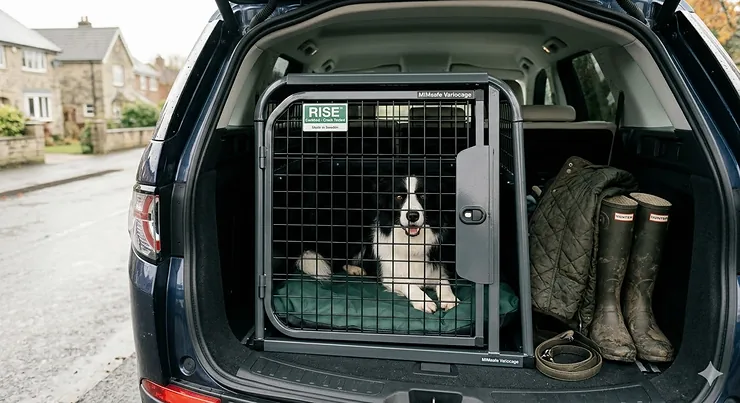
If you’re serious about dog safety car accident prevention, the MIM Safe VarioCage Single stands in a league of its own. This Swedish-engineered marvel isn’t just crash tested—it’s the only dog cage designed by genuine automotive crash test engineers using the same biomechanics principles that protect human passengers.
Key Specifications:
- Certified to UN ECE standards
- Adjustable depth (18 sizes available)
- Built-in crumple zone technology
- Emergency escape hatch
Price: £529 – £873 (depending on size)
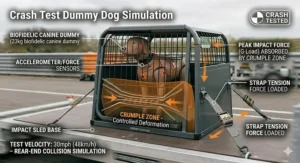
What makes the VarioCage truly exceptional is its innovative crumple zone design. Unlike rigid crates that transfer impact forces directly to your dog, this impact-resistant dog cage compresses during rear-end collisions, absorbing energy much like your vehicle’s own safety systems. UK buyers consistently praise its gas-spring assisted door and lockable latches, though some mention the initial assembly requires patience and ideally two people.
✅ Pros:
- Genuine crash test certification
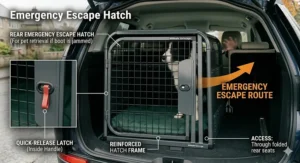
- Emergency escape through rear seats
- Lifetime structural warranty
❌ Cons:
- Premium pricing
- Heavy (15.5-27.3kg depending on size)
Customer Insight: “Worth every penny. My dog walked away unharmed from a motorway pile-up whilst the car was written off,” reports a verified UK Amazon buyer.
2. Thule Allax Dog Crate – Scandinavian Engineering Excellence
The Thule Allax represents what happens when a company renowned for roof racks applies the same engineering rigour to pet safety. Tested rigorously in Thule’s own Test Center and certified by TÜV SÜD, this crash tested dog travel crate offers front, rear, and roll-over protection with an innovative 10-13cm crumple zone.
Key Specifications:
- TÜV SÜD certified
- Gas-dampened door mechanism
- Ten different sizes available
- Adjustable depth for perfect vehicle fit
Price: £450 – £650
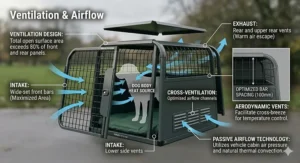
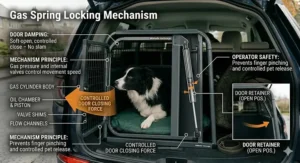
The Thule Allax excels in the details that matter for daily use. The gas-dampened door closes with a satisfying, silent precision that won’t startle anxious dogs, whilst the built-in lock provides security at service stations. The window and ventilation openings allow you to check on your pet without opening the crate, and the escape hatch provides emergency access if your boot won’t open post-collision.
✅ Pros:
- Premium build quality
- Completely rattle-free design
- Excellent ventilation
❌ Cons:
- Requires careful measurement
- Arrives flat-packed
Customer Insight: UK handlers report this is the quietest crate they’ve used, with zero rattling even on rough terrain.
3. 4pets ProLine Eagle – Swiss Precision on a Budget
Don’t let the lower price fool you—the 4pets ProLine delivers genuine crash tested dog crate protection at a fraction of the cost of premium options. This Swiss-made crate achieved outstanding results in independent crash tests by TÜV-SUD, the world leader in testing and product certification.
Key Specifications:
- TÜV-SUD crash tested
- Anodised aluminium construction
- Maintenance-free design
- One-hand door operation
Price: £84 – £110
The ProLine uses vertical bars that prevent dogs from chewing, combined with self-lubricating plastic-graphite hinges that never need oiling. The reinforced back wall and fibreglass-reinforced connectors create a structure that’s both lightweight and incredibly strong. However, some UK Amazon reviews mention receiving units with pre-cut packaging or slightly bent components, though these haven’t affected structural integrity.
✅ Pros:
- Exceptional value for crash-tested unit
- Swiss engineering quality
- Easy-clean removable floor mat
❌ Cons:
- Some quality control issues reported
- Limited UK availability
4. TransK9 B7 – The Professional’s Choice
Favoured by UK police forces, rescue services, and professional dog handlers, TransK9 represents British engineering at its finest. Independently crash tested covering front and rear impacts plus drop testing for roll-over scenarios, these bespoke crates are built to withstand the rigours of daily professional use.
Key Specifications:
- Independent crash testing certified
- 10-year structural warranty
- Bespoke fitting service
- Rear escape doors as standard
Price: £295 – £495
The TransK9 uses only the most durable materials, with crash tested designs that many UK trainers and handlers endorse. The build quality is exceptional, with attention to detail that ensures your dog travels as safely as possible. The company offers vehicle-specific fitting, taking measurements to ensure a perfect boot fit. UK customers particularly appreciate the comprehensive warranty and excellent customer service.
✅ Pros:
- UK-based company
- Bespoke vehicle fitting
- Professional-grade durability
❌ Cons:
- Longer lead times for custom orders
- Higher price point
Customer Insight: “I’ve tried numerous brands over 20+ years as a handler. TransK9 boxes work the best,” notes a professional dog trainer.
5. CADOCA Aluminium Dog Crate – Best Budget Option
For dog owners seeking basic protection without breaking the bank, the CADOCA Aluminium Crate offers decent construction at an accessible price point. Whilst it lacks official crash testing certification, the reinforced aluminium frame provides substantially more protection than fabric carriers.
Key Specifications:
- Aluminium frame construction
- Lockable doors with safety features
- Trapezoidal shape for boot fitting
- Includes washable mat
Price: £50 – £89
The CADOCA delivers solid value with its lightweight yet durable design. The aluminium frame won’t rust, and the sturdy plastic corners minimise injury risk during loading. UK buyers report easy assembly (typically 30 minutes) and note it fits well in popular models like the Peugeot 3008. However, this isn’t a safest dog crate for car UK option if crash protection is your priority—it’s best viewed as a containment system rather than a safety device.
✅ Pros:
- Excellent value for money
- Easy assembly
- Fits most boot sizes
❌ Cons:
- No crash testing certification
- Thin aluminium can bend
- Bars may be too wide for small dogs
6. Cozy Pet ACDC04 – Entry-Level Protection
The Cozy Pet aluminium range offers ten different sizes, making it accessible for virtually any dog breed. Whilst lacking crash certification, it provides basic containment that’s miles ahead of letting your dog roam free.
Key Specifications:
- Ten sizes available
- Aluminium and MDF construction
- Quick delivery
- Budget-friendly pricing
Price: £54 – £84
UK Amazon reviews reveal a mixed bag. Many buyers appreciate the rapid delivery and value, noting it serves well for short journeys and calm dogs. However, the wooden panels are MDF laminate rather than solid wood, and the aluminium isn’t the thickest grade. It’s perfectly adequate for restraining your pet in accordance with Highway Code requirements, but don’t expect TransK9-level protection in a serious collision.
✅ Pros:
- Very affordable
- Fast delivery
- Multiple sizes
❌ Cons:
- MDF construction rather than solid panels
- Not crash tested
- May not withstand determined escape artists
7. Sleepypod Mobile Pet Bed – Premium Small Dog Solution
For owners of small dogs (up to 6.8kg), the Sleepypod Mobile represents the pinnacle of portable pet safety. Crash tested and certified by the Center for Pet Safety for pets up to 15 pounds, this innovative 3-in-1 design functions as a carrier, car seat, and everyday pet bed.
Key Specifications:
- Center for Pet Safety 5-star rating
- PPRS technology prevents ejection
- Luggage-grade ballistic nylon
- Machine-washable bedding
Price: £160 – £225
The Sleepypod underwent the same rigorous dynamic crash testing used for child safety restraints, tested against U.S., Canadian, and EU standards. The patented PPRS (Pet Projection Restraint System) technology prevents your small dog from being thrown during sudden stops or collisions. UK buyers love that it reduces travel stress by allowing pets to travel in their familiar bed.
✅ Pros:
- Exceptional crash test results
- Multi-functional design
- Premium materials and construction
❌ Cons:
- Only suitable for small dogs
- Premium pricing
- Limited to 6.8kg maximum
✨ Don’t Miss These Exclusive Deals!
🔍 Take your pet’s safety to the next level with these carefully selected products. Click on any highlighted item to check current pricing and availability on Amazon.co.uk. These crash tested crates will help you create authentic peace of mind your family deserves!
Understanding UK Dog Car Safety Regulations
The legal landscape surrounding pets in vehicles is crystal clear, yet many UK drivers remain unaware of their obligations. Rule 57 of the Highway Code explicitly requires dogs to be suitably restrained in vehicles to prevent driver distraction and injury during sudden stops.
What “Suitably Restrained” Actually Means
The Highway Code recognises several methods: seat belt harnesses, pet carriers, dog cages, and dog guards. However, not all restraints are created equal. A £15 harness from a discount retailer might technically comply with the letter of the law, but will it protect your dog in a 30mph collision? The answer, backed by Centre for Pet Safety testing, is a resounding no.
Legal Consequences of Non-Compliance
Driving with an unrestrained dog isn’t just dangerous—it can be expensive. Fines can reach £5,000 with up to nine penalty points if you’re involved in an accident where your unrestrained pet contributed to the incident. Moreover, your insurance company may refuse to pay out if they determine your dog wasn’t properly secured. It’s a risk that simply isn’t worth taking.
Beyond Legal Compliance: The Physics of Dog Safety
Consider the forces involved: a 25kg dog in a 48km/h (30mph) crash experiences forces equivalent to 750kg. That’s three-quarters of a tonne hurtling through your vehicle’s interior. Without proper restraint, your beloved pet becomes a lethal projectile capable of killing rear-seat passengers, smashing through windscreens, or suffering catastrophic injuries themselves.
How Crash Testing Standards Protect Your Pet
Not all crash testing is created equal, and understanding the differences helps you separate genuine safety products from marketing hype.
The Gold Standard: TÜV SÜD Certification
TÜV SÜD certification demonstrates commitment to quality, safety and sustainability through independent testing facilities. Products bearing this mark have undergone front-impact, rear-impact, and roll-over testing that replicates real-world accident scenarios.
UN ECE Standards
The United Nations Economic Commission for Europe establishes automotive safety standards that many crash tested crates adhere to. The MIM Safe VarioCage, for instance, meets stringent UN ECE requirements originally designed for child restraint systems.
Center for Pet Safety Testing
Based in the United States, the Center for Pet Safety conducts independent crash testing using weighted test dummies. Their rigorous protocols have revealed that many popular pet restraints fail catastrophically, highlighting the importance of choosing certified products.
What to Look For in Crash Test Claims
Beware of vague marketing language like “crash test inspired” or “safety designed.” Genuine crash tested products will specify:
- The testing facility (TÜV SÜD, Center for Pet Safety, etc.)
- The standards met (UN ECE, FMVSS, etc.)
- The test speeds and impact scenarios
- Weight limitations and proper installation methods
If a manufacturer can’t provide this information, their safety claims deserve scepticism.
Choosing the Right Size: A Critical Safety Factor
Even the most rigorously crash tested dog crate won’t protect your pet if it’s the wrong size. Too small, and your dog suffers unnecessary stress and discomfort. Too large, and they become a pinball during sudden stops.
The Goldilocks Principle
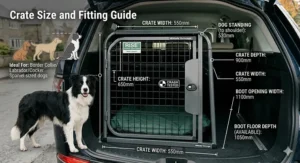
Your dog should be able to stand comfortably, turn around easily, and lie down in a natural position. However, excessive space allows dangerous movement during impacts. Measure your dog’s height from ground to shoulder (withers), then add 5-7cm for comfort without compromising safety.
Vehicle Compatibility Matters
Many crash tested crates offer adjustable depth to accommodate different boot sizes. The Thule Allax, for instance, includes a vehicle compatibility checker on their website, whilst TransK9 offers bespoke fitting services for UK vehicles. Don’t guess—measure your boot space carefully, accounting for wheel arches and sloped rear windows.
Breed-Specific Considerations
Some breeds require special attention. Long-bodied dogs like Dachshunds need extra length, whilst tall breeds like Great Danes benefit from crates with maximum height clearance. Brachycephalic breeds (pugs, bulldogs) require excellent ventilation due to their breathing difficulties.
Installation and Securing Your Crash Tested Crate
The safest crate in the world offers zero protection if improperly installed. Here’s how to ensure your crash tested dog travel crate actually performs as intended during an emergency.
Anchoring Systems Explained
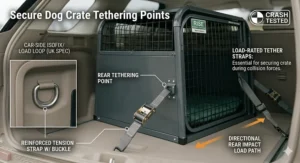
Most quality crates include tension straps or lashing points that secure the unit to your vehicle’s boot anchors. These aren’t optional extras—they’re essential safety components. The MIM Safe VarioCage features anti-slip straps specifically designed to secure the crate to your vehicle, preventing movement during impacts.
Common Installation Mistakes
The most frequent error is insufficient strap tension. Your crate shouldn’t move more than 2-3cm in any direction when firmly pushed. Another mistake is routing straps incorrectly, reducing their effectiveness during side impacts. Always follow manufacturer instructions precisely, and consider professional installation for premium units.
Testing Your Setup
Before your first journey, perform a safety check. With your dog inside, gently rock the crate from different angles. It should feel completely stable. During your initial short trips, check the installation after each journey until you’re confident everything remains secure.
Maintenance and Regular Inspections
Crash tested crates require ongoing maintenance. Check straps for wear every few months, inspect welds and joints for cracks, and ensure locking mechanisms function smoothly. The MIM Safe and TransK9 units include comprehensive warranties, but prevention beats cure.
Real-World Crash Test Results: What the Data Reveals
The sobering reality of pet safety became apparent when the Center for Pet Safety conducted comprehensive crash tests on crates, carriers, and harnesses, revealing that many popular products failed catastrophically.
The Crate Performance Gap
Of four tested crates, only one successfully kept the dog contained whilst remaining structurally intact and properly anchored. The failures weren’t minor—crates separated from anchoring systems, structural integrity collapsed, and test dummies were ejected at speeds that would prove fatal to real dogs.
Why Most Harnesses Fail
The harness results proved even more alarming. Only one of eight tested seat belt harnesses successfully kept the dog in the seat, with the remainder either failing completely or allowing dangerous levels of forward movement. This explains why professional handlers overwhelmingly prefer crates over harnesses for vehicle transport.
Carrier Catastrophes
During carrier testing simulating a 30mph front-end crash, only two carriers succeeded in containing the dog. Others came free from their restraints or couldn’t contain the weighted dummy, demonstrating that soft-sided carriers offer minimal protection despite their popularity.
The Life-Saving Difference
These tests aren’t academic exercises—they represent the difference between your dog walking away from an accident or suffering life-altering injuries. The investment in a properly crash tested unit isn’t optional for responsible pet owners; it’s essential.
Budget vs Premium: Is Expensive Always Better?
The price gulf between budget aluminium crates (£50-£90) and premium crash tested units (£450-£870) raises an obvious question: does more expensive always mean safer?
What You’re Actually Paying For
Premium prices reflect genuine crash testing, superior materials, and engineering expertise. The MIM Safe VarioCage employs automotive crash test engineers—the same professionals who design safety systems for Mercedes and Volvo. That expertise doesn’t come cheap, but it delivers proven protection.
When Budget Options Make Sense
For short journeys at low speeds, budget crates provide adequate restraint that satisfies Highway Code requirements. If you’re driving your Spaniel to the local park twice weekly, a £70 CADOCA crate offers reasonable value. However, for motorway travel, daily commutes, or high-value dogs, premium options provide genuine peace of mind.
The Middle Ground
Products like the 4pets ProLine (£84-£110) offer certified crash testing at accessible prices. Whilst not as feature-rich as the Thule or VarioCage, they deliver genuine protection without requiring a second mortgage.
Calculate the True Cost
Consider your dog’s value—both emotional and financial. A £1,500 pedigree Labrador deserves better protection than a £50 unrated crate. Factor in potential veterinary bills (easily £5,000+ for serious injuries) and the emotional trauma of losing your pet in a preventable accident. Suddenly, £500 for a premium crash tested unit seems remarkably reasonable.
Materials Matter: Aluminium vs Steel vs Composite
The construction material fundamentally impacts both safety performance and daily practicality.
Aluminium: Lightweight Versatility
Aluminium crates dominate the budget market, offering decent strength-to-weight ratios. They won’t rust, making them ideal for wet British climate conditions. However, cheaper aluminium can bend under severe impacts, and thin-gauge material provides less protection than properly engineered steel.
Steel: Maximum Strength
High-carbon steel crates like those from TransK9 offer superior impact resistance. The material’s inherent strength means thinner walls can provide better protection than thicker aluminium. The trade-off is weight—steel crates can be significantly heavier, making installation and removal more challenging.
Composite Construction: Best of Both Worlds
Premium units often combine materials strategically. The MIM Safe VarioCage uses reinforced steel for the frame whilst incorporating lightweight aluminium bars and fibreglass-reinforced plastic connectors. This engineered approach optimises both safety and usability.
Ventilation Considerations
Material choice affects ventilation. Mesh or barred designs provide better airflow than solid panels, crucial for brachycephalic breeds or summer travel. However, excessive openings can compromise structural integrity during impacts—another reason why crash tested designs outperform budget alternatives.
Special Considerations for Different Dog Breeds
Your dog’s breed significantly influences which crash tested dog crate best suits their needs.
Large Breeds: Size and Strength Challenges
Great Danes, Rottweilers, and similar giants require substantial crates with reinforced construction. The forces generated by a 60kg dog in even a minor collision demand premium engineering. The TransK9 B7 or MIM Safe VarioCage XXL represent sensible choices, despite their higher costs.
Small Breeds: Preventing Escape
Tiny dogs like Chihuahuas or Yorkshire Terriers can squeeze through surprisingly small gaps. Bar spacing becomes critical—many budget crates have bars spaced 5-7cm apart, easily wide enough for small breeds to escape or get stuck. The Sleepypod Mobile eliminates this concern entirely with its enclosed design.
Anxious or Reactive Dogs
Dogs suffering from travel anxiety benefit from crates with limited visibility, reducing overstimulation from passing traffic. However, this must be balanced against ventilation needs. The Thule Allax offers adjustable ventilation panels that can be modified based on your dog’s comfort level.
Brachycephalic Breeds: The Ventilation Imperative
Pugs, French Bulldogs, and English Bulldogs face breathing challenges that intensify in confined spaces. For these breeds, exceptional ventilation isn’t optional—it’s life-saving. Prioritise crates with maximum airflow, and never use solid-sided containers for brachycephalic dogs.
Maintaining Your Crash Tested Dog Crate
Proper maintenance ensures your crash tested dog travel crate continues providing protection throughout its lifespan.
Regular Cleaning Protocols
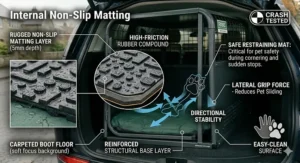
Most quality crates include removable floor mats that can be wiped down or machine washed. Clean these weekly to prevent odour build-up and bacteria growth. The crate frame requires only occasional wiping with pet-safe disinfectant.
Structural Integrity Checks
Every three months, inspect all joints, welds, and connection points for signs of stress or damage. Pay particular attention to areas where the crate contacts your vehicle’s boot, as vibration can cause fatigue over time. Any cracks, bends, or separation require immediate attention.
Replacing Worn Components
Straps and buckles experience the most wear. Replace these according to manufacturer recommendations (typically every 2-3 years) or immediately if you notice fraying, stretching, or damage. Many manufacturers sell replacement parts—a £25 strap replacement is considerably cheaper than a new crate.
Post-Accident Protocol
If you’re involved in any collision whilst transporting your dog, have the crate professionally inspected before reuse. Many manufacturers offer crash replacement programmes, recognising that even minor impacts can compromise structural integrity. The Sleepypod, for instance, includes a crash replacement programme as standard.
Training Your Dog to Love Their Crate
Even the safest crash tested dog crate won’t work if your dog refuses to enter it. Proper crate training transforms what could be a stressful experience into a comfortable journey your dog actually enjoys.
Start at Home: The Foundation Phase
Begin crate training at least two weeks before your first car journey. Place the crate in a quiet room with the door open, adding your dog’s favourite blanket and treats inside. Let them explore at their own pace without pressure. Many dogs naturally curl up in enclosed spaces, so patience often rewards you with a dog who views the crate as their personal den.
Positive Association Building
Feed meals near the crate initially, then gradually move the bowl inside. Once your dog willingly enters for food, start closing the door briefly during meals. Extend the duration slowly, never progressing faster than your dog’s comfort allows. UK dog behaviourists recommend short 5-10 minute sessions several times daily rather than lengthy training marathons.
Car Familiarisation
Before attempting journeys, let your dog sit in the stationary crate whilst the engine runs. Progress to short drives around the block, gradually extending duration. Always end sessions positively with treats and praise. According to the Dogs Trust, gradual habituation prevents travel sickness and anxiety that plague many dogs during car journeys.
Managing Anxiety and Stress
Some dogs struggle despite best efforts. Consider pheromone sprays like Adaptil for the crate interior, or consult your vet about anxiety medication for longer journeys. Never punish reluctance—this only reinforces negative associations. If progress stalls, professional dog behaviourists can provide tailored strategies.
Seasonal Considerations for UK Climate
Britain’s variable climate demands different approaches throughout the year to ensure your dog remains comfortable and safe in their crash tested dog crate.
Summer Safety: The Deadly Heat Trap
Even with windows cracked, vehicle interiors can reach lethal temperatures within minutes during British summer days. The RSPCA warns that dogs can suffer heatstroke at temperatures as low as 20°C, particularly brachycephalic breeds. Never leave your dog unattended in a vehicle during warm weather—not even for “just five minutes” whilst popping to the shops.
If summer travel is unavoidable, park in shade, ensure maximum ventilation through your crate’s design, and carry portable water bowls. The Thule Allax’s extensive ventilation panels make it particularly suitable for summer conditions, whilst solid-sided budget crates can become dangerous ovens.
Winter Challenges: Cold and Moisture
British winters bring different concerns. Whilst dogs are generally more cold-tolerant than heat-tolerant, drafty crates in unheated boot spaces can cause discomfort for thin-coated breeds. Add insulating blankets to crate floors, but ensure they won’t become projectiles during sudden stops by securing them properly.
Moisture management becomes critical during wet months. Dogs entering crates with wet coats create humidity that can lead to rust in cheaper aluminium units. The TransK9’s powder-coated finish resists corrosion better than budget alternatives, whilst stainless steel components in premium units eliminate rust concerns entirely.
Year-Round Ventilation Balance
British weather requires adaptable ventilation. The ideal crash tested dog travel crate offers adjustable airflow—maximum openness during summer, more protection during winter. Some handlers use removable crate covers during cold months, though these must never impede escape hatches or compromise structural integrity.
Alternatives to Traditional Crates: What Really Works
Whilst this guide focuses on crash tested crates, responsible pet owners should understand alternative restraint methods and their limitations.
Seat Belt Harnesses: The Disappointing Reality
Marketing images show happy dogs safely secured by harnesses attached to seat belts. Reality paints a grimmer picture. The Center for Pet Safety’s comprehensive testing revealed that only one harness (the Sleepypod ClickIt Sport) successfully restrained test dummies during 30mph crashes. Most harnesses either failed completely or allowed dangerous levels of forward movement that would prove fatal in real-world collisions.
The fundamental problem is physics. Harnesses transfer impact forces directly to your dog’s body through narrow webbing straps. During a 48km/h collision, that 25kg Labrador experiences forces exceeding 750kg—far more than any harness can safely distribute across a dog’s torso without causing devastating internal injuries.
Dog Guards and Barriers: Containment Without Protection
Metal barriers between rear seats and boot areas keep dogs out of the passenger compartment but offer zero impact protection. During rear-end collisions, unrestrained dogs slam into these barriers at collision speed, typically resulting in catastrophic injuries. Guards satisfy Highway Code containment requirements whilst providing false security regarding actual safety.
Soft-Sided Carriers: Pretty but Perilous
Fabric carriers dominate pet shops with attractive designs and lower prices. Testing reveals they’re essentially decorative death traps. Of carriers tested by the Center for Pet Safety, only two (both from Sleepypod) prevented test dummy ejection during simulated crashes. Others separated from restraints, collapsed, or failed to contain the weighted dummy. Unless specifically crash tested and certified, soft carriers provide minimal protection despite meeting airline cabin requirements.
Why Proper Crates Remain Superior
Crash tested crates protect through engineering rather than hope. The crumple zones in the MIM Safe VarioCage and Thule Allax absorb impact energy, whilst rigid construction prevents cabin intrusion. Your dog is protected within a survival cell similar to the one protecting human passengers, making properly certified crates the only genuinely safe option for vehicle transport.
🚀 Ready to Upgrade Your Dog’s Safety?
💡 Browse our top picks for crash tested dog crates on Amazon.co.uk. Every product featured has been carefully researched to ensure it meets UK safety standards. Click any highlighted crate name to view current prices, sizes, and customer reviews. Your dog’s safety is worth the investment!
Common Myths About Dog Car Safety Debunked
Misinformation about pet car safety spreads faster than facts. Let’s demolish the most persistent myths that endanger British dogs.
Myth: “My Dog Is Well-Behaved, So Restraint Isn’t Necessary”
Even the most obedient dog becomes a physics problem during collisions. Training can’t overcome the laws of motion. That perfectly behaved Spaniel who lies calmly in the boot becomes a 20kg projectile at 30mph, capable of killing rear-seat passengers. Behaviour is irrelevant when g-forces take control.
Myth: “Small Dogs Don’t Need Crash Tested Crates”
Physics doesn’t discriminate by size. A 5kg Chihuahua in a 48km/h crash generates forces equivalent to 150kg—the weight of two adult humans. Small dogs actually face higher risk of ejection through gaps in substandard restraints. The Sleepypod carriers exist precisely because small dogs deserve equal protection, scaled appropriately for their size.
Myth: “Any Crate Is Better Than Nothing”
This dangerous half-truth leads owners to purchase unrated budget crates believing they’ve addressed safety. Testing proves otherwise. Uncertified crates frequently fail by becoming projectiles themselves, transforming supposed safety devices into battering rams. A poorly designed crate can actually increase injury risk compared to proper harnesses. Only certified crash tested units provide genuine protection.
Myth: “Crash Testing Is Just Marketing Hype”
Independent testing by organisations like TÜV SÜD and the Center for Pet Safety uses the same rigorous protocols applied to child safety seats. These aren’t marketing departments rubber-stamping products—they’re independent laboratories conducting destructive testing that many products fail spectacularly. Certification means genuine protection validated by physics, not advertising hyperbole.
The True Cost of Dog Car Accidents
Understanding the real-world consequences of inadequate pet restraint puts the investment in crash tested dog crates into proper perspective.
Financial Implications: Beyond Insurance Excesses
Veterinary treatment for serious collision injuries easily exceeds £5,000. Complex orthopaedic surgeries, extended hospitalisation, and ongoing rehabilitation quickly drain savings. Many pet insurance policies exclude injuries resulting from non-compliance with Highway Code requirements, leaving owners facing five-figure bills entirely from their own pockets.
Add potential fines (up to £5,000), penalty points (up to nine), and increased insurance premiums following at-fault accidents involving unrestrained pets. The total financial impact can surpass £15,000—enough to purchase thirty premium crash tested crates.
The Emotional Toll: What Money Can’t Measure
Statistics and costs pale compared to the emotional devastation of losing your dog in a preventable accident. UK accident and emergency vets report heartbreaking scenes where owners arrive with critically injured pets, knowing a £200 crash tested crate could have prevented the tragedy.
The guilt compounds during recovery periods, watching your dog struggle with injuries caused by your inadequate safety measures. Many owners report the experience fundamentally changes their relationship with their pet, with trust eroded by their failure to provide basic protection.
Impact on Other Road Users
Unrestrained dogs don’t only endanger themselves. During collisions, dogs become projectiles that injure or kill human passengers. Multiple UK cases document children suffering life-changing injuries from unrestrained dogs during crashes. The legal and emotional consequences of your dog harming or killing another person’s child should motivate even the most budget-conscious owner to invest in proper safety equipment.
Prevention Through Proper Planning
Every disaster described above was entirely preventable through appropriate restraint. A £500 investment in a crash tested unit protects against five-figure veterinary bills, legal consequences, and emotional trauma that money cannot repair. The question isn’t whether you can afford a proper crash tested crate—it’s whether you can afford not to have one.
Environmental and Sustainability Considerations
Modern pet owners increasingly consider environmental impact alongside safety, and the crash tested dog crate market has responded.
Durability Equals Sustainability
Premium crash tested crates like the MIM Safe VarioCage and TransK9 units last decades with minimal maintenance. Compare this to budget alternatives requiring replacement every 2-3 years due to structural failure or corrosion. One £700 crate lasting twenty years has vastly lower environmental impact than ten £70 crates ending in landfills.
Manufacturing Transparency
Swedish manufacturers like MIM Safe and Thule increasingly publish environmental product declarations detailing carbon footprints and recyclability. The aluminium used in quality crates is typically recycled material, and the units themselves are fully recyclable at end-of-life. UK company TransK9 manufactures locally, eliminating the carbon costs of shipping from Asia.
Repair vs Replace Philosophy
Premium manufacturers actively support repairs rather than replacement. TransK9 sells individual replacement parts, extending crate lifespans indefinitely. This stands in stark contrast to budget brands where damaged components necessitate complete unit replacement. Choosing repairable products dramatically reduces waste whilst saving money long-term.
The True Cost of “Cheap”
Fast-fashion mentality has infected the pet product industry. Budget crates shipping from Asia carry significant carbon footprints from manufacturing and transportation, use virgin rather than recycled materials, and end their brief useful lives in landfills. The environmental cost of cheap products far exceeds their retail prices, making premium British or European manufactured units the sustainable choice.
Frequently Asked Questions
❓ What is the safest dog crate for car travel in the UK?
❓ Are crash tested dog crates worth the extra cost?
❓ How do I know if a crate is genuinely crash tested?
❓ What size crash tested dog crate does my dog need?
❓ Can I use a crash tested dog crate for air travel?
Conclusion: Your Dog Deserves the Best Protection
After reviewing the comprehensive landscape of crash tested dog crates available in the UK, the conclusion is clear: investing in proper pet safety isn’t optional—it’s essential. Whether you choose the gold-standard MIM Safe VarioCage, the premium Thule Allax, or a budget-conscious option like the CADOCA, the key is selecting a solution appropriate for your specific circumstances.
The safest dog crate for car UK drivers ultimately depends on your usage patterns, budget, and dog’s specific needs. Regular motorway commuters transporting valuable or beloved dogs should seriously consider premium certified options like the MIM Safe or Thule. The engineering expertise, comprehensive crash testing, and proven real-world performance justify the investment many times over.
For occasional local journeys, budget aluminium crates provide adequate restraint that satisfies Highway Code Rule 57 requirements. However, remember that basic containment differs significantly from crash protection—don’t confuse legal compliance with genuine safety.
The research from organisations like the Center for Pet Safety is unambiguous: crash testing reveals most uncertified products fail catastrophically, transforming supposed safety devices into dangerous hazards. Your dog trusts you completely to make decisions that protect their wellbeing. That trust deserves products backed by rigorous testing, automotive engineering, and independent certification.
As we navigate Britain’s roads in 2026, the message couldn’t be clearer: your dog’s safety is worth investing in. Choose wisely, install correctly, and drive with confidence knowing you’ve provided your four-legged family member with genuine protection that could save their life.
Recommended for You
- 7 Best Volvo XC90 Dog Crate UK – Safety & Comfort (2026)
- 7 Best BMW X5 Dog Crate Options 2026 | UK Expert Review
- Best Land Rover Defender Dog Crate: 7 Top UK Options (2026)
Disclaimer: This article contains affiliate links. If you purchase products through these links, we may earn a small commission at no additional cost to you. Prices shown are approximate and may vary based on size, retailer, and current promotions.
✨ Found this helpful? Share it with your mates! 💬 🤗
