In This Article
Picture this: you’ve just returned from a glorious countryside walk with your beloved golden retriever, Max. The sun was shining, birds were chirping, and then Max spotted the muddiest puddle in all of Britain. Fast forward 20 minutes, and your once-pristine car boot looks like a crime scene from a particularly soggy detective drama. Sound familiar?
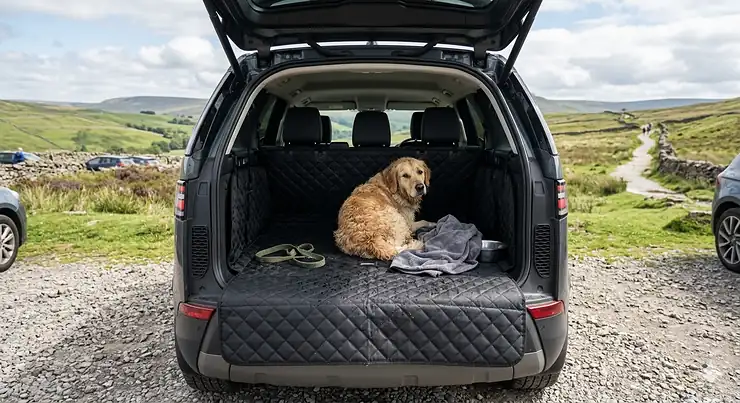
If you’re a dog owner in the UK, you already know that our unpredictable weather and our dogs’ unapologetic love for puddles make a dog boot liner UK waterproof an absolute necessity, not a luxury. Whether you’re dealing with soggy November walks through the Lake District or sandy beach trips to Cornwall in August, protecting your vehicle’s interior is essential for maintaining its resale value and your sanity.
A quality waterproof car boot cover for dogs does more than just catch mud. It shields against scratches from enthusiastic claws, contains pet hair that otherwise embeds itself into every fibre of your boot carpet, and provides a barrier against those inevitable spillages of water bowls and drool. According to UK law under Rule 57 of the Highway Code, dogs must be suitably restrained in vehicles, and whilst a boot liner doesn’t replace proper restraint systems, it creates a dedicated, safe space for your four-legged passenger.
In this comprehensive guide, we’ll explore the seven best options available on Amazon.co.uk in 2026, ranging from budget-friendly universal fits to premium heavy-duty solutions. We’ve researched real customer reviews from UK buyers, verified current pricing in pounds sterling, and examined the specifications that truly matter when you’re navigating British weather and British roads.
Quick Comparison Table
| Product | Size | Key Feature | Price Range | Rating |
|---|---|---|---|---|
| Yummy Bee Heavy Duty 4 Layer | 185 x 105cm | 600D Oxford quilted | £25-£35 | 4.5/5 |
| KYG XXL Nonslip Waterproof | 195 x 105cm | Super adhesive Velcro | £22-£30 | 4.3/5 |
| JOEJOY Nonslip with Storage | 185 x 105cm | Dual waterproof layers | £18-£25 | 4.4/5 |
| Just Pet Zone Quilted | Universal fit | 4-layer construction | £20-£28 | 4.6/5 |
| AMZPET with Armrest Pass | 127 x 100cm | 60/40 split compatible | £24-£32 | 4.3/5 |
| PETZANA 100% Waterproof | 180 x 105cm | Enhanced stitching | £17-£23 | 4.2/5 |
| Foxxer Universal 5-Year | 175 x 100cm | 5-year warranty | £28-£38 | 4.4/5 |
💬 Just one click – help others make better buying decisions too! 😊
Top 7 Dog Boot Liners UK Waterproof: Expert Analysis
1. Yummy Bee Car Boot Protector for Dogs – Best Overall Heavy-Duty Option
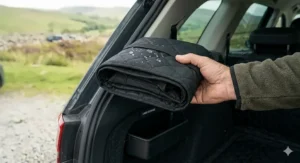
When it comes to robust protection that can withstand the chaos of even the most energetic Labrador, the Yummy Bee Car Boot Protector stands head and shoulders above budget alternatives. This isn’t your flimsy, single-layer affair that slides about and tears within a fortnight.
Key Specifications:
- Material: 600D Oxford quilted cotton with 4 premium layers
- Size: Large universal fit suitable for estate cars, SUVs, and 4x4s
- Features: Non-slip rubber mesh base, adjustable suction pads, storage pockets
What sets this liner apart is its weight—nearly twice as heavy as most competitors, which translates to exceptional durability. The four-layer construction includes quilted soft cotton on top, PP cotton padding, 210D polyester, and a non-slip rubber mesh foundation. UK customers particularly praise how well the Velcro strips grip carpeted boot walls, with one Essex-based buyer noting it “stayed perfectly in place even with two boisterous spaniels leaping in and out during a week-long Scottish holiday.”
The bumper flap extends generously to protect paintwork, which is particularly valuable given how scratched bumpers can knock hundreds off your vehicle’s trade-in value. At £25-£35, it represents brilliant value for money.
Pros:
✅ Exceptional build quality and durability
✅ Comprehensive coverage including sides and bumper
✅ Practical storage pockets for leads and treats
Cons:
❌ Slightly more expensive than basic alternatives
❌ Can be bulky when folded for storage
2. KYG XXL Dog Car Boot Liner – Best for Large Vehicles
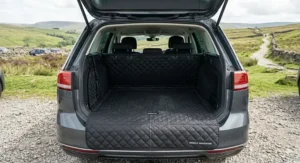
If you’re driving a Range Rover, Volvo XC90, or any substantial SUV, the KYG XXL Nonslip Waterproof Car Protector offers the generous dimensions you need at 195 x 105cm. This is the buy boot liner for dog crate enthusiasts who need that extra breathing room.
Key Specifications:
- Size: 195 x 105 x 38cm (XXL coverage)
- Material: Heavy-duty tear-resistant fabric with waterproof coating
- Features: 6+4 super adhesive Velcro straps, side wall protection
British buyers consistently highlight the superior Velcro system. Unlike cheaper models where the adhesive strips peel off after a single journey, KYG provides six permanent Velcro counterparts plus four replacements. For felt upholstery, they adhere directly; for plastic boot interiors, you apply the supplied counterparts.
One Birmingham customer shared: “Fits my Nissan Juke perfectly with no excess material sagging anywhere. The side zips are brilliant and can easily be undone if you want to lie the seats down.” The waterproof material genuinely repels moisture—simply wipe with a damp cloth or give it a garden hose rinse.
Price-wise, at £22-£30, it’s competitively positioned whilst offering XXL dimensions that smaller liners can’t match.
Pros:
✅ XXL size ideal for large SUVs and estate cars
✅ Robust Velcro system with replacements include
✅ Excellent value for the coverage provided
Cons:
❌ May be too large for compact hatchbacks
❌ Heavier weight makes it less portable
3. JOEJOY Car Boot Protector – Best Budget-Friendly Choice
For dog owners seeking essential protection without breaking the bank, the JOEJOY Nonslip Waterproof Dog Car Seat Cover delivers solid performance at an attractive price point. Don’t let the lower cost fool you—this is a genuinely waterproof solution, not a water-resistant pretender.
Key Specifications:
- Size: 185 x 105cm (universal fit)
- Material: 600D Oxford with dual waterproof layers (water-resistant coating + PVC)
- Features: Two large storage bags, anti-slip rubber bottom, side corner zippers
The dual waterproof layer system is this liner’s secret weapon. Many cheaper alternatives use a single coating that degrades after a few months of use. JOEJOY employs both a water-resistant coating on the 600D Oxford fabric and a PVC layer underneath, creating a genuinely impermeable barrier.
UK reviewers particularly appreciate the two zippered storage bags, perfect for stashing poo bags, tennis balls, and that emergency pack of dog treats. One Manchester-based owner of two Border Collies noted: “After muddy romps in the Peak District, I simply hose this down and hang it to dry. Six months in and it’s still completely waterproof.”
At £18-£25, this represents outstanding value, especially when you buy boot liner for dog crate purposes and need something functional rather than luxurious.
Pros:
✅ Excellent affordability without compromising waterproofing
✅ Practical storage solutions integrated
✅ Easy to clean and quick-drying
Cons:
❌ Thinner material than premium options
❌ Velcro can be temperamental on non-carpeted surfaces
4. Just Pet Zone Dog Car Boot Protector – Best for Machine Washing
If convenience is your priority and you’d rather chuck your boot liner in the washing machine than faff about with hoses and cloths, the Just Pet Zone Quilted Waterproof Boot Mat is your champion. This is the easy-clean boot protection solution for busy families.
Key Specifications:
- Size: Universal fit for most cars and SUVs
- Material: Soft quilted padding with 4-layer waterproof construction
- Features: Machine washable, non-slip backing, integrated bumper flap
The quilted aesthetic gives this liner a more premium appearance than some utilitarian alternatives, which matters if you’re the sort of person who occasionally needs to pop to Waitrose without looking like you’ve been camping in the Scottish Highlands. The four-layer construction provides genuine durability—customers report it maintaining its shape and waterproof properties even after multiple 30-degree machine washes.
A London-based customer shared: “I bought this for our Freelander 2 and it fits perfectly. Easy to install, and when my spaniel decided to shake muddy water everywhere, I just popped it in the washing machine. Came out looking brand new.” The reinforced stitching adds to its longevity, addressing a common complaint with cheaper quilted options.
Priced at £20-£28, it sits comfortably in the mid-range, offering premium features without the premium price tag.
Pros:
✅ Machine washable for ultimate convenience
✅ Attractive quilted finish suitable for upmarket vehicles
✅ Comprehensive bumper-to-bumper protection
Cons:
❌ Pockets smaller than advertised
❌ Velcro stickers may not adhere well to plastic boots
5. AMZPET Boot Liner for Dogs – Best for Split Rear Seats
Modern estate cars and SUVs often feature 60/40 or 40/60 split rear seats, allowing you to transport both passengers and dogs simultaneously. The AMZPET Boot Liner with Armrest Pass-Through is specifically engineered for this flexibility, making it ideal for families who need versatility.
Key Specifications:
- Size: 59 x 127 x 100cm
- Material: Scratch-proof and waterproof fabric
- Features: Armrest pass-through design, 2 storage pockets, convertible configuration
The armrest pass-through is genuinely clever. By unzipping one or both sides, you can fold down a portion of your rear seats without removing the entire liner—perfect for that B&Q run where you need to transport both your springer spaniel and a 2.4-metre length of timber. This scratch-resistant boot liner UK functionality has proven particularly popular with tradespeople who alternate between family duties and work requirements.
British customers appreciate the practical design considerations. One Sheffield buyer noted: “I didn’t need the stickers for the Velcro attachments as the liner stuck to the felt of my boot interior anyway. Looks neat and covers the boot fabric really well, preventing dog hair from coating everything.” The sustainability features, including Global Recycled Standard certification, appeal to environmentally conscious buyers.
At £24-£32, it’s positioned as a mid-to-premium option, but the versatility justifies the cost for those who need the split-seat functionality.
Pros:
✅ Unique split-seat compatibility for versatile use
✅ Sustainable materials with GRS certification
✅ Well-designed storage pockets
Cons:
❌ Velcro stickers may not stick to plastic boots
❌ Pockets smaller than they appear in photos
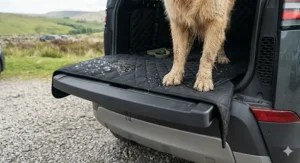
6. PETZANA Car Boot Liner – Best Basic Waterproof Protection
Sometimes you don’t need bells and whistles—you just need a straightforward, genuinely waterproof barrier between your dog and your boot carpet. The PETZANA 100% Waterproof Dog Car Seat Cover delivers exactly that at an attractive entry-level price.
Key Specifications:
- Size: 180 x 105cm (universal fit)
- Material: 600D Oxford cloth with PVC waterproof coating
- Features: Enhanced stitching on handles, quick installation, storage pocket
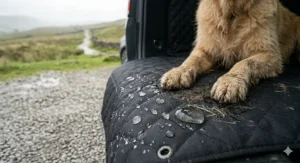
Don’t be fooled by the budget-friendly pricing—this liner genuinely is 100% waterproof, as demonstrated by numerous UK customer videos showing water being poured directly onto it without any seepage. The PVC coating creates an impermeable barrier, whilst the 600D Oxford cloth provides tear resistance against scratches from excited claws.
Installation takes mere minutes: snap the buckle straps around your headrests and tuck the soft seat anchors into the back seat. A Kent-based owner of two Labradors shared: “Bought this for the boot of a ’21 Ford Fiesta. Fits perfectly, easy to stick on and use, equally easy to remove. We got sick of having mud everywhere—this thing was a godsend.”
The only notable weakness is the Velcro attachment system, which several reviewers described as “totally useless.” However, at £17-£23, many buyers simply accept this limitation and use the headrest straps alone, which provide adequate security for less vigorous dogs.
Pros:
✅ Genuinely waterproof with PVC coating
✅ Excellent affordability
✅ Quick and simple installation
Cons:
❌ Velcro attachments poorly positioned and ineffective
❌ Material can crease heavily when folded
7. Foxxer Car Boot Liner – Best Warranty Coverage
For those who view their boot liner as a long-term investment rather than a disposable accessory, the Foxxer Universal Waterproof Boot Protector offers something genuinely rare in this market: a comprehensive 5-year warranty.
Key Specifications:
- Size: 175 x 100cm (universal design)
- Material: “Rip Stop” material with quilted padding
- Features: 5-year guarantee, anti-slip base, strong self-adhesives
The “Rip Stop” material is engineered to prevent small tears from spreading—a common failure point in standard fabrics when sharp claws catch. Combined with quilted padding and a waterproof coat, it creates a heavy-duty car boot mat that British customers report lasting years, even with daily use by larger breeds.
Whilst it lacks the split-seat versatility of the AMZPET or the XXL dimensions of the KYG, the Foxxer excels at being a reliable, no-nonsense estate car boot protector. Customers mention fitment with vehicles ranging from Skoda Octavias to Jaguar E-Paces, with the universal design accommodating most standard boot sizes.
One Audi Q8 owner noted: “It’s a great fit and I love the fact that it has a flap to protect the paintwork on my car when the dogs jump in and out.” At £28-£38, it’s at the higher end of the pricing spectrum, but that 5-year warranty provides peace of mind that cheaper alternatives can’t match.
Pros:
✅ Industry-leading 5-year warranty
✅ Rip Stop material prevents tear propagation
✅ Universal compatibility with most vehicles
Cons:
❌ Higher price point than budget alternatives
❌ Suction cups reported as less effective than advertised
Understanding Waterproof vs Water-Resistant Boot Liners
One of the most common mistakes UK dog owners make is assuming “water-resistant” and “waterproof” are interchangeable terms. They’re not—and understanding the difference could save you from discovering muddy water has seeped through to your boot carpet after a particularly soggy walk.
Water-resistant liners feature a coating that repels light moisture and prevents immediate soaking. Think of them like your everyday raincoat—fine for a drizzle, but you wouldn’t wear it in a downpour. These are typically made from treated fabrics with 1,000-2,000mm water column ratings. They’re suitable if your dog is generally well-behaved and you’re only dealing with damp paws rather than full-body mud coverage.
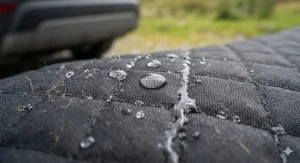
Waterproof liners, on the other hand, incorporate materials like PVC or polyurethane that create an impermeable barrier. These are your heavy-duty waders—capable of handling serious water exposure without any seepage. Quality waterproof car boot covers for dogs typically have ratings of 5,000mm or higher and will withstand your Labrador shaking an entire river’s worth of water everywhere.
For UK conditions, where a “light shower” can turn into biblical rainfall within minutes, genuinely waterproof protection is essential. Our climate doesn’t do half-measures, and neither should your boot liner. According to the RSPCA’s guidance on pet travel safety, proper vehicle protection is part of responsible pet ownership, ensuring both your dog’s comfort and your vehicle’s longevity.
Material Matters: Oxford Fabric, PVC, and Quilted Options
Walk into any pet shop or browse Amazon.co.uk, and you’ll encounter a bewildering array of materials: 600D Oxford, 210D polyester, PVC coatings, quilted cotton. What does it all mean, and which should you choose?
600D Oxford Fabric is the workhorse of the boot liner world. The “D” stands for denier, which measures thread thickness—600D is roughly equivalent to the material used in quality rucksacks. It’s tear-resistant, durable, and maintains its structure even after repeated use. Most premium dog boot liners UK waterproof models use 600D as their primary layer because it balances strength with flexibility.
PVC (Polyvinyl Chloride) provides the actual waterproofing in many liners. This plastic coating creates an impermeable barrier against moisture. Whilst it’s exceptionally effective, pure PVC can feel somewhat clinical and cold, which is why many manufacturers combine it with softer top layers. The dual-layer approach—Oxford fabric for comfort and durability, PVC underneath for waterproofing—offers the best of both worlds.
Quilted materials add padding and aesthetic appeal. They’re particularly popular in the UK market because they look less utilitarian and more like an intentional interior accessory. Quilting also provides cushioning, which some dogs find more comfortable for longer journeys. However, the stitching creates potential weak points, so look for reinforced stitching if you’re considering a quilted option.
For British weather and British dogs (who seem to possess an uncanny ability to find the muddiest spots in any park), a combination approach works best: 600D Oxford on top for durability and comfort, PVC or polyurethane in the middle for waterproofing, and a non-slip base layer to prevent sliding. This three-to-four layer construction appears in all our top-rated options for good reason—it simply works.
Installation Made Simple: Headrest Straps, Velcro, and Suction Pads
You’ve invested in a quality boot liner, but if it slides around like a wayward shopping trolley every time your terrier jumps in, it’s not doing its job. Proper installation and securing mechanisms are crucial, and fortunately, modern liners offer several tried-and-tested approaches.
Headrest Straps are the most reliable securing method and the primary anchor point for virtually all car boot liners. These adjustable buckle straps loop around your rear seat headrests, holding the front edge of the liner in place. They’re universally compatible (every modern car has headrests) and can accommodate different headrest widths through simple adjustment. Most UK customers report these as “fit and forget”—once properly adjusted, they rarely need readjustment.
Velcro Strips are meant to secure the side walls of the liner to your boot’s interior panels. In theory, they’re brilliant. In practice, they’re the most common complaint in customer reviews. The issue isn’t the Velcro itself but the adhesive backing that’s supposed to stick to your boot walls. On carpeted surfaces, sewn-in Velcro often grips adequately without additional adhesive. On plastic surfaces, however, the supplied sticky strips frequently fail, particularly in cold weather or after exposure to boot moisture.
The solution? If your boot has carpeted walls, you’re golden—the Velcro will grip naturally. If it’s plastic, consider the Velcro as supplementary rather than primary securing, and rely more heavily on the headrest straps and seat anchors. Some resourceful British customers have reported success with additional sticky-back Velcro from B&Q or Screwfix, applied where they actually need it rather than where the manufacturer arbitrarily positioned it.
Suction Pads appear on premium models as additional securing points, particularly for window attachment. They’re hit-and-miss in British climates—cold temperatures and moisture reduce suction effectiveness. Consider them a bonus feature rather than essential.
The best advice? Position your liner, secure the headrest straps firmly, tuck the seat anchors properly, and then test it vigorously before your first dog-assisted journey. Better to discover installation issues in your driveway than when you’re halfway to the Brecon Beacons.
Size Selection Guide: Hatchback, Estate, and SUV Requirements
Choosing the wrong size boot liner is like buying shoes two sizes too small and hoping they’ll “stretch to fit”—technically possible but ultimately disappointing. Here’s how to measure correctly and select the appropriate dimensions for your specific vehicle type.
Hatchbacks (Ford Fiesta, VW Polo, Vauxhall Corsa) typically require liners in the 140-160cm length range. These compact vehicles often have irregular boot shapes with wheel arch intrusions, so universal-fit liners around 150 x 100cm work well. You’ll likely have some excess material that can be tucked or trimmed, which is preferable to a liner that’s too small and leaves gaps.
Estate Cars (Volvo V60, Skoda Octavia Estate, BMW 3 Series Touring) are the sweet spot for standard boot liners. Dimensions around 175-185cm length and 100-105cm width provide comprehensive coverage. The flatter load floor in estates means you’ll achieve a neater fit with less bunching than in hatchbacks. If you have a 60/40 split rear seat and want to use it, ensure your liner offers either a split design or armrest pass-through functionality.
SUVs and 4x4s (Range Rover Sport, Nissan Qashqai, Land Rover Discovery) often benefit from XXL options at 195cm+ length. The additional height of SUV boots means you’ll also want greater side wall coverage—look for dimensions that include the depth measurement (the 38-48cm figure in specifications). The extra interior volume means there’s more to protect, but also more flexibility in fitment.
Measuring Your Boot: Don’t rely solely on vehicle type. Grab a tape measure and check:
- Length from back of rear seats (upright position) to the inside of the tailgate
- Width at the widest point (usually between wheel arches)
- Depth from boot floor to top of boot opening
Add 10-15cm to your length measurement to account for the bumper flap (essential for protecting paintwork when dogs jump out). It’s always better to have slight excess that you can fold back than to discover your new liner stops 5cm short of protecting your bumper.
Maintaining Your Boot Liner: Cleaning and Care Tips
A quality boot liner is an investment in your vehicle’s longevity, but like any investment, it requires proper maintenance to deliver maximum value. Here’s how to keep yours performing optimally through British winters and muddy spring seasons.
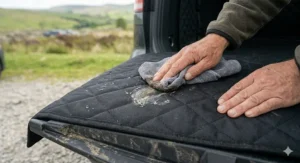
Immediate Post-Walk Treatment: Don’t let mud and moisture sit for hours. As soon as you’re home, remove any large debris—sticks, leaves, the occasional unfortunate worm—and shake out loose dirt. For genuine waterproof liners, you can literally hose them down in your driveway or garden. Let the water run until it flows clear, then hang over a washing line or fence to dry. British customers report this takes 2-4 hours in reasonable weather, longer in winter dampness.
Machine Washing (if applicable): Models like the Just Pet Zone are machine-washable, but follow these guidelines religiously. Use a 30-degree cycle—hot water can degrade waterproof coatings. Avoid fabric softener, which can reduce waterproofing effectiveness. Don’t tumble dry unless explicitly stated as safe; air drying preserves material integrity. Wash separately from other items to prevent debris transfer.
Spot Cleaning: For minor incidents between deep cleans, keep a spray bottle of diluted pet-safe cleaning solution in your boot. Spray, wipe with a damp cloth, and allow to air dry. This prevents stains from setting and maintains freshness without full washing.
Storage When Not in Use: If you’re storing your liner seasonally (perhaps you only use it during muddy winter months), ensure it’s completely dry first to prevent mildew. Fold rather than stuff it into a bag—this prevents permanent creasing. Store somewhere cool and dry, away from direct sunlight which can degrade waterproof coatings over time.
Velcro Maintenance: Pet hair is Velcro’s nemesis. Regularly pick out accumulated fur using tweezers or a stiff brush. This maintains the Velcro’s gripping power and prevents build-up that reduces effectiveness.
Annual Waterproofing Check: Once a year, test your liner’s waterproofing by pouring a small amount of water onto it and observing. If you notice seepage where there wasn’t before, it may be time to apply a waterproofing spray (available from outdoor shops) or consider replacement if degradation is significant.
Following these practices, UK customers report boot liners lasting 3-5 years even with weekly use—a remarkable return on investment compared to the cost of professional boot carpet cleaning or, worse, permanent water damage to your vehicle’s interior.
UK Legal Requirements: Highway Code and Vehicle Safety
Many British dog owners don’t realise that transporting your furry companion isn’t just about convenience—it’s a legal matter governed by specific regulations. Understanding these requirements protects both you and your pet whilst ensuring compliance with UK law.
Rule 57 of the Highway Code explicitly states that drivers must “make sure dogs or other animals are suitably restrained so they cannot distract you while you are driving or injure you, or themselves, if you stop quickly.” Whilst a boot liner alone doesn’t constitute restraint, it creates a defined space where restraint systems (harnesses, crates, or dog guards) can be effectively deployed.
The consequences of non-compliance aren’t trivial. UK law permits fines ranging from £100 to £5,000 for improperly restrained animals, depending on circumstances. More importantly, if you’re involved in an accident and your dog was unrestrained, your insurance company may void your policy, leaving you personally liable for all damages.
Beyond simple restraint, The Welfare of Animals (Transport) regulations prohibit transporting animals in ways that cause injury or unnecessary suffering. A quality waterproof boot liner contributes to this by providing a comfortable, clean space rather than forcing your dog to sit on harsh metal or plastic surfaces.
Insurance Implications: Review your car insurance policy’s fine print. Most UK insurers require proper pet restraint, and some specifically mention boot protection equipment. Admiral, for instance, notes that claims may be affected if you weren’t following legal requirements when an incident occurred. A boot liner, combined with proper restraint, demonstrates responsible pet ownership and regulatory compliance.
Safety Statistics: To understand why these regulations exist, consider this sobering fact from the RSPCA: an unrestrained 32kg dog travelling at just 30mph can exert force equivalent to 100kg in a collision. That’s not just dangerous for your dog—it’s potentially lethal for human passengers.
The proper setup combines multiple elements: a secured boot liner creating a defined space, a dog guard or barrier preventing access to passenger areas, and either a harness attached to secure points or a properly secured crate. This integrated approach satisfies legal requirements whilst maximising safety for everyone in the vehicle.
Cost Analysis: Budget vs Premium Options
Walk into this market, and you’ll find boot liners priced anywhere from £15 to £150+. Is a £140 custom-fit liner genuinely seven times better than a £20 universal option? Let’s break down the economics.
Budget Tier (£15-£25): Options like the PETZANA and JOEJOY fall into this category. They provide essential waterproof protection and basic features. You’re sacrificing some durability (thinner materials, simpler construction) and convenience (less effective securing systems, fewer integrated features). For occasional users or those on tight budgets, these represent excellent value—they’ll handle muddy paws and protect your boot adequately for 1-2 years of moderate use.
Mid-Range (£25-£40): This is the sweet spot where most of our recommended products sit. The Yummy Bee, KYG, and Foxxer offer significantly improved materials, better construction, and more thoughtful design. You’re paying for longevity (3-5 years of regular use), enhanced features (effective securing systems, storage pockets, bumper flaps), and superior waterproofing. For weekly dog transport, the additional £10-15 investment pays dividends through extended lifespan and better performance.
Premium (£40-£80): Brands like Kong and tailored options from Boot Buddy occupy this tier. You’re paying for perfect fitment (custom-made for your specific vehicle model), premium materials, and often extended warranties. Is this worth it? If you’re keeping your vehicle long-term and use the boot daily for dogs, muddy gear, or work equipment, yes. The superior fit means better protection, and the quality construction can last 5-7+ years.
Custom/Bespoke (£80-£150+): Companies like Hatchbag and UK Custom Covers offer fully tailored solutions. These fit like a glove, protecting every millimetre of your boot. For high-value vehicles (Range Rovers, Porsches, luxury estate cars) where boot damage could cost thousands to repair, this tier makes financial sense. For standard family vehicles, it’s harder to justify unless you’re planning to keep the car until it becomes a classic.
Cost Per Year Analysis: A £20 liner lasting 18 months costs £13.33/year. A £35 liner lasting 4 years costs £8.75/year. A £100 custom liner lasting 7 years costs £14.28/year. Viewed through this lens, mid-range options often deliver the best value unless you have specific requirements (perfect fitment, very heavy use) that justify premium pricing.
Don’t forget secondary costs. Cheaper liners that fail prematurely lead to boot damage requiring professional cleaning (£50-100+) or permanent staining that reduces resale value (potentially £200-500 impact). A quality liner is insurance against these hidden costs.
Special Considerations for Different Dog Breeds
Not all dogs interact with boot liners the same way. A calm Cavalier King Charles Spaniel poses very different challenges from an enthusiastic Border Collie or a massive Great Dane. Here’s how to select based on your specific breed’s characteristics.
Large Breeds (Labradors, Golden Retrievers, German Shepherds): These dogs are heavy, and when they jump in and out of boots, they generate significant force. Prioritise liners with reinforced stitching and tear-resistant materials like 600D Oxford. The weight factor also means you need genuinely robust securing systems—flimsy Velcro won’t cut it. Look for options with multiple headrest strap attachment points and substantial material weight (the Yummy Bee’s heavy construction excels here).
Small to Medium Breeds (Spaniels, Terriers, Beagles): These dogs are often the muddiest because they’re closer to ground level and fit into smaller puddles. They also tend to be energetic, meaning more movement and potential sliding. Non-slip bases become crucial. The good news is that standard universal sizes work well, and you won’t need XXL dimensions. Focus on easy-clean options since small dogs somehow manage to spread mud more comprehensively than larger breeds.
Giant Breeds (Great Danes, Mastiffs, Irish Wolfhounds): You need XXL everything—both in liner size (195cm+ length) and material strength. These gentle giants are heavy, and their claws can be substantial. Look for “Rip Stop” materials and multiple layers. Also consider that giant breeds often come with giant drool—waterproofing becomes doubly important. The KYG XXL is specifically designed with these breeds in mind.
High-Energy Breeds (Border Collies, Springer Spaniels, Working Cockers): These dogs don’t just sit in the boot—they bounce, spin, and generally create chaos. Securing systems face maximum stress. Opt for liners with comprehensive side wall coverage and the most robust attachment systems available. You’ll also appreciate quick-dry materials because these breeds rarely sit still long enough for thorough drying before boot entry.
Senior or Anxious Dogs: Comfort becomes paramount. Quilted options with extra padding help older dogs with joint issues settle more comfortably. The softer surface also appeals to anxious dogs who may be nervous travellers. Darker colours can be more calming than bright patterns.
Multiple Dogs: If you’re transporting several dogs simultaneously, consider the total weight and energy level combined. Two small terriers create more chaos than one Labrador. You may need to size up from what single-dog guidelines suggest, and durability becomes even more critical.
Seasonal Considerations: Winter Wet vs Summer Heat
British seasons create wildly different challenges for boot protection, and understanding these variations helps you maintain your liner’s effectiveness year-round.
Autumn/Winter (October-March): This is when boot liners earn their keep in the UK. Relentless rain, muddy footpaths, and wet leaves create a perfect storm of mess. Waterproofing is paramount—even “resistant” materials may struggle with the constant moisture barrage. During these months, you’ll be cleaning your liner weekly (or even more frequently if you’re dedicated to daily walks regardless of weather).
Pay attention to drying times. In British winter, air-drying can take 6-8 hours due to high humidity, so having a backup liner or planning cleaning around dry forecast windows becomes important. The boot liner essentially becomes a working piece of equipment requiring regular rotation and maintenance.
Also consider temperature. Car interiors can become dangerously cold in winter, and whilst less discussed than summer heat, hypothermia risks exist for wet dogs in unheated vehicles. A padded liner provides slight insulation, though it’s no substitute for proper warming and drying of your dog before transport.
Spring (April-June): Mud season extends into spring, but you’re also dealing with shedding as dogs lose winter coats. This is when Velcro maintenance becomes critical—accumulated fur reduces effectiveness. Regular brushing of the liner prevents hair becoming embedded.
Summer (July-September): British summers bring different challenges. Whilst mud decreases, sandy beach trips create their own cleaning requirements (sand is remarkably adept at infiltrating every crevice). The bigger concern is heat. Advice from pet safety organisations like the RSPCA emphasises that even moderate temperatures can create dangerous conditions inside vehicles.
Dark-coloured liners absorb heat more than light colours, though the difference is marginal inside an enclosed boot. More importantly, ensure your liner doesn’t block ventilation points. Some cheaper models completely seal the boot floor, preventing air circulation. Premium options often incorporate breathable elements whilst maintaining waterproofing.
Never leave dogs unattended in vehicles during warm weather—boot liner or not. If you must transport your dog on warm days, run air conditioning, ensure water is available, and plan journeys during cooler morning or evening hours.
Year-Round Strategy: Many experienced UK dog owners maintain two liners—a heavy-duty waterproof for winter mud season and a lighter, more breathable option for summer. This rotation extends each liner’s lifespan and ensures optimal protection year-round. Alternatively, select a versatile mid-range option like the Yummy Bee or KYG that handles all seasons adequately.
Environmental Impact and Sustainable Choices
As environmental awareness increases, many British consumers are questioning whether their boot liner choice aligns with sustainability values. The good news is that durable boot protection actually contributes positively to environmental goals, though some options are greener than others.
Durability as Sustainability: The most environmentally friendly boot liner is one that lasts. A liner used for 5+ years prevents multiple replacements ending up in landfill. This is where investing in quality pays ecological dividends—a £35 liner lasting five years is infinitely preferable to five £10 liners each lasting a year.
Materials Matter: Traditional PVC, whilst excellent for waterproofing, is petroleum-based and challenging to recycle. However, newer formulations and alternative waterproofing materials (polyurethane coatings, for instance) offer similar performance with reduced environmental impact. The AMZPET, with its Global Recycled Standard certification, demonstrates that sustainable production is possible in this market segment.
End-of-Life Considerations: When your liner finally reaches the end of its useful life, disposal becomes relevant. Textile recycling facilities exist across the UK (check your local council website for locations), though waterproof-coated materials can be challenging to process. Some creative British dog owners repurpose old liners as garden kneeling pads, garage floor protection, or dust sheets—extending utility beyond vehicle use.
Repair vs Replace: Minor tears in quality liners can often be repaired using waterproof repair patches (available from outdoor equipment retailers). This extends lifespan and prevents premature disposal. It’s worth attempting repair for small damage rather than automatically replacing.
Packaging: When purchasing, note the packaging approach. Amazon.co.uk sellers increasingly use minimal packaging, though some still employ excessive plastic. This is one advantage of buying from UK-based retailers who ship directly—reduced packaging and lower transport emissions compared to international sellers.
The Bigger Picture: Remember that a boot liner protects your vehicle’s interior, reducing the need for professional cleaning (which often involves chemical-heavy products and significant water use) and maintaining resale value (extending vehicle lifespan rather than premature scrapping due to interior degradation). This broader environmental benefit shouldn’t be overlooked.
For the environmentally conscious UK buyer, the strategy is clear: invest in a durable, quality liner from a company with demonstrable environmental credentials, maintain it properly to maximise lifespan, and dispose of it responsibly when replacement becomes necessary.
Frequently Asked Questions
❓ How often should I replace my dog boot liner UK waterproof?
❓ Can I use a boot liner with a dog crate or cage?
❓ Do waterproof boot liners affect my car insurance in the UK?
❓ What's the best way to remove dog hair from a boot liner?
❓ Are expensive custom-fit boot liners worth it for UK vehicles?
Conclusion: Choosing Your Perfect Waterproof Boot Liner
After exploring dozens of options and analysing hundreds of UK customer reviews, one truth emerges: the “perfect” boot liner doesn’t exist universally—it exists specifically for your circumstances, your vehicle, and your dog’s particular brand of chaos.
For most British dog owners, the Yummy Bee Heavy Duty 4 Layer represents the optimal balance of durability, features, and value. Its robust construction withstands the punishment of even the most enthusiastic Labradors, whilst the comprehensive coverage (including sides and bumper protection) guards against the myriad ways dogs can damage vehicle interiors. At £25-£35, it’s priced accessibly without the compromises inherent in ultra-budget options.
If you’re driving a larger SUV or transporting multiple dogs, the KYG XXL offers the generous dimensions you need without ballooning costs. Its superior Velcro system (with replacements included) addresses one of the most common liner failures.
Budget-conscious buyers shouldn’t feel they must compromise on waterproofing—the JOEJOY proves that genuinely waterproof protection can be achieved at £18-£25. Just accept the thinner materials mean slightly shorter lifespan and plan accordingly.
Whatever your choice, remember that a boot liner isn’t just about protecting upholstery—it’s about maintaining your vehicle’s value, simplifying cleaning routines, and creating a comfortable, safe space for your four-legged companion. British weather and British dogs test equipment relentlessly; investing in quality protection pays dividends every time you open that boot to discover muddy paws haven’t translated to muddy carpets.
The best boot liner is the one that’s installed in your vehicle, protecting it from the next inevitable muddy adventure. Stop putting off this purchase whilst your boot accumulates damage—choose one of our recommended options and reclaim control over your vehicle’s interior.
✨ Don’t Miss These Exclusive Deals!
🔍 Take your dog travel experience to the next level with these carefully selected products. Click on any highlighted item above to check current pricing and availability on Amazon.co.uk. These boot liners will help you maintain a pristine vehicle interior your family will appreciate!
Recommended for You
- 7 Best Skoda Octavia Estate Dog Crates UK 2026
- 7 Best Tesla Model Y Dog Crate Solutions for UK Drivers 2026
- 7 Best Nissan Qashqai Dog Crate Sizes 2026
Disclaimer: This article contains affiliate links. If you purchase products through these links, we may earn a small commission at no additional cost to you. Prices shown are approximate and may vary.
✨ Found this helpful? Share it with your mates! 💬🤗
