In This Article
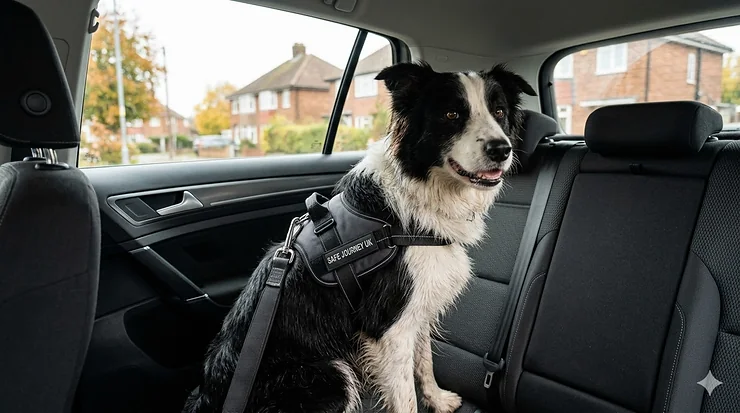
Picture this: you’re driving down the M25 with your beloved spaniel bouncing around the back seat, head out the window, ears flapping in the breeze. Adorable, right? Unfortunately, it’s also illegal, dangerous, and could land you with a £5,000 fine plus nine penalty points on your licence.
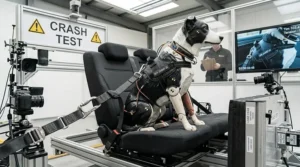
Welcome to the reality of UK dog car laws in 2026. Under Highway Code Rule 57, all dogs must be “suitably restrained” during vehicle travel to prevent driver distraction and injury during sudden stops. But here’s the kicker: not all restraints are created equal. Many cheap harnesses available online offer little more than a false sense of security, failing catastrophically in crash tests.
After spending countless hours researching products on Amazon.co.uk, examining crash test data, and speaking with UK pet owners, I’ve compiled this definitive guide to dog seat belt harness options that actually work. Whether you’ve got a tiny terrier or a massive mastiff, there’s a proper restraint system here that’ll keep your four-legged co-pilot safe whilst ensuring you stay on the right side of the law.
The stakes are genuinely high. An unrestrained 27-kilogram (60-pound) dog in a vehicle travelling at 35 mph becomes a 1,225-kilogram (2,700-pound) projectile in a collision, endangering everyone in the car. More than that, your car insurance could be invalidated if you’re involved in an accident with an unrestrained pet. Let’s explore the best options available right now.
Quick Comparison Table
| Product | Type | Crash Tested | Price Range | Best For | Rating |
|---|---|---|---|---|---|
| Kurgo Enhanced Strength Tru-Fit | Full Harness | ✅ Yes | £35-£45 | Medium to large dogs | 4.4/5 |
| EzyDog Drive Car Harness | Full Harness | ✅ Yes | £45-£65 | All sizes, premium quality | 4.5/5 |
| CarSafe Crash Tested Harness | Full Harness | ✅ Yes | £26-£35 | Budget crash-tested option | 4.3/5 |
| SlowTon Dog Car Harness Set | Vest + Belt | ❌ No | £8-£15 | Budget-conscious owners | 4.4/5 |
| EzyDog Seat Belt Restraint | Tether Only | ❌ No | £10-£15 | Use with existing harness | 4.4/5 |
| SOL 2-Pack Dog Seat Belts | Tether Only | ❌ No | £4.99-£7.99 | Basic compliance | 4.3/5 |
| Kurgo Impact Dog Car Harness | Full Harness | ✅ Yes | £40-£55 | Lightweight everyday use | 4.4/5 |
💬 Just one click – help others make better buying decisions too! 😊
✨ Don’t Miss These Exclusive Deals!
🔍 Take your dog’s car safety to the next level with these carefully selected products. Click on any highlighted item to check current pricing and availability on Amazon.co.uk. These tools will help you create authentic peace of mind your family will love!
Top 7 Dog Seat Belt Harness Products: Expert Analysis
1. Kurgo Enhanced Strength Tru-Fit Dog Car Harness – Premium Crash-Tested Choice
The Kurgo Enhanced Strength Tru-Fit stands as one of the most rigorously tested options available to UK pet owners. This American brand has earned its reputation through proper crash testing at established university facilities using US Federal Motor Vehicle Safety Standard FMVSS 213 for child restraint systems, certified for dogs up to 34 kilograms.
Key Specifications:
- Steel nesting buckle system for maximum strength
- Five-point adjustability for custom fit
- Padded chest plate to distribute impact forces
- Includes 25-centimetre (10-inch) seatbelt tether
Price: £35-£45 (varies by size)
What sets the Kurgo Tru-Fit apart is its engineering borrowed from rock-climbing harnesses, creating a restraint system that actually protects your dog rather than just preventing them from jumping about. The broad, padded chest plate ensures that impact forces are distributed across your dog’s body rather than concentrated on their neck or spine.
UK customers consistently praise its sturdy construction, though many note you should size up if your dog is between measurements. One reviewer with a 13-kilogram cocker spaniel mentioned the harness “fits perfectly and gives genuine peace of mind,” though it took several adjustments to get the fit just right initially.
Pros:
✅ Independently crash-tested to recognised standards
✅ Can double as everyday walking harness with front D-ring
✅ Lifetime warranty against manufacturing defects
Cons:
❌ Sizing runs slightly small – order up if between sizes
❌ Metal components may rust if exposed to water regularly
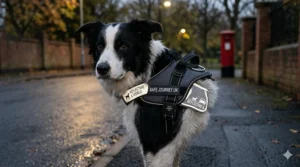
2. EzyDog Drive Car Harness – Top-Tier Protection with European Certification
For those willing to invest in premium protection, the EzyDog Drive Car Harness represents the gold standard. This Australian brand has earned certification across three major markets: Europe (ECE Regulation 16), USA (FMVSS 213), and Australia (ADR69/00), making it one of the most comprehensively tested options available.
Key Specifications:
- Ergonomic EVA-padded chest plate that moulds to your dog’s body
- Crosslink technology using actual vehicle seatbelt webbing
- Aluminium alloy tri-glides for lightweight strength
- Double stainless steel D-rings for dual functionality
Price: £45-£65 (depending on size and seller)
The EzyDog Drive uses genuine automotive seatbelt material throughout its construction, ensuring it can withstand the same forces as human restraints. The moulded chest plate is particularly clever, conforming to your dog’s shape after the initial fitting for ultimate comfort on long journeys.
UK buyers frequently mention how straightforward the numbered sizing system makes achieving a perfect fit. One owner of a deep-chested boxer noted that whilst initial setup took patience, the measurement markings on the straps were “genuinely helpful” for ensuring balanced adjustment.
Pros:
✅ Triple-certified across international safety standards
✅ Step-in design makes daily use effortless once sized
✅ Suitable for dogs from 7 kilograms to over 34 kilograms
Cons:
❌ Premium pricing may be prohibitive for some budgets
❌ Initial fitting requires time and patience for proper adjustment
3. CarSafe Crash Tested Dog Safety Harness – Excellent Value from Halti Makers
The CarSafe Crash Tested Dog Safety Harness, manufactured by the Company of Animals (makers of the renowned Halti brand), offers genuine crash protection without the premium price tag. Certified up to 32 kilograms at an OVSC-registered laboratory facility, this harness took two years to develop and represents outstanding value.
Key Specifications:
- Single continuous loop of safety-standard seatbelt material
- Hi-vis reflective fabric for enhanced visibility
- Padded chest and neck strap for comfort
- Converts to walking harness with front and back lead connection points
Price: £26-£35 (varies by size)
What makes the CarSafe particularly appealing for UK buyers is its unique single-loop webbing design, which maintains strength whilst keeping the overall weight down. The fully reflective front chest piece ensures your dog remains visible if you need to make an emergency stop on a dark motorway.
Several UK reviewers mention using it successfully with EzyDog seatbelt adaptors, with one noting it “saved my dog in several emergency stop situations.” The adjustable straps do work loose when wet, however, requiring periodic re-tightening during rainy British weather.
Pros:
✅ Certified crash protection at mid-range pricing
✅ Dual-purpose design serves as walking harness
✅ Trusted Halti brand heritage
Cons:
❌ Straps may loosen when wet, requiring regular checks
❌ Limited adjustment range may not fit all body types perfectly
4. SlowTon Dog Car Harness Plus Connector Strap – Popular Budget-Friendly Option
The SlowTon Dog Car Harness Plus Connector Strap dominates Amazon.co.uk’s bestseller lists for good reason: it offers decent functionality at pocket-friendly prices. Whilst not crash-tested, this vest-style harness with integrated seatbelt provides basic Rule 57 compliance.
Key Specifications:
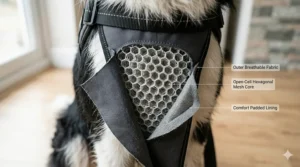
- Double breathable mesh fabric with flannelette edge
- Four adjustable PP material straps for custom fit
- Elastic nylon safety seatbelt (adjustable 53-74 centimetres)
- Two chest buckles for easy on/off
Price: £8-£15 (frequently discounted)
This harness uses a vest-style design that wraps around your dog’s chest and neck, distributing restraint forces more evenly than simple collar attachments. The double mesh construction helps prevent overheating during summer journeys, whilst the elastic bungee section in the seatbelt absorbs some shock from sudden braking.
UK customers appreciate its value proposition, though opinions divide on durability. One owner reported using three different sizes over several years, finally replacing them “because they got nasty rather than breaking.” Another noted it works well for their 20-kilogram cattle dog mix but required significant cinching of adjustment straps.
Pros:
✅ Exceptionally affordable entry point for Rule 57 compliance
✅ Breathable mesh prevents overheating on long journeys
✅ Available in six sizes from XXXS to Large
Cons:
❌ Not crash-tested – offers restraint but uncertain crash protection
❌ Plastic buckles may not withstand impact forces
5. EzyDog Dog Seat Belt Restraint – Rule 57 Compliant Universal Tether
The EzyDog Dog Seat Belt (also called the Seat Belt Restraint) isn’t a harness itself but rather a high-quality tether designed to connect your existing harness to your vehicle’s seatbelt system. At under £15, it’s an economical way to achieve Rule 57 compliance if you already own a suitable harness.
Key Specifications:
- Connects to D-ring on any dog harness
- Attaches to standard UK vehicle seatbelt buckles
- Durable nylon webbing with shock-absorbing stretch
- Universal fit for all vehicle types
Price: £10-£15
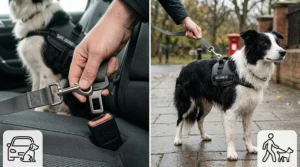
This restraint attaches to the stainless steel D-ring on your dog’s existing harness, then threads through your car’s seatbelt system before clicking into the buckle. The design ensures your dog remains in one position, preventing them from clambering over passengers or distracting the driver.
UK reviewers consistently mention its sturdiness, with one noting it “keeps my little dog safe in the car or on my knee, as it also attaches to my wheelchair seatbelt.” The main limitation is length – several customers added carabiners to provide extra movement range for comfort.
Pros:
✅ Affordable solution if you already own a quality harness
✅ Simple, straightforward design with minimal failure points
✅ Compatible with wheelchairs and other seated applications
Cons:
❌ Requires existing harness – not a complete solution
❌ May be too short for larger dogs to sit/lie comfortably
6. SOL 2-Pack Dog Seat Belts for Cars UK – Basic Budget Twin-Pack
The SOL 2-Pack Dog Seat Belts represents the absolute entry point for Rule 57 compliance. At under £5 during sales, you get two 70-centimetre adjustable straps with secure clip-on design, making this ideal for households with multiple dogs or those on extremely tight budgets.
Key Specifications:
- Durable nylon construction with reflective stitching
- Adjustable length fits most dog sizes
- 360-degree swivel clasp prevents tangling
- Two units included in package
Price: £4.99-£7.99 (often on special offer)
These basic tethers do exactly what they promise: prevent your dog from roaming freely in your vehicle. The nylon webbing is reasonably robust, and the swivel clasp prevents the frustrating tangles that plague cheaper alternatives. However, don’t expect crash protection from these budget options.
UK buyers use these primarily for compliance rather than serious safety, with many keeping a spare in their boot for emergency situations. One reviewer mentioned they’re “perfect for occasional use” but wouldn’t rely on them as a primary restraint for daily commuting with an energetic dog.
Pros:
✅ Unbeatable value – two restraints for under £8
✅ Simple design means minimal things to go wrong
✅ Meets basic Highway Code requirements
Cons:
❌ No crash testing or safety certification
❌ Lacks cushioning or shock absorption features
7. Kurgo Impact Dog Car Harness – Lightweight Everyday Alternative
The Kurgo Impact Dog Car Harness offers a more streamlined alternative to the beefier Tru-Fit model. Weighing less than 450 grams whilst maintaining crash-tested certification, this harness integrates directly with your vehicle’s seatbelt system without requiring additional tethers.
Key Specifications:
- Single-piece tubular webbing construction
- Broad padded chest plate for comfort
- All-steel nesting buckle system
- Integrates directly with car seatbelt (no separate tether needed)
Price: £40-£55 (varies by size)
The Impact’s clever design threads your car’s seatbelt directly through webbing loops on the harness back, eliminating the need for separate attachment hardware. This reduces potential failure points whilst keeping the overall system lightweight enough for daily use without wrestling with heavy equipment.
UK customers particularly appreciate this harness for breeds like border collies and Samoyeds (11-23 kilograms range). One reviewer noted their 13-kilogram dog has “plenty of space to settle on the back seat when restrained, but not enough to try jumping in my toddler’s lap.”
Pros:
✅ Crash-tested protection without excessive bulk
✅ Direct seatbelt integration simplifies setup
✅ Lifetime warranty provides long-term value
Cons:
❌ Seatbelt threading through harness may limit dog’s natural movement
❌ Not suitable for dogs under 11 kilograms
Understanding UK Dog Car Safety Laws: Highway Code Rule 57
Rule 57 of the Highway Code states clearly: “When in a vehicle make sure dogs or other animals are suitably restrained so they cannot distract you while you are driving or injure you, or themselves, if you stop quickly. A seat belt harness, pet carrier, dog cage or dog guard are ways of restraining animals in cars.”
This isn’t merely a suggestion. Breaching Rule 57 can result in prosecution for driving without due care and attention, with fines reaching £5,000, up to nine penalty points on your licence, and potential driving bans. More worryingly for your wallet, most UK insurers will consider driving with an unrestrained pet as negligence, invalidating your policy entirely if you’re involved in an accident.
The law applies regardless of your dog’s size or temperament. Even that perfectly behaved Labrador who never moves from their spot needs proper restraint. Why? Because in a collision, even gentle pets become dangerous projectiles. Think of it this way: you wouldn’t dream of letting a toddler roam free in your car, and your 15-kilogram spaniel deserves the same consideration.
What Counts as “Suitable Restraint”?
The Highway Code specifically mentions four approved methods:
- Seat belt harnesses – the focus of this article
- Pet carriers – hard-sided containers
- Dog cages or crates – typically used in estate car boots
- Dog guards – barriers separating boot space from passenger area
Crucially, simply attaching a lead to your dog’s collar and clipping it to a seatbelt does NOT constitute suitable restraint. Collar attachments can cause fatal neck injuries during sudden stops and are generally considered insufficient to comply with Rule 57.
Why Crash Testing Matters: The Shocking Truth About Pet Restraints
Here’s something most dog owners don’t realise: the pet products industry is largely unregulated. Unlike child car seats, which must meet strict government standards, manufacturers can label dog harnesses as “crash-tested” without any independent verification.
Independent testing by the Center for Pet Safety in the United States revealed that only one of eight tested harness brands offered genuine crash protection, with the rest allowing test dogs to launch from seats or suffering catastrophic failure. Many products sold as safety devices actually offer nothing more than distraction prevention.
The non-profit Center for Pet Safety, funded by Subaru of America, has conducted the most comprehensive independent testing of pet travel products. Their crash test dummy dogs—weighted and instrumented simulants in three sizes representing 11-kilogram, 20-kilogram, and 34-kilogram dogs—undergo impacts based on the same FMVSS 213 standard used for child safety seats.
What Happens in a Crash?
According to pet advocacy group BarkBuckleUp, a 27-kilogram dog travelling at 56 kilometres per hour (35 mph) generates 1,225 kilograms of force in a collision. That force must go somewhere. A proper harness distributes it across the dog’s chest and shoulders. A poor-quality harness? It fails completely, allowing your dog to become a projectile that could injure passengers, break through your windscreen, or suffer catastrophic injuries themselves.
In crash tests, failed harnesses typically exhibit:
- Plastic buckles shattering on impact
- Webbing tearing under load
- Attachment points ripping free
- Dogs launching off seats, risking secondary impacts
Certified products like the Kurgo and EzyDog harnesses featured here use automotive-grade materials, steel hardware, and designs specifically engineered to withstand impact forces. Yes, they cost more than £5 options, but they’re the difference between your dog surviving an accident and becoming a statistic.
How to Choose the Right Dog Seat Belt Harness
Selecting the proper restraint for your canine companion involves more than simply matching their weight to a size chart. Here’s what you need to consider:
1. Measure Your Dog Accurately
Grab a flexible measuring tape and measure three crucial dimensions:
- Neck girth: The circumference at the base of the neck where a collar sits
- Chest girth: The widest part of the ribcage, typically just behind the front legs
- Length: From the base of neck to base of tail
Always measure your dog standing naturally. If measurements fall between sizes, choose the larger option—you can always tighten straps, but you can’t expand a too-small harness.
2. Consider Your Dog’s Build and Temperament
Deep-chested breeds like boxers, greyhounds, and whippets need harnesses with significant chest-strap adjustment. Barrel-chested breeds such as bulldogs require different proportions than slim breeds. Anxious dogs might do better with vest-style harnesses that provide a “hugging” sensation, whilst energetic pups need something bombproof.
3. Evaluate Your Vehicle Type
Estate cars and SUVs with spacious cargo areas might benefit from crate systems rather than harnesses. Smaller vehicles with limited back-seat space need compact harness designs that don’t overwhelm the area. Consider where your dog will travel most often—boot, back seat, or footwell—and choose accordingly.
4. Factor in Multi-Functionality
Many modern harnesses serve double duty as walking harnesses. If you’re driving somewhere for a woodland walk, having a harness that works for both travel and the subsequent ramble saves hassle. Look for front and back D-ring attachment points.
5. Budget for Quality
Yes, you can buy a dog seatbelt for under £5. You can also buy a chocolate teapot for similar money, and both offer comparable crash protection. If budget is genuinely tight, save up the extra £20-30 for a properly crash-tested option. Your dog’s life is worth it.
6. Read Actual Customer Reviews
Amazon reviews tell you what manufacturers won’t. Look for patterns: do multiple reviewers mention specific fit issues? Does the harness work loose during journeys? Did anyone’s dog escape? These real-world experiences matter more than marketing copy.
Installation and Fitting Guide: Getting It Right
Even the best harness fails if improperly fitted. Follow these steps for optimal safety:
Initial Fitting Process
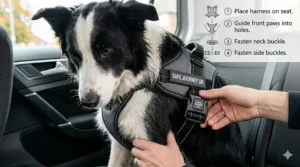
- Start with loose straps: Loosen all adjusters completely before the first fit
- Put it on correctly: Most harnesses are overhead designs – slip over your dog’s head, then fasten chest clips
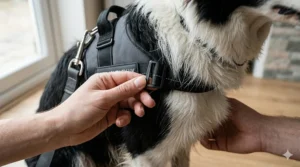
- Adjust systematically: Begin with chest straps, ensuring they’re snug but not restrictive
- Check the neck: Two fingers should fit comfortably between harness and dog’s neck
- Test the back straps: Adjust so the harness doesn’t shift when your dog moves
The Two-Finger Rule
Throughout the harness, you should be able to slide two fingers between the webbing and your dog’s body. Tighter than this risks restricting breathing; looser allows too much movement and reduces crash protection.
Vehicle Connection
- Harness-only systems: Thread your car’s seatbelt through the designated loops on the harness back, then click into the buckle as normal
- Harness plus tether: Attach the tether to the harness D-ring, then connect the other end to your seatbelt buckle
- Never attach to collars: Always use the harness D-ring, never a collar, to prevent neck injury
Regular Maintenance Checks
Before each journey, quickly verify:
- All buckles are securely fastened
- Straps haven’t worked loose
- No fraying or damage to webbing
- Metal components aren’t bent or deformed
After any sudden stop or minor collision, inspect the harness thoroughly. Many manufacturers recommend replacing crash-tested harnesses after any significant impact, even if damage isn’t visible, as structural integrity may be compromised.
Alternative Restraint Methods: Crates, Carriers, and Guards
Whilst seat belt harnesses work brilliantly for many situations, they’re not your only option for Rule 57 compliance. Understanding alternatives helps you choose the best solution for your circumstances.
Boot-Mounted Dog Crates
For estate cars, SUVs, and similar vehicles, a properly secured crate offers excellent protection. Independent crash testing found that the Gunner Kennel G1 Intermediate with strength-rated anchor straps was the only crate that fully contained test dogs and remained secured during 48-kilometre-per-hour (30-mph) impacts.
Advantages:
- Highest level of crash protection available
- Dog contained separately from passengers
- Can double as home crate for consistency
Disadvantages:
- Expensive (£200-500 for crash-tested models)
- Requires significant boot space
- Not suitable for smaller vehicles
Pet Carriers
Suitable for small dogs and cats, carriers strap into existing seatbelts. However, most carrier brands merely prevent distraction rather than providing genuine crash protection, with only two meeting basic safety requirements in independent testing.
Dog Guards
These barriers separate boot space from passenger areas, preventing dogs from entering the cabin. They’re popular in the UK for working dogs and larger breeds. However, they offer minimal protection for the dog themselves during lateral collisions, focusing primarily on preventing dogs from becoming projectiles toward passengers.
The RSPCA provides additional guidance on choosing between these options based on your dog’s size, temperament, and your vehicle type. Consider consulting their resources if you’re uncertain which approach suits your circumstances.
Training Your Dog to Accept a Car Harness
Even the perfect harness is useless if your dog refuses to wear it. Here’s how to make car travel a positive experience:
Start Young If Possible
Puppies adapt to harnesses far more readily than adult dogs encountering restraints for the first time. If you’re bringing home a new pup, introduce the harness during their early socialisation period (8-16 weeks).
Create Positive Associations
- Let them investigate: Leave the harness near their bed for several days so they can sniff and explore it without pressure
- Pair with treats: Each time they approach or sniff the harness, provide a high-value treat
- Practice indoors: Put the harness on for short periods at home, immediately followed by something wonderful—dinner, playtime, or walks
- Keep sessions brief: Five-minute practice sessions multiple times daily work better than marathon training
Gradual Vehicle Introduction
Once your dog accepts wearing the harness indoors:
- Harness on, sit in parked car: Lots of treats and praise, then back inside
- Harness on, engine running: Same routine, just getting them used to engine noise
- Short trips to amazing places: Drive 5 minutes to their favourite park
- Gradually extend duration: Build up to longer journeys over several weeks
Dealing with Resistant Dogs
Some dogs genuinely struggle with confinement. For anxious dogs:
- Consider Adaptil calming collars (pheromone-based, veterinarian-approved)
- Consult a certified dog behaviourist for desensitisation programs
- Speak with your vet about travel anxiety medications for severe cases
Never force a panicking dog into a harness and immediately drive—this creates negative associations that make future attempts exponentially harder.
Common Mistakes to Avoid
Even experienced dog owners make these errors. Here’s what to watch for:
Mistake #1: Collar Attachments
Attaching a seatbelt lead directly to your dog’s collar concentrates all restraint force on their neck. In a collision, this can cause fatal cervical injuries. Always use a proper harness with chest attachment points.
Mistake #2: Front-Seat Placement
Whilst legal, placing dogs in front passenger seats is highly discouraged due to airbag deployment risks—an inflating airbag strikes a dog with enough force to cause severe or fatal injuries. If absolutely necessary, disable the passenger airbag completely.
Mistake #3: Shared Restraints
That clever lead splitter that lets two dogs share one seatbelt? Terrible idea. In a collision, the combined weight creates forces neither dog’s individual harness can handle, and they’ll likely collide with each other, causing additional injuries.
Mistake #4: Assuming Compliance Equals Safety
Meeting Rule 57’s legal requirements doesn’t automatically mean your dog is genuinely protected. A £4 tether prevents your dog roaming (legal compliance) but offers zero crash protection (actual safety). Know the difference.
Mistake #5: Neglecting Regular Inspections
Harness webbing deteriorates over time, especially when exposed to UV light, moisture, and general wear. Manufacturers recommend replacing harnesses showing signs of frayed webbing, deformed metal, pulled stitches, or chew marks. Check before every journey.
Mistake #6: One-Size-Fits-All Thinking
Your dog’s body shape changes with age, weight fluctuations, and even seasonal coat changes. That perfectly fitted harness in January might be too tight by June when your spaniel’s wearing their full summer coat. Reassess regularly.
Frequently Asked Questions About Dog Seat Belt Harness Products
❓ Are cheap dog seat belts from Amazon actually safe for my pet?
❓ What's the difference between crash-tested and non-crash-tested dog harnesses in the UK?
❓ Can I use my dog's regular walking harness as a car seat belt harness?
❓ How tight should a dog seat belt harness be fitted in my car?
❓ Will my car insurance be invalid if I don't use a dog seat belt harness in the UK?
Conclusion: Investing in Your Dog’s Safety Is Non-Negotiable
Choosing a dog seat belt harness shouldn’t be an afterthought or a box-ticking exercise to avoid fines. It’s fundamentally about protecting a family member who trusts you implicitly with their safety. Yes, properly crash-tested harnesses cost more than budget alternatives. But can you really put a price on preventing the horror of watching your beloved companion become a projectile during a collision?
After evaluating dozens of products available on Amazon.co.uk, three clear winners emerge: the Kurgo Enhanced Strength Tru-Fit for its proven crash protection and versatility, the EzyDog Drive Car Harness for those seeking the ultimate in certified safety across multiple international standards, and the CarSafe Crash Tested Harness for buyers wanting genuine crash protection without premium pricing.
For UK pet owners in 2026, Rule 57 compliance is just the starting point. The real goal is ensuring that when you arrive at your destination—whether that’s the local park, the vet’s surgery, or a Scottish holiday—you do so with your four-legged friend safe, secure, and ready to enjoy the adventure ahead.
Don’t wait for a close call or an expensive fine to take action. Choose a proper restraint system today, fit it correctly, and drive with confidence knowing you’ve done right by your canine companion. Because they’d do the same for you.
Recommended for You
- 7 Best Dog Boot Liner UK Waterproof 2026
- 7 Best Skoda Octavia Estate Dog Crates UK 2026
- 7 Best Tesla Model Y Dog Crate Solutions for UK Drivers 2026
Disclaimer: This article contains affiliate links. If you purchase products through these links, we may earn a small commission at no additional cost to you. Prices shown are approximate and may vary. All product recommendations are based on genuine research of items available on Amazon.co.uk and represent the author’s honest assessment of quality, value, and suitability for UK pet owners.
✨ Found this helpful? Share it with your mates! 💬🤗
