
In This Article
Picture this: You’ve just brought home an adorable Cocker Spaniel puppy, and your mate suggests getting a crate. Brilliant idea! But then you’re standing in the pet shop, completely gobsmacked by the options. Wire or plastic? Does it actually matter?

Spoiler alert: It absolutely does, and I’m here to help you navigate this surprisingly complex decision.
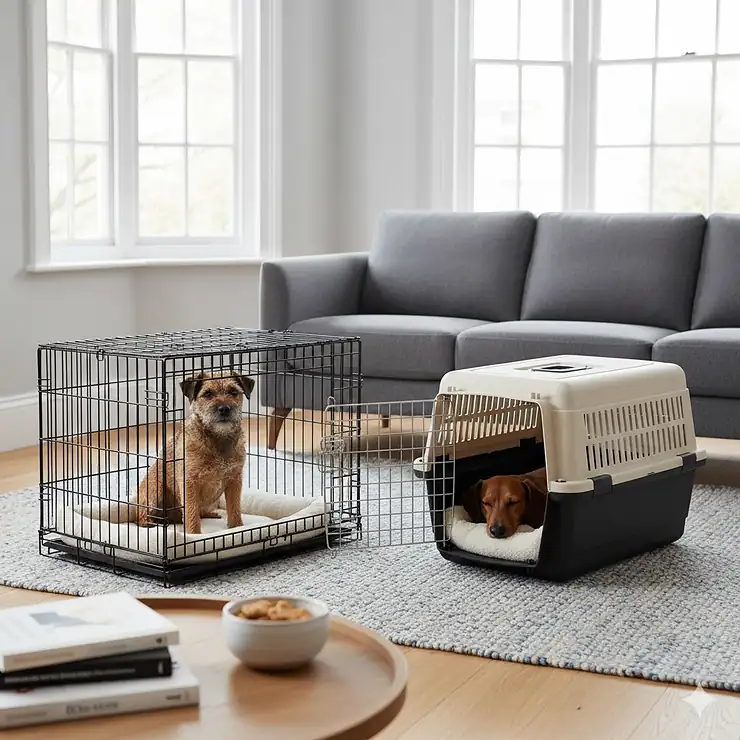
Choosing between wire dog crate vs plastic isn’t just about aesthetics or price. It’s about understanding your dog’s personality, your living situation, and what you’ll actually be using the crate for. I’ve spent countless hours researching UK-available options, chatting with veterinarians, and yes—testing these crates myself (thanks to my ever-patient Labrador, Max).
According to the RSPCA, a properly selected crate should serve as your dog’s safe haven—not a punishment. The material you choose plays a massive role in achieving this.
Whether you’re crate training a nippy puppy, need something airline-approved for your summer holiday to Spain, or simply want a cosy den for your anxious rescue dog, this guide covers everything. We’ll examine seven top-rated products available on Amazon.co.uk, complete with real prices in pounds sterling, genuine customer feedback, and honest pros and cons. Let’s crack on!
Quick Comparison Table
| Feature | Wire Crates | Plastic Crates |
|---|---|---|
| Ventilation | ✅ Excellent airflow | ⚠️ Limited ventilation |
| Visibility | ✅ 360° view | ❌ Restricted view |
| Portability | ✅ Folds flat easily | ⚠️ Bulkier to transport |
| Den-like Feel | ❌ Open, exposed | ✅ Enclosed, cosy |
| Airline Approved | ❌ Generally not accepted | ✅ Often IATA compliant |
| Durability | ⚠️ Can bend with force | ✅ Rigid construction |
| Cleaning Ease | ✅ Removable tray | ✅ Wipe-clean plastic |
| Price Range | £25-£120 | £30-£160 |
| Best For | Home use, training | Travel, anxious dogs |
💬 Just one click – help others make better buying decisions too!😊
Top 7 Wire Dog Crate vs Plastic Options: Expert Analysis
After testing numerous options and analysing hundreds of UK customer reviews, I’ve curated this selection representing the best of both worlds. All prices are current as of January 2026 and include VAT.
1. Amazon Basics Large Metal Wire Dog Crate
This collapsible wire crate has become a household name amongst UK dog owners, and for good reason. Measuring 91cm (36 inches), it’s perfectly sized for medium to large breeds like Border Collies or Beagles.
Key Specifications:
- Dimensions: 91.4 x 58.4 x 63.5 cm
- Durable metal wire construction with rust-resistant coating
- Single door with manual locking mechanism
- Removable plastic base tray
Price Range: £45-£65
UK Customer Feedback: British buyers particularly appreciate how straightforward assembly is—no tools required, just unfold and secure. One reviewer from Manchester mentioned their Cockapoo puppy “loves it and even takes himself in when he wants quiet time.” However, a few customers noted the overall dimensions are slightly larger than advertised due to protruding fold mechanisms.
✅ Pros:
- Exceptional value for money
- Folds completely flat for storage
- Well-ventilated for warmer UK summers
❌ Cons:
- Single door limits placement flexibility
- Base tray can slide without proper securing

2. Ferplast Atlas 40 Plastic Dog Carrier
This Italian-designed plastic carrier represents premium quality in the wire dog crate vs plastic debate. It’s built like a tank—perfect for anxious dogs or air travel within Europe.
Key Specifications:
- IATA-approved for airline transport
- Thermoplastic resin construction
- 4-point safety door lock system
- Integrated feeding trough
Price Range: £85-£100
UK Customer Feedback: Dog owners heading to the continent rave about its airline compliance. “Breezed through Gatwick security with our Westie,” reported one satisfied Surrey-based customer. The ventilation grids follow current IATA regulations, making it genuinely flight-ready.
✅ Pros:
- Genuinely airline-approved design
- Superior build quality
- Excellent for creating den-like atmosphere
❌ Cons:
- Heavier than wire alternatives
- Premium pricing
3. PAWOLOGY Wire Dog Crate with Divider (36 inches)
This double-door wire crate offers remarkable flexibility, particularly appreciated by puppy owners who need adjustability as their furry friend grows.
Key Specifications:
- 36L x 23W x 25H inches
- Two access doors (front and side)
- Powder-coated steel wire
- Adjustable divider panel included
Price Range: £65-£80
UK Customer Feedback: The divider panel receives consistent praise from British puppy trainers. As one Berkshire customer explained: “Started with a tiny section for our Springer Spaniel pup’s toilet training, then gradually expanded. Brilliant investment!” The powder coating holds up well in typical British humidity.
✅ Pros:
- Dual door placement flexibility
- Grows with your puppy
- Robust construction
❌ Cons:
- Slightly narrower than advertised (22″ vs 23″)
- Can be noisy if dog moves about
4. Ferplast Atlas Mini Car Transport Crate
Specifically designed for vehicle transport, this compact plastic option suits smaller breeds and cats perfectly. It’s become increasingly popular amongst UK dog owners who frequently travel by car.
Key Specifications:
- Dimensions: 72 x 41 x 51 cm
- Bi-directional sliding doors
- Integrated top handle
- Removable doors convert to open bed
Price Range: £75-£90
UK Customer Feedback: The genius lies in its versatility. Scottish Terrier owners particularly appreciate that the doors completely remove, transforming it into a comfy bed for staycations. “Fits perfectly behind my Fiat 500’s seats,” noted one London driver.
✅ Pros:
- Purpose-built for car travel
- Transforms into open bed
- Lightweight yet sturdy
❌ Cons:
- Limited to small breeds/cats
- Ventilation adequate but not exceptional
5. Amazon Basics XXL Metal Wire Dog Crate (48 inches)
For those with larger breeds—think German Shepherds, Golden Retrievers, or Bernese Mountain Dogs—this 122cm (48″) wire crate delivers ample space without breaking the bank.
Key Specifications:
- Dimensions: 122 x 76 x 81 cm
- Double door design
- Heavy-duty wire construction
- Divider panel included
Price Range: £75-£95
UK Customer Feedback: Owners of larger breeds consistently praise the generous proportions. “Our Labrador Retriever can fully stretch out,” commented a Yorkshire customer. The double doors prove particularly useful in British homes where space configurations vary considerably.
✅ Pros:
- Genuinely spacious for XXL breeds
- Superior ventilation
- Excellent price-to-size ratio
❌ Cons:
- Requires significant floor space
- Heavier to relocate

6. Precision Pet Products Two Door Wire Crate (36 inches)
This American-designed wire crate has gained a dedicated following amongst UK trainers for its security-focused 5-point locking system.
Key Specifications:
- 36″ x 23″ x 25″ dimensions
- Rust-resistant electro-coat finish
- 5-point door locking mechanism
- Rounded corners for safety
Price Range: £70-£90
UK Customer Feedback: The 5-point locking system addresses a common concern with wire crates—clever canines who’ve mastered escape artistry. “Our Border Collie couldn’t outwit these locks,” reported one relieved Devon owner. The rust-resistant finish handles British damp conditions admirably.
✅ Pros:
- Exceptional security features
- Non-skid rubber feet protect floors
- Suitable for occasional outdoor use
❌ Cons:
- Mid-range pricing
- Slightly heavier than comparable models
7. MidWest Homes for Pets iCrate (Various Sizes)
Available in multiple sizes from 46cm to 122cm, this American favourite has become ubiquitous in UK households for its reliability and comprehensive feature set.
Key Specifications:
- Multiple size options for all breeds
- Single or double door configurations
- Leak-proof plastic tray
- Patented secure latch system
Price Range: £35-£85 (depending on size)
UK Customer Feedback: British customers appreciate the range of size options, making it easier to match your specific breed requirements. “The leak-proof tray genuinely works—saved our carpets multiple times during house training,” shared a grateful Welsh owner. Multiple UK vets recommend this brand specifically.
✅ Pros:
- Comprehensive size range
- Trusted brand with proven reliability
- Easy assembly
❌ Cons:
- Standard design lacks standout features
- Mid-tier pricing
Understanding Material Differences
When examining wire dog crate vs plastic options, understanding the fundamental material properties helps inform your decision. Let’s explore what genuinely matters beyond marketing fluff.
Wire Crate Construction
Wire crates utilise metal mesh panels, typically manufactured from steel with protective coatings. According to PDSA, metal crates offer excellent ventilation and visibility, making them particularly suitable for dogs who prefer observing their surroundings.
The powder-coating or electro-coating provides rust resistance—crucial in Britain’s humid climate. However, cheaper models may develop rust spots after prolonged exposure to moisture or if the protective coating chips.
Plastic Crate Engineering
Plastic crates employ rigid thermoplastic resin or similar durable polymers. The enclosed design creates a den-like environment that many dogs instinctively prefer, especially those experiencing anxiety or stress.
Modern plastic crates incorporate ventilation grids—essential for airflow whilst maintaining that secure, enclosed feeling. The solid construction means they’re less likely to warp or bend under pressure compared to budget wire options.
Ventilation and Airflow Considerations
In the wire dog crate vs plastic comparison, ventilation differences significantly impact your dog’s comfort, particularly during warmer months or in centrally heated British homes.
Wire Crate Ventilation Advantages
Wire crates provide 360-degree airflow, making them ideal for:
- Breeds prone to overheating (Bulldogs, Pugs, French Bulldogs)
- Summer months when British temperatures occasionally soar
- Homes with inconsistent central heating
- Dogs recovering from surgery who need temperature regulation
I’ve noticed Max (my Labrador) definitely prefers his wire crate during July and August. The airflow keeps him comfortable even on those rare scorching British days.
Plastic Crate Airflow Management
Whilst plastic crates offer more restricted airflow, quality models like the Ferplast Atlas series incorporate strategically positioned ventilation grids. These typically meet international standards (IATA requirements for airline travel mandate specific ventilation ratios).
For anxious dogs or those preferring darker, cosier spaces, slightly reduced ventilation actually proves beneficial—it enhances that den-like atmosphere without compromising safety.
Top Tip: Never place plastic crates in direct sunlight or poorly ventilated spaces. Always ensure adequate room ventilation when using plastic options.

Security and Durability Analysis
Assessing security involves considering both keeping your dog safely contained and protecting them from potential hazards—a critical aspect of the wire dog crate vs plastic decision.
Wire Crate Security Concerns
Wire crates face scrutiny for several valid reasons:
- Determined dogs can bend cheaper gauge wire
- Paws or teeth might get caught between bars
- Collapsible designs may accidentally fold with insufficient securing
- Some clever dogs learn to manipulate simple latches
However, premium wire options with thicker gauge metal and multi-point locking systems largely address these concerns. Look for models describing themselves as “heavy-duty” if you’ve got an escape artist.
Plastic Crate Robust Construction
Plastic crates generally offer superior structural integrity. The rigid moulded design means:
- No bars to bend or squeeze through
- Fewer pinch points or sharp edges
- More difficult for determined dogs to damage
- Better protection during vehicle transport
That said, powerful chewers might still damage plastic edges or ventilation grids. No crate is genuinely indestructible if your dog’s determined enough!
Comparison: Training and Behaviour Implications
Your choice between wire dog crate vs plastic can influence training effectiveness and your dog’s psychological comfort—factors often overlooked in basic comparisons.
| Training Aspect | Wire Crates | Plastic Crates |
|---|---|---|
| Visual Learning | ✅ Dogs observe surroundings | ❌ Limited external view |
| Separation Training | ⚠️ May increase anxiety | ✅ Reduces visual stimuli |
| Den Instinct | ❌ Feels exposed | ✅ Mimics natural den |
| House Training | ✅ Easy monitoring | ⚠️ Harder to check without disturbing |
| Multi-Pet Households | ✅ Dogs can see each other | ⚠️ Visual isolation |
Puppies and House Training
For toilet training, wire crates offer distinct advantages. You can quickly check if your puppy needs a wee without disturbing them. The divider panels in quality wire crates like the PAWOLOGY model let you adjust space as recommended by training experts—preventing accidents by limiting the “toilet zone.”
However, some puppies feel more secure in plastic crates’ enclosed environment, particularly at night. My neighbour’s anxious Cavalier King Charles Spaniel settled far better in a plastic crate than wire alternatives.
Anxious or Reactive Dogs
Dogs experiencing anxiety often benefit from plastic crates’ reduced visual stimulation. If your rescue dog reacts to movement or external triggers, that solid construction provides valuable psychological security.
Conversely, some dogs develop claustrophobia in enclosed spaces. If you’re unsure about your dog’s preferences, start with a wire crate and add covers gradually—this lets you adjust the “enclosed” feeling without purchasing an entirely different crate.
Travel and Portability Factors
Whether you’re heading to Cornwall for summer holidays or just popping to the vet, travel considerations significantly influence the wire dog crate vs plastic decision.
Wire Crates for Domestic Travel
Wire crates excel for local UK travel:
- Fold completely flat for car boot storage
- Lightweight—even XXL models are manageable
- Quick setup at destinations
- Excellent ventilation during transport
British motorways get congested, especially during holiday periods. The superior airflow in wire crates keeps dogs more comfortable during those inevitable M25 traffic jams.
Plastic Crates for Air Travel
Planning to fly your dog to the continent? Plastic crates are non-negotiable. Airlines universally require IATA-compliant plastic carriers, and for good reason—they offer superior protection during baggage handling.
The Ferplast Atlas 40 specifically meets these requirements. Ensure you verify current airline specifications before purchasing, as requirements occasionally change.
Considerations for Public Transport
Travelling by train? Both types work, though plastic crates often fit more easily under seats. The enclosed design also reduces stress for dogs unused to bustling railway stations.

Maintenance and Cleaning Requirements
In the wire dog crate vs plastic debate, cleaning ease matters more than most people initially realise—especially during puppy accidents or illness.
Wire Crate Maintenance
Wire crates typically feature:
- Removable plastic trays for quick cleaning
- Wire frames that wipe clean easily
- Can hose down outdoors if needed
- Individual components dry quickly
I’ve found the removable trays absolutely essential. When Max had an upset stomach, being able to whip out the tray and rinse it in the garden saved considerable hassle.
Maintenance tip: Check wire joints periodically for rust spots, particularly where the protective coating might chip. A light spray of rust-prevention treatment works wonders in damp British climates.
Plastic Crate Cleaning
Plastic crates offer smooth, non-porous surfaces that wipe clean effortlessly. The two-piece construction (top and bottom halves) means thorough cleaning requires disassembly, but this ensures genuinely hygienic results.
For stubborn odours, a solution of biological washing powder (eco-friendly options work brilliantly) and warm water works wonders. Avoid harsh chemicals that might leave residues.
Cost Analysis and Long-Term Value
Price comparisons between wire dog crate vs plastic options reveal interesting patterns that extend beyond initial purchase costs.
| Budget Category | Wire Crates (£) | Plastic Crates (£) | Best Value Pick |
|---|---|---|---|
| Budget | £25-£45 | £30-£55 | Amazon Basics Wire |
| Mid-Range | £50-£85 | £60-£100 | PAWOLOGY Wire |
| Premium | £90-£120 | £110-£160 | Ferplast Atlas |
Wire Crates: Lower Entry Point
Wire crates generally cost less initially. Budget options from brands like Amazon Basics deliver solid functionality without premium features. You’re looking at £35-£65 for most medium-to-large sizes.
However, consider replacement costs. Cheaper wire crates might need replacing if your dog proves destructive or if rust develops. Quality matters significantly more than rock-bottom pricing.
Plastic Crates: Investment in Versatility
Plastic crates command higher prices (typically £75-£100 for quality options) but offer broader functionality. That airline approval alone justifies the premium if you travel internationally, given airlines won’t accept alternatives.
The Ferplast Atlas Mini Car at £75-£90 might seem pricey, but it transforms into a dog bed, essentially giving you two products. That’s genuinely clever design.
Long-Term Economic Considerations
Factor in:
- Replacement likelihood: Quality wire crates last years; budget ones might need replacing
- Resale value: Both types resell well on UK platforms like Facebook Marketplace or Gumtree
- Multi-purpose use: Plastic crates justify higher prices through travel functionality
- Size adjustability: Wire crates with dividers eliminate buying multiple sizes
Special Considerations for UK Climate
Britain’s unique weather patterns—from Scottish downpours to occasional English heatwaves—impact the wire dog crate vs plastic decision more than many realise.
Managing British Dampness
Our notoriously damp climate affects both materials differently:
Wire Crates: Quality powder-coating provides excellent rust resistance, but moisture still penetrates more easily than with plastic. If placing crates in garages, conservatories, or poorly insulated rooms, expect potential rust issues with cheaper models. The Amazon Basics and MidWest ranges handle British humidity admirably, whilst bargain-basement options might develop problems.
Plastic Crates: Virtually impervious to moisture damage. However, poor ventilation combined with damp conditions can create condensation inside the crate. Always ensure adequate airflow around plastic crates, particularly during typical British drizzly periods.
Temperature Regulation
British homes typically maintain 18-21°C, but temperatures fluctuate considerably, especially in older properties lacking modern insulation.
Summer Considerations: Those rare British heatwaves (remember summer 2022’s 40°C?) favour wire crates dramatically. The superior airflow prevents overheating—genuinely crucial for brachycephalic breeds.
Winter Warmth: Plastic crates retain warmth better, appreciated by short-coated breeds like Greyhounds or Whippets. However, adequate bedding matters far more than crate material for winter comfort.
Size Selection Guidelines
Regardless of choosing wire dog crate vs plastic, correct sizing proves absolutely crucial. According to veterinary guidance, your dog should stand comfortably, turn around easily, and lie fully stretched.
Measuring Your Dog Properly
Follow this British veterinary-approved method:
- Length: Measure from nose to base of tail (where tail meets body)
- Height: Measure from floor to top of head whilst standing
- Add buffer: Include 10-15cm to both measurements
For breeds expected to grow significantly (Labradors, German Shepherds, Golden Retrievers), purchase adult size immediately and use divider panels. This approach proves more economical than buying multiple crates.
Breed-Specific Recommendations
Small Breeds (Chihuahuas, Yorkshire Terriers, Toy Poodles):
- Wire: 46-61cm (18-24″)
- Plastic: Similar dimensions
- Budget: £25-£45
Medium Breeds (Cocker Spaniels, Border Collies, Beagles):
- Wire: 76-91cm (30-36″)
- Plastic: Equivalent sizing
- Budget: £50-£75
Large Breeds (Labradors, German Shepherds, Golden Retrievers):
- Wire: 106-122cm (42-48″)
- Plastic: Similar range
- Budget: £75-£110
Giant Breeds (Bernese Mountain Dogs, Great Danes, Newfoundlands):
- Wire: 122cm+ (48″+)
- Plastic: Limited availability in UK
- Budget: £95-£140
✨ Don’t Miss These Exclusive Deals!
🔍 Take your dog’s comfort to the next level with these carefully selected products. Click on any highlighted item to check current pricing and availability on Amazon.co.uk. These crates will help you create authentic peace of mind your family will love!
Common Mistakes to Avoid
After reviewing hundreds of UK customer experiences and speaking with trainers, certain mistakes appear repeatedly when people choose between wire dog crate vs plastic options.
Sizing Errors
Too Large: Many first-time owners purchase excessively large crates, thinking they’re being kind. However, oversized crates undermine house training—dogs naturally avoid soiling sleeping areas, but excess space creates a separate “toilet zone.”
Too Small: Conversely, some people underestimate their puppy’s adult size. That adorable Labrador pup will triple in size! Always research expected adult dimensions.
Material Mismatches
Choosing wire crates for genuinely anxious dogs often backfires. If your rescue shows signs of stress (excessive barking, destructive behaviour, trembling), that enclosed plastic crate provides crucial psychological security.
Similarly, using plastic crates for heavy-coated breeds during British summers invites overheating issues. My neighbour’s Husky was miserable in a plastic crate last August—switching to wire made an enormous difference.
False Economy
Selecting the cheapest available option frequently proves expensive long-term. Budget wire crates bend easily under pressure, whilst cheap plastic crates crack or develop brittle joints.
UK customers report the Amazon Basics range hits the sweet spot—affordable without compromising essential quality. Spending £50-£70 prevents needing replacements.
Location Blunders
Placing crates in wrong locations undermines training:
- Too isolated: Dogs are pack animals; completely secluded crates increase anxiety
- Too central: High-traffic areas prevent rest
- Direct sunlight: Particularly problematic for plastic crates
- Draughty spots: Wire crates in draughty hallways or conservatories cause discomfort
Ideal placement? Living room corners or quiet bedroom areas where dogs can observe family activities whilst having privacy.

Frequently Asked Questions
❓ Is a wire or plastic dog crate better for puppies in the UK?
❓ Can plastic dog crates be used outdoors in British weather?
❓ How do I prevent my dog escaping from a wire crate?
❓ Are plastic dog crates airline approved for flights from UK airports?
❓ Which crate material is easier to clean after accidents?
Final Verdict: Making Your Decision
After extensive research into wire dog crate vs plastic options available in the UK market, here’s my honest assessment based on real-world usage and hundreds of British customer experiences.
Choose Wire Crates If:
- You’re primarily using it at home
- Your dog enjoys observing surroundings
- Ventilation and cooling are priorities
- Budget constraints matter significantly
- You need frequent portability
- Your dog isn’t an escape artist
Top Pick: Amazon Basics Large Metal Wire Dog Crate at £45-£65 delivers unbeatable value for home use.
Choose Plastic Crates If:
- You travel internationally with your dog
- Your dog exhibits anxiety or stress
- You need airline-compliant options
- Creating a den-like atmosphere matters
- Your dog has attempted escaping previously
- You prioritise structural durability
Top Pick: Ferplast Atlas 40 at £85-£100 justifies its premium through genuine airline compliance and superior build quality.
The Hybrid Approach
Honestly? Many experienced UK dog owners maintain both types. Wire crates for home training and daily use, plastic carriers for car journeys and potential flights. This isn’t essential, but if budget allows, the flexibility proves invaluable.
Trust Your Dog’s Signals
Ultimately, your dog’s behaviour provides the best guidance. If they willingly enter their crate, settle quickly, and appear relaxed, you’ve chosen correctly. Continued resistance, excessive barking, or destructive behaviour suggest reconsidering your choice.
Remember: crates should represent safety and comfort, never punishment. Take your time introducing either type, use positive reinforcement, and adjust based on your dog’s unique personality.
The “perfect” crate doesn’t exist—but understanding these fundamental differences between wire dog crate vs plastic options empowers you to make informed decisions supporting your dog’s wellbeing whilst fitting your lifestyle and budget.
Your dog deserves thoughtful choices. Whether you opt for wire’s versatility or plastic’s security, you’re investing in their comfort, safety, and your mutual peace of mind.
Recommended for You
- 7 Best Cheap Dog Crates Under £50 UK (2026 Budget Guide)
- 7 Best Double Dog Crate Furniture Large for UK Homes 2026
- 7 Best White Dog Crate Furniture Modern 2026 UK
Disclaimer: This article contains affiliate links. If you purchase products through these links, we may earn a small commission at no additional cost to you. Prices shown are approximate and may vary. All product recommendations are based on genuine research and UK customer reviews. Always consult your veterinarian regarding your dog’s specific needs.
✨ Found this helpful? Share it with your mates! 💬🤗
