
In This Article
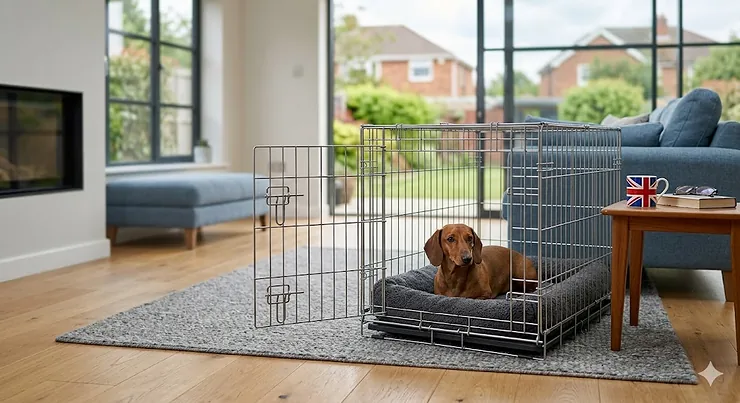
Choosing a dachshund crate 30 inch isn’t just about finding somewhere for your sausage dog to sleep — it’s about protecting one of the most vulnerable spines in the canine world. Standard dachshunds, with their elongated bodies and short legs, face a staggering risk of intervertebral disc disease (IVDD), affecting roughly one in four dachshunds during their lifetime. The right crate provides a safe, spine-neutral space that prevents the jumping, twisting, and overextension that can trigger disc problems.
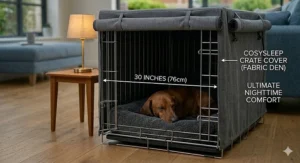
British dachshund owners face unique challenges too. Our compact terraced houses and flats demand space-efficient solutions, whilst our damp climate means proper ventilation becomes essential to prevent mould and respiratory issues. A properly sized 30 inch crate accommodates most standard dachshunds comfortably — roughly 76 cm in length — allowing them to stand, turn, and stretch without excess space that might encourage toileting accidents during house training.
What most buyers overlook is that the crate shape matters as much as the size. Long dog breeds like dachshunds benefit from rectangular floor plans rather than square enclosures. The spine-friendly design allows natural movement patterns whilst discouraging the vertical jumps that stress their backs. In this guide, we’ll examine seven crates available on Amazon.co.uk that balance proper dimensions, build quality, and value — all whilst keeping your sausage dog’s unique anatomical needs front and centre.
Quick Comparison: Top Dachshund Crate 30 Inch Models
| Model | Doors | Divider | Weight | Price Range | Best For |
|---|---|---|---|---|---|
| Amazon Basics 30″ Wire | Double | ✅ | ~11 kg | £35-£45 | Budget-conscious buyers |
| MidWest iCrate 30″ | Single/Double | ✅ | ~11 kg | £40-£55 | Long-term durability |
| DogCrates+ Medium 30″ | Double | ❌ | ~9 kg | £30-£40 | Lightweight portability |
| BUNNY BUSINESS 30″ | Single | ✅ | ~10 kg | £25-£35 | First-time crate users |
| PawHut Soft-Sided 30″ | Multiple | N/A | ~4 kg | £35-£50 | Travel & temporary use |
| Ellie-Bo Folding 30″ | Single | ✅ | ~10 kg | £30-£40 | Compact storage needs |
| Midwest Life Stages 30″ | Double | ✅ | ~11 kg | £50-£65 | Premium build quality |
💬 Just one click — help others make better buying decisions too! 😊
✨ Don’t Miss These Exclusive Deals!
🔍 Take your dachshund’s comfort to the next level with these carefully selected products. Click on any highlighted item to check current pricing and availability on Amazon.co.uk. These picks will help you find exactly what your sausage dog needs!
Top 7 Dachshund Crate 30 Inch Options: Expert Analysis
1. Amazon Basics Medium Metal Wire Dog Crate 30″
The Amazon Basics 30-inch wire crate strikes a sensible balance between affordability and functionality — rather what you’d expect from a no-nonsense brand that avoids the marketing fluff. At 76 cm length, it provides ample floor space for standard dachshunds whilst the double-door configuration (front and side access) proves remarkably handy in tight British living spaces.
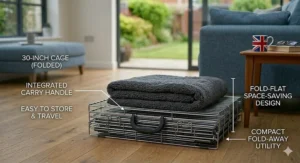
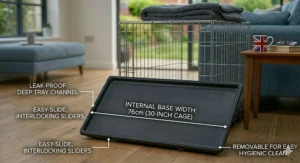
The wire spacing measures approximately 5 cm apart, which prevents even determined dachshunds from squeezing through whilst maintaining proper ventilation — essential in our damp climate where air circulation prevents that musty smell developing. The removable plastic tray slides out for cleaning without requiring you to dismantle anything, and the fold-flat design means you can tuck it behind the sofa when guests visit (a luxury in most UK homes where spare storage space doesn’t exist).
UK buyers particularly appreciate the robust slide-bolt latches that actually stay closed. The included divider panel extends the crate’s usefulness from puppyhood through adulthood, allowing you to adjust the space as your dachshund grows. One consideration: the metal wire can feel cold underfoot during British winters, so invest in a proper crate mat rather than relying on old towels.
Customer feedback from UK reviewers consistently mentions the straightforward assembly — no tools required, sets up in under five minutes — and the value proposition. Several owners note their dachshunds settled into it within days, though the lack of corner protectors means the powder coating can chip if you drag it across tile floors.
Pros:
✅ Double-door access suits awkward room layouts
✅ Divider panel grows with your puppy
✅ Tool-free assembly for the DIY-averse
Cons:
❌ Wire floor requires comfortable matting
❌ Powder coating chips without careful handling
Around £35-£45 depending on retailer, this represents solid value for permanent home use. Not the fanciest option, but it does the job without drama — rather like a reliable Volvo estate for your dachshund.
2. MidWest Homes for Pets iCrate 30 Inch
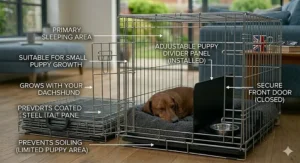
MidWest’s iCrate enjoys cult status amongst UK dog trainers, and for good reason. The build quality outpaces budget competitors — heavier gauge wire, reinforced corners, and that distinctive roller feet design that protects hardwood floors and tiles alike. British owners with period properties particularly value this detail, as scratched original floorboards prove expensive to refinish.
The 30-inch model (available in single or double-door variants) measures precisely for standard dachshunds, with the rectangular footprint allowing natural stretching without encouraging them to use one end as a toilet. The included divider panel uses a different mounting system than cheaper crates — it actually stays where you position it rather than rattling loose when your dachshund shifts position.
What distinguishes the iCrate is the attention to spine-friendly design. The low-threshold door opening (about 12 cm off the ground) means dachshunds enter without that awkward vertical hop that stresses their backs. MidWest clearly consulted veterinarians when designing this, though they’ll never shout about it in the marketing.
UK customer reviews highlight the crate’s longevity — several owners report 8+ years of daily use without structural issues. The slide-bolt latch feels more substantial than competitors, important for dachshunds who’ve mastered escape artistry. The fold-flat mechanism includes safety latches that prevent accidental collapse whilst setting up, a thoughtful touch missing from cheaper alternatives.
The weight (~11 kg) makes it less suitable for frequent relocation, but that heft translates to stability. Boisterous dachshunds won’t shift it across wooden floors during excited moments.
Pros:
✅ Reinforced construction outlasts budget alternatives
✅ Low-threshold entry protects dachshund backs
✅ Roller feet prevent floor damage
Cons:
❌ Heavier weight limits portability
❌ Premium pricing over basic models
Expect to pay £40-£55 for the single-door version, slightly more for double-door. The longevity justifies the investment if you’re planning years of use rather than just puppy training.
3. DogCrates+ Medium Foldable 30 Inch
The DogCrates+ 30-inch model positions itself as the lightweight champion — around 9 kg compared to 11 kg for MidWest equivalents — which matters if you’re lugging it between your main home and a country cottage, or up three flights of stairs in a Victorian conversion flat.
The double-door configuration provides front and top access, the latter proving surprisingly useful for coaxing reluctant dachshunds inside without the awkward bending that murders your lower back. The non-chew plastic tray uses a composite material that resists staining and odour absorption better than the cheaper ABS alternatives, though it still requires regular washing in our bacteria-loving British climate.
Where this crate falls short is the absence of a divider panel — a curious omission at this price point that limits its usefulness for puppy training. You’ll need to purchase one separately or improvise with cardboard boxes, neither ideal solutions. The wire gauge feels fractionally thinner than premium alternatives, though still adequate for dachshunds (who aren’t exactly Houdini-level escape artists unless food’s involved).
UK buyers note the assembly speed — genuinely tool-free and manageable in under three minutes — and appreciate the slightly narrower profile that fits through standard British doorways without removing the hinges. The fold-flat thickness measures about 7 cm, making it genuinely storable behind bedroom furniture.
Several UK reviewers mention using this as a secondary crate for overnight stays at relatives’ houses, where the lighter weight and quick setup justify keeping it as a backup option.
Pros:
✅ Lightweight design for multi-location use
✅ Top-loading access reduces back strain
✅ Stain-resistant tray material
Cons:
❌ No divider panel included
❌ Thinner wire gauge than premium models
Typically priced around £30-£40, it occupies an awkward middle ground — not cheap enough to be a bargain, not robust enough to justify premium pricing. Best suited for owners who genuinely need the portability rather than looking for their primary crate.
4. BUNNY BUSINESS Metal Dog Crate 30″
BUNNY BUSINESS might sound like a children’s toy brand, but their 30-inch crate delivers surprising value for budget-conscious UK buyers. At £25-£35, this undercuts most competitors whilst maintaining acceptable build quality — though “acceptable” carries important caveats we’ll address.
The single-door configuration keeps costs down but limits placement flexibility in compact British homes. The included divider panel uses a basic clip system that occasionally shifts position, requiring periodic adjustment as your dachshund moves about. The removable tray employs standard ABS plastic that gets the job done but retains odours more readily than premium alternatives.
Where BUNNY BUSINESS succeeds is in the basics: the wire spacing prevents escapes, the fold-flat mechanism works reliably, and the latch system — whilst not as refined as MidWest’s — secures properly when you take care to engage it fully. UK customers note that the powder coating quality trails premium brands, with some chipping reported after six months of regular repositioning.
This crate makes sense for first-time dachshund owners unsure about committing to crate training, or as a temporary solution whilst house training puppies. The lower investment feels less painful if your dachshund proves the rare specimen who never takes to crating. It also works well for those on tighter budgets who understand they’re trading longevity for affordability.
Several UK reviewers successfully used this for the critical 4-6 month puppy phase before upgrading to premium alternatives, suggesting it serves adequately for short to medium-term needs.
Pros:
✅ Budget-friendly entry point
✅ Divider panel included despite low price
✅ Adequate for short-term use
Cons:
❌ Single-door limits placement options
❌ Powder coating durability concerns
At £25-£35, this won’t win design awards but it keeps dachshund puppies contained whilst you determine whether crate training suits your household. Manage expectations accordingly and it delivers fair value.
5. PawHut Soft-Sided Portable Crate 30″
The PawHut soft-sided 30-inch crate serves an entirely different purpose than wire alternatives — this is your travelling companion for vet visits, overnight stays, and those rare sunny British weekends when you venture to dog-friendly holiday lets.
Weighing roughly 4 kg compared to 11 kg for wire crates, it transforms portability completely. The fabric construction (600D Oxford cloth) resists light rain — useful given our climate — whilst mesh windows on all sides provide ventilation that prevents overheating in cars. The steel frame tubes assemble via shock-cord connections similar to camping tents, meaning setup takes perhaps 30 seconds once you’ve done it twice.
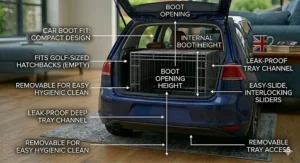
British owners particularly value the compact folding — it reduces to about the thickness of a rolled yoga mat, fitting easily into car boots alongside the rest of your weekend gear without requiring you to remove rear seats. The multiple entry points (front, side, and top) make it genuinely easier to coax nervous dachshunds inside than wire alternatives where you’re essentially posting them through a single opening.
The critical limitation: this absolutely cannot serve as your primary home crate for determined chewers or anxious dogs. The fabric construction offers minimal security against escape attempts, and any dachshund with separation anxiety will likely damage the mesh panels within days. It’s designed for temporary containment of already crate-trained dogs, not for establishing boundaries with puppies.
UK veterinarians and groomers often recommend these for transport purposes, as they weigh less than wire alternatives whilst providing adequate security for car journeys. The internal pocket stores treats and toys, thoughtful touches that distinguish quality soft-sided options from cheap knockoffs.
Pros:
✅ Ultralight for genuine portability
✅ Weather-resistant fabric for British climate
✅ Folds incredibly compact for storage
Cons:
❌ Unsuitable for primary home crating
❌ Limited security against determined escape artists
Expect £35-£50 depending on exact model specifications. Worth the investment if you travel regularly with your dachshund; unnecessary expense if it’ll sit unused eleven months yearly.
6. Ellie-Bo Folding Metal Crate 30″
Ellie-Bo, a British brand popular amongst UK rescue centres and training facilities, produces this 30-inch wire crate that balances domestic pricing with institutional durability requirements. The company supplies numerous UK animal charities, suggesting their products withstand considerably more abuse than typical household use.
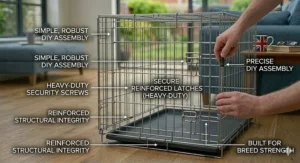
The single-door version prioritises structural reinforcement over convenience, with heavier corner brackets and thicker base frame than similarly priced competitors. This translates to a crate that won’t flex or rattle when your dachshund shifts position — particularly appreciated by owners of vocal sausage dogs whose nighttime movements otherwise wake the household.
The included divider panel uses metal clips rather than plastic, a minor detail that prevents the frustrating breakages that plague budget alternatives after six months. The removable tray features slightly raised edges (about 4 cm) that contain accidents more effectively than flat-edge designs, reducing the midnight clean-up drama when puppies haven’t quite mastered bladder control.
UK buyers note Ellie-Bo’s customer service operates from Birmingham rather than overseas call centres, making warranty claims and replacement parts considerably simpler. The fold-flat mechanism includes a safety lock that prevents accidental deployment — genuinely useful when storing it in a cramped garage or garden shed where you’re constantly shifting items around.
The wire gauge sits between budget and premium options, adequate for dachshunds without the reassuring heft of MidWest products. Several UK owners report 5+ years of regular use without structural failures, though the powder coating quality trails premium brands slightly.
Pros:
✅ British brand with UK-based support
✅ Reinforced construction for longevity
✅ Metal divider clips resist breakage
Cons:
❌ Single-door configuration only
❌ Slightly heavier than portable alternatives
Typically £30-£40, representing solid value for owners who prioritise durability over features. The British provenance means replacement parts remain available rather than forcing you to import from overseas suppliers.
7. MidWest Life Stages Double Door 30″
The MidWest Life Stages 30-inch represents the premium end of the spectrum — this is what professional UK dog trainers and behaviourists recommend when clients want the “buy it right, buy it once” option. The construction quality exceeds even MidWest’s own iCrate series, with thicker wire gauge, reinforced door frames, and those distinctive corner protectors that prevent floor damage.
The double-door configuration provides front and side access, with both doors featuring the patented slide-bolt latches that actually justify the premium pricing. These latches include multiple locking points around the door perimeter rather than a single bolt, creating genuine security against escape artists. British owners with crafty dachshunds particularly value this, as the breed’s problem-solving abilities occasionally surprise even experienced owners.
The Life Stages name references the included divider panel’s exceptional adjustability — it positions at multiple points rather than just one or two settings, allowing you to fine-tune the space as your dachshund transitions from 3-month puppy to full-grown adult. The divider uses tool-free clips that actually hold position without requiring periodic readjustment, a seemingly minor detail that prevents considerable frustration over months of use.
What distinguishes this model is the thought given to long-term ownership. The removable tray uses a composite plastic that resists cracking even after years of removal and replacement, whilst the powder coating quality exceeds alternatives — several UK owners report pristine appearance after 7+ years of daily use. The roller feet include replaceable caps, extending the crate’s usable life when wear eventually occurs.
The weight (~11 kg) makes this unsuitable for frequent relocation, but that mass translates to stability that anxious dachshunds appreciate. The fold-flat mechanism includes clear visual indicators showing proper engagement, preventing the setup frustrations that plague cheaper alternatives.
Pros:
✅ Premium construction justifies higher pricing
✅ Multi-point locking system for security
✅ Exceptional divider panel adjustability
Cons:
❌ Higher initial investment
❌ Weight limits portability
Expect £50-£65 depending on retailer, making this roughly double the cost of budget alternatives. The investment makes sense if you’re planning decade-long ownership rather than just covering the puppy phase. Professional trainers consistently recommend this model for owners serious about proper crate training.
Understanding Your Dachshund’s Unique Crating Needs
Dachshunds aren’t just small dogs with peculiar proportions — their elongated spinal structure creates specific requirements that generic dog crates often ignore. The average standard dachshund measures roughly 20-25 cm at the shoulder but extends 40-45 cm from chest to rump, creating that distinctive sausage profile. This anatomical reality means they need crates designed around horizontal space rather than vertical height.
The critical measurement involves your dachshund’s full stretched length plus 10-12 cm for comfortable movement. Most standard dachshunds require the full 76 cm (30 inches) that these crates provide, though miniature varieties might manage with 24-inch alternatives. The height requirement proves less demanding — roughly 50-55 cm allows them to sit fully upright and stand without hunching, though excessive vertical space encourages jumping behaviours that stress their vulnerable spines.
British veterinary guidance from organisations like PDSA emphasises that proper crating actually protects against IVDD by providing a controlled environment where dachshunds can’t engage in high-risk activities like sofa jumping or stair climbing. The crate becomes particularly crucial during IVDD recovery periods, where strict confinement proves medically necessary for 6-8 weeks.
UK owners face additional considerations around our climate. Wire crates provide superior ventilation compared to plastic alternatives — essential in damp British conditions where poor air circulation creates mould and respiratory issues. The removable trays must be cleaned regularly (weekly minimum) to prevent bacteria accumulation, particularly relevant during our perpetually drizzly autumn and winter months when everything takes twice as long to dry.
The divider panel deserves special mention for dachshund owners. Puppies have notoriously unreliable bladder control, and providing excess space encourages them to toilet in one corner whilst sleeping in another. The divider allows you to restrict space during house training (roughly 50 cm length for a 12-week puppy) before gradually expanding as control improves. This isn’t mere convenience — it significantly accelerates house training by leveraging their natural reluctance to soil their sleeping area.
Setting Up Your Dachshund Crate for British Living Conditions
British homes present unique challenges for crate placement — our compact layouts, damp climate, and energy-conscious heating require thoughtful positioning rather than just plonking the crate wherever space exists.
The ideal location balances several competing requirements. Your dachshund needs to feel part of household activities (isolation anxiety proves common in this social breed) whilst having somewhere quiet for genuine rest. Ground-floor living rooms or kitchens typically work well, positioned away from radiators (which create uncomfortable heat gradients) but near enough to family activity zones that your dachshund doesn’t feel banished.
Avoid placing crates directly on cold tile or stone floors — common in British kitchens and conservatories — as the chill transfers through the metal frame and plastic tray. A thick rubber mat underneath provides insulation whilst preventing the crate from sliding across smooth surfaces when your dachshund shifts position. This matters particularly in period properties with original flagstone or tile floors that never quite warm up even with underfloor heating.
The bedding choice impacts comfort considerably. Avoid thick memory foam mattresses that encourage dachshunds to burrow underneath (creating overheating risks), but don’t rely on thin towels that bunch up and provide inadequate cushioning. Purpose-designed crate mats measuring 75 x 50 cm fit the 30-inch footprint properly whilst offering adequate padding without excess thickness. British weather means selecting machine-washable options rated for at least 40°C washing cycles — you’ll be laundering them monthly minimum to prevent that distinctive damp dog smell developing.
Ventilation requires attention in our humid climate. Position the crate away from corners where air circulation stagnates, creating ideal conditions for mould growth. The wire construction helps, but periodically moving the crate (quarterly minimum) and wiping down the frame prevents moisture accumulation. British owners in ground-floor flats or period properties with rising damp should elevate crates slightly — placing them on a wooden pallet or raised platform prevents direct ground contact whilst improving air flow underneath.
Temperature regulation matters more than Americans realise. British homes typically maintain cooler temperatures (18-20°C) than American standards, and dachshunds feel the chill despite their determined personalities suggesting otherwise. A lightweight blanket draped over the top and back creates a den-like environment whilst retaining warmth, though ensure at least two sides remain uncovered for ventilation. Remove this covering during summer months or your dachshund will overheat — their low-to-ground body position and poor air circulation at floor level makes them vulnerable even at temperatures that seem moderate to humans.
Common Dachshund Crate Training Mistakes UK Owners Make
British politeness sometimes works against us when crate training dachshunds. We feel guilty confining them, leading to inconsistent enforcement that confuses dogs and sabotages training progress. The most persistent mistake involves using the crate as punishment — shutting your dachshund inside after misbehaviour teaches them to fear it rather than view it as a safe den.
The second major error involves purchasing too large a crate initially, believing it saves money by accommodating adult size from puppyhood. This backfires spectacularly with dachshunds, who’ll happily toilet in one corner whilst sleeping in another if you provide the space. The divider panel exists precisely to prevent this, yet many UK owners either lose it during setup or forget to adjust it as their puppy grows. Use the divider religiously during the 8-16 week period when bladder control remains unreliable.
Rushing the introduction proves another common British failing. We expect our pragmatic, no-nonsense approach to produce immediate results, then feel frustrated when dachshunds — famously stubborn creatures — refuse to cooperate. Proper introduction requires 7-10 days of gradual habituation: feeding meals inside the crate whilst the door remains open, tossing treats inside for retrieval, and only closing the door briefly once your dachshund enters willingly.
UK owners also underestimate the importance of location consistency. Moving the crate between rooms daily to suit your convenience confuses dogs about where their safe space actually exists. Establish a permanent home location and maintain it, only using portable soft-sided alternatives for travel purposes.
The British tendency toward over-furnishing creates problems too. Filling the crate with excessive toys, blankets, and cushions might seem comforting, but it prevents proper temperature regulation and creates hiding spots that anxious dachshunds burrow into rather than learning to self-soothe. Keep furnishings minimal — a fitted mat, perhaps a single chew toy, and that’s genuinely sufficient.
Energy levels get miscalculated frequently. British owners sometimes expect tired dogs to settle immediately into crates, but dachshunds require mental stimulation alongside physical exercise. A 20-minute walk around the block exhausts their legs without touching their problem-solving drive. Incorporate training sessions, scent work, or puzzle feeders before crating to ensure genuine tiredness rather than just physical fatigue.
The timing of crate use deserves mention too. UK regulations around animal welfare — specifically the Animal Welfare Act — require that dogs aren’t confined for excessive periods. Adult dachshunds shouldn’t remain crated longer than 4-5 hours during daytime, with overnight periods being the exception. British working households need realistic plans involving dog walkers or midday returns home, rather than assuming 8-hour confinement proves acceptable because the crate cost £50.
How the Best Crate Shape Supports Dachshund Spinal Health
The rectangular footprint of a 30-inch crate isn’t aesthetic preference — it’s anatomical necessity for long dog breeds requiring horizontal stretching without excessive vertical space. Standard wire crates measure approximately 76 cm length x 48 cm width x 53 cm height, creating a floor plan that accommodates natural dachshund sleeping positions.
Dachshunds typically sleep curled up or stretched on their sides, with their spine forming either a C-curve or remaining relatively straight. Both positions require adequate length without forcing them to curve excessively, which stresses the intervertebral discs that prove so vulnerable in this breed. The 76 cm length allows a 45 cm dachshund to stretch fully with 15 cm clearance at either end, preventing the cramped positions that encourage disc compression.
The height limitation proves equally important. Excessive vertical space (anything over 60 cm for standard dachshunds) encourages jumping or rearing behaviours that strain their backs. The 53 cm standard height allows comfortable sitting and standing without permitting vertical leaps — maintaining spine-friendly movement patterns even when your dachshund gets excited about dinner time.
Wire construction offers advantages beyond ventilation. The open sides prevent the claustrophobic feeling that solid-walled plastic crates can create, whilst allowing your dachshund visual contact with household activities. This proves particularly relevant for separation anxiety prevention — dachshunds crated in plastic airline kennels sometimes develop anxiety because they feel isolated despite being physically present in the room.
The door positioning impacts spinal health too. Low-threshold entries (12-15 cm off the ground) mean dachshunds step inside rather than hopping, reducing the jarring impact on their vertebrae. Double-door configurations provide placement flexibility that prevents awkward entry angles — you can position the crate with whichever door offers the most direct, level access rather than forcing your dachshund to navigate around furniture or enter at an angle.
The floor surface requires consideration. Bare wire floors prove uncomfortable and potentially harmful, with gaps that could trap small paws. The removable plastic tray serves dual purposes: providing a smooth, comfortable base whilst containing any accidents. Adding a fitted crate mat creates cushioning that supports proper spinal alignment during rest — particularly important for dachshunds predisposed to disc problems.
UK veterinary research suggests that appropriate crate design contributes to IVDD prevention by establishing safe rest zones where risky behaviours physically cannot occur. Unlike open floor plans where dachshunds leap onto sofas or sprint up stairs, the crate provides controlled space where movement patterns remain spine-friendly. This becomes particularly crucial for dachshunds aged 3-7 years, when IVDD risk peaks according to Purina’s research.
Wire vs Soft-Sided: Which Crate Material Suits British Conditions?
Wire crates dominate the UK market for permanent home use, and British climate explains much of this preference. Our persistently damp weather — averaging 156 rain days annually across much of England — creates conditions where moisture management proves essential for preventing mould growth and bacterial accumulation.
Wire construction allows unrestricted air circulation from all sides, meaning bedding and the crate interior dry efficiently between uses. This matters particularly in British homes without air conditioning (roughly 95% of UK housing stock), where humidity control relies entirely on ventilation rather than mechanical systems. A damp soft-sided crate stored in a British garage or conservatory develops that distinctive musty smell within weeks — wire alternatives simply don’t create the enclosed conditions where mould thrives.
The cleaning requirements differ substantially too. Wire crates disassemble easily, with removable plastic trays that pop into the bathtub or garden for hosing down. British washing machines accommodate crate mats and bedding readily enough, but washing an entire fabric crate proves considerably more involved — most won’t fit domestic machines, requiring either professional cleaning or awkward hand-washing sessions.
Soft-sided crates excel for specific UK use cases, particularly travel. British car boots (even in estate cars) rarely match American SUV dimensions, making the compact folding of fabric crates genuinely valuable. They weigh roughly one-third of wire equivalents (4 kg vs 11 kg), transforming portability completely when you’re navigating narrow B-roads to a rural holiday let or visiting relatives in Scotland.
The durability equation favours wire substantially for permanent installation. Fabric crates tolerate perhaps 2-3 years of regular use before zipper failures or mesh tears require replacement — wire alternatives last 7-10 years with basic maintenance. British owners planning long-term crate use find wire options deliver better value despite higher initial investment.
Temperature regulation requires mention too. Fabric crates retain heat more than wire alternatives, occasionally problematic during rare British heatwaves when temperatures exceed 25°C. The insulation that makes them comfortable for winter travel becomes a liability when parked cars heat up quickly. Wire crates maintain ambient temperature without creating hot spots, though they offer less protection against cold draughts during winter.
Security differences prove significant for anxious dachshunds. Determined dogs breach fabric crates relatively easily — a motivated dachshund can chew through mesh panels or force zippers within 20 minutes if separation anxiety strikes. Wire construction provides genuine containment that survives panic episodes, essential for safety during your absence.
The aesthetic consideration matters in compact British homes where the crate occupies visible living space rather than being tucked in a separate room. Wire crates appear utilitarian but honest — they’re obviously dog equipment. Fabric alternatives sometimes blend better with home décor, though this advantage diminishes once you drape blankets over wire crates to create that den-like environment dachshunds prefer.
For British owners, the verdict typically suggests investing in a quality wire crate (£40-£60) for permanent home use, with an optional soft-sided alternative (£30-£45) if you genuinely travel regularly. Attempting to use soft-sided crates for both purposes usually results in premature failure and replacement costs that exceed buying separate purpose-specific options initially.
Long-Term Cost Analysis: What That £40 Crate Really Costs
British owners appreciate straightforward value assessments, so let’s examine what that 30-inch crate investment actually entails over its useful life. The upfront purchase represents perhaps 40% of total ownership costs — bedding, maintenance, and replacements comprise the hidden expenses that accumulate over years.
A mid-range wire crate (£40-£50) typically serves 7-10 years with basic care, translating to £4-£7 annually. Budget alternatives (£25-£35) rarely exceed 3-4 years before structural failures require replacement, effectively costing £6-£12 annually despite lower initial pricing. Premium options (£55-£65) often outlast even their generous warranties, with 10-12 year lifespans reported by UK owners, reducing annual cost to £4.50-£6.50.
Bedding costs accumulate more substantially than buyers anticipate. Quality crate mats run £15-£25 and require replacement every 18-24 months as compression reduces cushioning effectiveness. Budget towels or blankets wear out faster (6-12 months) and don’t provide adequate spinal support, creating false economy. Over a decade, expect £80-£120 in bedding replacement costs.
Cleaning supplies deserve mention too. British damp means regular disinfecting (monthly minimum using pet-safe solutions at £5-£8 per bottle) to prevent bacterial growth and odour. Enzyme cleaners for accident cleanup (essential during puppyhood) cost £8-£12 per 500ml bottle. Annual cleaning supply costs typically run £30-£50 depending on your dachshund’s toileting reliability.
Replacement parts extend crate lifespan significantly. Door latches (£5-£8), divider panels (£12-£18), and plastic trays (£15-£25) prove considerably cheaper than buying new crates when individual components fail. British brands like Ellie-Bo maintain spare parts availability domestically, whilst American imports require more expensive international shipping — a consideration favouring UK-made alternatives.
Energy costs remain negligible given crates don’t consume power, though positioning near radiators or heated floors wastes energy by creating temperature gradients your dachshund finds uncomfortable anyway. Proper placement away from heat sources actually reduces household heating costs by preventing compensatory thermostat adjustments.
The total 10-year ownership cost for a mid-range setup typically runs £250-£350 (crate £45, bedding £100, cleaning £400, replacement parts £30), translating to £25-£35 annually. Premium setups cost slightly more (£300-£400 total) but deliver better durability and comfort. Budget approaches rarely save money once you account for earlier replacement cycles and inferior materials requiring more frequent bedding changes.
British owners should factor vet bills into this equation too. Proper crating prevents injuries that prove surprisingly expensive — a single IVDD episode requiring conservative treatment runs £300-£800 in vet fees, whilst surgical intervention costs £3,000-£6,000. The £40 crate that prevents even one back injury delivers spectacular ROI compared to medical expenses from inadequate containment.
UK-Specific Considerations: Regulations, Climate & Living Spaces
British dachshund owners navigate requirements that American guides completely ignore. Our compact housing, specific welfare regulations, and climate realities create practical constraints worth addressing directly.
The Animal Welfare Act 2006 establishes baseline standards requiring that crates allow dogs to sit, stand, turn around, and lie down comfortably. Enforcement remains inconsistent, but responsible owners should ensure the 30-inch dimensions genuinely accommodate their specific dachshund rather than just meeting generic size recommendations. Measure your dog and add 10-12 cm to their stretched length — regulations aside, this prevents the cramped conditions that stress joints and discourage crate acceptance.
English housing regulations affect crate placement in rental properties. Whilst crates themselves rarely violate tenancy agreements, damage to floors or walls from improper placement absolutely can. Use protective mats underneath to prevent scratches, and avoid positioning against external walls in period properties where damp penetration creates mould risks. Landlords proving increasingly sensitive to pet damage means maintaining pristine condition becomes essential for deposit recovery.
Scotland and Wales maintain similar animal welfare standards to England, though enforcement approaches differ slightly. Northern Ireland follows separate legislation with comparable requirements. Practical differences prove minimal for crate selection, though owners should verify local authority guidance if concerns arise.
British climate creates unique challenges for crate maintenance. Our 70-80% average humidity (considerably higher than most American regions) accelerates bacterial growth and rust formation. Stainless steel or powder-coated wire resists British damp better than cheaper galvanised alternatives, justifying the modest price premium (typically £5-£10 additional). The removable plastic tray must be dried thoroughly after cleaning — leaving it damp in the crate creates ideal mould conditions within 48 hours.
Space constraints in British housing require realistic assessment. The average UK living room measures roughly 4m x 3.5m — considerably smaller than American equivalents — meaning a 76 cm x 48 cm crate occupies roughly 10% of floor space. Fold-flat storage capability becomes genuinely important rather than just convenient, particularly in terraced houses or flats where dedicated storage rooms don’t exist.
British homes lack central air conditioning, meaning summer heat management relies on natural ventilation. Position crates away from south-facing windows where direct sunlight creates uncomfortable heat, and ensure cross-ventilation during warm months. The wire construction helps, but British owners should monitor temperature during those rare weeks when British summer actually materialises.
Heating efficiency matters during our lengthy heating season (typically October-April). Placing crates directly adjacent to radiators wastes energy whilst creating uncomfortable temperature gradients — your dachshund alternates between too hot and too cold rather than maintaining comfortable ambient temperature. Position crates 1-2 metres from heat sources for optimal comfort without energy waste.
Transportation regulations affect owners who crate dogs in vehicles. The Highway Code requires dogs be suitably restrained whilst travelling, either via crates secured in the boot or harnesses attached to seatbelts. Wire crates in car boots must be secured against movement during braking — use cargo straps or purpose-designed restraints rather than assuming the crate’s weight provides adequate stability.
Frequently Asked Questions
❓ Can I use a 30 inch crate for a miniature dachshund?
❓ How long can I legally keep a dachshund crated in the UK?
❓ Do wire crates rust in British damp conditions?
❓ Should I cover my dachshund's crate overnight?
❓ Can I use the same crate for IVDD recovery that I use for normal crating?
Conclusion: Choosing Your Dachshund’s Safe Haven
Selecting a dachshund crate 30 inch isn’t merely purchasing pet equipment — it’s investing in spinal health protection for a breed facing genuinely elevated injury risks. The anatomy that makes dachshunds endearingly distinctive also creates vulnerabilities requiring thoughtful accommodation rather than generic solutions.
British owners navigate additional considerations around our compact housing, damp climate, and specific welfare regulations that American guides blithely ignore. The crates examined here all serve adequately within their respective price brackets, though MidWest’s iCrate and Life Stages models deliver the durability and spine-friendly design features that justify their premium positioning for owners planning long-term use.
Budget-conscious buyers will find acceptable short-term solutions in the BUNNY BUSINESS and basic Amazon Basics options, particularly suitable for determining whether crate training suits your specific dachshund before committing to premium alternatives. The DogCrates+ and Ellie-Bo models occupy that awkward middle ground — neither cheap enough for disposable use nor robust enough for premium status.
The soft-sided PawHut serves entirely different purposes than wire alternatives, excelling for travel whilst proving inadequate for primary home crating. British owners who genuinely travel frequently benefit from owning both categories rather than attempting to make either type serve dual purposes inadequately.
Remember that proper introduction proves more important than the specific crate selected. The fanciest £65 MidWest Life Stages becomes worthless if your dachshund fears entering it, whilst even budget alternatives succeed when you invest time establishing positive associations. Patience, consistency, and gradual habituation trump equipment quality every time.
The spine-friendly dimensions matter considerably more than bells and whistles. Ensure your chosen crate provides adequate horizontal space without excessive height that encourages risky jumping behaviours. The long dog breed crate dimensions — approximately 76 cm length for standard dachshunds — accommodate natural stretching whilst preventing the cramped positions that stress vulnerable intervertebral discs.
British welfare standards and practical living constraints require realistic assessment of how crating fits your actual lifestyle rather than theoretical ideals. Working 9-hour days without midday breaks? Crating likely isn’t appropriate regardless of which model you purchase. Compact flat with limited storage? The fold-flat mechanism becomes essential rather than merely convenient.
Ultimately, that £40-£60 investment in quality crate delivers spectacular value when it prevents even a single IVDD episode costing thousands in veterinary care. View it as structural insurance for your dachshund’s spine rather than just containment equipment, and the pricing suddenly appears remarkably reasonable for the protection it provides.
Recommended for You
- Jack Russell Terrier Crate Size: 7 Best Options UK (2026)
- 7 Best Crate for French Bulldog UK 2026: Expert Picks
- 7 Best Small Dog Travel Crate Airline Approved UK 2026
Disclaimer: This article contains affiliate links. As an Amazon Associate, I earn from qualifying purchases. If you purchase products through these links, we may earn a small commission at no additional cost to you.
✨ Found this helpful? Share it with your mates! 💬🤗
