
In This Article
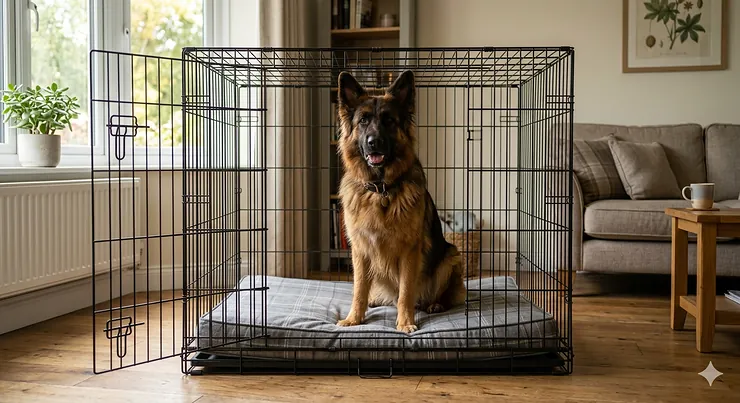
Choosing the wrong crate size for your German Shepherd isn’t just inconvenient—it can undermine house training, trigger anxiety, and leave your dog feeling cramped or, conversely, insecure in too much space. After helping dozens of British GSD owners navigate this decision, I’ve learnt that the german shepherd crate size guide most people stumble upon online rarely accounts for the nuances of working line shepherds versus show lines, or how a female GSD from a compact bloodline needs different dimensions than a strapping 45 kg male. According to breed standards, German Shepherds are strongly built, relatively long-bodied dogs requiring appropriately spacious accommodations.
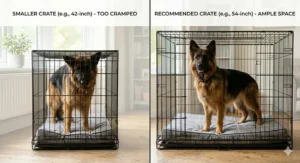
The standard recommendation you’ll see everywhere—”48 inches for German Shepherds”—isn’t wrong, but it’s incomplete. A 42-inch crate works brilliantly for many females and smaller males, whilst some particularly tall working line dogs genuinely need that extra headroom a 48-inch provides. What most buyers overlook is that British homes tend to run smaller than American ones, so a massive crate that theoretically “gives more room” can dominate your living space and paradoxically make your dog less comfortable if it disrupts the household flow. The RSPCA emphasises that crates should be large enough for dogs to stand, turn around, and lie down comfortably—but not so large that they undermine house training. In this guide, I’ll walk you through exactly how to measure your GSD, decode the real differences between crate sizes available on Amazon.co.uk, and match seven top-rated products to specific dog profiles—from anxious rescue shepherds to boisterous puppies who’ll grow into their frame over the coming year.
Quick Comparison: Top German Shepherd Crates at a Glance
| Crate Type | Size | Best For | Typical Price Range (GBP) | Key Feature |
|---|---|---|---|---|
| Budget Wire Crate | 42″ or 48″ | Standard GSDs, first-time buyers | £50-£80 | Divider panel included |
| MidWest iCrate | 48″ | Most adult males, versatile placement | £70-£110 | Double door, proven reliability |
| Heavy Duty Steel | 48″ | Escape artists, anxious dogs | £180-£280 | Reinforced frame, dual latches |
| Plastic Travel Crate | 42″ | Air travel, car journeys | £120-£200 | Airline-approved, weatherproof |
| Collapsible Aluminium | 48″ | Frequent travellers, UK weather | £250-£400 | Lightweight, rust-resistant |
| Furniture-Style Crate | 42″ | Calm adults, aesthetic priority | £150-£250 | Looks like end table, quiet dogs only |
| XXL Heavy Duty | 54″ | Giant males 50+ kg, working lines | £300-£500 | Maximum stretch room |
From the comparison above, budget-conscious buyers gravitate toward the £50-£80 wire crates with dividers—perfectly adequate for well-adjusted GSDs—but if you’re contending with a dog who’s previously bent crate bars or suffers separation anxiety, that £100 saving evaporates the moment you’re replacing a mangled standard crate. The heavy duty steel options in the £180-£280 bracket deliver the kind of robust construction that genuinely deters escape attempts, which matters rather a lot when you’re living in a terraced house in Manchester and can’t risk your shepherd damaging rented property. For those shuttling between a London flat and a countryside cottage, the collapsible aluminium crates justify their £250-£400 price tag through sheer convenience and rust resistance—critical in the British climate where damp garages are the norm.
💬 Just one click—help others make better buying decisions too! 😊
Top 7 German Shepherd Crates: Expert Analysis for UK Buyers
1. MidWest Homes for Pets iCrate 48-Inch
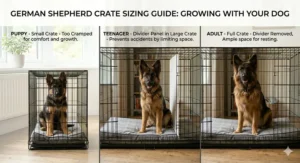
The MidWest iCrate remains the benchmark against which I judge all other crates. At 48″ L × 30″ W × 33″ H, it accommodates the vast majority of adult German Shepherds without dominating smaller British living rooms the way a 54-inch behemoth would. What most Amazon.co.uk listings won’t tell you is that the dual-door configuration (front and side entry) transforms how you position the crate in tight UK spaces—slide it into an alcove under the stairs and use the side door, or tuck it beside the sofa and access from the front. The included divider panel is indispensable for puppy owners: you start with a 24-inch section for your 8-week-old, then expand every few weeks as they grow, meaning you’re not wrestling with multiple crate purchases.
In my experience, the slide-bolt latches on this model are cleverly engineered with locking tips that prevent the accidental openings some shepherds master with their snouts. UK buyers particularly appreciate that it folds flat in seconds for storage or transport—handy when you’re driving a compact hatchback to the Peak District for a weekend. The protective e-coat finish resists rust better than basic powder coating, which matters when you’re storing it in a damp British shed between uses. Customer feedback from UK reviews consistently praises its stability on hard floors without needing rubber feet, though a few note the plastic tray can feel lightweight under a heavy-pawed male.
Pros:
✅ Dual doors offer brilliant placement flexibility in compact UK homes
✅ Divider panel grows with your puppy, saving £100+ on multiple crates
✅ Folds completely flat—fits in a Honda Civic boot for travel
Cons:
❌ Not suitable for determined escape artists or severe anxiety cases
❌ Plastic tray may require upgrading for heavy chewers
Best for: The majority of British GSD owners raising a puppy through adulthood, especially those in flats or terraced houses where space and doorway placement matter. Price range: Around £70-£110 on Amazon.co.uk depending on sales.
2. Budget-Friendly Wire Crate with Divider (Amazon Basics / Generic 48″)
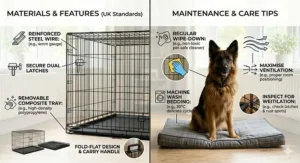
If you’re after the essentials without frills, the generic 48-inch wire crates flooding Amazon.co.uk in the £50-£80 bracket deliver remarkable value. These typically measure 48″ × 30″ × 32″ and include a divider panel, removable tray, and single front door. The metal gauge is thinner than premium models—you’ll notice the slight rattle when your GSD shifts position—but for a well-adjusted adult who views their crate as a cosy den rather than a prison, it’s perfectly adequate. I’ve seen these last years in households where the dog only uses the crate for overnight sleeping or short daytime absences.
The trade-off is build quality. Some UK buyers report latches that don’t click as positively as the MidWest equivalent, and the powder coating can chip where bars meet at corners, exposing metal that eventually rusts in British damp. That said, if you’re fostering a rescue GSD to assess temperament before committing to a long-term setup, or you’re simply testing whether your dog takes to crate training at all, this is the sensible entry point. Just inspect the welds and corner joints when it arrives—quality control varies wildly among the Amazon.co.uk third-party sellers.
Pros:
✅ Unbeatable price for a 48-inch crate with divider—often under £60 delivered
✅ Lightweight enough for one person to move between rooms
✅ Suitable for calm GSDs who don’t test boundaries
Cons:
❌ Thinner wire gauge—persistent chewers may bend bars over time
❌ Powder coating quality inconsistent, can rust in damp storage
Best for: Budget-conscious first-time GSD owners, calm adult dogs, or temporary fostering situations. Price range: £50-£80 on Amazon.co.uk.
3. Heavy Duty Steel Crate (LEMBERI / Feandrea 48″)
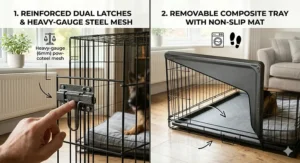
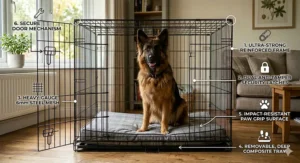
When your German Shepherd has previously escaped a standard wire crate or suffers pronounced separation anxiety, the heavy duty steel crates become non-negotiable. Models like the LEMBERI or Feandrea featured on Amazon.co.uk use 4-6mm gauge steel tubing—double the thickness of budget crates—and reinforce stress points with welded corner bracing. At 48″ × 32″ × 35″, these run slightly taller than standard crates, which UK buyers with particularly upright-eared shepherds appreciate. The dual-latch system on each door requires two deliberate actions to open, thwarting even the cleverest snout-and-paw combinations.
What the product photos don’t convey is the weight: around 40 kg assembled, versus 15 kg for a standard wire crate. This heft is a feature, not a bug—it prevents a frantic dog from shifting the crate across your hardwood floor, which protects both your flooring and your deposit if you’re renting in London or Birmingham. The floor grate elevates your dog slightly above the slide-out metal tray, meaning accidents drain through rather than pooling. In practice, this makes cleanup far less grim, though you’ll want to line it with veterinary bedding for comfort. Some models include lockable castors, which transform a 40 kg lump into a surprisingly mobile piece of furniture you can wheel to different rooms.
Pros:
✅ Reinforced construction genuinely deters escape attempts and destructive anxiety behaviours
✅ Elevated floor grate simplifies accident cleanup—critical during house training or upset stomachs
✅ Weight prevents sliding on hard floors common in UK homes
Cons:
❌ Substantial weight (40 kg) makes moving between floors impractical without help
❌ Higher cost (£180-£280) is a significant jump from budget options
Best for: Anxious rescue GSDs, dogs with a history of crate escape, or owners who’ve already replaced cheaper crates. Price range: £180-£280 on Amazon.co.uk.
4. Petmate Ultra Vari Kennel 48-Inch (Plastic Travel Crate)
The Petmate Ultra Vari 48″ represents the gold standard for plastic crates—airline-approved, weatherproof, and genuinely indestructible under normal use. At 48″ × 32″ × 35″, it’s chunkier than wire crates but breaks down into two nesting halves for storage, which is brilliant for British car boots. I’ve watched these survive transatlantic flights, lorry beds on bumpy country lanes, and years of a GSD’s enthusiastic scratching without cracking. The solid construction also blocks drafts, which matters if your crate lives in a chilly British hallway or unheated conservatory during winter months.
Where this crate excels is travel. The tie-down holes let you secure it properly in an SUV’s cargo area, preventing it from becoming a projectile if you brake hard on a motorway. UK buyers heading to Europe with their dogs appreciate that it meets IATA standards for air travel—just add the optional water bowl and you’re sorted. The ventilation slots provide airflow without the open visibility of wire crates, which some anxious dogs find calming. Conversely, if your GSD thrives on watching household activity, they may feel isolated in a plastic crate. The door is sturdy plastic, not metal, so determined chewers can eventually damage the latches—though I’ve yet to see a dog actually escape one.
Pros:
✅ Airline-approved and car-travel optimised with tie-down holes
✅ Weatherproof—ideal for damp British garages, sheds, or outdoor use
✅ Breaks down into two halves for compact storage
Cons:
❌ Limited visibility may not suit GSDs who like observing their surroundings
❌ Heavier than wire crates, though more portable than heavy duty steel
Best for: Frequent travellers, owners who fly with their GSD, or those needing weatherproof outdoor/garage storage. Price range: £120-£200 on Amazon.co.uk.
5. Collapsible Aluminium Crate (Impact-Style 48″)
The collapsible aluminium crates—typified by brands like Impact or K9 Kennel Boss—occupy a premium niche: professional-grade durability in a portable package. At 48″ × 30″ × 33″, the dimensions mirror standard crates, but the powder-coated aluminium frame resists rust indefinitely, which is rather important when British weather means everything stored in a garden shed or car boot faces perpetual damp. These collapse flat to about 10 cm height using quick-release pins, then reassemble in under a minute without tools. For UK owners who shuttle between properties or travel to agility competitions, this convenience justifies the £250-£400 price tag.
What separates these from cheaper collapsible soft crates is security. The aluminium tube framing is robust enough to contain an anxious 40 kg male without flexing, whilst the mesh panels provide visibility and airflow. The integrated handle on top lets one person carry it like a briefcase when collapsed—try that with a 40 kg steel crate. UK buyers particularly value the rust resistance: store this in a damp Cornish garage over winter and it emerges unscathed, whilst even premium wire crates start showing corrosion. The elevated floor design with a slide-out tray mirrors heavy duty crates, making cleanup straightforward.
Pros:
✅ Collapses to 10 cm flat—fits under a bed or in a car boot permanently
✅ Aluminium construction eliminates rust concerns in British climate
✅ Lightweight (12-15 kg) yet sturdy enough for anxious dogs
Cons:
❌ Premium pricing (£250-£400) is a significant investment
❌ Mesh panels can be chewed by extremely destructive dogs, unlike solid steel
Best for: Frequent travellers, owners with multiple properties, or those prioritising long-term durability in damp UK conditions. Price range: £250-£400 on Amazon.co.uk.

6. Furniture-Style Wooden Crate (IRONCK 42″)
For GSD owners who’ve successfully crate-trained a calm adult and now want something less industrial in their living room, furniture-style crates like the IRONCK 42″ disguise themselves as end tables or TV stands. Measuring 42″ × 28″ × 30″ externally, with an internal steel frame wrapped in engineered wood panelling, they blend into British interiors far better than wire cages. The removable tray and magnetic door latches maintain functionality whilst the top surface supports up to 50 kg, letting you display photos or a lamp as you would any side table.
The critical caveat: these are only appropriate for genuinely relaxed dogs who treat their crate as an optional den, not anxious shepherds who test boundaries. The engineered wood panels won’t withstand sustained chewing or panic-driven escape attempts. I’ve seen them work beautifully in households where a mature GSD has outgrown crate dependency but still enjoys a quiet corner to retreat to. The 42-inch size suits most females and compact males, though taller working line dogs may find the 30-inch height restrictive when standing. UK buyers appreciate that they don’t scream “I own a large dog” the way a steel cage does—relevant if you’re renting and landlords are skittish about pets.
Pros:
✅ Aesthetically pleasing—doubles as functional furniture in British living rooms
✅ Top surface supports lamps, photos, or decorative items
✅ Magnetic latches operate silently, unlike noisy metal bolts
Cons:
❌ Unsuitable for anxious, destructive, or escape-prone dogs
❌ Engineered wood panels vulnerable to chewing and moisture
Best for: Calm, well-trained adult GSDs in homes where aesthetics matter. Price range: £150-£250 on Amazon.co.uk.
7. XXL Heavy Duty Crate 54-Inch (Oversized for Giant Males)
The 54-inch heavy duty crates cater to the upper end of the GSD spectrum: working line males exceeding 45 kg, dogs with unusually long bodies, or owners who simply want maximum stretch-out space for overnight confinement. At 54″ × 37″ × 45″, these are genuinely enormous—picture a crate that dominates even a generous British lounge. The extra height (45 inches versus 33 inches on standard crates) means even the tallest shepherd with upright ears stands comfortably without hunching.
In my experience, these make sense in specific scenarios: if you’re working 10-hour shifts and your GSD spends significant daytime hours crated, the ability to fully stretch out makes a welfare difference. Likewise, if you’ve got a 50 kg male from substantial working lines—think German import rather than compact British show lines—the 48-inch crate may technically fit but leaves little sprawl room. The construction mirrors the heavy duty 48-inch models: reinforced steel, dual latches, elevated floor grate. UK buyers need to measure doorways before ordering; getting a 54-inch crate upstairs in a Victorian terrace can be genuinely difficult.
Pros:
✅ Maximum comfort for giant GSDs or extended crating periods
✅ Tall enough (45″) for even the most upright-eared working line dogs
✅ Reinforced heavy duty construction as standard
Cons:
❌ Dominates living space—impractical for flats, small terraced houses
❌ May not fit through standard British doorways (76 cm width)
Best for: Exceptionally large working line males, owners with ample space, or situations requiring extended daily crating. Price range: £300-£500 on Amazon.co.uk.
42 Inch vs 48 Inch GSD Crate: The Real Difference
The 42-versus-48-inch debate isn’t just about six inches—it’s about whether your GSD can comfortably turn around without contortions versus whether your living room becomes dominated by a crate. A 42-inch crate (typically 42″ × 28″ × 31″) suits females weighing 25-32 kg and compact males up to 35 kg, particularly if they’re from British or European show lines rather than bulkier working lines. When you measure your dog from nose to tail base and add 10 cm, most shepherds in this weight range land squarely in 42-inch territory. According to German Shepherd size data, females typically measure 56-61 cm at the withers and weigh 23-32 kg, whilst males stand 61-66 cm and weigh 30-41 kg.
The 48-inch crate (48″ × 30″ × 33″) provides noticeably more stretch-out room and becomes necessary for males exceeding 35 kg, tall dogs whose ears brush the ceiling of a 42-inch, or working line GSDs bred for substance rather than elegance. What British owners often overlook is the width dimension: 48-inch crates gain an extra 5 cm of width, which matters more for turning around than the length increase. If your GSD measures 26 inches at the shoulder and you’re borderline between sizes, the 48-inch prevents that hunched posture when standing.
In practical terms, I’ve watched 32 kg females thrive in 42-inch crates for years, happily curling up with room to spare. Conversely, a 38 kg male from working lines looked cramped in the same size—he could technically turn around, but it involved awkward shuffling rather than fluid movement. For puppies, both sizes work with a divider panel; you’re buying for their adult dimensions anyway. The space consideration cuts both ways in British homes: a 48-inch crate in a compact London flat genuinely impedes movement, whilst the same crate in a Yorkshire farmhouse barely registers.
Working Line German Shepherd Crate Needs
Working line German Shepherds—whether Czech, DDR, or West German working bloodlines—tend toward larger frames, higher energy, and more intense temperaments than show lines. A typical working line male stands 64-66 cm at the shoulder and weighs 38-43 kg, with broader chests and more substantial bone structure. This translates to crate requirements you can’t fudge: they need a genuine 48-inch crate with the full 33-inch height, and some of the larger specimens genuinely benefit from 54-inch models.
Beyond dimensions, working line GSDs often display higher drive and persistence, which means standard crate construction may not suffice. I’ve seen working line shepherds methodically test every weld and latch on budget wire crates, exploiting weaknesses a calmer show-line dog would never notice. For these dogs, heavy duty steel construction with dual latches isn’t a luxury—it’s essential infrastructure. The elevated floor grate also matters more with working dogs who tend to be harder on equipment; they’ll wear through a plastic tray faster than you’d expect.
UK owners importing working line puppies from Germany or Czech Republic should plan for adult dimensions on the generous end of the spectrum. That adorable 8-week-old might seem fine in a 36-inch section of a divided crate, but by six months they’re already testing the 42-inch mark. Buying a 48-inch heavy duty crate from the outset saves the awkwardness of upgrading mid-adolescence when your dog has already formed attachments to their original crate. Working line GSDs also mature more slowly—they’re not mentally adult until 2-3 years—so you’re looking at extended crate use compared to show lines who often settle by 18 months.
GSD Male vs Female Sizing: What Actually Matters
Sexual dimorphism in German Shepherds creates genuinely different crate requirements, though individual variation swamps breed averages. Typical British-bred GSD females weigh 25-32 kg and stand 56-61 cm at the shoulder, whilst males weigh 32-40 kg and stand 61-66 cm. This 5 cm height difference and 8 kg weight difference nudges many females toward 42-inch crates and most males toward 48-inch—but bloodline matters more than sex alone.
A compact show-line male from British champion lines might weigh 32 kg and fit perfectly in a 42-inch crate, whilst a substantial working-line female from German imports might hit 35 kg and genuinely need the 48-inch. What you’re measuring isn’t really sex—it’s the dog’s adult build, which correlates loosely with sex but varies wildly with breeding. The practical tell is shoulder height: if your GSD measures over 61 cm at maturity, their ears likely touch or nearly touch the roof of a 42-inch crate (31-inch interior height) when they stand. That’s your signal to upsize.
For UK buyers purchasing puppies, ask the breeder for the parents’ weights and measurements. A male pup from a 35 kg sire and 28 kg dam will almost certainly fit the 42-inch bracket; a male from a 42 kg sire and 32 kg dam is heading for 48-inch territory. Females are less predictable—I’ve met 30 kg bitches who barely use half their 48-inch crate and would’ve been happier in a cosier 42-inch, and 32 kg females who genuinely needed the space. When in doubt for a female, the 42-inch with an option to upgrade later costs less than buying oversized from the start.
Shepherd Breed Measurement Tips for Perfect Fit
Measuring your German Shepherd correctly prevents the costly mistake of buying a too-small crate or the spatial awkwardness of a needlessly large one. You need three measurements: length (nose to tail base), height (floor to top of head when standing naturally), and width (shoulder to shoulder at the broadest point). For length, place your GSD in a natural standing position—not stretched, not hunched—and measure from the tip of their nose to where their tail meets their body. Add 10-12 cm to this figure for your minimum crate length.
Height is trickier because shepherds’ ear positions vary. Measure from the floor to the highest point when their ears are naturally upright; if they’ve got floppy puppy ears still, estimate based on the parents. Add 7-10 cm to ensure they won’t scrape the ceiling when standing or sitting upright. Width matters less since crates are standardised, but check your dog’s shoulder width when sitting—if they’re exceptionally broad-chested (common in working lines), they need at least 30-inch interior width, which corresponds to 48-inch crates.
For British buyers with puppies, this is guesswork based on parental size. A useful rule: at 16 weeks, most GSD puppies are approximately 40% of their adult weight. So a 14 kg 4-month-old is likely heading for 35 kg at maturity, placing them in the 48-inch category. Breeders can also estimate based on paw size and bone thickness at 8-12 weeks, though this requires experience. When measurements land you exactly between sizes, I lean toward the larger crate: your dog will forgive you for extra space, but cramped quarters breed resentment and anxiety you’ll spend months unpicking.
How to Choose the Right Crate Material for British Conditions
British weather inflicts particular cruelty on crate materials: damp, temperature fluctuation, and the perpetual threat of rust. Wire crates dominate the market because they’re lightweight, affordable, and provide visibility, but not all finishes handle UK garages equally. Basic powder coating chips at weld points, exposing bare steel that rusts in damp storage within months. Look for “e-coat” or “electrophoretic coating” in product descriptions—this creates a more durable, rust-resistant finish that survives British sheds.
Plastic crates (like the Petmate Vari) laugh at moisture and temperature swings, making them ideal if you’re storing in an unheated garage or using outdoors at summer shows. They’re also genuinely weatherproof for car boot storage—relevant for British dog owners who live in their wellies and drive to muddy trails every weekend. The downside is weight and bulk; they take up more space than a folded wire crate and don’t breathe as well in hot weather, though British “hot weather” rarely creates problems.
Aluminium crates occupy the sweet spot for British conditions: they combine the rust-resistance of plastic with the airflow of wire, whilst folding compact like wire crates. The powder-coated aluminium used in premium collapsible crates will still look pristine after five years in a Lakeland cottage’s damp garage. For indoor-only use in centrally heated British homes, material matters less; even budget wire crates last years when kept dry. But if your crate sees garage storage, car travel, or garden use during summer, prioritise rust-resistant materials or accept that you’ll be replacing budget wire crates every 2-3 years when the floor bars corrode.
Common Mistakes When Buying a German Shepherd Crate
The most expensive mistake British GSD owners make is buying too large initially, thinking “more room is always better.” A 10-week-old puppy in a 48-inch crate treats one end as a bedroom and the other as a toilet, completely undermining house training. This happens because dogs instinctively avoid soiling their sleeping space—but if the crate is vast, they simply designate separate zones. Always use a divider panel to create an appropriately small space for puppies, expanding it every 3-4 weeks as they grow.
The second error is underestimating working line GSDs’ strength and persistence. Owners see a well-rated wire crate on Amazon.co.uk for £60, purchase it for their working line puppy, then discover at seven months that the adolescent dog has bent two bars and is methodically testing the door latches. By the time they upgrade to a heavy duty model at £200, they’ve spent £260 total when they could’ve bought the robust crate initially. If you’ve specifically sought a working line or imported GSD, factor that into your crate budget from day one.
A particularly British mistake is ignoring doorway dimensions. Victorian terraces and 1930s semis often have 76 cm internal doorways, and a 48-inch (122 cm) crate doesn’t fit through without tilting awkwardly. Measure your narrowest doorway before ordering, especially if the crate needs to go upstairs. Some collapsible models solve this by assembling in situ, but rigid heavy duty crates can trap you into ground-floor-only placement. Finally, UK buyers frequently overlook that Amazon.co.uk pricing includes VAT whilst US sites don’t, creating false comparisons when researching products. A £100 crate on Amazon.co.uk is genuinely cheaper than a $110 crate shipped from the US once you factor 20% VAT and postage.
Large Working Dog Crate Needs: Beyond Standard Requirements
German Shepherds fall into the “large working dog” category alongside Malinois, Dutch Shepherds, and Rottweilers—breeds with elevated strength, drive, and problem-solving ability. Standard crate features adequate for a Labrador often fail with these dogs. Heavy working dogs need reinforced latches that resist snout manipulation; I’ve watched GSDs study a simple slide-bolt latch for 30 seconds, then methodically nose it open. Dual-latch systems requiring two separate actions thwart this, though truly determined dogs eventually puzzle out even these.
The floor construction matters more with working breeds because they’re harder on equipment. A thin plastic tray bows under a 40 kg GSD’s shifting weight and can crack if the dog scratches vigorously. Metal trays or elevated grate floors distribute weight better and survive years of use. Working dogs also tend to be more destructive when anxious or understimulated; the difference between 3mm and 5mm gauge steel wire becomes apparent when a bored shepherd systematically chews a corner weld for an hour.
For UK owners, this translates to a simple principle: if you’re specifically choosing a working dog—whether for sport, protection training, or simply because you admire the temperament—allocate budget for working-dog-grade equipment. A heavy duty 48-inch crate with reinforced construction costs £200-£280 on Amazon.co.uk, versus £60-£80 for a standard wire crate. This feels expensive until you’ve replaced two standard crates in six months because your adolescent GSD treated them like enrichment puzzles. Working dog owners in British urban areas also need to consider noise: a dog rattling a lightweight wire crate at 2 AM in a terraced house tests your neighbours’ patience faster than almost anything else.
Setting Up Your GSD’s Crate for UK Weather
British weather creates unique crate setup challenges—primarily damp and temperature fluctuation. If you’re positioning a crate in an unheated British hallway or conservatory, drafts and chill become welfare issues November through March. Wire crates offer zero insulation, so you’ll want a fitted crate cover (breathable fabric, not plastic) that blocks drafts whilst maintaining airflow. Many UK owners use purpose-made crate covers from Amazon.co.uk in winter, removing them in summer to prevent overheating.
Bedding choices matter in British damp. Fleece vet bedding excels because moisture wicks through to a layer underneath, staying dry on top even when it’s 90% humidity outside and your GSD tracks in wet paws from a December garden. Standard dog beds absorb moisture and take forever to dry in British conditions—not ideal if your dog has an accident or comes in soaked from a rainy walk. Layer newspaper or puppy pads under vet bedding initially for easy cleanup during house training.
For garage or outdoor placement, elevation prevents ground damp from wicking into the crate. Place the crate on wooden pallets or specifically designed elevated platforms to create air circulation underneath. This is especially critical for wire crates stored in British garages where concrete floors stay perpetually damp. Plastic crates handle this better due to sealed floors, but even they benefit from elevation to prevent the base sitting in puddles. UK owners using crates in cars should secure them with straps or netting—a loose 40 kg crate becomes a lethal projectile in a motorway emergency stop.
Understanding UK Dog Crate Regulations and Safety Standards
Unlike some EU countries where specific dog transport crate standards are legally mandated, the UK operates more on general animal welfare principles under the Animal Welfare Act 2006. You won’t find a “BS (British Standard) Dog Crate” certification, but you are legally responsible for your dog’s welfare, which includes providing appropriate housing and safe transport. In practice, this means choosing a crate size that allows your GSD to stand, turn around, and lie down naturally—all points trading standards would investigate if your dog’s welfare were questioned. The Blue Cross guidance emphasises that crates must provide a safe, secure, and private area where dogs feel comfortable—never as punishment or long-term confinement.
For car travel specifically, the Highway Code (Rule 57) requires dogs to be suitably restrained so they can’t distract the driver or injure you in a sudden stop. Whilst this doesn’t mandate crates over seatbelt harnesses, a properly secured crate offers superior protection in accidents. UK insurance companies have occasionally denied claims where an unrestrained dog contributed to an accident, though caselaw is limited. If you’re using a crate in your vehicle, it must be secured with straps or fitted into the cargo area in a way that prevents movement. For detailed crate training guidance, the GSD League of GB provides breed-specific advice for British owners.
For air travel from UK airports, IATA standards govern crate requirements. Your crate must be rigid (no soft-sided), well-ventilated, leak-proof on the bottom, and large enough for the dog to stand and turn around. The Petmate Vari and similar airline-approved models meet these standards; wire crates generally don’t. British Airways and Virgin Atlantic specify that crates must be labelled with your contact details and any handling instructions. Brexit hasn’t changed these requirements for travel, though you now need an Animal Health Certificate instead of an EU Pet Passport when flying to Europe with your GSD.
Long-Term Cost Analysis: Investing in Quality for UK Owners
The maths on crate ownership tilts heavily toward buying quality initially. A £60 budget wire crate that lasts 18 months before rust or bent bars force replacement costs more over a dog’s lifetime than a £200 heavy duty crate that survives 10+ years. British GSD owners should expect their dog to need a crate for at least the first 2-3 years, and many dogs appreciate having crate access their entire lives as a safe retreat. Amortised over a shepherd’s 10-12 year lifespan, the premium crate costs £20/year versus potentially £40/year for repeated budget crate purchases.
Secondary costs stack up subtly. Cheap crates often lack divider panels, forcing you to buy a smaller puppy crate (£40-£60) then upgrade to an adult size (another £60-£80), totalling £100-£140 versus one quality crate with divider at £90-£110. Replacement trays for worn-out plastic bases run £15-£25 on Amazon.co.uk; metal tray crates eliminate this. Factor in that flimsy crates bent by an anxious dog may damage your flooring or walls—relevant in British rentals where your deposit is at stake.
For UK buyers, the sweet spot is typically the MidWest iCrate 48″ at £70-£110 or a mid-tier heavy duty model at £130-£180, depending on your dog’s temperament. These deliver years of reliable service without the premium pricing of aluminium collapsible crates (£250-£400) that only make financial sense if you’re travelling constantly. Budget crates work fine if you’re fostering or genuinely uncertain whether crate training will stick, but for a purchased puppy you’re committed to raising, invest the extra £30-£50 upfront for a crate that lasts.
Frequently Asked Questions
❓ What size crate does a German Shepherd need in the UK?
❓ Can I use a 42-inch crate for a male German Shepherd?
❓ Are heavy duty crates worth the extra cost for German Shepherds in the UK?
❓ Do plastic or wire crates work better in British weather?
❓ How do I know if my German Shepherd puppy needs a bigger crate?
Conclusion: Finding Your German Shepherd’s Perfect Crate
After years helping British GSD owners navigate crate selection, the pattern is clear: most succeed with a quality 48-inch wire crate featuring a divider panel and dual doors, purchased once and used from puppyhood through adulthood. The MidWest iCrate 48″ remains my default recommendation for its proven reliability, thoughtful design, and £70-£110 price point that balances quality with affordability. It handles the vast majority of British-bred GSDs beautifully, fits through standard doorways, and folds flat when you’re driving to the Lake District for a weekend.
For the subset of dogs requiring more—anxious rescues, working line imports, or confirmed escape artists—the heavy duty steel crates at £180-£280 deliver peace of mind that cheap wire crates can’t match. You’re paying for reinforced construction that genuinely deters destructive behaviour and protects your British home’s walls and floors from damage. And for the genuinely giant males from substantial working bloodlines, don’t hesitate to jump to the 54-inch category; cramped quarters breed resentment you’ll spend months correcting.
Whatever size and style you choose, remember that a crate is training infrastructure, not a storage container for an inconvenient dog. Properly introduced with positive associations, your German Shepherd’s crate becomes their chosen retreat—a quiet corner in your Cotswolds cottage or Birmingham flat where they feel genuinely secure. Invest in appropriate size and quality now, and you’ll both benefit for years to come.
Recommended for You
- Best Golden Retriever Crate 42 Inch UK: 7 Expert Picks 2026
- Best Crate for Labrador Retriever UK: 7 Expert Picks 2026
- Best 36 Inch Dog Crate with Divider UK 2026: 7 Top Picks
Disclaimer: This article contains affiliate links. As an Amazon Associate, I earn from qualifying purchases. If you purchase products through these links, we may earn a small commission at no additional cost to you.
✨ Found this helpful? Share it with your mates! 💬🤗
