
In This Article
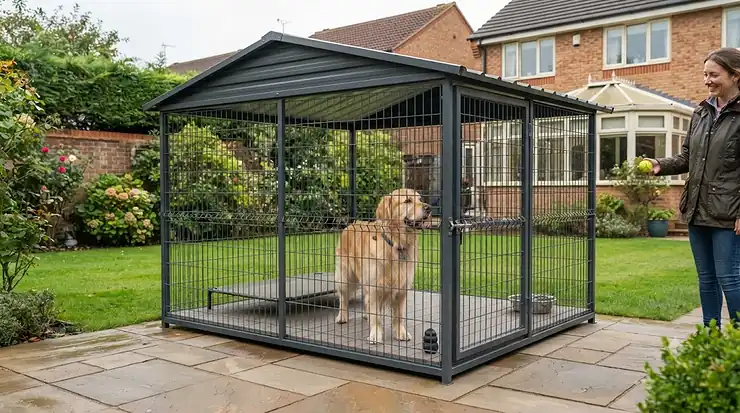
Big dogs need big outdoor space, and British weather doesn’t make that easy. One minute it’s blazing sunshine, the next it’s sideways rain, and your Labrador or Malinois is stuck choosing between a soggy garden and a stuffy conservatory. A covered dog run for large dogs solves that dilemma in one go: a secure, roofed enclosure where a large or giant breed can stretch, patrol the fence line, and nap in the shade without you fretting every time the sky changes its mind.
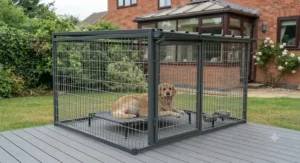
What is a covered dog run for large dogs? It’s a fenced outdoor enclosure, usually built from galvanised steel or heavy-duty mesh panels, fitted with a solid or fabric roof that blocks rain and UV rays while still letting air circulate freely.
This guide walks through seven genuinely available options on amazon.co.uk, from wallet-friendly starter kennels to modular breeder-grade systems, and digs into the shaded run coverage options, roofing materials, and sizing decisions that actually matter for a dog with real muscle behind its shoulders. We’ll also cover the welfare side, because a run with a roof is only half the job; the rest is knowing how to use it properly so your dog’s exercise needs and comfort come first.
Quick Comparison Table
| Product | Best For | Roof Type | Approx. Footprint | Price Range |
|---|---|---|---|---|
| Dellonda DG281 | Best all-round balance | 210D oxford cloth | 2 x 2m | £200-£250 |
| PawHut Large Breed Run | Biggest dogs, most space | Waterproof PE cover | 3 x 3m | £250-£320 |
| vidaXL 2x2x2m Cage | Tall, athletic jumpers | Galvanised steel panel | 2 x 2m | £150-£220 |
| Navaris Triangle Shelter | Adding shade to an existing run | Pop-up UV canopy | 1.2 x 1.2m | £25-£45 |
Looking at this snapshot, the spread in price and footprint tells its own story: a full permanent enclosure like the PawHut Large Breed Run costs roughly ten times more than a portable shade add-on like the Navaris Triangle Dog Shade Shelter, because you’re buying containment and coverage, not just shade. If your garden already has secure fencing and you only need sun protection, the cheaper route makes sense; if you’re starting from scratch, the fuller enclosures earn their higher price tag through security as much as shelter.
💬 Just one click — help others make better buying decisions too!😊
Top 7 Covered Dog Runs for Large Dogs: Expert Analysis
Below are seven real, currently listed products that cover the budget, mid-range and premium brackets, plus a couple of clever alternatives for owners who already have fencing sorted and just need coverage.
1. Dellonda 2 x 2 x 1.5m Galvanised Steel Dog Kennel (DG281) — sturdy UK-brand build at a fair price
The DG281 is one of the few dog runs on this list actually designed and sold by a UK company, and that shows in the small details, like spring-loaded assembly buttons that don’t need a full toolkit. It’s built from rust-resistant galvanised steel with PVC-coated wire fencing, and the roof is a 210D oxford cloth cover rated for both waterproofing and UV protection, giving genuine shaded run coverage rather than a token strip of fabric. At 2m x 2m x 1.5m and roughly 34.5kg, this suits medium-to-large breeds well, though very tall dogs like a Great Dane will find the 1.5m roofline a squeeze. Based on the spec comparison with cheaper imports, the thicker-gauge steel and toggle-fixed roof cover are what justify the mid-range price; this isn’t the flimsiest option on Amazon, nor the most expensive. Reviewers consistently report that assembly takes under an hour with two people and that the lockable door holds up against determined pushing from bigger dogs. What most buyers overlook is that the roof cover is removable, so you can strip it back on mild days for extra airflow and refit it before a downpour.
Pros:
- ✅ UK-based brand with responsive customer support
- ✅ Toggle-fixed roof strips off for ventilation on warm days
- ✅ Solid galvanised frame resists rust through wet winters
Cons:
- ❌ 1.5m roof height cramps very tall large breeds
- ❌ Not expandable if you need more room later
Priced around £200-£250 at the time of research, the DG281 sits in the mid-range and represents strong value for owners who want a UK-supported product rather than an unbranded import.
2. PawHut Heavy Duty Dog Run with Roof for Large Breeds — biggest footprint for giant dogs
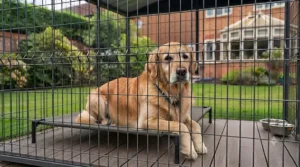
PawHut’s large-breed run is the size option to reach for when your dog genuinely needs room to properly run, not just turn around. Built at roughly 3m x 3m with a height near 2.35m, it uses galvanised chain-link fencing on a powder-coated steel frame, topped with a waterproof, UV-resistant PE cover. The taller 2.35m frame matters more than it sounds: large breeds that like to rear up on their hind legs or bark at the fence line need headroom, and a squat roof becomes a hazard rather than a shelter. This is the run to pick for households with a Rottweiler, a Bernese Mountain Dog, or two large dogs sharing the same space, since the sheer square footage keeps play from feeling constrained. Reviewers consistently mention that the chain-link sections feel noticeably heavier-gauge than budget alternatives, and a recurring theme in aggregated feedback is that the anti-escape lock genuinely stops nose-nudging escape artists. On the flip side, several buyers note the cover needs re-tensioning after strong winds.
Pros:
- ✅ Roomy 3m x 3m footprint suits multiple large dogs
- ✅ Tall 2.35m roofline gives real headroom
- ✅ Anti-escape lock rated for persistent, strong dogs
Cons:
- ❌ Cover can loosen in high winds without re-tensioning
- ❌ Large footprint needs a fairly flat, spacious garden
Expect to pay in the £250-£320 range for this size, which is reasonable given the amount of steel and fabric involved, though it’s worth checking current price and delivery costs before committing, since larger kennels sometimes carry a bulky-item surcharge.
3. vidaXL Galvanised Steel Dog Cage with Roof, 2x2x2m — tallest roofline for jumpers and lean athletic breeds
vidaXL’s take on the covered run swaps chain-link for a rigid galvanised steel mesh panel system, and its standout feature is genuine 2-metre headroom across the whole footprint, not just at the peak. That extra vertical space is what separates this from the Dellonda kennel above: a Weimaraner or a young Doberman that likes to jump at the fence has considerably less chance of clearing a 2m panel than a 1.5m one. The lockable hinged door and modular mesh panels also mean the whole structure holds its shape better under a dog leaning against the sides, something wire mesh runs can struggle with over time. What the spec sheet won’t tell you, but reviewers note, is that the rigid panel design assembles faster than tensioned tarpaulin kennels because there’s less fabric-fiddling involved. This is a strong pick for owners who’ve had a dog previously clear a shorter run, since the tall panels remove that temptation almost entirely.
Pros:
- ✅ Full 2m height deters jumping and fence-scaling
- ✅ Rigid mesh panels hold shape better than tensioned fabric
- ✅ Faster, tool-light assembly than tarpaulin-roofed kennels
Cons:
- ❌ Solid panel roof provides less airflow than mesh-and-fabric designs
- ❌ Heavier individual panels make solo assembly awkward
At around £150-£220, this sits in the mid-range and offers arguably the best value-per-metre-of-height on this list, particularly for breeds with a habit of testing boundaries.
4. ZEYUAN Dog House with Run, 165 x 251 x 181cm, Galvanised Steel with Canopy — best combined shelter-and-run in one unit
Rather than treating the sleeping area and the exercise space as two separate purchases, ZEYUAN’s design bolts an insulated-feel dog house directly onto a canopied run, so your dog can wander between shade, shelter, and open air without you needing to build or buy anything extra. The galvanised steel frame and canopy top give reasonable UV and rain resistance across the run section, while the enclosed house end offers a proper retreat during heavier weather. For large breeds that spend meaningful daytime hours outside, having both zones under one connected structure cuts down on wasted garden space compared with a separate kennel and run bought individually. Based on the spec comparison with combo units from other brands, the 165cm width is workable for one large dog but tight for two sharing simultaneously. Aggregated review sentiment points to straightforward setup and decent stability once ground-anchored, with a recurring note that the canopy section benefits from an extra layer of shade cloth during peak summer.
Pros:
- ✅ Combines sleeping shelter and exercise run in one footprint
- ✅ Saves garden space versus buying two separate structures
- ✅ Straightforward anchoring for wind stability
Cons:
- ❌ Snug for two large dogs sharing at once
- ❌ Canopy alone may need extra shade cloth in strong summer sun
Typically priced in the £150-£200 bracket, it represents solid value for anyone who hasn’t yet bought a dog house, since you’re effectively getting two products bundled into one.
5. Tidyard Outdoor Dog Kennel Pet Dog Pen with Roof (Walk-In, Large Size) — best budget option for a genuinely large exercise space
Tidyard’s walk-in pen is the run to consider when large breed exercise space matters more to you than premium finishing touches. Available in bigger footprints that stretch well past 4m in length, it gives a genuinely large breed room to trot rather than just pace, at a price point closer to the budget kennels than the premium ones. The frame uses standard galvanised tubing with a mesh cage design, topped by a fitted roof cover for rain and sun protection for dogs that spend long stretches outdoors. Here’s what to weigh: the trade-off for that extra length is a lighter-gauge frame than the PawHut or vidaXL options, so it suits calmer large breeds better than a dog that regularly body-checks fencing. Reviewers consistently describe the walk-in door as genuinely convenient for cleaning and feeding without needing to crouch, and a repeated theme in feedback is that ground-anchoring stakes are essential rather than optional in exposed gardens.
Pros:
- ✅ Long walk-in footprint gives real room to trot
- ✅ Human-height walk-in door simplifies cleaning and feeding
- ✅ Budget-friendly for the sheer amount of covered space
Cons:
- ❌ Lighter-gauge frame than premium galvanised options
- ❌ Needs proper ground anchoring in windy or exposed spots
At roughly £150-£250 depending on the exact length chosen, this is one of the better cost-per-square-metre deals on the list, provided your dog isn’t an aggressive fence-tester.
6. Puppy Panel Heavy Duty Galvanised Steel Modular Run Panels — best modular, expandable system for multi-dog households
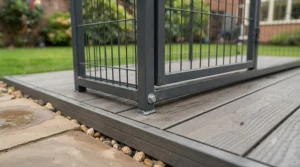
Rather than a fixed kennel, Puppy Panel sells individual heavy-duty galvanised steel sections, roughly 1.2m x 1.0m each, that bolt together into whatever shape and size your garden actually allows. This is the pick for breeders, multi-dog households, or anyone who suspects their space needs might change as a puppy grows into an adult large breed. Because each panel is independently rigid, you can configure an L-shaped run around a shed, extend it later with more panels, or add a roofed section over just part of the enclosure while leaving the rest open to the sky. On paper this means more planning effort upfront, since you need to calculate panel counts and roofing separately, but it also means you’re not locked into a single manufacturer’s fixed dimensions. Reviewers who use these for working and sporting breeds consistently praise the rigidity compared with flexible fencing, noting that panels don’t sag or bow under a dog leaning its full weight against them.
Pros:
- ✅ Fully modular — reconfigure or expand the layout anytime
- ✅ Rigid panels resist sagging under a leaning large dog
- ✅ Suits multi-dog households and breeders needing custom shapes
Cons:
- ❌ Roofing is sold separately, adding to total project cost
- ❌ Requires more planning than a boxed, fixed-size kennel
Individual panels commonly run in the £40-£90 range each, so a full run built from six to eight panels plus a roof typically lands in the low-to-mid £300s to £500s range — more of an investment, but one that can grow with your dog rather than needing replacing.
7. Navaris Triangle Dog Shade Shelter — best portable shade add-on for sun protection
Not every large dog needs a full new enclosure; plenty of owners already have secure fencing and just need better shaded run coverage options within it. The Navaris Triangle Shelter is a pop-up canopy with UV-protected, waterproof cooling white fabric, designed to be pitched inside an existing run, patio, or garden corner in minutes without tools. Its triangular pop-up frame is genuinely portable, which suits owners who want to reposition shade through the day as the sun moves, something a fixed kennel roof can’t do. Based on the spec comparison with fixed roofing, this won’t offer the same structural security as a galvanised run, but it excels specifically at the sun protection for dogs job description, and its light fabric promotes airflow underneath better than a solid panel roof. Reviewers consistently note it’s quick to pitch and strike, making it popular for people who also take it camping or to the beach with their dog. A repeated point in feedback is that it needs firm ground-anchoring in breezy conditions, since the fabric catches wind like a small sail.
Pros:
- ✅ Repositionable shade that follows the sun through the day
- ✅ Sets up in minutes without tools
- ✅ Doubles as travel or beach shade for the same dog
Cons:
- ❌ Offers shade only, not full containment security
- ❌ Needs firm anchoring in windy gardens
At around £25-£45, this is the cheapest item on the list and a smart top-up purchase for anyone whose existing run just needs better sun coverage rather than a full rebuild.
Practical Usage Guide: Setting Up and Maintaining Your Covered Run
Getting a covered dog run right isn’t just about the purchase; the first month of use decides whether it becomes a favourite spot or an ignored corner of the garden. Start by siting the run on level, well-drained ground, ideally with some natural shade from a fence or shed to supplement the roof cover during the hottest part of the day. Ground-anchor every corner properly, even on kennels that ship with basic stakes, since British gardens rarely offer perfectly firm soil and a run that shifts in wind quickly loses a dog’s trust in it. During the first thirty days, introduce your dog gradually with short supervised sessions and familiar bedding rather than expecting them to settle in immediately; large breeds especially can find a brand-new enclosure unsettling if they’re used to full garden access.
On maintenance, check roof cover tension monthly, since oxford cloth and PE covers stretch slightly over time and need re-tightening to keep shedding rain properly. Galvanised frames rarely rust, but bolted joints benefit from an annual check for looseness, particularly if your dog is a leaner or a jumper. A common first-month mistake is under-anchoring on the windward side, causing covers to flap loose exactly when shelter matters most, so revisit anchor points after the first proper storm rather than assuming the initial setup will hold indefinitely.
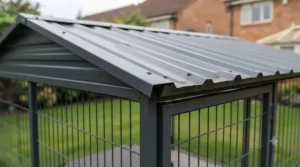
Real-World Scenarios: Which Covered Run Suits Your Dog?
Picture three different households working through the same decision. First, a family with a young, high-energy Labrador in a modest suburban garden: here, the vidaXL Galvanised Steel Dog Cage with Roof makes sense, since its 2m panels handle a dog that likes to jump up at the fence, and the compact 2x2m footprint fits a smaller plot without dominating it. Second, a rural household with two working-line German Shepherds and space to spare: the Puppy Panel modular system wins here, letting them build an L-shaped run around an existing shed and expand it later if a third dog joins the family. Third, a retired couple with an elderly Bernese Mountain Dog who mainly wants a shaded spot to doze while they garden: the Navaris Triangle Dog Shade Shelter, pitched inside their existing patio fencing, solves the sun protection for dogs problem without the cost or disruption of a full rebuild. Matching the product to the dog’s age, energy level, and your existing garden setup, rather than simply picking the best-reviewed item, is what actually determines whether the purchase gets used daily or abandoned by autumn.
How to Choose a Covered Dog Run for Large Dogs
Working through these seven criteria in order will steer you toward the right pick faster than scrolling reviews:
- Measure your dog’s stretch, not just its height — a large breed needs to turn, stretch, and build up a trot; aim for at least 2-3 times your dog’s body length in the shortest dimension.
- Check the roofline height against jumping habits — dogs that rear up or jump at fences need 2m-plus clearance, not the 1.5m found on some budget kennels.
- Match frame gauge to your dog’s strength — heavier, more powerful breeds need galvanised steel over lighter wire mesh to avoid bowing panels.
- Decide between fixed and modular — modular panels suit growing puppies or multi-dog households likely to need more space later.
- Factor in your garden’s wind exposure — exposed plots need proper ground-anchoring and a cover rated for wind, not just rain.
- Consider combined shelter-and-run units if space is tight — these save you buying a separate dog house later.
- Set a total budget including roofing and anchors — modular systems especially can creep upward once roofing and hardware are added.
Shaded Run Coverage Options: Roofs, Canopies and Shade Sails
Not all “covered” runs cover the same amount, or the same way. Solid oxford cloth or PE tarpaulin roofs, like those on the Dellonda and PawHut kennels, block rain completely and cut UV exposure significantly, but reduce airflow more than open designs. Rigid galvanised panel roofs, as used on the vidaXL cage, shed rain well and never sag, though they can trap heat if there’s no ventilation gap. Pop-up canopy shelters like the Navaris shade tent trade weatherproofing for flexibility, letting more air circulate underneath while still cutting direct sun, which suits milder climates or runs that already have some natural shelter. For owners piecing together their own setup, a simple shade sail stretched over an existing run panel frame is a genuinely underrated option: it’s inexpensive, lets rain through in light showers (worth pairing with a smaller waterproof section over any bedding area), and cools the space more effectively than solid roofing on genuinely hot days because heat doesn’t build up underneath it the way it can beneath tarpaulin.
Covered Dog Run vs Open Dog Run: Which Wins?
An open run, essentially fencing without any roof, costs less and never needs its cover re-tensioning, but it leaves your dog fully exposed to both rain and direct sun, which matters more for large breeds than owners often expect since bigger bodies retain heat for longer. A covered dog run solves that exposure problem directly, and for UK weather specifically, where a sunny morning can turn into a downpour by lunchtime, the roof earns its keep more often than not. Where open runs win is flexibility and lower maintenance; there’s no fabric to replace, no tensioning to check, and no risk of a cover collapsing under snow load in winter. On balance, for a large dog spending real daytime hours outside, a covered run’s shelter benefits generally outweigh the extra £50-£150 it typically costs over an equivalent open enclosure, particularly once you factor in vet bills avoided from heat-related issues.
✨ Don’t Miss These Exclusive Deals!
🔍 Take your garden set-up to the next level with these carefully selected covered runs. Click through to check current pricing and availability, and give your large dog a genuinely comfortable outdoor space this year.
Sun Protection for Dogs: Why Shade Matters More Than You Think
Dogs cool themselves primarily through panting rather than sweating, which makes shade a genuinely functional necessity rather than a nice extra, especially for large and giant breeds carrying more body mass to cool. According to the RSPCA’s guidance on dogs living outside, dogs kept outdoors must always be able to move away from direct sunlight into shade, and temperatures within any outdoor enclosure should ideally stay between 10°C and 26°C. Heatstroke develops faster than most owners expect: the PDSA notes that nearly three-quarters of heatstroke cases happen during play and exercise rather than passive lounging, which is exactly the scenario a covered run is built to prevent, since a shaded retreat is always within a few strides. Flat-faced, overweight, elderly, and thick-coated large breeds are at particular risk, so positioning any run to avoid south-facing heat traps, and pairing roof coverage with fresh water at all times, does more for welfare than the roof alone.
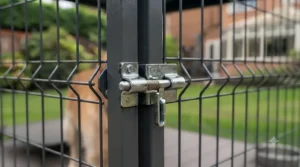
Covered Dog Runs for Large Breed Exercise Needs
Large breed exercise needs aren’t just about distance; they’re about safe, controlled movement that doesn’t hammer developing joints or an ageing frame. A covered run gives a large dog somewhere to patrol, stretch, and burn off restless energy between proper walks, without the growth-plate stress that comes from repeated hard-surface running in puppies under 16-18 months. The Kennel Club’s guidance for breeders and owners recommends that dogs have access to a good-sized exercise area alongside supervised free-running and lead walks, and that any ad-lib outdoor access includes adequate shelter from the weather — which is precisely what a well-chosen covered run for large dogs provides. For working and sporting breeds with genuinely high energy levels, look for the larger footprints on this list, like the PawHut or Puppy Panel builds, since a cramped run can become a source of frustration rather than relief. For older or recovering large dogs, a smaller, well-shaded space that limits sudden sprinting, paired with soft bedding, often does more good than raw square footage.
Common Mistakes When Buying a Covered Dog Run for Large Dogs
The most frequent error is buying based on the dog’s current size rather than its adult size, which catches out plenty of large-breed puppy owners who outgrow a run within a year. A close second is underestimating roofline height, assuming any roof will do without checking whether a dog that jumps or rears up can clear it. Skipping proper ground-anchoring is another recurring issue, particularly with lighter mesh kennels, since a run that shifts in wind quickly becomes unsafe rather than merely inconvenient. Buyers also frequently forget to budget for accessories, like extra shade cloth, anchoring kits, or flooring, treating the base kennel price as the full cost when it rarely is. Finally, many owners place the run in a spot chosen for garden aesthetics rather than actual shade and drainage, leading to a structure that looks fine but bakes in full sun for half the day regardless of its roof.
Safety, Regulations and Planning Guide
In most UK gardens, a freestanding covered dog run doesn’t require planning permission, since these structures are typically classed as temporary or moveable garden equipment rather than permanent buildings, but larger permanent installations with concrete bases can fall under permitted development rules depending on size and proximity to boundaries, so it’s worth a quick check with your local council if you’re planning anything substantial. On welfare compliance, the RSPCA is clear that any dog housed outdoors needs constant access to shade, water, and shelter from wind and rain, and that temperatures within the space should be actively managed rather than left to chance. If your dog shows signs of heatstroke, such as heavy panting, drooling, or disorientation, the RSPCA’s first-aid guidance recommends moving them into shade immediately and cooling them gradually with cool, not icy, water while arranging urgent veterinary care. Building these safety margins into your run from day one, rather than retrofitting them after a scare, is the difference between a genuinely welfare-friendly space and one that merely looks secure.
Long-Term Cost and Maintenance
Beyond the sticker price, covered dog runs carry ongoing costs worth factoring into your decision. Fabric roof covers on oxford cloth or PE tarpaulin kennels typically need replacing every two to four years depending on UK sun and rain exposure, with replacement covers usually costing a fraction of the original kennel price. Galvanised steel frames rarely need replacing at all if properly assembled, making the frame itself close to a one-off cost, while modular systems like Puppy Panel carry a slightly higher upfront outlay per square metre but no fabric to replace at all, which can make them cheaper over a five-year span despite the higher initial spend. Ground anchors, occasional bolt tightening, and the odd replacement stake after a storm are minor but genuine costs that add up to perhaps £20-£40 a year across most setups. Weighed against the total cost of ownership, the cheapest kennel upfront isn’t always the cheapest over its working life, particularly if its cover needs replacing twice as often as a heavier-duty alternative.
What to Expect: Real-World Performance
On paper, every run in this guide promises weatherproofing and security, but real-world performance varies with your specific garden and dog. Expect fabric roof covers to develop a light sag after the first heavy rain until you retension them, a normal part of settling in rather than a fault. Expect galvanised frames to develop a light patina rather than actual rust within the first year, even in damp British conditions, provided joints stay properly bolted. Expect your dog to test the fence line within the first week, pushing against weak points, which is exactly why frame gauge and anchoring matter more than headline price. And expect noticeably different usage patterns by season: shaded runs get heavy use through spring and summer afternoons, while in winter, most large dogs use the space more briefly, favouring shorter, drier bursts of outdoor time over long stretches under the roof.
FAQ
❓ Do covered dog runs need planning permission in the UK?
❓ What size covered run does a large dog need?
❓ Can I leave my large dog in a covered run all day?
❓ What's the best roof material for a dog run in the UK climate?
❓ How do I stop my dog overheating in a covered run during summer?
Conclusion
A genuinely good covered dog run for large dogs comes down to matching frame strength, roofline height, and coverage type to your specific dog rather than chasing the highest star rating. The Dellonda DG281 offers dependable UK-brand value for most medium-to-large breeds, the PawHut Large Breed Run and vidaXL 2x2x2m Cage step up for bigger or more athletic dogs, the ZEYUAN combo unit and Tidyard walk-in pen solve space and budget problems respectively, the Puppy Panel system suits anyone planning to expand, and the Navaris Triangle Shelter is the smart top-up for existing runs that just need better shade. Whichever you choose, pair it with proper ground-anchoring, seasonal maintenance checks, and genuine attention to shade and water, and it’ll earn its place as your dog’s favourite corner of the garden rather than a forgotten purchase.
Recommended for You
- Modular Dog Run vs Chain Link Dog Run: 7 Best UK Kits (2026)
- 7 Best Dog Runs Under £300 for a Secure Garden in 2026
- Wooden Dog Kennel With Veranda: 7 Best Picks for 2026 UK Gardens
Disclaimer: This article contains affiliate links. As an Amazon Associate, I earn from qualifying purchases. If you purchase products through these links, we may earn a small commission at no additional cost to you.
✨ Found this helpful? Share it with your friends! 💬🤗
