
In This Article
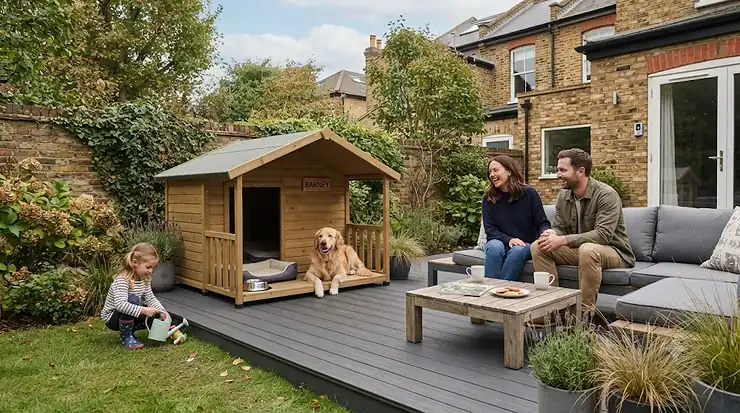
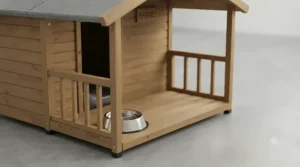
There’s a particular kind of satisfaction in watching your dog flop down in a patch of shade, chin on paws, utterly unbothered by the drizzle two feet away. That’s the whole point of a wooden dog kennel with veranda: it gives your dog somewhere dry to sleep and somewhere shaded to loiter, without forcing them to choose between “inside” and “outside.” A wooden dog kennel with veranda is essentially a traditional apex or pent-roofed dog house with an attached, roofed decking area at the front — a covered porch, in other words, that lets your dog watch the garden, eat their dinner, or simply catch a breeze without stepping into direct sun or rain.
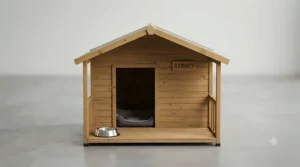
Most of us don’t think about this distinction until the first proper heatwave, or the first week of sideways October rain, when a bog-standard box kennel suddenly looks a bit mean. The veranda isn’t a gimmick tacked on for the photos — it changes how much a dog actually uses the structure day to day.
This guide walks through seven genuinely available wooden kennels with verandas sold through amazon.co.uk, ranging from compact spruce builds under £160 to heavy-duty pressure-treated apex kennels built for a Labrador-sized resident. Rather than repeating manufacturer copy, every product here gets an honest look at what the specifications actually mean for your dog, how the designs compare, and where the real trade-offs sit. According to RSPCA guidance on keeping dogs outside, an outdoor kennel needs to be large enough for separate sleeping and activity areas, with a dog able to stand, turn, stretch and wag their tail freely inside it — that’s the welfare baseline every recommendation below is measured against, alongside real UK buyer feedback where it’s genuinely available.
Quick Comparison Table
| Kennel | Best For | Approx. Price | Veranda Depth |
|---|---|---|---|
| WilTec Luxury XL Dog Kennel | Budget buyers, small-medium dogs | Around £150 | Roughly 33cm |
| Pinelap 3×2 Apex Kennel + Veranda | Value-focused, medium dogs | Low-to-mid £200s | 2ft (61cm) |
| Aivituvin Outdoor Dog House with Porch | Small-medium breeds, tidy gardens | Around £100-£130 | Spacious deck porch |
| PawHut Wooden Dog Kennel (109cm) | Medium dogs up to 20kg | Around £100-£140 | Overhang-covered entry |
| Pinelap 3×3 Apex Kennel + Veranda | Medium-large dogs, longevity | Around £285 | 2ft (61cm) |
| Aivituvin Large Anti-Chew Porch House | Chewers, large breeds | Around £180-£240 | Large covered porch |
| Pinelap 4×3 Apex Kennel + Veranda | Large breeds, permanent outdoor housing | Around £320 | 2ft (61cm) |
Looking at the spread above, the price gap between the cheapest and priciest options isn’t really about brand prestige — it’s almost entirely down to timber thickness, overall footprint and whether the kennel is pressure-treated for long-term rot resistance. Budget picks like the WilTec Luxury XL Dog Kennel suit dogs who mainly nap in a garden shelter during the day, while the Pinelap apex range is built as genuine full-time outdoor housing with a ten-year anti-rot guarantee behind it. If you’re outfitting a large or working breed for year-round outdoor living, the extra spend on the bigger Pinelap builds tends to pay for itself in fewer repairs and re-treatments down the line.
💬 Just one click — help others make better buying decisions too!😊
Top 7 Wooden Dog Kennels With Veranda: Expert Analysis
Every kennel below has been assessed on real specifications, genuine aggregated review sentiment where it’s verifiable, and honest reasoning about who each design actually suits. Prices are approximate — always check the current price on the product page before buying, since Amazon listings fluctuate.
1. WilTec Luxury XL Dog Kennel — best budget entry with a proper covered patio
The standout here is the price point: this is one of the cheapest genuinely veranda-equipped wooden kennels on amazon.co.uk, and it doesn’t skip the covered patio to get there. Built from spruce with heightened feet, the house measures roughly 93.5 x 70 x 77.5cm with an additional 80 x 35 x 33cm decked patio section bolted on the front. That patio area is genuinely usable — big enough for a food bowl and a dog lying half in, half out of the shade, rather than a decorative strip that’s more trim than function.
Based on the spec comparison, the raised feet matter more than they sound. Lifting the base off the lawn keeps the floor dry through a typical damp British autumn and stops cold ground temperature transferring straight into the sleeping area — a detail that separates a genuinely usable outdoor kennel from a glorified crate with a roof. On paper, this is a kennel for small-to-medium dogs (think spaniels, terriers, and similarly sized breeds) rather than anything approaching Labrador scale, since the internal footprint is compact. Aggregated Amazon review sentiment sits around the high 3-star mark across a decent sample size, with the pattern of feedback suggesting the build is solid for the price but the roofing material and joins need a proper waterproofing pass before the first winter, which is worth budgeting for.
Pros:
- ✅ Lowest price point of any veranda-equipped kennel here
- ✅ Genuinely usable, not token-sized, covered patio
- ✅ Raised feet help keep the base dry and insulated
Cons:
- ❌ Best suited to small-medium dogs, not large breeds
- ❌ Roof seams often need extra sealant before winter
Value verdict: at around £150, this is the easiest entry point into veranda-style dog housing for owners with a smaller dog and a modest budget.
2. Pinelap 3×2 Apex Kennel + Veranda — best value UK-made pressure-treated build
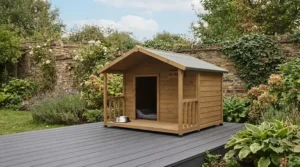
What most buyers overlook about this model is the timber specification: it’s fully tongue-and-groove, tanalised pressure-treated wood, backed by a ten-year anti-rot guarantee — a genuinely different tier of construction to the flat-pack spruce houses further down this list. The overall footprint is 5ft x 2ft including a 2ft front veranda, with a 3ft ridge height and 2ft eaves height on the apex roof, which sheds rain properly rather than pooling on a flat top.
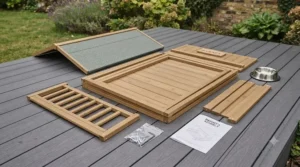
Here’s what to weigh: this is a proper self-assembly garden structure, not a snap-together box, so first-time builders should expect an hour or two with a second pair of hands rather than a fifteen-minute job. Reviewers consistently note the kennel arrives in large, heavy pre-cut sections that go together logically, and more than one buyer has commented it looks better once finished than the flat-packed photos suggest — a common pattern with UK-made apex kennels where the promotional imagery undersells the finished product. The felt roofing is included, though several buyers flag that additional wood treatment on top of the factory tanalising is worth doing for genuine long-term weatherproofing, particularly on cut edges exposed during assembly.
Pros:
- ✅ Ten-year anti-rot guarantee on pressure-treated timber
- ✅ Proper apex roof sheds rain far better than flat designs
- ✅ Sturdy, heavy-section construction built to last years
Cons:
- ❌ Self-assembly is more involved than flat-pack alternatives
- ❌ Cut edges benefit from extra treatment before winter
Value verdict: in the low-to-mid £200s, this sits comfortably as the best value genuinely UK-manufactured wooden dog kennel with veranda for medium breeds.
3. Aivituvin Outdoor Dog House with Porch — best for small-medium dogs and tidy gardens
The standout feature is the elevated, padded floor — removable for cleaning, and raised specifically to stop damp creeping up from underneath, which matters far more in a UK garden than in a drier climate. Dimensions run to roughly 114.3cm deep by 83.6cm wide by 82.8cm high, with a spacious deck porch built into the front third of that footprint, giving a dog somewhere to stretch out on sunny days without leaving the shelter entirely.
Based on the spec sheet, the “anti-bite” framing around entry points is a sensible addition for households with a determined chewer, and the hanging overhang roof is angled to keep rain and harsh midday sun off the porch area specifically, not just the sleeping compartment. Aggregated customer sentiment describes the kennel as easy to assemble — commonly cited at around 20-25 minutes for two people — with consistent praise for build quality and appearance once finished. One recurring theme in genuine reviews is that owners find it well suited to compact or cockerpoo-sized dogs, with a smaller number reporting damage on arrival, which is worth checking for at the point of delivery before assembling.
Pros:
- ✅ Elevated, removable floor genuinely reduces damp exposure
- ✅ Quick assembly, typically well under half an hour
- ✅ Anti-bite framing suits households with chewers
Cons:
- ❌ Footprint suits small-medium dogs, not large breeds
- ❌ Occasional transit damage reported, worth inspecting on arrival
Value verdict: around £100-£130 depending on current promotions, this is a strong pick if garden space and dog size are both on the smaller side.
4. PawHut Wooden Dog Kennel (109cm) — best all-rounder for medium dogs
The short version: raised base, asphalt roof, and a genuinely weather-resistant treatment, aimed squarely at medium dogs up to around 20kg and 80cm in body length — think Border Collies or French Bulldogs, per the manufacturer’s own sizing guidance. The elevated base is the detail worth dwelling on, since it’s specifically engineered to stop dampness and cold transferring up through the floor, which is exactly the failure point that ruins cheaper flat-bottomed kennels within a year or two of UK weather.
What the spec sheet won’t tell you outright is how much day-to-day usability comes from the small design choices: an openable roof for cleaning access, a removable base tray, and two windows with door curtains that let a breeze through on warm days while still offering some shelter from direct wind. Reviewer volume for this specific size is still building on amazon.co.uk, so treat aggregate ratings with some caution rather than as settled consensus; what’s verifiable is the manufacturer specification and the broader PawHut track record across its wider kennel range, which skews toward practical, if unremarkable, garden housing rather than premium joinery.
Pros:
- ✅ Elevated base actively fights damp and cold transfer
- ✅ Openable roof makes cleaning genuinely straightforward
- ✅ Sized clearly for medium breeds up to roughly 20kg
Cons:
- ❌ Review volume still limited for this exact size variant
- ❌ Asphalt roof will need occasional resealing over time
Value verdict: typically listed in the £100-£140 range, it’s a sensible middle-ground pick for owners who want function over flourish.
5. Pinelap 3×3 Apex Kennel + Veranda — best mid-range pick for longevity
Stepping up from the 3×2 model, this 5ft x 3ft footprint with its own 2ft front veranda gives noticeably more room to move without a huge jump in price. It’s built to the same tanalised, pressure-treated T&G specification as the smaller Pinelap kennel, with the same 3ft ridge and 2ft eaves height on the apex roof — the extra width is where the real benefit lands, since it lets a medium-to-large dog turn and lie fully stretched out, which the RSPCA’s welfare guidance flags as a non-negotiable minimum for outdoor housing.
Here’s what to weigh against the smaller model: the extra floor area does mean a heavier, more involved self-build, but reviewers consistently rate this size as the sweet spot between “big enough to actually be comfortable” and “still manageable to assemble without a trade crew.” Verified aggregate ratings currently sit around 3.8 out of 5 across a modest review sample — solid rather than spectacular, and honestly in line with what you’d expect from a flat-packed, self-assembled timber structure at this price rather than a factory-finished shed. As with the smaller Pinelap kennel, buyers should plan on an annual wood treatment pass beyond the initial tanalising for maximum lifespan.
Pros:
- ✅ Genuinely spacious interior for medium-large dogs
- ✅ Same ten-year anti-rot tanalised timber as smaller sizes
- ✅ Apex roof and veranda combination sheds weather well
Cons:
- ❌ Heavier build means assembly takes real effort
- ❌ Needs annual re-treatment for best long-term condition
Value verdict: at around £285, this is the pick for owners who want a kennel with veranda that will comfortably outlast a puppy’s growth spurt.
6. Aivituvin Large Anti-Chew Porch House — best for larger breeds and determined chewers
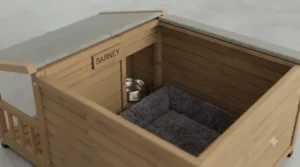
The defining feature is the metal-reinforced frame around the entry and porch structure, built specifically to withstand chewing and clawing from bigger, stronger dogs — a genuine step up from the standard wooden framing used on the brand’s smaller porch model reviewed above. The large overhang roof extends well beyond the walls, creating a genuinely deep, weatherproof porch rather than a narrow lip, and the whole structure is scaled for larger breeds that would simply outgrow the compact Aivituvin house.
Based on the spec comparison with the brand’s smaller model, the metal frame is the meaningful upgrade here rather than a marketing add-on: chew-resistant framing at stress points (door edges, porch rails) is precisely where cheaper wooden kennels fail first under a large dog’s jaw and claws. Reviewers consistently note the weatherproof roofing as effective in genuinely wet conditions, though verified review volume specifically for this larger configuration is thinner than for the brand’s smaller porch house, so treat star-rating claims with appropriate caution until you’ve checked current listing data yourself.
Pros:
- ✅ Metal-reinforced frame resists chewing far better than wood alone
- ✅ Large overhang roof creates a genuinely deep, shaded porch
- ✅ Scaled properly for large breeds, not a stretched small design
Cons:
- ❌ Verified review volume for this size is currently limited
- ❌ Higher price bracket than the brand’s smaller porch model
Value verdict: expect a price somewhere in the £180-£240 range, justified if your dog is a large breed with a habit of testing woodwork.
7. Pinelap 4×3 Apex Kennel + Veranda — best premium pick for large, permanent outdoor housing
This is the largest kennel on the list at 6ft x 3ft overall, including its own 2ft front veranda, and it’s built to the identical ten-year anti-rot, tanalised pressure-treated T&G specification as the smaller Pinelap models — the difference is purely scale. At this footprint, it’s genuinely suitable for large breeds such as Labradors, German Shepherds or similarly sized dogs who need to lie fully stretched, turn freely, and still have room for a separate activity zone within the structure, which is exactly the welfare standard the RSPCA sets for permanent outdoor housing.
What most buyers overlook is that the jump in price from the 3×3 model buys considerably more usable floor area rather than fancier materials — the build quality, roofing approach and ten-year guarantee are consistent across the whole Pinelap range. Reviewers consistently describe assembly as straightforward given the included nails, screws and felt roofing, with one recurring tip worth repeating: check inside the felt roll for the fixings before starting, since more than one buyer has reported nearly missing them. As with the smaller sizes, an annual re-treatment beyond the factory tanalising is the realistic maintenance cost of keeping this kennel weatherproof for its full expected lifespan.
Pros:
- ✅ Largest, most spacious option for genuinely big breeds
- ✅ Ten-year anti-rot guarantee on full pressure-treated build
- ✅ Consistent Pinelap build quality across the whole range
Cons:
- ❌ Highest price point of the seven kennels covered here
- ❌ Requires more garden space and a proper flat base
Value verdict: at around £320, this is the premium choice for owners committing to full-time, long-term outdoor housing for a large dog.
Practical Usage Guide: Setting Up and Maintaining Your Veranda Kennel
Getting a wooden dog kennel with veranda right isn’t just about the purchase — where and how you set it up does most of the heavy lifting for your dog’s actual comfort. Start with orientation: position the entrance and veranda so they face away from prevailing wind and driving rain, which in most of the UK means avoiding a westerly-facing opening if you can help it. A south or east-facing veranda tends to catch gentle morning sun without baking the kennel through a July afternoon.
Base preparation matters more than most first-time buyers expect. Even a raised-floor kennel benefits from sitting on a level, firm surface — paving slabs or a timber base frame — rather than directly on grass, which stays damp and encourages the underside timber to soften over time. During the first 30 days, check the roof felt or asphalt joins after the first heavy rain, since transit and assembly can loosen fixings that only reveal a leak under real weather.
For ongoing maintenance, an annual wood treatment (even on pre-tanalised kennels) extends lifespan considerably, and a quick check of hinges, door curtains and floor panels each season catches small issues before they become structural ones. Common early mistakes include underestimating how much space the veranda needs beyond the kennel’s footprint, and skipping a trial “dry run” placement before committing to final assembly — both are easy to avoid with five minutes of planning.
Real-World Scenarios: Which Veranda Kennel Suits Your Dog?
Picture three genuinely different households. First, a retired couple with a Cavalier King Charles Spaniel and a small courtyard garden — for them, the WilTec Luxury XL Dog Kennel or the Aivituvin Outdoor Dog House with Porch makes sense: modest footprint, budget-friendly, and more than enough veranda for a small dog to sun itself without needing a large structure eating into limited outdoor space.
Second, a family with a young, energetic Labrador who spends daytime hours in the garden while everyone’s at work or school. Here, the calculus shifts toward the Pinelap 3×3 or Pinelap 4×3 Apex Kennel + Veranda — enough room for the dog to fully stretch and turn, a properly rot-resistant build for genuine daily use, and a veranda deep enough that the dog isn’t forced to choose between full sun and a cramped interior on a hot afternoon.
Third, a household with a large, food-motivated chewer — a rescue GSD cross, say — who has already destroyed one flimsy plastic kennel. For that scenario, the Aivituvin Large Anti-Chew Porch House with its metal-reinforced frame is the more realistic long-term investment, even at a higher price point, simply because the alternative is replacing a cheaper kennel within a season.
Problem → Solution: Solving Common Veranda Kennel Issues
Problem: the veranda floods in heavy rain. This usually comes down to base level rather than the kennel itself — re-level the base or add a slight paving slope away from the structure, and check the roof overhang genuinely extends past the veranda’s front edge.
Problem: the dog won’t use the veranda at all. Often it’s positioning — if the porch faces a busy path or a neighbour’s fence line, a nervous dog may avoid sitting exposed there. Try repositioning so the veranda overlooks a quieter part of the garden.
Problem: timber starts greying or softening after a year. This is standard UK weathering on any wood, tanalised or not. An annual exterior wood treatment, applied before autumn, is the fix — skipping it is the single most common reason kennel lifespans fall short of the anti-rot guarantee period.
Problem: draughts through the sleeping compartment. A PVC strip curtain or a simple wind-break board fitted just inside the main door (leaving the veranda open) keeps the sleeping area noticeably warmer without blocking airflow entirely.
Problem: condensation build-up inside during cold snaps. Check that any vents aren’t accidentally blocked by bedding, and avoid overinsulating a kennel that isn’t designed for it — some airflow is necessary to stop damp settling.
How to Choose a Wooden Dog Kennel With Veranda
Choosing the right wooden dog kennel with veranda comes down to a handful of genuinely decision-shaping factors, in roughly this order of priority:
- Size against your dog’s dimensions. Measure nose-to-tail and floor-to-head, then add at least 15cm to both for the interior — undersizing is the single most common buying mistake.
- Timber treatment. Tanalised, pressure-treated timber with a stated anti-rot guarantee (like the Pinelap range) will outlast untreated or lightly-treated spruce builds by years, not months.
- Veranda depth. A token 20cm lip isn’t a real veranda — look for at least 30-60cm of genuinely usable covered decking.
- Roof design. Apex roofs shed UK rain more reliably than flat or minimally-pitched designs, particularly over a multi-year lifespan.
- Base elevation. A raised floor keeps damp and cold from transferring upward, which matters enormously through a typical British winter.
- Assembly realism. Be honest about whether you’re prepared for a heavier, multi-hour self-build versus a lighter flat-pack structure.
- Chew resistance. If your dog is a determined chewer, prioritise metal-reinforced framing over standard wood joints at stress points.
Veranda-Style Dog Housing vs Standard Kennels
The core difference between veranda-style dog housing and a standard box kennel isn’t cosmetic — it’s about how much of the day the structure is actually usable. A standard kennel gives a dog two choices: fully inside, in the dark and often stuffy, or fully outside, exposed to whatever the sky is doing. Veranda-style dog housing adds a genuine third option: shaded, sheltered, but still outward-facing, which is closer to how dogs naturally choose to rest when given the option.
This matters most in shoulder seasons — spring and autumn — when temperatures swing enough that a dog might want shelter from rain in the morning and shade rather than a dark interior by afternoon. Standard kennels also tend to concentrate wear at a single entry point, whereas veranda designs distribute foot traffic and weather exposure across a slightly larger footprint, which in practice means the main sleeping compartment stays drier and cleaner for longer. The trade-off, honestly, is footprint and price — veranda-style housing needs more garden space and typically costs more than an equivalent standard kennel of the same brand and build quality.
Kennel Porch Benefits Explained
The kennel porch benefits that matter most in practice are surprisingly practical rather than aesthetic. A covered porch gives a dog a legitimate outdoor vantage point — somewhere to watch the garden gate or the postman without getting soaked doing it, which matters a great deal for breeds prone to boredom or separation anxiety when left outside. It also creates a sensible spot for food and water bowls, kept dry and shaded without cluttering the sleeping compartment itself, which in turn keeps the interior bedding area cleaner.
There’s a thermal argument too: a porch roof extends shade further from the structure than the walls alone would provide, reducing how much direct sun hits the entrance during the hottest part of the day. And practically, a porch acts as a boot-scraper zone of sorts — muddy paws get a chance to dry and shed excess mud on decking before a dog steps onto sleeping bedding, which is a small but genuinely useful hygiene benefit that standard kennels simply don’t offer.
Shaded Kennel Porch Options: Choosing the Right Overhang
Not all shaded kennel porch options are equal, and the overhang depth is really the variable that decides whether shade is genuine or nominal. A shallow overhang of 10-15cm barely shifts shadow through a full day as the sun moves; a deeper overhang of 30cm or more — like the setups on the Aivituvin Outdoor Dog House with Porch and the Pinelap apex kennels — maintains usable shade across a much wider window of the afternoon.
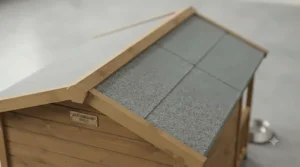
Roof material affects this too. Asphalt-shingled or felted apex roofs, as used across the PawHut Wooden Dog Kennel and the Pinelap range, absorb and re-radiate less heat than thin metal sheeting can, which keeps porch temperatures noticeably more comfortable during a genuine summer spell. If your garden has limited natural shade from trees or fencing, prioritising deeper overhang porches over compact designs is the more meaningful upgrade compared with chasing extra headline dimensions elsewhere on the spec sheet.
Shade Structures for Dogs: Why Position and Orientation Matter
Shade structures for dogs only work if they’re positioned with the sun’s actual path in mind, not just placed wherever’s convenient in the garden. Blue Cross advice on keeping pets cool recommends positioning outdoor housing in the shade, moving it as needed through the day, with enough airflow underneath rather than the base sealed flat against the ground — advice that applies directly to where you site a veranda kennel, not just smaller hutches. An east-facing veranda catches gentler morning light and is shaded through the hottest midday and afternoon hours, which tends to suit most UK gardens better than a south-facing setup that bakes all day.
Dogs rely on panting rather than sweating to cool down, and the PDSA’s guidance on heatstroke in dogs makes clear that shade access is one of the most effective ways to prevent dangerous overheating, so a kennel veranda genuinely earns its keep during a heatwave, not just as a rain shelter. It’s worth remembering, though, that even a well-shaded veranda isn’t a substitute for supervision on genuinely hot days — check water bowls are topped up and consider bringing particularly heat-sensitive breeds indoors during the worst of any summer spike.
Common Mistakes When Buying a Wooden Dog Kennel With Veranda
The most frequent mistake is buying to the dog’s current size rather than its adult size — a sensible approach for a puppy, admittedly, but one that means a second purchase within a year for fast-growing breeds. Close behind that is underestimating veranda depth: many listings show a veranda in photos that looks generous but measures under 30cm in the actual spec sheet, which barely accommodates a bowl, let alone a resting dog.
Skipping base preparation is another common error — placing even a raised-floor kennel directly on soft grass undermines a lot of the weatherproofing engineering built into the structure. And a genuinely underrated mistake is ignoring assembly realism: several of the sturdier Pinelap-style kennels arrive in heavy, large sections that genuinely need two people, not one determined owner with a Saturday afternoon free.
Outdoor Dog Comfort: What to Expect Season by Season
Outdoor dog comfort with a veranda kennel changes meaningfully across the year, and it’s worth setting expectations by season rather than assuming one setup covers everything equally well. In spring and autumn, the veranda genuinely earns its keep — dogs use it heavily as a dry, shaded middle ground between fully inside and fully exposed, particularly during the UK’s characteristic pattern of brief showers between sunny spells.
Summer performance depends heavily on overhang depth and orientation, as covered above; a well-sited kennel with a deep veranda keeps a dog notably cooler than a standard box kennel through a heatwave, though it’s still not a substitute for shade-checking on the hottest days. Winter is where raised floors and pressure-treated timber matter most — a kennel that performs beautifully in June can feel considerably less cosy in January without proper base insulation from the ground and a windbreak across the main sleeping compartment’s entrance, distinct from the open veranda itself.
Long-Term Cost & Maintenance
Total cost of ownership for a wooden dog kennel with veranda extends well beyond the purchase price, and it’s worth budgeting honestly for it. Annual wood treatment — even on pre-tanalised timber like the Pinelap range — typically costs relatively little in product but represents a genuine recurring commitment, roughly an hour or two of work each autumn. Roofing felt or asphalt shingles generally need inspection or minor repair every few years, particularly after storm-heavy winters.
Set against that ongoing cost, the value case for a properly treated, ten-year anti-rot guaranteed kennel is straightforward: cost-per-year drops considerably compared with replacing a cheaper, untreated kennel every two or three seasons as the timber softens and rots. For owners planning genuinely long-term outdoor housing, paying more upfront for the Pinelap-tier build quality is very often the cheaper option once measured over a full decade rather than a single purchase price.
Safety, Regulations & Planning Permission Guide
Most wooden dog kennels sold for UK gardens fall well within permitted development rules and don’t require planning permission, but it’s worth understanding the actual limits rather than assuming. According to the Planning Portal’s outbuildings guidance, outbuildings are generally considered permitted development providing they’re single storey, with a maximum eaves height of 2.5 metres and an overall height capped at four metres under a dual-pitched roof or three metres otherwise — and crucially, these rules explicitly cover kennels alongside sheds and other garden structures. Positioning close to a boundary can lower the maximum height allowance further, so it’s worth checking your specific plot before finalising a large structure like the 6ft Pinelap kennel.
Beyond planning, the RSPCA’s welfare standards are the practical benchmark worth building toward regardless of legal minimums: adequate space to move freely, genuine shelter from rain, wind and direct sun, and appropriate temperature regulation are the non-negotiables for any dog housed outdoors for meaningful periods. If in doubt about a specific structure or boundary situation, a quick check with your local planning authority avoids any surprises after assembly.
Frequently Asked Questions
❓ What is a wooden dog kennel with veranda?
❓ How big should a wooden dog kennel with veranda be for a large dog?
❓ Do wooden dog kennels with verandas need planning permission in the UK?
❓ How often does a wooden kennel with veranda need re-treating?
❓ Is a veranda kennel better than a standard box kennel for hot weather?
Conclusion
A wooden dog kennel with veranda earns its place over a standard box kennel by giving your dog genuine flexibility — shelter when it’s needed, shade when it isn’t, and a dry spot to simply watch the world go by. Across the seven kennels covered here, the right choice really comes down to your dog’s size, your garden space, and how much you’re willing to invest upfront for long-term durability. Budget-conscious owners with smaller dogs are well served by the WilTec Luxury XL Dog Kennel or the Aivituvin Outdoor Dog House with Porch, while households committing to full-time outdoor housing for a large or growing dog should weight their decision toward the pressure-treated, anti-rot guaranteed Pinelap range.
Whichever size you land on, the fundamentals matter more than any single spec: proper timber treatment, a genuinely deep veranda rather than a token overhang, a raised base, and sensible positioning against sun and wind. Get those right, and a wooden dog kennel with veranda becomes exactly what it should be — somewhere your dog actually chooses to spend time, not just somewhere they’re sent.
Recommended for You
- Weatherproof Dog Kennel UK: 7 Top Picks for 2026 (Rain-Tested)
- Apex Roof vs Pent Roof Dog Kennel: 7 Best Picks for 2026
- Raised Floor Wooden Kennel for Large Dogs: 7 Best Picks 2026
Disclaimer: This article contains affiliate links. As an Amazon Associate, I earn from qualifying purchases. If you purchase products through these links, we may earn a small commission at no additional cost to you.
✨ Found this helpful? Share it with your friends! 💬🤗
