
In This Article
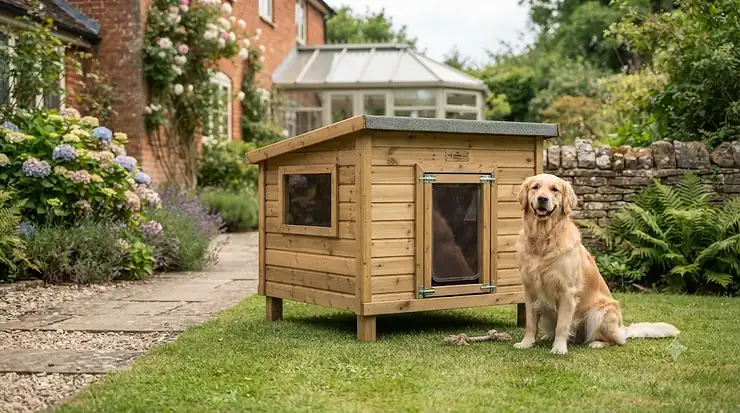
Leave a large dog’s kennel sitting flush on wet grass for one British winter and you’ll see exactly why so many owners end up replacing it by spring. Timber wicks up moisture from the ground like a straw in a glass of water, and once that happens, rot sets in fast — usually right where your dog’s bed and paws spend most of their time. A raised floor wooden kennel for large dogs solves this at the design stage rather than the repair stage: a few centimetres of clearance between the base panel and the soil is often the difference between a shelter that lasts a decade and one that’s swollen, mouldy, and sagging by year two.
This guide walks through seven genuinely available options on amazon.co.uk, from budget elevated shelters through to insulated and heated cabins, with honest analysis of who each one actually suits. We’ll also dig into large breed joint health, damp-proofing techniques, kennel base materials, and the practical realities of British weather — because a spec sheet only tells half the story. According to RSPCA guidance on keeping dogs outside, outdoor housing needs proper protection from rain, wind and sun as a baseline welfare requirement, and a raised floor is one of the simplest ways to meet that standard. Let’s get into the detail.
Quick Comparison Table
| Kennel | Best For | Price Range | Key Feature |
|---|---|---|---|
| PawHut Elevated Wooden Kennel | Budget buyers wanting a simple raised base | Under £200 | Removable elevated floor panel |
| Cozy Pet DK01XL Insulated Kennel | Cold, exposed gardens | £250-£350 range | Full 4-sided Styrofoam insulation |
| Aivituvin AIR43-M Anti-Chew Kennel | Persistent chewers and diggers | £150-£250 range | Anti-chew metal frame + raised platform |
| PawHut Large Weatherproof Porch Kennel | Dogs that like to lounge outdoors | £250-£350 range | Covered porch plus raised main house |
| Morgete Anti-Chewing Wooden House | Heavy-set breeds needing a sturdy frame | £150-£250 range | Reinforced iron-frame construction |
| Aivituvin AIR7024 Heated Kennel | Senior or arthritic large dogs in winter | £350-£450 range | Thermostat-controlled heating pad |
| Wooden Dog Kennel – Sturdy & Attractive | Traditionalists wanting a classic pitched roof | Under £150 | Wide overhang, simple raised base |
Looking at the spread above, the gap between the cheapest and most expensive option isn’t really about “better” or “worse” wood — it’s about how much climate control and chew-resistance you’re paying for on top of the raised floor that all seven share. Budget-conscious buyers land well with the PawHut Elevated Wooden Kennel or the classic Wooden Dog Kennel – Sturdy & Attractive, while anyone in a genuinely cold or exposed spot should look hard at the Cozy Pet DK01XL or Aivituvin AIR7024. Owners of enthusiastic chewers will get more long-term value from the metal-reinforced Aivituvin AIR43-M or Morgete than from a pure-timber build, even at a similar price point.
💬 Just one click — help others make better buying decisions too!😊
Top 7 Raised Floor Wooden Kennels for Large Dogs: Expert Analysis
1. PawHut Elevated Wooden Kennel — removable raised floor for easy cleaning
The standout here is the fully removable elevated floor panel, which slides out for hosing down without dismantling the whole structure. At roughly 100 x 65.5 x 68cm, it’s built for medium-to-large breeds rather than giants, so a Labrador or Springer fits comfortably while a Mastiff will feel the pinch.
The asphalt-shingled roof opens for ventilation and cleaning access, and the fir wood body carries a water-resistant paint finish that holds up reasonably well through a typical UK autumn and winter. Reviewers describe assembly taking around 20-30 minutes for two people, with pre-drilled holes that line up well — a detail that matters more than it sounds, since misaligned panels are the single biggest cause of DIY kennel assembly headaches.
Based on the spec comparison, this is squarely a starter kennel: it does the raised-floor job properly without the insulation or reinforced framing found further up this list. Reviewers consistently report that the slot-together floor panel is the feature they value most, since it turns a routine clean into a five-minute job rather than a scrub-and-dry ordeal. What most buyers overlook is that the “elevated” clearance here is modest — a couple of centimetres — which helps with puddles but won’t fully solve persistent damp ground in a low-lying garden.
Pros:
- ✅ Removable floor panel makes cleaning genuinely quick
- ✅ Openable roof aids ventilation and deep cleans
- ✅ Straightforward two-person assembly in under 30 minutes
Cons:
- ❌ Modest ground clearance won’t fix badly waterlogged gardens
- ❌ Sizing suits medium-large dogs, not true giant breeds
Priced under £200 at the time of research, the PawHut Elevated Wooden Kennel offers strong value as an entry point into raised-floor housing, though check current price and stock before buying, as availability shifts through the year.
2. Cozy Pet DK01XL Insulated Kennel — full four-sided Styrofoam insulation
What jumps out immediately is the four-sided insulation package: treated fir wood, a Styrofoam core, and a plywood inner layer sandwiched together on every wall, not just the roof. That’s a meaningfully different build to most “insulated” kennels on the market, which often just line the roof cavity and call it a day.
The removable floor sits on adjustable feet, so you can level the kennel on uneven ground — a genuinely useful feature for anyone whose garden isn’t billiard-table flat, which, let’s be honest, is most of us. A PVC strip curtain over the doorway cuts draughts further, and the double-hinged roof splits for full interior access when it’s time to strip everything out and disinfect.
On paper this means the DK01XL is the strongest cold-weather performer of the seven, and reviewer sentiment backs that up: owners of German Shepherds and similar large working breeds frequently mention that their dogs use the kennel through winter rather than retreating indoors, which isn’t something you hear said of uninsulated builds. The trade-off is assembly complexity — more panels and insulation layers mean more parts to align, and it’s a two-person job that can run beyond an hour for first-timers.
Pros:
- ✅ Genuine 4-sided insulation, not just a lined roof
- ✅ Adjustable feet cope with uneven garden surfaces
- ✅ PVC strip curtain reduces draughts at the doorway
Cons:
- ❌ Longer, fiddlier assembly than simpler models
- ❌ Premium build pushes it toward the top of the price bracket
Expect a price in the £250-£350 range depending on retailer promotions, and given the insulation spec, this represents strong long-term value for anyone in an exposed or northern UK garden.
3. Aivituvin AIR43-M Anti-Chewing Metal Frame Kennel — reinforced frame stops destructive chewers
The headline feature is the all-around metal frame wrapping the timber panels, specifically engineered to survive dogs that treat wooden edges as a chew toy. This matters more than most buyers initially realise, because timber-only kennels frequently fail not from rot but from a bored large dog methodically dismantling the door frame over a few months.
Underneath, the raised wooden platform and waterproof plastic feet keep the sleeping area off the ground, while a spacious front porch gives room to lounge without leaving shelter. The asphalt roof and vinyl door curtain add further weatherproofing, rounding out a build that’s clearly aimed at tougher, more demanding use than a typical decorative garden kennel.
Here’s what the spec sheet won’t tell you, but user reports suggest: the metal reinforcement adds noticeable weight, which is actually a benefit in windy gardens since it resists tipping and shifting far better than lightweight timber-only builds. This is the kennel to choose if you’re a Rottweiler, Doberman, or working-breed owner who has already been through one or two chewed-up kennels and wants something that survives contact. Aggregated review sentiment describes the metal frame as the deciding factor for repeat buyers who’d previously written off wooden kennels entirely.
Pros:
- ✅ Metal frame genuinely resists chewing and scratching
- ✅ Raised platform plus waterproof feet doubles down on damp protection
- ✅ Extra weight improves stability in windy spots
Cons:
- ❌ Heavier construction makes repositioning harder
- ❌ Metal components need occasional rust checks in wet climates
At around £150-£250, the Aivituvin AIR43-M earns its place for households where destructiveness, not just weather, is the main design challenge.
4. PawHut Large Weatherproof Porch Kennel — spacious covered porch plus raised main house
The distinguishing feature is the generous covered porch bolted onto the main sleeping compartment, effectively doubling the usable footprint so a large dog can sunbathe under cover without leaving the structure at all. At around 59 x 63.5 x 39.25 inches overall, it’s one of the roomier options here.
Fir wood construction with a weatherproof asphalt roof and raised main-house flooring keeps the sleeping quarters dry, while the porch area — rated to handle its own separate weight capacity — gives a genuinely usable outdoor lounging zone. That’s a meaningful upgrade over kennels that only offer a covered doorway.
Based on the spec comparison, this model suits dogs that spend significant daylight hours outside rather than just sleeping in the kennel overnight — think family gardens where the dog has full daytime access to the outdoors. Reviewers frequently note that the porch becomes the dog’s preferred daytime spot, with the raised interior reserved mainly for sleeping and shelter during rain. What most buyers overlook is that the extra porch space means a larger overall footprint, so measuring your intended spot before ordering really does matter here.
Pros:
- ✅ Covered porch adds genuine daytime lounging space
- ✅ Raised main house keeps sleeping area dry and warm
- ✅ Sturdy fir wood build rated for large breeds
Cons:
- ❌ Large footprint needs a correspondingly large garden spot
- ❌ Porch deck isn’t insulated, so it’s fair-weather use mainly
Typically found in the £250-£350 range, this is a strong mid-to-premium pick for owners prioritising outdoor lifestyle over pure winter insulation.
5. Morgete Anti-Chewing Wooden House — reinforced iron-frame build for heavier breeds
The standout is the all-around innovative iron frame that enhances structural rigidity while resisting chewing damage — similar in concept to the Aivituvin above but built by a different manufacturer with its own take on the reinforcement pattern. It’s available in two size options, which helps when you’re kitting out anything from a Boxer to a Bernese Mountain Dog.
Waterproof rubber feet lift the whole structure off the ground, protecting the base timber from rot while promoting airflow underneath — precisely the kind of passive ventilation that stops moisture pooling under the kennel. The roof opens fully and the floor panels are removable, so deep cleaning doesn’t require dismantling the entire shell, and a wind-lock keeps the asphalt roof secured during gusty weather.
What most buyers overlook about this model is that the elevated foundation isn’t just about keeping the dog dry — it also protects your dog from ground chill, which matters enormously for large breeds prone to joint stiffness (more on that in the joint health section below). Reviewers consistently mention easy assembly as a strength, with one common thread being that the numbered panels and pre-fitted fixings make the process considerably less frustrating than some competitor kits.
Pros:
- ✅ Iron-frame reinforcement resists chewing and structural stress
- ✅ Roof wind-lock prevents blow-off in exposed gardens
- ✅ Removable floor and full-opening roof simplify cleaning
Cons:
- ❌ Only two size options, limiting fit for giant breeds
- ❌ Rubber feet need periodic inspection for wear
Priced in the £150-£250 range, the Morgete sits as a genuine alternative to the Aivituvin range for buyers who want reinforced durability without stretching into premium heated territory.
6. Aivituvin AIR7024 Heated Kennel — thermostat-controlled heating pad for winter comfort
This is the only kennel on the list with active heating, and it’s the standout feature by a distance: a UL-tested heating pad maintains a set temperature range, paired with a chew-resistant cord and overheat protection built in. For anyone whose large dog genuinely struggles in cold weather, this changes the calculation entirely.
Beyond the heating element, the build includes a heavy-duty metal frame, a six-sided removable insulated liner, a raised floor, and a weatherproof asphalt roof — essentially combining the insulation approach of the Cozy Pet kennel with active heat on top. The liner can be pulled for warm-weather use, so the kennel isn’t a one-season purchase.
Here’s what the spec sheet won’t tell you, but user reports suggest: the heating pad’s real value shows up not in outright cold but in damp cold — the combination that aggravates stiff joints most in older or arthritic large dogs, as covered in more detail in the joint health section below. For senior Labradors, Retrievers, or Shepherds with existing joint issues, that combination of raised floor, insulation, and active heat is arguably the single strongest argument for spending toward the top of this list’s price range, rather than a luxury add-on.
Pros:
- ✅ Thermostat-controlled heating pad with overheat protection
- ✅ Removable liner allows warm-weather use too
- ✅ Metal frame adds structural durability alongside insulation
Cons:
- ❌ Requires an outdoor-rated power supply nearby
- ❌ Highest price point of the seven kennels featured
At around £350-£450, this is a premium buy, but for senior or joint-compromised large dogs it’s arguably the most defensible spend on this entire list.
7. Wooden Dog Kennel – Sturdy & Attractive — classic pitched roof with wide weather overhang
The defining feature is the traditional pitched roof with a generous overhang, which does a surprisingly good job of shielding the doorway from driving rain without any of the bells and whistles found elsewhere on this list. It’s a straightforward, no-frills build finished in light timber.
Constructed from finished wood with a raised base as standard, it keeps the core damp-proofing benefit that every kennel here shares while skipping insulation, metal reinforcement, or active heating. Reviewers describe the assembly as quick — often cited around 15-25 minutes — and multiple owners mention adapting the design creatively, including one memorable case of a buyer building a small ramp for a tortoise rather than a dog, which says a lot about how approachable the design is to modify.
Reviewers consistently note the build quality as good for the price bracket, with several customers highlighting how well it looks in a garden setting compared to the more utilitarian competitors above. What most buyers overlook is that “classic” doesn’t mean “compromise” here: the wide overhang is doing real functional work, meaningfully reducing wind-driven rain reaching the door and porch area, even without the closed porch structure found in pricier models.
Pros:
- ✅ Wide roof overhang genuinely cuts wind-driven rain exposure
- ✅ Fast assembly, typically under 25 minutes
- ✅ Attractive traditional look that suits most gardens
Cons:
- ❌ No insulation or reinforced frame for extreme conditions
- ❌ Sizing runs on the smaller side of “large dog” territory
Usually available under £150, this remains the most budget-friendly genuine raised-floor option on the list, and a sensible starting point for first-time outdoor kennel owners.
Top 7 Kennels: Specs, Price Range & Best For
| Kennel | Material | Raised Floor | Insulated | Best For |
|---|---|---|---|---|
| PawHut Elevated Wooden Kennel | Fir wood | Yes, removable | No | Budget first-timers |
| Cozy Pet DK01XL | Treated fir wood + Styrofoam | Yes, adjustable feet | Yes, 4-sided | Cold, exposed gardens |
| Aivituvin AIR43-M | Wood + metal frame | Yes, platform | No | Chewers and diggers |
| PawHut Porch Kennel | Fir wood | Yes, main house | No | Daytime outdoor lounging |
| Morgete Anti-Chewing House | Wood + iron frame | Yes, waterproof feet | No | Heavier, sturdier breeds |
| Aivituvin AIR7024 | Wood + metal frame | Yes, plus liner | Yes, heated | Senior or arthritic dogs |
| Wooden Dog Kennel – Sturdy & Attractive | Finished timber | Yes, standard base | No | Classic budget pick |
The clearest pattern in this table is that raised flooring is now table stakes — every genuinely credible large-dog kennel on the market includes it — while insulation and active heating are what actually separate budget builds from premium ones. If you’re weighing up the Cozy Pet DK01XL against the Aivituvin AIR7024, the deciding factor really comes down to whether your dog needs passive warmth retention or active heat, which usually maps directly onto age, breed, and any existing joint conditions.
✨ Don’t Miss These Exclusive Deals!
🔍 Ready to give your dog a drier, warmer place to rest? Click through on any of the seven kennels above to check current pricing and availability, and find the raised floor wooden kennel that matches your garden and your dog’s needs.
Practical Usage Guide: Setting Up Your Raised Floor Kennel Properly
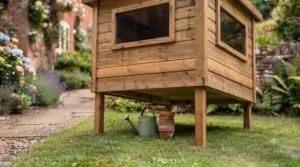
Getting a raised floor wooden kennel for large dogs right isn’t just about unboxing it and walking away — the first 30 days genuinely shape how well it performs for years afterward. Start by choosing a spot with partial shade and good drainage; a kennel raised 5cm off the ground still won’t help much if it’s sitting in a puddle after every rainfall, so avoid the lowest point of your garden even if it’s the most sheltered.
Once assembled, treat the exterior timber with a UK-approved wood preservative before the first heavy rain, even if the kennel arrives pre-treated — an extra coat at the seams and joints, where water tends to collect, adds meaningful years to the structure’s life. As explained in this NetRegs guide to wood preservatives, any wood preservative sold in the UK must carry approval under the Control of Pesticide Regulations or the Biocidal Products Regulations, so always check the product label before buying.
Common first-month mistakes include over-bedding the kennel (thick blankets can trap moisture against the raised floor rather than letting it breathe), positioning the doorway to face prevailing wind, and skipping a settling-in period where your dog gets short, positive introductions to the new space rather than being expected to sleep there immediately on night one. Set a maintenance rhythm early: a monthly check of the floor panel for warping, a seasonal wood treatment top-up, and an annual full clean of the underside where dust and cobwebs like to gather.
Real-World Scenario: Which Kennel Suits Your Dog?
The retired working dog in a damp Yorkshire garden: An 8-year-old Labrador with early joint stiffness needs warmth more than novelty. Here, the Aivituvin AIR7024 Heated Kennel or the Cozy Pet DK01XL are the sensible picks — both combine raised flooring with genuine insulation or active heat, directly addressing the cold-damp joint pain pattern that vets commonly describe in ageing large breeds.
The energetic young German Shepherd who chews everything: Budget matters less here than durability. The Aivituvin AIR43-M or Morgete Anti-Chewing House make more sense than a pure-timber build, since their metal reinforcement survives determined chewing that would reduce a standard kennel to splinters within months.
The first-time large-breed owner on a tight budget: A Boxer puppy in a small suburban garden doesn’t need heating or reinforced steel — it needs a dry, raised, well-ventilated shelter that won’t break the bank. The PawHut Elevated Wooden Kennel or Wooden Dog Kennel – Sturdy & Attractive cover the fundamentals without overspending on features the household doesn’t yet need.
Kennel Base Materials: What Actually Sits Under the Floor
The material choice under a raised floor matters almost as much as the raised design itself. Solid timber floor panels, typically fir or pine, offer good insulation value but need proper preservative treatment to resist rot — untreated softwood in ground contact can start showing decay within a single wet season. Marine-grade plywood, sometimes used in premium kennel floors, resists delamination better than standard ply but adds cost.
Beneath the panel itself, the support structure matters too. Treated timber battens or bearers lift the floor clear of standing water, while some premium kennels use adjustable plastic or rubber feet that let you level the base on sloped or uneven ground — a detail that sounds minor until you’ve tried levelling a kennel on a lawn that slopes even slightly. Metal-framed bases, as seen on the Aivituvin and Morgete models above, add rigidity and chew resistance but require occasional checks for rust in genuinely wet climates.
For anyone considering aftermarket flooring upgrades, interlocking rubber or PVC kennel tiles can be laid over an existing raised wooden base to add grip and cushioning, which brings us neatly to the next section on large breed joint health.
Large Breed Joint Health and Kennel Flooring
Large and giant breed dogs carry a disproportionately high risk of hip and joint problems compared to smaller dogs, and flooring choice plays a bigger role in comfort than most owners realise. According to PDSA guidance on hip dysplasia in dogs, the condition most commonly affects medium-to-large breed dogs, causing pain, stiffness and eventually arthritis, with symptoms often first appearing while a puppy is still growing. Cold, damp conditions are widely reported to worsen joint stiffness and arthritic pain in dogs, which is precisely why a raised, insulated floor isn’t just a comfort upgrade — it’s a genuinely protective feature for at-risk breeds.
A hard, cold, and damp surface underneath a resting large dog does two things: it pulls body heat away faster than an insulated surface would, and it offers poor cushioning for joints already under strain from the dog’s own body weight. Practically, this means owners of breeds prone to hip or elbow issues — German Shepherds, Labradors, Golden Retrievers, Rottweilers, Great Danes — should weight insulation and raised, cushioned flooring more heavily in their buying decision than owners of joint-healthy breeds might need to.
Adding a supportive orthopaedic bed inside any of the seven kennels above compounds the benefit, since it layers cushioning on top of the raised floor’s thermal advantage. For dogs already diagnosed with joint conditions, this combination — raised floor, insulation or heat, and supportive bedding — isn’t overkill; it directly addresses several risk factors vets commonly discuss for managing canine joint pain.
How to Choose a Raised Floor Wooden Kennel for Large Dogs
- Measure your dog standing and lying down. The kennel interior should let them turn around, stretch fully, and stand without ducking — cramped housing is a genuine welfare concern, not just a comfort issue.
- Assess your garden’s drainage and exposure. A low-lying, waterlogged spot needs a kennel with more ground clearance and stronger damp-proofing than a well-drained, sheltered corner.
- Factor in your dog’s age and joint health. Senior or joint-compromised large dogs benefit disproportionately from insulated or heated options, even at a higher upfront cost.
- Check the wood treatment and warranty. Pressure-treated or pre-painted timber with a documented preservative treatment will outlast untreated or lightly finished alternatives.
- Consider chewing and destructive tendencies honestly. If previous housing has been chewed through, budget for metal-reinforced construction rather than replacing a pure-timber kennel repeatedly.
- Plan for cleaning access. Removable floors and fully-opening roofs turn a dreaded chore into a five-minute task — a detail that affects how consistently you’ll actually keep the kennel hygienic.
- Set a realistic budget band, not a single number. Since exact prices shift with promotions and stock, decide on a range (e.g. “under £250”) rather than fixating on one figure, and compare features within that band.
Damp-Proof Kennel Base: Techniques That Actually Work
A raised floor solves most of the damp problem, but a few additional techniques push protection further. Laying a bed of gravel or paving slabs beneath the kennel’s feet stops legs sinking into soft ground and improves drainage around the base — a simple, low-cost addition that pairs well with any of the seven kennels above.
Applying a water-repellent wood treatment (as distinct from a purely cosmetic stain) at the joints and end-grain — the parts of timber most prone to soaking up moisture — meaningfully extends the life of an untreated or lightly-finished base. According to the Timber Decking and Cladding Association, brush-applied preservatives aren’t a substitute for factory pressure-treatment on load-bearing outdoor timber, but they remain useful as a maintenance top-up on visible surfaces and cut ends.
Ventilation underneath the raised floor matters as much as the clearance height itself — a kennel base with no airflow gap can trap humid air just as effectively as ground contact would, so avoid boxing in the underside completely, even for extra insulation. Finally, positioning the kennel entrance away from prevailing wind and rain direction, and adding a doorway curtain where the kennel doesn’t include one, rounds out a genuinely damp-proof setup without needing to buy the most expensive model on the list.
Large Breed Kennel Flooring Options: Comparing the Alternatives
Beyond the built-in wooden floor panels covered above, several supplementary flooring options exist for owners wanting extra comfort or durability. Interlocking rubber kennel tiles offer excellent grip and shock absorption, particularly useful for dogs with joint issues, though they add ongoing cost and require periodic cleaning to prevent moisture pooling underneath the tiles themselves.
Raised wire or slatted platforms, common in working and boarding kennels, maximise airflow and drainage but generally need to be paired with substantial bedding to remain comfortable for a large dog’s pressure points — used bare, they can create uneven weight distribution that isn’t ideal for dogs with existing joint sensitivity. Solid insulated flooring, as found in the Cozy Pet and Aivituvin heated models above, trades some of that airflow for consistent warmth retention, which tends to suit the British climate better than pure ventilation-focused designs.
The right choice ultimately depends on climate and dog-specific factors: a healthy working breed in a well-drained garden may do perfectly well on a standard raised timber floor, while an older or joint-compromised dog benefits more from insulated or cushioned flooring layered on top of the raised base.
Common Mistakes When Buying a Large Dog Kennel
Buyers frequently underestimate sizing, choosing a kennel based on the dog’s current size rather than its adult or senior size — a mistake that’s especially common with fast-growing large breed puppies. Another recurring error is prioritising appearance over ground clearance and drainage, since an attractive kennel that sits too low or lacks proper treatment will still succumb to damp regardless of how good it looks in photos.
Skipping preservative maintenance is another common pitfall — even pre-treated timber benefits from an annual top-up coat, particularly at joints and cut edges where factory treatment penetrates less deeply. Finally, many owners place the kennel in the most convenient spot in the garden rather than the most sheltered one, which undermines even the best-designed raised floor if the whole structure sits in a wind tunnel or full afternoon sun with no shade.
What to Expect: Real-World Performance in UK Weather
On paper, specs like “weatherproof asphalt roof” and “raised floor” sound uniformly reassuring, but real-world performance varies more than the marketing suggests. Budget kennels without insulation genuinely do keep dogs dry through a British winter, provided positioning and maintenance are handled properly — dryness and warmth are separate problems, and a raised floor solves the former far more reliably than the latter.
Insulated and heated models earn their higher price primarily in temperature stability rather than dryness, since an uninsulated but well-raised kennel is already reasonably dry. Owners of older or thinner-coated large breeds — Greyhounds, Dobermans, ageing working dogs — tend to notice the biggest quality-of-life difference when upgrading from a standard raised kennel to an insulated or heated one, while younger, thick-coated breeds often do fine with the more basic builds on this list.
Long-Term Cost & Maintenance
Total cost of ownership for a wooden kennel extends well beyond the purchase price. Budget models under £150 typically need a preservative retreatment every 12-18 months and may need floor panel replacement within 4-6 years under constant outdoor exposure, while premium insulated or metal-reinforced builds tend to need less frequent structural maintenance but carry higher running costs if heating is involved.
Cost-per-year is a more useful comparison than sticker price alone: a £180 budget kennel needing a £15-£20 annual preservative treatment and a floor replacement every five years works out to a broadly similar long-term spend as a £320 insulated kennel with lower ongoing maintenance but a higher upfront cost. For dogs with genuine joint health needs, the calculation shifts further in favour of the pricier heated or insulated options, since the value isn’t purely structural — it’s measured in your dog’s comfort and mobility too.
Features That Actually Matter (And Those That Don’t)
Raised, removable flooring, genuine preservative-treated timber, and a properly overhanging or covered roofline are the features that consistently deliver real-world value across every price point on this list. Insulation and active heating matter enormously for specific dogs — seniors, thin-coated breeds, joint-compromised dogs — but are genuinely optional extras for young, healthy, thick-coated breeds in milder parts of the UK.
Decorative touches like elaborate porch railings or colour-matched paint finishes look appealing in product photos but contribute little to actual welfare outcomes, so they’re reasonable tie-breakers between otherwise similar kennels rather than primary decision factors. Similarly, “double-hinged roof” and “wind-lock” features sound like marketing flourishes but genuinely do reduce the risk of a roof panel blowing off in exposed gardens — worth prioritising if your garden regularly catches the wind.
Safety, Regulations & Compliance Guide
While there’s no single UK statute dictating exact kennel construction standards for private pet owners, the Animal Welfare Act’s general duty of care principles apply, and the RSPCA’s guidance referenced earlier sets a practical benchmark: outdoor housing should let a dog stand, turn, stretch and lie down comfortably, with proper shelter from rain, wind and sun. Any wood preservative used on a kennel should carry approval under the UK’s Biocidal Products Regulations, as covered in the NetRegs guidance above, and buyers should always check product labelling rather than assuming an older or imported treatment is still legally approved for sale.
Positioning also matters for compliance with general welfare expectations: avoid direct, unshaded summer sun exposure and unprotected winter exposure alike, and never treat an outdoor kennel as a substitute for adequate social interaction and daily exercise, both of which remain essential regardless of how well-built the shelter itself is.
Buyer’s Decision Framework
If your dog is young, healthy, and thick-coated, choose a standard raised timber kennel without insulation, because the core damp protection is sufficient and you’ll save money for other priorities. If your dog is a persistent chewer or lives in a windy, exposed garden, choose a metal-reinforced model, because structural durability will save you from repeat purchases. If your dog is elderly, thin-coated, or has diagnosed joint issues, choose an insulated or heated kennel, because temperature stability directly affects comfort and mobility. If your budget is tight and your garden is well-drained and sheltered, a classic pitched-roof design remains a genuinely sound choice rather than a compromise.

FAQ
❓ Do wooden dog kennels really need a raised floor?
❓ How high should a raised kennel floor be off the ground?
❓ Are heated dog kennels safe to leave outside all winter?
❓ What's the best wood treatment for an outdoor dog kennel?
❓ Can a raised floor kennel help with my dog's joint pain?
Conclusion
A raised floor wooden kennel for large dogs isn’t a luxury upgrade — it’s the baseline that separates a shelter which lasts years from one that quietly rots away within a couple of wet seasons. Across the seven options here, the right pick genuinely depends on your specific dog and garden: budget-conscious owners with young, healthy dogs do perfectly well with the PawHut Elevated Wooden Kennel or the Wooden Dog Kennel – Sturdy & Attractive, while chewers need the reinforced builds of the Aivituvin AIR43-M or Morgete, and senior or joint-compromised dogs deserve the insulation or active heat found in the Cozy Pet DK01XL and Aivituvin AIR7024.
Whichever you choose, remember that the kennel itself is only part of the picture — positioning, ongoing wood treatment, and appropriate bedding all compound the benefits of a raised design. Get those fundamentals right, and a well-chosen wooden kennel really can serve your dog comfortably for many winters to come.
Recommended for You
- Insulated Wooden Dog Kennel UK: 7 Best Winter Picks 2026
- 7 Best Wooden Dog Kennels Under £150 in 2026 (Honest Guide)
- Quiet Dog Crate: 7 Best Noise-Reducing Picks for UK Homes (2026)
Disclaimer: This article contains affiliate links. As an Amazon Associate, I earn from qualifying purchases. If you purchase products through these links, we may earn a small commission at no additional cost to you.
✨ Found this helpful? Share it with your friends! 💬🤗
