
In This Article
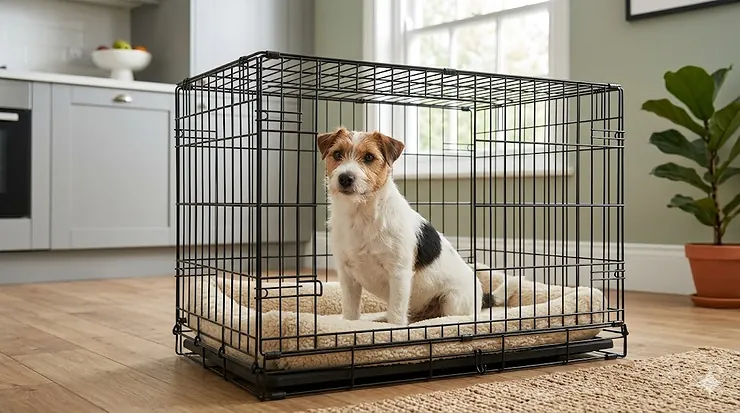
If you’ve ever watched a Jack Russell Terrier attempt a jailbreak from an inadequately secured crate, you’ll know these terriers possess the determination of a convict and the cunning of a master locksmith. Getting the jack russell terrier crate size spot-on isn’t just about comfort—it’s about containment, safety, and your sanity.
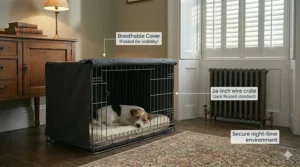
Jack Russells typically need a medium-sized crate, measuring around 60 cm (L) x 42 cm (W) x 44 cm (H), though in the UK market, you’ll often see this listed as a 24-inch crate. According to The Kennel Club, which officially recognised the Jack Russell Terrier as a distinct breed in 2016, these terriers typically stand between 25-38 cm tall at the shoulder and weigh 6-8 kg. What the specifications don’t tell you is that your JRT’s relentless energy and natural burrowing instincts mean the crate needs to be robust enough to withstand a miniature tornado with teeth.
The trick lies in selecting a crate that’s neither too spacious (they’ll designate one corner as the loo) nor too cramped (uncomfortable and potentially stressful). Your Jack Russell should be able to stand upright without bending their legs, turn around comfortably, and stretch out fully when lying down. This isn’t just about following guidelines—it’s about creating a den-like sanctuary that appeals to their instinctive need for a secure space whilst keeping your furniture intact when you nip out for milk.
British homes tend to be more compact than their American counterparts, which makes collapsible, dual-purpose crates particularly appealing. Whether you’re living in a Victorian terrace in Brighton or a modern flat in Manchester, space is at a premium, and your Jack Russell’s crate needs to fit seamlessly into your life without dominating the living room.
Quick Comparison Table: Top Jack Russell Crate Options
| Crate Model | Size (cm) | Type | Price Range (£) | Best For |
|---|---|---|---|---|
| Cardys Small Dog Crate | 60 x 40 x 50 | Wire/Metal | £25-£40 | Budget-conscious owners |
| Furdreams Heavy-Duty 24″ | 60 x 45 x 50 | Metal | £30-£50 | Determined escapologists |
| JAMES & STEEL Pink Crate | 60 x 42.5 x 51 | Wire | £35-£55 | Style-conscious homes |
| MidWest iCrate (imported) | 61 x 46 x 48 | Wire with divider | £40-£65 | Growing puppies |
| Amazon Basics Soft Crate | 60 x 43 x 43 | Fabric/Mesh | £20-£35 | Travel and occasional use |
| Straame Heavy-Duty | 60 x 40 x 50 | Reinforced metal | £45-£70 | High-anxiety terriers |
| Bunty Fabric Carrier | 60 x 40 x 45 | Soft-sided mesh | £25-£40 | Car travel and holidays |
💬 Just one click—help others make better buying decisions too! 😊
Top 7 Jack Russell Terrier Crates: Expert Analysis
1. Cardys Small Dog Crate (24-Inch, Dual Door)
The Cardys crate features two doors for dual access with an easy-clean removable plastic tray and strong folding metal construction, making it a solid entry-level option for Jack Russell owners across the UK. Measuring 60 x 40 x 50 cm, this wire crate provides adequate space for an adult JRT weighing 13-17 pounds.
What sets the Cardys apart in the crowded UK market is its dual-door configuration—front and side access—which proves invaluable when positioning the crate in awkward corners of British homes where space is tight. The slide-bolt latches offer reasonable security, though owners of particularly determined Jack Russells might find them less escape-proof than heavy-duty alternatives.
The removable plastic tray sits flush with the crate floor, making accident clean-up considerably less traumatic at three in the morning when your puppy hasn’t quite mastered nighttime bladder control. Customers appreciate the crate’s size, finding it bigger than expected and well-proportioned, with one noting it’s large enough for German Wirehaired Pointers—though for a Jack Russell, it’s perfectly proportioned rather than oversized.
Pros:
✅ Dual-door access ideal for tight spaces
✅ Collapses flat for storage in small British homes
✅ Removable tray simplifies cleaning
Cons:
❌ Standard latches may not deter determined escapologists
❌ Wire spacing could allow smaller items (toys, bedding) to be pulled through
Price: Around £25-£40 on Amazon.co.uk
This crate suits first-time Jack Russell owners or those with calmer, less destructive terriers. If you’re dealing with a JRT who’s already demonstrated Houdini-like tendencies, invest the extra £15-£20 in a heavy-duty model with reinforced locks.
2. Furdreams 24-Inch Heavy-Duty Dog Crate
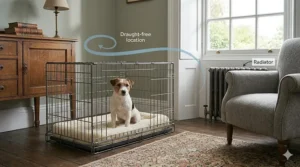
The Furdreams represents the sweet spot between affordability and durability—a rather important balance when your Jack Russell regards flimsy crates as afternoon entertainment. This heavy-duty black metal crate features two doors (front and side) with a chew-resistant plastic base tray and carrier handle, all packed into a 60 x 45 x 50 cm footprint.
What most UK buyers overlook about this model is its anti-rust black powder coating, which matters considerably more in our perpetually damp climate than Americans might appreciate. Leave a standard wire crate in a British garage or conservatory for six months, and you’ll be rewarded with rust spots and weakened joints. The Furdreams coating provides genuine protection against the moisture that permeates everything from November through March.
The dual-access doors aren’t just a convenience feature—they’re essential for managing a terrier’s stubborn streak. When your Jack Russell decides the front door is lava and refuses to enter, having side access allows you to redirect their attention and encourage entry from a different angle. It’s dog psychology meets practical design.
Pros:
✅ Rust-resistant coating suited to damp British conditions
✅ Chew-resistant base tray withstands determined gnawing
✅ Foldable design with carry handle for mobility
Cons:
❌ Slightly heavier than basic models (less portable)
❌ Black finish shows dust and dog hair readily
Price: £30-£50 range on Amazon.co.uk
Best suited for Jack Russells with moderate-to-high energy who need a robust home base. If you live in a humid area—coastal towns, river valleys, anywhere in Scotland—the rust resistance alone justifies the modest price premium.
3. JAMES & STEEL My Pet Dog Crate (Pink, 24-Inch)
For those who prefer their dog equipment to complement their interior design rather than dominate it, the JAMES & STEEL crate offers functionality wrapped in a less institutional aesthetic. Measuring 60 x 42.5 x 51 cm, this durable wire construction crate features two double-latched doors for easy access and added safety, all finished in a distinctive pink powder coating.
The double-latched doors represent a meaningful upgrade over single-latch designs. Jack Russells possess surprising paw dexterity and have been known to manipulate simple slide bolts through persistent pawing. The dual-latch system requires two separate actions to open—not impossible for a determined JRT, but substantially more challenging than standard single-latch configurations.
UK customers praise the quality, noting it’s sturdy enough to withstand the rigours of puppyhood, which for Jack Russells means considerably more abuse than most breeds inflict. The spacious design accommodates small-to-medium breeds comfortably, though remember the golden rule: for a Jack Russell, “comfortable” means just enough room to stand, turn, and stretch—not enough to establish separate sleeping and toileting zones.
Pros:
✅ Double-latched doors enhance security
✅ Distinctive colour options (pink, blue, grey) suit varied décor
✅ Excellent airflow through wire construction
Cons:
❌ Wire construction shows dirt readily
❌ Slightly higher price point for aesthetic features
Price: Around £35-£55 on Amazon.co.uk
This crate appeals to owners who refuse to sacrifice style for function. If your crate lives in the living room rather than tucked away in a utility room, the JAMES & STEEL’s aesthetic consideration justifies the modest premium over purely utilitarian alternatives.
4. MidWest iCrate (24-Inch with Divider Panel)
Whilst the MidWest brand originates in America, their iCrate has developed a cult following among UK dog owners for good reason. The 24-inch model (approximately 61 x 46 x 48 cm) includes a divider panel that transforms a single purchase into a grow-with-your-puppy solution—particularly clever given that Jack Russells reach adult size relatively quickly but still benefit from size-appropriate confinement during house-training.
The iCrate includes a free divider panel allowing you to adjust the size whilst your dog grows, along with a durable leak-proof plastic pan, protective rubber feet, and a carrying handle. The rubber feet matter more than you’d think—they protect wooden floors from scratches and prevent the crate from sliding across laminate when your terrier has midnight zoomies.
What sets the MidWest apart is build quality that feels distinctly more substantial than budget alternatives. The wire gauge is thicker, the joints more robust, and the slide-bolt latches operate smoothly even after months of use. For a breed that tests equipment limits daily, these seemingly minor quality differences accumulate into genuinely better long-term value.
Pros:
✅ Divider panel extends usability from puppyhood to adulthood
✅ Superior build quality compared to budget options
✅ Rubber feet protect flooring
Cons:
❌ Premium pricing (often £40-£65 when imported to UK)
❌ US voltage divider incompatibility (not applicable to manual crates, but worth noting for heated bed accessories)
Price: £40-£65 range on Amazon.co.uk (availability varies)
The MidWest iCrate justifies its premium through longevity and versatility. If you’re purchasing for a puppy, the divider panel eliminates the need to buy multiple crates as they grow—ultimately saving money whilst reducing waste.
5. Amazon Basics Soft-Sided Folding Crate (24-Inch)
Not every Jack Russell requires Fort Knox-level security. If you’re primarily seeking a travel crate for car journeys to the vet, weekend trips, or visits to relatives, the Amazon Basics soft-sided crate offers excellent value without the weight penalty of metal alternatives.
Measuring approximately 60 x 43 x 43 cm when erected, this fabric crate features mesh windows on multiple sides, providing superior ventilation—particularly welcome during British summer heatwaves (both days of them). The soft-sided construction folds completely flat, occupying minimal boot space when not in use—a genuine advantage when packing the car for a Lake District holiday.
However, let’s be brutally honest about limitations. This crate is entirely inappropriate for unsupervised confinement of a determined Jack Russell. The fabric construction, whilst chew-resistant, isn’t chew-proof. A motivated JRT with time and privacy will create their own exit. It’s designed for supervised use during travel or as a familiar sleeping space in unfamiliar locations, not as a primary containment solution at home.
Pros:
✅ Lightweight and highly portable for travel
✅ Folds completely flat for storage
✅ Excellent ventilation through mesh panels
Cons:
❌ Unsuitable for unsupervised containment
❌ Minimal chew resistance for determined terriers
Price: £20-£35 on Amazon.co.uk
Ideal as a secondary crate for travel rather than a primary home crate. If you frequently visit friends, family, or dog-friendly accommodation, having a soft-sided crate provides your Jack Russell with a familiar den in unfamiliar locations.

6. Straame Heavy-Duty Folding Dog Crate (24-Inch)
For Jack Russells displaying separation anxiety or determined escape tendencies, the Straame Heavy-Duty crate represents serious containment engineering. Measuring 60 x 40 x 50 cm, this reinforced metal construction features enhanced door security specifically designed to resist manipulation by clever paws.
The chew-resistant removable tray deserves particular mention—constructed from thicker plastic than budget alternatives, it withstands the focused gnawing that anxious terriers inflict when stressed. The easy-clean surface means you’re not scrubbing texture grooves for hours after an accident, which happens more frequently with anxious dogs during the settling-in period.
What justifies the premium pricing is the sliding lock system, which requires upward lifting and lateral movement to open—a two-dimensional puzzle that defeats most canine escape attempts. Whilst no crate is truly 100% escape-proof, the Straame makes successful jailbreaks substantially less likely than standard single-action latches.
Pros:
✅ Reinforced construction withstands determined escape attempts
✅ Enhanced locking mechanism defeats most manipulation attempts
✅ Thicker tray resists chewing damage
Cons:
❌ Higher price point (£45-£70 range)
❌ Heavier construction reduces portability
Price: Around £45-£70 on Amazon.co.uk
This crate suits owners dealing with separation anxiety, previous escape artists, or Jack Russells demonstrating destructive behaviour when confined. The investment pays dividends if it prevents injury from unsafe escape attempts or damage to cheaper crates that fail under pressure.
7. Bunty Fabric Pet Carrier with Mesh Sides
The Bunty Pet Products fabric carrier features handy carry straps and mesh sides so pets can see out, with sturdy construction designed to withstand escape attempts. At approximately 60 x 40 x 45 cm, it’s ideally proportioned for Jack Russell Terriers who need secure transport rather than permanent housing.
This British-made carrier particularly excels for car travel—it fits neatly on rear seats or in boots without the metallic rattling that metal crates produce over speed bumps. The mesh sides provide excellent visibility, reducing travel anxiety in dogs who become stressed when unable to monitor their surroundings. For Jack Russells prone to car sickness, this visibility often correlates with calmer behaviour.
The fabric construction means this carrier weighs considerably less than metal alternatives—a meaningful advantage when carrying your Jack Russell through crowded train stations or manoeuvring through narrow airplane aisles if you’re fortunate enough to have a cabin-approved flyer.
Pros:
✅ British-made with UK customer service
✅ Lightweight design ideal for public transport
✅ Mesh visibility reduces travel anxiety
Cons:
❌ Not suitable for home confinement
❌ Fabric can retain odours if accidents occur
Price: £25-£40 on Amazon.co.uk
Perfect for owners who frequently travel with their Jack Russell on public transport, visit dog-friendly cafés, or need a lightweight carrier for vet visits. Not a replacement for a home crate but an excellent supplementary piece of kit.
How to Choose the Perfect Jack Russell Terrier Crate Size
Measuring Your Jack Russell Correctly
Stand your terrier on a flat surface and measure from the tip of their nose to the base of their tail—not including the tail itself. Allow for double the length of their body, so a 30 cm dog requires a 60 cm crate. For height, measure from the floor to the top of their head when standing naturally, then add 10-15 cm clearance.
Most adult Jack Russells fall comfortably within the 24-inch (60 cm) crate category, though individuals vary. If your JRT measures at the larger end of the breed standard—around 35-38 cm from nose to tail base—consider a 30-inch (76 cm) crate for genuine comfort rather than forcing them into marginal accommodation.
The Goldilocks Principle: Not Too Big, Not Too Small
Crate size directly impacts house-training success. If the crate allows just enough room to stand up and turn around, a healthy dog will not soil its crate, as they won’t eliminate where they sleep. Provide excessive space, and your clever terrier will designate one end as the bedroom and the opposite corner as the bathroom—utterly defeating the house-training purpose.
For puppies, this creates a dilemma: purchase an adult-sized crate now and waste money replacing it later, or buy appropriately sized crates at each growth stage? The elegant solution involves crates with adjustable divider panels. Position the divider to create puppy-appropriate space, then progressively move it as they grow, ultimately removing it entirely for the adult dog. One purchase, multiple configurations, superior house-training results.
Construction Materials: Wire vs Plastic vs Fabric
Wire crates dominate the UK market for Jack Russells, offering superior ventilation and visibility whilst folding flat for storage. The open construction prevents overheating—relevant during British summer heatwaves and in centrally heated homes during winter. However, wire provides minimal noise dampening, and the metallic rattling when your JRT shifts position at 3 AM tests your commitment to crate training.
Plastic crates (airline-approved models) provide better noise insulation and create more den-like darkness that some anxious Jack Russells prefer. The enclosed sides prevent drafts—appreciated by short-coated JRTs in chilly British homes—but ventilation suffers, and you can’t monitor your dog without opening doors.
Fabric soft-sided crates offer portability and packability but sacrifice security. They’re travel accessories rather than primary confinement tools—perfectly adequate for supervised situations but wholly inappropriate for leaving a Jack Russell unattended.
Door Configuration: Single vs Double Access
Dual-door crates (front and side access) provide positioning flexibility that proves invaluable in compact British homes. Place the crate against a wall with the side door accessible, or in an open area using the front entrance—the choice adapts to your floor plan rather than dictating it.
For Jack Russells displaying reluctance to enter via the front door, having side access allows you to redirect their approach angle. It’s surprisingly effective dog psychology: the same terrier who refuses the front entrance will often march confidently through the side door without hesitation.
UK-Specific Considerations
British homes average substantially smaller than American properties, making collapsible crates essential rather than merely convenient. A 24-inch wire crate that folds to approximately 5 cm thickness slides behind sofas, under beds, or in coat cupboards when not in use—critical when your spare room doubles as your home office and your hallway isn’t wide enough for permanent crate placement.
Weather-resistance matters more in the UK climate than sellers acknowledge. If your crate lives in a conservatory, garage, or any unheated space, rust-resistant coating prevents degradation during our damp autumn and winter months. Standard powder coating suffices for climate-controlled interiors, but opt for anti-rust treatments if the crate experiences temperature fluctuations and condensation.
Jack Russell Crate Training: A British Approach
The First 48 Hours: Setting Foundation
Prop open the crate door and allow your dog to explore its confines, placing food or a favourite toy inside to encourage entry. British dog trainers favour gradual introduction over forced confinement, recognising that Jack Russells respond poorly to coercion but excel when they believe crate entry was their brilliant idea.
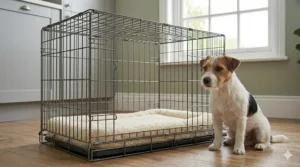
Position the crate in your family’s main living area—the kitchen or sitting room—rather than isolating it in a utility room or garage. Jack Russells are intensely social dogs who’d rather be imprisoned with company than free in solitude. Crate training fails when the crate represents banishment from the pack.
Common British Mistakes (And How to Avoid Them)
Mistake #1: Using the crate as punishment. British reserve might tempt you to send your misbehaving JRT to their crate as “time out,” but this creates negative associations that undermine training. The crate should represent sanctuary, not penalty.
Mistake #2: Underestimating wet weather impact. British Jack Russells spend considerable time outdoors in damp conditions, then bring moisture indoors. Ensure adequate bedding that wicks moisture away from skin—particularly important for short-coated JRTs who feel the cold more than their rough-coated cousins.
Mistake #3: Extended confinement beyond reasonable limits. No dog should be left in its crate for the entire day—both owner and dog should think of the crate as a safe haven, not a prison. Adult Jack Russells tolerate approximately four hours maximum; puppies considerably less. British employment patterns increasingly favour remote work, but if you’re commuting to an office, arrange midday dog walkers or consider doggy daycare rather than all-day crate confinement.
The Covered Crate Debate
Dogs love dens and feel safer if the crate is covered with a blanket, creating the darkness and enclosure that appeals to den-dwelling instincts. However, covering the crate entirely restricts airflow and visibility—potentially increasing anxiety in some Jack Russells who prefer to monitor their environment.
The British compromise: cover three sides and the top, leaving the front door area visible. This creates den-like security whilst maintaining sightlines to family activity. Use breathable fabric (old blankets, towels) rather than waterproof materials that trap heat and condensation.
Night-Time Strategy for British Households
Place the puppy crate in your bedroom initially, despite your aesthetic objections. Jack Russell puppies separated from their littermates experience genuine distress, and proximity to sleeping humans provides comfort that reduces whining. After two weeks of settled night-time behaviour, progressively move the crate towards its permanent location—a few feet each night until it reaches the kitchen or wherever you’ve designated as its long-term home.
British Victorian and Edwardian homes with solid doors between floors benefit from baby gates that maintain auditory connection whilst providing visual separation. Your puppy hears you moving about upstairs but can’t see you, striking a balance between independence and reassurance.
Escape-Proof Solutions for Determined Jack Russells
Understanding Terrier Escape Psychology
Jack Russells don’t escape crates from malice—they’re responding to instincts honed over generations of selective breeding. Their strong prey drive and tendency to confront danger without hesitation makes them persistent problem-solvers, viewing crate latches as puzzles requiring solution rather than barriers demanding respect.
The breed was developed to pursue foxes underground, squeezing through impossibly tight spaces and working independently without handler guidance. These same qualities that made them exceptional working terriers make them exceptional escape artists. Understanding this context helps you approach containment with appropriate seriousness.
Reinforced Lock Systems
Standard slide-bolt latches fail against determined Jack Russells because they require only single-axis movement—push or pull. Upgrade to locks requiring two-dimensional manipulation: lift AND slide, or rotate AND push. These compound movements exceed most canine problem-solving abilities, though never underestimate a motivated JRT.
Carabiner clips provide additional security for particularly clever escape artists. Thread a small carabiner through the door and frame, creating a backup system that requires thumbs to operate. It’s inelegant but effective—your escape artist might defeat the primary latch through persistent pawing, but the carabiner stops them actually opening the door.
Addressing Separation Anxiety Root Causes
Escape attempts often signal separation anxiety rather than simple boredom. A Jack Russell who calmly accepts crate confinement when you’re home but frantically attempts escape when left alone isn’t being difficult—they’re experiencing genuine psychological distress.
British veterinary behaviourists increasingly recommend graduated desensitisation: practice leaving for 30 seconds, return before anxiety escalates, reward calm behaviour, then progressively extend absence duration. It’s tedious and time-consuming but addresses root causes rather than merely containing symptoms. The RSPCA provides guidance on recognising and managing separation anxiety in dogs, which proves invaluable for owners struggling with this common terrier issue.
Consider pet cameras with two-way audio—seeing your Jack Russell’s behaviour when you’re absent provides invaluable insight into whether you’re dealing with escape artistry, anxiety, or simple mischief. British broadband infrastructure now supports reliable streaming even in rural areas, making this technology accessible nationwide.
Jack Russell Crate Accessories: Beyond Basic Containment
Bedding Choices for British Climates
British weather demands bedding that performs across seasons. Summer requires cooling—opt for thin cotton or elevated mesh beds that promote airflow. Winter demands insulation—fleecy veterinary bedding (Vetbed) or quilted pads that trap warmth without excessive bulk.
Ensure fresh water is always available in the crate, using clip-on bowls that prevent spillage when your terrier inevitably knocks against them. Standard bowls placed on the crate floor create puddles that soak bedding and make the entire space unpleasant—contributing to reluctance to use the crate.
Toys and Entertainment
Crate-safe toys occupy your Jack Russell’s formidable intelligence during confinement. Avoid anything with detachable parts—squeakers, plastic eyes, rope strands—that become choking hazards when unsupervised. Kong-style rubber toys filled with frozen peanut butter or wet dog food provide extended entertainment that survives even determined chewing.
Rotate toys weekly to maintain novelty. Jack Russells become bored with familiar toys quickly, but reintroducing items after a week’s absence reignites interest. It’s cheaper than constantly purchasing new toys and leverages your terrier’s goldfish-like memory.
Crate Covers and Acoustic Dampening
British terraced housing and flats with shared walls benefit from acoustic consideration. Wire crates transmit every movement as metallic rattling—potentially disturbing neighbours during night-time position shifts. Thick blanket covers draped over the crate absorb sound whilst creating den-like darkness many Jack Russells prefer.
Ensure covers don’t obstruct ventilation. Leave the front quarter uncovered or use breathable fabrics that allow airflow whilst dampening noise. Waterproof covers trap heat and condensation—avoid them unless genuinely necessary for outdoor use.

Real-World Scenarios: Matching Crates to British Lifestyles
The London Flat-Dweller with a Commuting Jack Russell
Emma lives in a third-floor Islington flat and commutes to Canary Wharf for work. Her Jack Russell, Biscuit, accompanies her on the Tube twice daily. She needs:
- Primary crate: Wire folding model (24-inch) positioned beside her bed, providing night-time security and serving as Biscuit’s safe space when visitors arrive
- Travel crate: Soft-sided fabric carrier that fits under Tube seats and weighs under 3 kg when empty
- Strategy: Biscuit travels in the soft carrier during commutes, uses the wire crate at home
Budget: £60-£80 total for both crates. The investment prevents boarding kennel fees (£35-£50 per day in London) and allows Biscuit to accompany Emma to dog-friendly offices and cafés.
The Retired Couple in Rural Wales
Margaret and David retired to Pembrokeshire with their rescue Jack Russell, Taffy, who displays moderate separation anxiety when left alone. They need:
- Heavy-duty crate: Reinforced 24-inch model with enhanced locks positioned in the kitchen
- Car crate: Plastic airline-approved carrier secured in the boot for weekly vet visits and shopping trips
- Strategy: Graduated desensitisation training using the kitchen crate, secured travel in the car crate
Budget: £80-£120 total. Rural Wales veterinary services require 20-30 minute drives, making secure car transport essential. The heavy-duty kitchen crate prevents escape attempts that could result in Taffy injuring himself in their isolated cottage.
The Manchester Family with Energetic Puppy
The Johnsons have three children aged 6-12 and recently acquired a Jack Russell puppy named Chaos (aptly named). They need:
- Adjustable crate: 24-inch wire model with divider panel for house-training
- Positioning: Kitchen placement away from the children’s play area
- Strategy: Crate serves as puppy’s retreat from boisterous children and enforces necessary rest periods
Budget: £45-£65 for quality divider-equipped crate. The divider panel eliminates the need for multiple crates as Chaos grows, whilst the crate provides essential boundaries in the controlled chaos of family life.
Maintenance and Cleaning: Keeping Crates Hygienic
Weekly Maintenance Schedule
British damp conditions promote mildew growth faster than drier climates. Establish a weekly cleaning routine:
- Remove and wash all bedding in hot water (60°C minimum)
- Wipe down crate frame with pet-safe disinfectant
- Scrub the plastic tray with enzymatic cleaner to eliminate odours
- Inspect for rust spots, applying touch-up coating as needed
Seasonal Deep Cleaning
Twice yearly—spring and autumn—disassemble the crate completely for thorough cleaning. British weather creates mud season (November-March) that infiltrates everything despite your best efforts. Wire crates accumulate grime in joints and corners that standard wiping misses.
For rust prevention, apply WD-40 or similar lubricant to hinges and latch mechanisms. British humidity causes metal components to seize, and preventive maintenance proves easier than forcing rusted latches during an emergency.
Odour Management in British Homes
British homes typically feature less ventilation than Continental or American properties—our heritage buildings prioritise heat retention over airflow. This means odours linger longer, particularly in kitchens where most crates live.
Enzymatic cleaners break down urine and faeces compounds rather than merely masking them. British brands like Simple Solution or Bio-Productions offer products specifically formulated for pet odours. Avoid bleach-based cleaners that react with urine to create toxic fumes—particularly dangerous in enclosed spaces.
Legal Considerations: UK Dog Transport Regulations
Highway Code Requirements
It’s against the law to have a dog loose in the car—legally they should be safely restrained so they don’t distract the driver and cause an accident. Rule 57 of the UK Highway Code mandates that “when in a vehicle make sure dogs or other animals are suitably restrained so they cannot distract you while you are driving or injure you, or themselves, if you stop quickly.”
Enforcement varies, but failure to properly secure your dog can result in fines up to £5,000 if the breach leads to distraction causing an accident. More significantly, inadequate restraint may invalidate your car insurance in the event of a claim—potentially leaving you personally liable for damage and injury costs.
Airline Travel Regulations
If you’re planning to fly with your Jack Russell within the UK or to Europe, airline regulations mandate specific crate types. The crate must be IATA-approved, featuring:
- Rigid construction (wire or hard plastic)
- Secure locking mechanism (not just clips)
- Adequate ventilation on at least two sides
- Sufficient space for the dog to stand, turn, and lie down
- Food and water containers accessible from outside
British Airways, easyJet, and Ryanair maintain slightly different requirements—verify with your specific carrier well before travel dates. Jack Russells generally qualify for cabin travel on some airlines due to their compact size, though this varies by carrier and route.
Insurance Implications
UK pet insurance policies increasingly include clauses about proper containment. If your Jack Russell escapes an inadequate crate and causes property damage or injury, your liability coverage may not respond if the insurer determines you failed to provide appropriate containment.
Read policy documents carefully—some insurers specify minimum crate standards or exclude coverage for escape-related incidents entirely. This isn’t theoretical risk: Jack Russells who escape confinement and attack livestock or cause road traffic accidents generate substantial liability claims.

Frequently Asked Questions
❓ What size crate does a Jack Russell Terrier need in the UK?
❓ Can I use a 30-inch crate for my Jack Russell puppy to grow into?
❓ Are soft-sided crates suitable for Jack Russell Terriers?
❓ How do I prevent my Jack Russell from escaping their crate?
❓ Where should I position my Jack Russell's crate in a British home?
Conclusion: Making the Smart Crate Investment
Selecting the right jack russell terrier crate size represents more than measuring dimensions and clicking “buy now” on Amazon.co.uk. It’s about understanding your terrier’s psychology, your lifestyle constraints, and the unique challenges of managing an energetic, intelligent breed within the compact confines of British homes.
The 24-inch crate category dominates for good reason—it’s correctly proportioned for the breed standard whilst remaining manageable in homes where floor space commands premium pricing. Whether you opt for the budget-friendly Cardys (£25-£40), the robust Furdreams Heavy-Duty (£30-£50), or the premium MidWest iCrate (£40-£65), you’re investing in containment equipment that protects your dog, your belongings, and your sanity during the house-training journey.
Remember that the cheapest crate rarely proves the most economical choice when replaced three times after escape-related damage. Invest appropriately at the outset—a quality 24-inch wire crate with secure latches and divider panel serves from puppyhood through senior years, ultimately costing less than serial replacements of inadequate equipment.
Your Jack Russell didn’t choose to be a bundle of terrier determination wrapped in a compact package. They’re responding to generations of selective breeding that created dogs capable of pursuing foxes underground through cramped, dark spaces whilst thinking independently. Channel these qualities through appropriate training and containment, and you’ll discover why Jack Russell owners tolerate the chaos: beneath the mischief lives a fiercely loyal, remarkably intelligent companion worth every challenge they present.
Recommended for You
- 7 Best Crate for French Bulldog UK 2026: Expert Picks
- 7 Best Small Dog Travel Crate Airline Approved UK 2026
- 7 Best Cheap Puppy Crates Under £30 UK 2026 | Save Money
Disclaimer: This article contains affiliate links. As an Amazon Associate, I earn from qualifying purchases. If you purchase products through these links, we may earn a small commission at no additional cost to you.
✨ Found this helpful? Share it with your mates! 💬🤗
