
In This Article
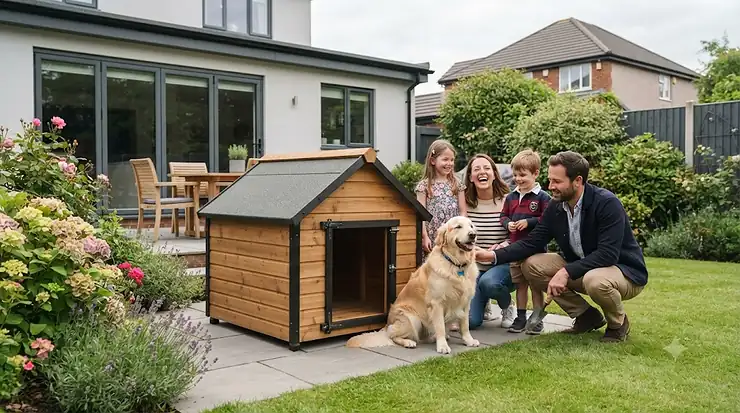
Buying an apex roof dog kennel is one of those decisions that looks simple until you actually start scrolling through options — suddenly you’re comparing tanalised timber, felt versus shingle roofing, and wondering whether “apex” is just a fancy word for “pointy.” It isn’t fancy at all, really. It’s just the roof shape that’s been keeping British sheds, barns and kennels dry since forever, and for good reason: two sloped panels meeting at a ridge shed rainwater far more efficiently than a flat lid ever could.
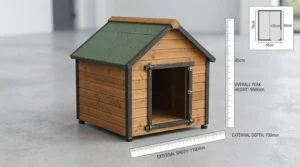
This guide cuts through the marketing fluff. We’ve researched seven genuine products currently available to UK buyers — spanning budget metal-framed playpens through to premium insulated timber builds — and paired each one with honest analysis of what the spec sheet actually means for your dog, day to day. You’ll also find a full breakdown of pitched roof dog kennel design, why roof pitch benefits go well beyond good looks, and how an apex roof dog kennel stacks up against pent and flat alternatives.
Whether you’re kennelling a boisterous Labrador that treats every structure as a chew toy, or looking for a quiet corner shelter for an elderly terrier, there’s a build here that fits.
Quick Comparison Table
| Product | Roof Type | Best For | Price Range |
|---|---|---|---|
| FeelGoodUK Pinelap Apex Kennel | Felt-covered T&G apex | Budget buyers wanting solid timber | Around £200-£230 |
| KCT Large Apex Playpen | Metal apex canopy | Multi-pet households, flexible use | Typically £150-£250 |
| Cheeko Apex Roof Kennel | Felt apex, removable floor | Compact gardens, easy cleaning | Roughly £120-£160 |
| PawHut Porch Dog House | Asphalt-shingle apex | Owners wanting a porch/lounging area | Around £180-£260 |
| Aivituvin Insulated Dog House | Insulated apex, anti-chew frame | Chewers, cold-climate gardens | Around £200-£320 |
| Benchmark Premium Wood Kennel | OSB + felt apex, with run | Larger dogs needing a secure run | Mid-£1,000s to £1,800 range |
| Benchmark Eco Thermal Kennel | Insulated WPC composite apex | Year-round outdoor living, low maintenance | Upper-£1,000s to £2,000+ range |
Looking across this table, the spread is deliberately wide: the KCT Large Apex Playpen and Cheeko Apex Roof Kennel suit anyone testing the waters with a first outdoor shelter, while the Benchmark Premium Wood Kennel and Benchmark Eco Thermal Kennel are built for dogs that genuinely live outside for large parts of the day. Notice, too, that “apex roof” doesn’t mean one fixed material — you’ll see felt, asphalt shingle, and insulated composite roofing all under the same design umbrella, and that choice affects both upfront price and how often you’ll be up a stepladder doing maintenance.
💬 Just one click — help others make better buying decisions too!😊
Top 7 Apex Roof Dog Kennels: Expert Analysis
1. FeelGoodUK Pinelap Apex Kennel — best value solid-timber build
The standout here is straightforward: a proper tongue-and-groove apex kennel at a price point that doesn’t require a second mortgage. This is a pressure-treated softwood build with roughly a 3ft ridge height and 2ft eaves, which in practice means most medium breeds can stand fully upright inside without stooping under the slope.
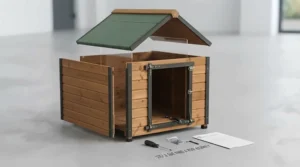
The lift-up roof panel is the detail that separates a genuinely usable kennel from a decorative one — you can reach in for cleaning or bedding changes without dismantling anything. Pressure treatment adds real rot resistance, but tanalising isn’t a lifetime guarantee; it buys you years, not decades, before the timber needs re-treating.
Based on the spec comparison with similarly sized wooden kennels, this sits firmly in the “does the job properly, skips the frills” category — ideal for a first-time buyer who wants a trusted apex shape without paying premium-brand prices. Reviewers of similar T&G apex kennels consistently note that the lift-up roof is the single most-mentioned convenience feature, while a recurring theme in feedback on this class of product concerns the felt roof needing a reapplication of sealant sooner than expected in exposed, windy gardens.
Pros:
- ✅ Solid pressure-treated tongue-and-groove construction
- ✅ Lift-up roof for genuinely easy cleaning access
- ✅ Roomy 3ft ridge height suits medium breeds
Cons:
- ❌ Felt roofing needs earlier resealing in exposed spots
- ❌ Assembly requires two people for the roof panel
At around £200-£230, this is one of the more accessible genuine wooden apex builds on the market — solid value if you’re not chasing insulation or a run. Prices vary by retailer and season, so always check current listings before buying.
2. KCT Large Apex Playpen — best flexible multi-pet enclosure
What stands out about this one is versatility: it’s marketed as suitable for dogs, cats, rabbits and even poultry, which tells you the apex canopy roof is doing double duty as weather protection rather than a dedicated dog-house shell. That’s a genuinely different proposition from a solid timber kennel.
The metal apex roof sheds rain effectively thanks to the same ridge-and-slope geometry as timber builds, but because the sides are usually open-panel or mesh rather than solid wood, it behaves more like a covered run than an insulated shelter. Expect decent ventilation and visibility, but noticeably less thermal protection in winter than any of the fully enclosed wooden options on this list.
What most buyers overlook about this style of product is that the apex roof height matters more than usual here — a low, flat-topped enclosure lets water pool on the roof mesh, while the pitched design keeps it draining away, protecting the frame’s coating from prolonged standing water. Aggregated feedback on similar galvanised-frame apex playpens tends to flag easy assembly and good ventilation as strengths, alongside occasional notes that the panels can feel less rigid than solid timber under a determined, large-breed dog.
Pros:
- ✅ Genuinely multi-purpose across several pet types
- ✅ Good ventilation and visibility for supervised outdoor time
- ✅ Apex roof drains rainwater efficiently off mesh panels
Cons:
- ❌ Less thermal protection than a solid timber kennel
- ❌ Frame can flex under sustained pressure from larger dogs
Typically priced in the £150-£250 range depending on size, this is best treated as a secure daytime run with weather cover rather than an overnight shelter in a British winter.
3. Cheeko Apex Roof Kennel — best compact footprint for smaller gardens
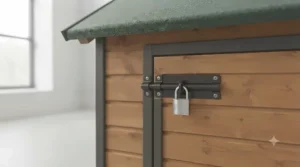
The headline feature is the removable floor, paired with a door latch that adds a genuine layer of security most budget kennels skip entirely. For a compact apex build, that combination punches above its price bracket.
Constructed from treated wood with a felt-covered apex roof, the outer dimensions run around 84 x 101 x 87cm with a usable inner space closer to 69 x 80 x 70cm — enough for small-to-medium breeds to turn around and lie comfortably, per the Code of Practice for the Welfare of Dogs, which specifies that housing must let a dog stretch, walk and turn around freely. The metal grille in the door keeps ventilation flowing even with the latch engaged.
Here’s what to weigh: the compact size that makes this ideal for smaller gardens also means it’s genuinely unsuitable for anything above a medium breed. Reviewers commonly cite the removable floor as a real time-saver during cleaning, while a smaller subset flag that adjustable feet are needed on uneven paving to stop the whole unit rocking.
Pros:
- ✅ Removable floor makes cleaning noticeably faster
- ✅ Lockable door latch adds real security
- ✅ Compact footprint suits smaller gardens
Cons:
- ❌ Not sized for large or giant breeds
- ❌ Needs a level base to sit properly
Expect a price roughly in the £120-£160 range, making it one of the more affordable genuinely secure options here, though it’s worth checking current stock and shipping costs, as availability shifts between UK stockists.
4. PawHut Porch Dog House — best for a sheltered outdoor lounging spot
The standout feature is the porch itself — a covered overhang at the front that gives a dog somewhere to sit half-in, half-out without getting rained on, which is a genuinely nice touch most apex kennels don’t bother with.
Built from fir wood with an asphalt-shingle apex roof and side windows, this leans more “garden feature” than “utility shelter.” The shingle roofing is worth noting specifically because it behaves differently from felt: asphalt shingles are more resistant to UV degradation over time, though they add weight and generally cost more to replace if damaged.
On paper, this means buyers get a longer-lasting roof surface at the expense of a bit more upfront cost and installation fuss compared with felt. Reviewers of this porch-style design tend to praise the aesthetic and the shaded lounging area, while some note that the window openings, though nice for airflow, need a removable cover for genuinely cold nights.
Pros:
- ✅ Covered porch area extends usable outdoor space
- ✅ Shingle roofing resists UV wear better than felt
- ✅ Side windows improve ventilation and light
Cons:
- ❌ Windows need covering in cold or wet weather
- ❌ Heavier build makes repositioning harder
Sitting around the £180-£260 mark, this is a strong pick if you want a kennel that also looks good as a garden feature — just budget for a window cover or curtain as a practical add-on.
5. Aivituvin Insulated Dog House — best for chewers and cold-climate gardens
The defining feature is the anti-chew metal frame wrapped around the wooden structure, which addresses a problem most timber apex kennels simply don’t solve: a determined chewer working away at exposed corner edges.
Construction pairs fir wood panels with an all-around iron frame and an insulated liner, sitting under an apex-style asphalt roof with raised, waterproof feet. The insulation liner is the detail that matters most in practice — it’s a removable layer rather than built into the walls, so you can pull it for summer ventilation and reinstall it before the first frost, which is more flexible than a permanently insulated build.
What the spec sheet won’t tell you, but buyer reports suggest, is that the metal frame edges need a periodic wipe-down, since exposed metal in a garden setting is more prone to condensation than wood alone. Feedback on this design consistently highlights the anti-chew durability as the standout benefit, with a smaller number of buyers noting that assembly instructions could be clearer for the liner attachment step.
Pros:
- ✅ Metal frame genuinely deters chewing damage
- ✅ Removable insulated liner adapts to the seasons
- ✅ Raised waterproof feet keep the floor dry
Cons:
- ❌ Exposed metal needs occasional condensation checks
- ❌ Liner assembly instructions can be fiddly
Priced around £200-£320 depending on size, this is a sensible middle ground between a basic timber kennel and a fully insulated premium build — particularly strong value if chewing is a known issue.
6. Benchmark Premium Wood Kennel — best for larger dogs needing a secure run
The headline here is scale and structure: this is a full kennel-and-run combination, not just a sleeping box, built on a tanalised 45 x 45mm pressure-treated frame with a proper roofed run attached.
The roof itself is worth detailing because it’s a genuine two-layer system — structurally sound OSB3 sheeting topped with heavy-duty IKO felt — which is a meaningfully more robust setup than shiplap-and-felt alone. Based on the spec comparison, the OSB base gives the felt something rigid to bond to, reducing the sagging that causes premature felt splitting on thinner roof decks.
Screwed rather than nailed panelling is a small but genuinely useful detail if you ever need to replace a chewed or damaged section, since you can remove individual boards instead of prising out nails and risking splits. The run’s galvanised panels, spaced at 5cm gaps, meet the kind of secure-enclosure standard referenced in UK boarding and kennelling guidance for exercise areas.
Pros:
- ✅ Two-layer OSB and felt roof resists sagging
- ✅ Screwed panels are easier to repair or replace
- ✅ Attached run gives large dogs genuine exercise space
Cons:
- ❌ Needs a firm, level base such as concrete
- ❌ Among the pricier options on this list
Positioned in the mid-£1,000s to around £1,800, depending on size selected, this is squarely aimed at owners housing a larger dog outdoors for significant parts of the day, not an occasional-use shelter.
7. Benchmark Eco Thermal Kennel — best low-maintenance year-round build
The standout feature is the wood-plastic composite construction — panels made from a blend of hardwood fibres and recycled polyethene — which fundamentally changes the maintenance conversation compared with every timber option above.
Because WPC boards won’t rot, crack, splinter, or need annual re-treatment, the 24mm interlocking hollow-spaced boards create a cavity-wall effect that adds insulation without the bulk of a separate liner. The apex roof uses box-profile roofing as standard, sitting above a floor built on recycled plastic lumber rather than timber joists — so the entire structure is designed to shrug off damp rather than merely resist it for a while.
Here’s the honest trade-off: what most buyers overlook about this build is that “eco thermal” refers to material performance, not active heating — it moderates temperature swings rather than warming the interior. Buyer feedback on WPC composite kennels in this category tends to highlight the near-zero maintenance as the deciding factor, alongside occasional comments that the composite panels feel less “traditional” aesthetically than natural timber.
Pros:
- ✅ WPC composite needs virtually no annual maintenance
- ✅ Cavity-wall design adds passive insulation
- ✅ Fully recyclable materials throughout
Cons:
- ❌ Higher upfront cost than timber equivalents
- ❌ Less traditional look than natural wood
Sitting in the upper-£1,000s to £2,000-plus bracket, this is the pick for owners who want to install once and essentially forget about roof or panel maintenance for years.
Top 7 Products at a Glance
| # | Product | Roof Material | Ideal Breed Size | Best For |
|---|---|---|---|---|
| 1 | FeelGoodUK Pinelap Apex Kennel | Felt over T&G | Medium | Budget-conscious first buyers |
| 2 | KCT Large Apex Playpen | Metal canopy | Small-medium | Multi-pet daytime enclosures |
| 3 | Cheeko Apex Roof Kennel | Felt | Small-medium | Compact gardens |
| 4 | PawHut Porch Dog House | Asphalt shingle | Medium-large | Sheltered lounging space |
| 5 | Aivituvin Insulated Dog House | Asphalt over insulated liner | Small-large | Chewers, cold gardens |
| 6 | Benchmark Premium Wood Kennel | OSB + IKO felt | Large | Dogs needing a secure run |
| 7 | Benchmark Eco Thermal Kennel | WPC box-profile | Medium-large | Low-maintenance, year-round |
Reading across this table, the roofing material is really the story: felt is cheapest but needs the most attention, shingle sits in the middle for durability and looks, and WPC composite in the Benchmark Eco Thermal Kennel essentially removes roof maintenance from the equation altogether. If your priority is upfront cost, the FeelGoodUK Pinelap Apex Kennel and Cheeko Apex Roof Kennel are the sensible starting points; if it’s decades of low fuss, the composite build justifies its price over time.
What Is an Apex Roof Dog Kennel?
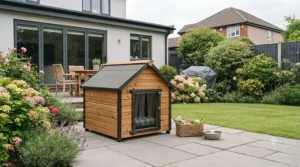
An apex roof dog kennel is a dog shelter topped with a pitched, ridge-peaked roof — two sloping panels meeting at a central line — rather than a flat or single-slope lid. The design, sometimes called a gable roof dog house in wider building terminology, sheds rain and snow far more effectively than flat alternatives, which is exactly why it’s the dominant style across British garden buildings generally, as Wikipedia’s overview of roof pitch explains in relation to steeper slopes shedding water faster than shallow ones.
The terms pitched roof dog kennel and apex roof kennel are used more or less interchangeably by UK retailers, though “apex” more specifically refers to the peaked ridge point itself, while “pitched” describes any sloped roof more broadly — including single-slope pent designs. A gable roof dog house, in strict architectural terms, is simply another name for the same two-sided, ridge-topped shape.
How to Choose an Apex Roof Dog Kennel
- Measure your dog standing and lying down. The kennel’s internal footprint should let your dog turn around, stretch out, and stand at full height near the ridge — cramped housing genuinely affects welfare, not just comfort.
- Check the roof material against your climate exposure. Felt suits sheltered gardens; shingle or composite roofing earns its extra cost in exposed, windy, or coastal locations.
- Confirm the timber treatment method. Pressure-treated (tanalised) softwood outlasts surface-sprayed alternatives by years, not months.
- Assess ventilation versus insulation balance. A sealed box traps moisture; look for designs with proper airflow even when insulated.
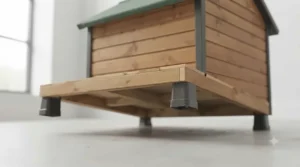
- Factor in ground contact. Raised feet or a plinth base keep damp from wicking up through the floor — non-negotiable for any dog kennel sited directly on soil or grass.
- Decide whether you need an attached run. If your dog spends significant daytime hours outside, a kennel-and-run combination beats a standalone shelter for genuine exercise space.
- Check assembly and repair practicality. Screwed panels beat nailed ones for long-term repairability, especially with chewers in the household.
Real Dog Owner Scenarios: Which Apex Kennel Fits Your Situation?
If you’re a first-time dog owner in a small suburban garden with a young Cocker Spaniel, the Cheeko Apex Roof Kennel or FeelGoodUK Pinelap Apex Kennel make more sense than anything larger — compact, secure, and easy to reposition if you rearrange the garden later.
If you’re managing a working farm dog or a large-breed rescue that spends most daylight hours outdoors, the Benchmark Premium Wood Kennel with its attached run gives genuine exercise space alongside secure overnight shelter, which matters under the space and enrichment expectations set out in UK kennel licensing guidance.
If you’re a household with a known chewer — a young Labrador or a bored terrier — the Aivituvin Insulated Dog House solves a specific, recurring problem that no amount of “sturdy timber” marketing language on cheaper kennels actually addresses.
Common Apex Kennel Problems and How to Fix Them
Problem: Roof felt lifting at the edges. Solution: re-seal with a bituminous adhesive at the first sign of curling, before water can track underneath the joint.
Problem: Damp smell despite a raised floor. Solution: check that ventilation gaps aren’t blocked by bedding, and confirm the base is genuinely level — pooling water at one corner is a common hidden cause.
Problem: Dog reluctant to enter in cold weather. Solution: add a heavy draught excluder curtain at the entrance rather than sealing the whole opening, preserving airflow while cutting the wind chill.
Problem: Chewed corners or door frames. Solution: switch to a metal-framed design like the Aivituvin Insulated Dog House, or fit corner guards to an existing timber kennel.
Problem: Kennel rocking on uneven paving. Solution: fit adjustable rubber feet or pack shims under the base rather than relying on the ground settling naturally.
Apex vs Pent Roof: Which Wins for a Dog Kennel?
The apex vs pent roof debate really comes down to water shedding versus footprint efficiency. An apex roof kennel has two symmetrical sloped panels meeting at a central ridge, distributing water evenly to both sides. A pent roof kennel has a single sloped panel running from a high side to a low side, which is cheaper to build and marginally more wind-resistant in very exposed spots, since there’s less peak height catching gusts.
| Factor | Apex Roof | Pent Roof |
|---|---|---|
| Water shedding | Excellent, even distribution | Good, but funnels to one side |
| Headroom | Taller at ridge, more standing space | Uniform, generally lower |
| Wind resistance | Slightly more surface area at peak | Marginally lower profile |
| Best For | Larger breeds, exposed gardens | Compact spaces, budget builds |
In practice, the apex shape wins for most UK gardens simply because our weather is dominated by persistent rain rather than sustained high winds, and the additional ridge headroom genuinely benefits medium-to-large breeds. Pent roofs earn their keep in very tight side-return spaces where the sloped profile tucks neatly against a fence line.
Roof Pitch Benefits: What Steeper Apex Roofs Actually Do
Roof pitch benefits go beyond simply “rain runs off faster,” though that’s the headline advantage. A steeper pitch also reduces the surface area exposed to direct sunlight at any given moment during the day, which measurably slows felt degradation compared with a shallow-pitched design left baking in summer glare.
Steeper pitches additionally create more usable internal roof-space volume, which improves natural air circulation above a dog’s resting area — genuinely relevant in summer, when heat can otherwise pool under a flat or barely-pitched roof. The trade-off is wind loading: a very steep apex catches more sidewall pressure in gusty conditions, which is why UK-manufactured kennels tend to settle on moderate pitches rather than the dramatic A-frame angles sometimes seen on continental European designs.
Kennel Roof Shingles, Felt and Long-Term Maintenance Costs
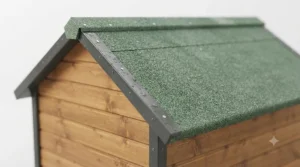
Kennel roof shingles — typically asphalt-based, as used on the PawHut Porch Dog House — cost more upfront than felt but last considerably longer under UV exposure, generally justifying the premium if you’re not planning to replace the whole kennel within five years. Felt roofing, used on the FeelGoodUK Pinelap Apex Kennel, Cheeko Apex Roof Kennel, and as the top layer on the Benchmark Premium Wood Kennel, remains the most common choice because it’s cheap to replace piecemeal rather than requiring a full roof strip.
Over a five-year ownership window, felt roofing typically needs one to two resealing or replacement cycles in an average UK garden, each a modest DIY cost in materials. Shingle roofing rarely needs attention in that same period but costs more to repair if a section is damaged, since shingles are harder to patch invisibly than felt. Composite roofing, as fitted to the Benchmark Eco Thermal Kennel, effectively removes this maintenance cost from the equation entirely — the higher purchase price is, in effect, five-plus years of roofing maintenance paid upfront.
Common Mistakes When Buying an Apex Roof Dog Kennel
The most frequent mistake is sizing a kennel to the dog’s current size rather than its adult size, particularly with puppies — a growing Labrador outgrows a “medium” kennel within a year. A close second is ignoring the base requirement: several premium builds, including the Benchmark Premium Wood Kennel, explicitly need a firm, level base such as concrete or paving, and skipping this step voids both structural stability and, often, the warranty.
Buyers also commonly underestimate delivery and assembly logistics for larger kennel-and-run combinations, which frequently arrive on a pallet requiring more than one person to position. Finally, a subtler mistake is choosing based purely on aesthetics — a beautiful porch-style build like the PawHut Porch Dog House looks fantastic but may not suit a persistent chewer the way a metal-framed alternative would.
Apex Roof Kennels for Different Dogs and Households
For small breeds in modest gardens, the Cheeko Apex Roof Kennel offers genuine security without wasted space. For medium breeds where daytime lounging matters, the PawHut Porch Dog House adds a shaded outdoor spot beyond just a sleeping box. For large or giant breeds needing genuine outdoor living space, the Benchmark Premium Wood Kennel and Benchmark Eco Thermal Kennel both scale appropriately with an attached run. For households managing a known chewer regardless of size, the Aivituvin Insulated Dog House is the specific-problem solution worth the modest price premium over a plain timber build.
Safety, Regulations and Planning Permission for Garden Kennels
Under UK planning rules, most garden kennels count as outbuildings and fall under permitted development, meaning formal planning permission usually isn’t required — but height limits still apply. As one local authority’s guidance notes, outbuildings with a dual-pitched (apex) roof can reach up to 4 metres, compared with 3 metres for other roof types, which is one more reason the apex shape is so common on larger kennel-and-run builds — it simply allows more height within the same permitted development rules.
On the welfare side, official statutory guidance for licensed dog boarding facilities sets out expectations around suitable environment, ventilation and protection from extreme temperature that are worth applying even to a private garden kennel, since they reflect genuinely evidence-based welfare thresholds rather than arbitrary rules — see the government’s statutory guidance on dog kennel boarding licensing for the full detail. Even where these rules technically apply only to licensed boarding businesses, they’re a genuinely useful private-owner benchmark: adequate insulation, protection from draughts, and constant access to shade and shelter.
Frequently Asked Questions
❓ Is an apex roof dog kennel better than a flat-roof kennel?
❓ What size apex roof dog kennel do I need for a large breed?
❓ How often should I re-treat a wooden apex kennel?
❓ Do I need planning permission for an apex roof dog kennel?
❓ Can an apex roof dog kennel be insulated?
Conclusion
An apex roof dog kennel earns its popularity honestly: the pitched design sheds British weather better than flat or minimally-sloped alternatives, and the seven products compared here show just how much variation sits within that one basic shape — from a budget metal playpen through to a fully insulated composite build designed to last decades with minimal upkeep.
If you’re buying on a budget, the FeelGoodUK Pinelap Apex Kennel and Cheeko Apex Roof Kennel deliver genuine, secure shelter without overspending. If a chewer is part of the equation, the Aivituvin Insulated Dog House solves that specific problem directly. And if you’re housing a larger dog outdoors for real stretches of the day, the Benchmark Premium Wood Kennel or Benchmark Eco Thermal Kennel both justify their higher price with genuine long-term durability and, in the composite build’s case, near-zero maintenance.
Whichever you choose, remember that the roof is only half the story — siting, base preparation, and ventilation matter just as much as the material overhead. Get those fundamentals right, and any of the seven builds above should serve your dog well for years to come.
✨ Don’t Miss These Exclusive Deals!
🔍 Check current prices on today’s top apex roof dog kennel picks before stock changes — your dog’s next favourite spot might be one click away!
Recommended for You
- Wooden Dog Kennel With Raised Floor: 7 Best Elevated Picks 2026
- Weatherproof Wooden Dog Kennel: 7 Best Picks for UK Gardens 2026
- Kennels for Professional Dog Groomers: 7 Best Picks for 2026
Disclaimer: This article contains affiliate links. As an Amazon Associate, I earn from qualifying purchases. If you purchase products through these links, we may earn a small commission at no additional cost to you.
✨ Found this helpful? Share it with your friends! 💬🤗
