
In This Article
Buy a weatherproof wooden dog kennel in Britain and you’re not really buying a kennel — you’re buying a small, unheated building that has to survive whatever the sky decides to throw at it for the next decade. Sideways rain in November, a hard frost in January, a rare heatwave in July, and back round again. Most kennels sold as “weatherproof” are nothing of the sort once you actually check the roof material and the timber treatment underneath the marketing photos.
That gap between the listing and reality is exactly why this guide exists. We’ve pulled together seven real weatherproof wooden dog kennels currently sold on amazon.co.uk, compared them honestly on the things that actually matter in a UK garden — roof construction, timber treatment, insulation, and genuine waterproofing rather than the word “weatherproof” printed on a box — and we’ve dug into the practical side too: how to felt a roof properly, which treatments and varnishes are safe, and what UK welfare guidance actually says about keeping a dog outdoors.
None of this replaces common sense or your vet’s advice on whether your particular dog should be outside at all. But if you’ve already decided a kennel is right for your household, the difference between a good one and a bad one is measured in whether your dog stays dry through a Yorkshire winter or not.
What Is a Weatherproof Wooden Dog Kennel?
A weatherproof wooden dog kennel is an outdoor timber shelter built with treated wood, a sealed or felted roof, and construction that keeps rain, wind and damp from reaching the dog inside. Genuine weatherproofing depends on three things working together: pressure-treated or tanalised timber that resists rot, a properly sealed roof (usually felt, asphalt shingle, or a waterproof membrane), and raised, ventilated flooring that stops rising damp and standing water.
The word “weatherproof” gets used loosely across pet retail, so it’s worth being sceptical of the label alone. A kennel with an untreated softwood shell and a thin decorative roof panel might survive a dry summer but will likely warp, swell, and let water in by its second British winter — precisely the gap this guide is here to close.
Quick Comparison Table
| Product | Timber Treatment | Roof Type | Best For | Price Range |
|---|---|---|---|---|
| Kennelstore Aston | Pressure-treated, 15-year anti-rot | Apex, felt-covered | Medium-large breeds, long-term outdoor use | £250-£400 |
| Pets Imperial Norfolk | Treated wood + Styrofoam core | Insulated apex | All-weather insulation, multiple sizes | £70-£130 |
| Cherry Acres Montgomery | Tanalised timber, 15-year guarantee | Apex, weather-shedding | Multi-dog households, kennel plus run | £300-£600 |
| PawHut Wooden Kennel | Basic fir wood | Asphalt shingle | Budget buyers, smaller breeds | £50-£90 |
| Trixie Natura Flat Roof Kennel | Solid wood, weatherproof finish | Flat, hinged | Easy cleaning, medium dogs | £90-£140 |
| VOUNOT Wooden Dog House | Treated wood | Waterproof felt roof | Budget-mid, small-medium dogs | £60-£90 |
| FeelGoodUK Medium Kennel | Tongue and groove panels | Lift-up, wind protector | Draught resistance, medium breeds | £100-£160 |
The spread here runs from a basic £60 fir-wood box to a £600 kennel-and-run combination, and the difference is rarely cosmetic. Reviewers consistently note that pressure-treated or tanalised timber, as used on the Kennelstore Aston and Cherry Acres Montgomery, resists rot for years longer than the untreated or lightly treated fir wood found on budget models like the PawHut Wooden Kennel. According to RSPCA guidance on keeping dogs outside, shelter from rain, wind and direct sun is a genuine welfare requirement, not a nice-to-have — which makes roof and timber quality the two things worth spending on first.
💬 Just one click — help other make better buying decisions too!😊
Top 7 Weatherproof Wooden Dog Kennels: Expert Analysis
Genuine budget, mid-range, and premium options are covered here, along with a couple of lesser-known but well-built alternatives. Every kennel below is a real product currently available on amazon.co.uk.
1. Kennelstore Aston — 15-year anti-rot guarantee on genuinely pressure-treated timber
The standout feature is that anti-rot guarantee, which is unusually long for this category and reflects proper pressure-treated timber rather than a surface-level stain. Pressure treatment forces preservative deep into the wood fibres under vacuum, rather than sitting on the surface the way a brush-on treatment does — practically, that means the timber resists rot from the inside out, not just where it’s visibly coated. The apex roof design also matters more than it looks: a pitched roof sheds rainwater far more effectively than a flat one, reducing the pooling that eventually works its way through even a well-sealed surface.
Based on the spec comparison, the Kennelstore Aston suits owners planning to keep a kennel outdoors permanently for years rather than a season or two — the guarantee alone signals the manufacturer expects genuine long-term exposure. Reviewers consistently highlight the felt roof’s durability and the option to add insulation later, though a few note that the premium price puts it well above entry-level alternatives.
Pros:
- ✅ Genuine pressure-treated timber with a 15-year anti-rot guarantee
- ✅ Apex roof sheds rain more effectively than flat designs
- ✅ Optional insulation upgrade for winter use
Cons:
- ❌ Considerably pricier than budget wooden kennels
- ❌ Larger sizes require two people to assemble comfortably
Sitting in the £250-£400 range, the Kennelstore Aston represents strong long-term value for owners who want a kennel that genuinely lasts a decade or more rather than needing replacement after a few wet winters.
2. Pets Imperial Norfolk — insulated wood-and-Styrofoam build for genuine all-weather use
What sets the Pets Imperial Norfolk apart is the Styrofoam core sandwiched between layers of treated wood, which is the standout feature worth explaining properly: this isn’t just a wooden box with a nice roof, it’s a genuinely insulated structure, closer in principle to a mini garden building than a basic dog house. That insulation matters more in the UK than in milder climates, given how often temperatures swing between damp cold and brief warm spells within the same week.
What most buyers overlook about insulated kennels is that insulation cuts both ways — it keeps warmth in during winter, but it also needs decent ventilation to avoid trapping condensation in summer, and the Norfolk’s design includes vents specifically to manage that. Reviewers consistently report that the removable floor makes cleaning genuinely straightforward, a detail that matters far more day-to-day than most spec sheets suggest. A common complaint in user reviews centres on the assembly instructions, which some found less clear than the kennel’s overall build quality deserved.
Pros:
- ✅ Styrofoam-insulated core suited to cold and damp conditions
- ✅ Removable floor simplifies regular cleaning
- ✅ Available across a genuine range of sizes
Cons:
- ❌ Assembly instructions are reportedly less clear than ideal
- ❌ Insulation needs proper ventilation to avoid summer condensation
At around £70-£130 depending on size, the Pets Imperial Norfolk offers strong value for owners specifically prioritising warmth alongside rain protection, rather than rain protection alone.
3. Cherry Acres Montgomery — tanalised timber built for multi-dog households and attached runs
The headline feature is scale: this is a kennel genuinely designed to pair with a run, built from tanalised timber — a pressure treatment process similar to that used on garden fencing and decking, chosen specifically because it holds up to years of continuous outdoor exposure. The apex roof and reinforced panel construction are built with the assumption that this kennel will sit outside permanently, in all weather, potentially housing more than one dog.
Here’s what to weigh: tanalised timber is genuinely excellent at resisting rot and insect damage, but it’s a heavier, more substantial build than most single-dog kennels, which means it needs a level, well-drained base to sit on rather than bare soil. Aggregated buying-guide commentary consistently ranks this among the more premium options specifically for households with working dogs or multiple animals needing a shared but weatherproof outdoor space, with the 15-year timber guarantee cited repeatedly as a strong reassurance for that level of spend.
Pros:
- ✅ Tanalised timber built for genuine long-term outdoor exposure
- ✅ Can be paired with a matching secure run
- ✅ 15-year timber guarantee backs up the premium price
Cons:
- ❌ Among the most expensive options in this category
- ❌ Requires a properly level, drained base for installation
Priced at roughly £300-£600 depending on configuration, the Cherry Acres Montgomery is best value for multi-dog households or working dogs needing genuinely long-term outdoor housing, rather than a single pet dog’s occasional outdoor retreat.
4. PawHut Wooden Kennel — budget entry point with basic fir-wood construction
The standout advantage here is simply price — this is one of the most accessible wooden kennels on amazon.co.uk, built from fir wood with an asphalt shingle roof rather than the pressure-treated timber and felt roofing found on pricier models. Fir is a softer, less rot-resistant wood than pressure-treated pine or tanalised timber, so the honest analytical take is that this kennel suits light-to-moderate outdoor exposure rather than being left permanently in driving rain for a decade.
What the spec sheet won’t tell you outright, but user reports suggest, is that this kennel benefits significantly from additional treatment shortly after purchase — a coat of pet-safe wood preservative extends its working life meaningfully beyond what the factory finish alone provides. Reviewers consistently note good value for smaller breeds and milder climates, with a recurring theme that owners in wetter parts of the UK, such as western Scotland or the Lake District, may want to budget for extra weatherproofing work fairly early on.
Pros:
- ✅ Among the most affordable genuine wooden kennels available
- ✅ Straightforward assembly suited to first-time buyers
- ✅ Compact size fits smaller gardens easily
Cons:
- ❌ Basic fir wood needs additional treatment for longevity
- ❌ Asphalt shingle roof is less durable than felt alternatives
At around £50-£90, the PawHut Wooden Kennel delivers reasonable value as an entry-level option, provided buyers factor in a bit of additional treatment work rather than expecting years of maintenance-free use straight out of the box.
5. Trixie Natura Flat Roof Dog Kennel — hinged roof for genuinely easy access and cleaning
The standout feature is the hinged roof, which lifts fully open rather than requiring the whole structure to be dismantled for cleaning — a small design detail that makes a real practical difference over years of use. Built from solid wood with an elevated, removable floor, the Trixie Natura Flat Roof Dog Kennel is aimed squarely at medium-sized dogs who need a shelter that’s simple to maintain rather than the most heavily insulated option available.
On paper this means slightly less weather resistance than an apex-roofed alternative, since flat roofs are inherently more prone to standing water than pitched ones — a detail worth weighing carefully given how much UK rainfall a flat surface has to shed. What most buyers overlook is that flat-roofed kennels benefit disproportionately from a decent felt covering and occasional roof treatment, since there’s less natural run-off doing the work for you. Reviewers consistently praise the ease of cleaning and the elevated floor’s role in keeping the interior dry, even while a minority mention the timber feeling less substantial than the price might suggest.
Pros:
- ✅ Hinged roof makes cleaning genuinely straightforward
- ✅ Elevated, removable floor helps prevent damp
- ✅ Well suited to medium-breed dogs
Cons:
- ❌ Flat roof design sheds rain less effectively than apex styles
- ❌ Some buyers find the timber thinner than expected for the price
Typically priced around £90-£140, the Trixie Natura Flat Roof Dog Kennel offers solid value for owners prioritising ease of maintenance, provided the roof felt is checked and refreshed more regularly than an apex-roofed alternative would need.
6. VOUNOT Wooden Dog House — waterproof felt roof at a genuinely accessible price
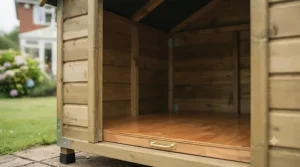
The standout here is straightforward: a proper waterproof felt roof at a price point usually reserved for thinner asphalt or plastic alternatives. The treated wood shell, combined with non-slip feet that lift the base slightly off the ground, addresses two of the most common weak points in budget kennels — roof leaks and rising damp from ground contact — without pushing the price into premium territory.
Based on the spec comparison, the VOUNOT Wooden Dog House sits comfortably between the cheapest fir-wood options and the pricier insulated builds, offering genuine rain protection without the added cost of a Styrofoam core. Aggregated review sentiment consistently flags the felt roof and removable floor as the strongest selling points, with occasional notes that the interior space feels a little snug for larger medium breeds — worth double-checking dimensions against your dog’s size before buying.
Pros:
- ✅ Genuine felt roof rather than a thinner budget alternative
- ✅ Non-slip feet reduce ground contact and rising damp
- ✅ Removable floor simplifies cleaning
Cons:
- ❌ Interior space runs on the snug side for larger medium dogs
- ❌ No insulation layer for particularly cold conditions
At around £60-£90, the VOUNOT Wooden Dog House represents strong value for weatherproofing basics done properly, without stretching into premium pricing.
7. FeelGoodUK Medium Wooden Dog Kennel — tongue-and-groove panels with a dedicated wind protector
The standout feature is the tongue-and-groove panel construction, a joinery method that interlocks each timber board into the next rather than simply butting flat panels together — the practical result is far fewer gaps for wind and driving rain to exploit than typical flat-panel kennel walls. A dedicated wind protector at the entrance adds a further layer of draught resistance, addressing one of the most commonly overlooked weak points in kennel design: the doorway itself.
Here’s what to weigh: tongue-and-groove construction is more labour-intensive to manufacture, which is reflected in the price, but reviewers consistently note that the draught reduction is genuinely noticeable compared with simpler panel designs, particularly in exposed or windy gardens. The lift-up roof aids cleaning access, echoing the hinged design seen on the Trixie Natura Flat Roof Dog Kennel, though here it’s paired with a pitched rather than flat profile for better rain shedding.
Pros:
- ✅ Tongue-and-groove panels reduce gaps and draughts
- ✅ Dedicated wind protector at the entrance
- ✅ Lift-up roof combined with a pitched, rain-shedding design
Cons:
- ❌ Mid-range pricing sits above basic fir-wood alternatives
- ❌ Limited colour and finish options compared with some rivals
Priced around £100-£160, the FeelGoodUK Medium Wooden Dog Kennel offers strong value specifically for exposed or windy gardens where draught resistance matters as much as rain protection.
Practical Usage Guide: Assembling and Weatherproofing Your Kennel
Getting a weatherproof wooden dog kennel to actually perform starts before your dog ever sets paw inside it. Siting matters more than most owners expect: position the kennel on level, well-drained ground, ideally raised slightly or set on paving slabs, and angle the entrance away from the prevailing wind and driving rain — in most of the UK, that means facing away from the south-west, where the bulk of our weather tends to come from.
During the first thirty days, check the roof seams and any joints weekly rather than assuming factory assembly is watertight from day one — felt and shingle roofing can shift slightly as timber settles, and catching a small gap early is far easier than dealing with water damage months later. If your kennel arrived with basic factory treatment, such as the PawHut Wooden Kennel, plan to apply a pet-safe wood preservative within the first few weeks, focusing especially on any cut edges exposed during assembly, since these are rarely pre-treated as thoroughly as the main panels.
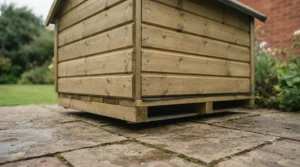
A common early mistake is placing the kennel directly on bare soil or grass, which invites rising damp regardless of how good the roof is. Raising the base even a few centimetres, as several kennels here already do with built-in feet, makes a genuine difference to how long the floor timber lasts.
Real-World Scenarios: Matching the Right Kennel to Your Garden and Dog
The exposed, windy garden. A garden with little natural shelter from hedges or fencing, where wind-driven rain is the main problem rather than standing water, is better served by the FeelGoodUK Medium Wooden Dog Kennel, whose tongue-and-groove construction and wind protector specifically target draughts rather than just rainfall.
The multi-dog working household. A household with two working dogs needing secure, weatherproof outdoor housing attached to a run benefits most from the Cherry Acres Montgomery, since its tanalised timber and run compatibility solve a genuinely different problem than a single-dog starter kennel.
The first-time buyer on a tight budget. An owner buying their first outdoor kennel, uncertain how much use it will get, is reasonably served by the VOUNOT Wooden Dog House — a genuine felt roof and treated timber at an accessible price, without committing to premium spending before knowing whether the setup suits their dog long-term.
How to Choose a Weatherproof Wooden Dog Kennel
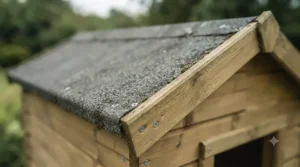
- Check the timber treatment first. Pressure-treated or tanalised wood resists rot for years longer than basic fir, which matters more than any other single spec in a UK climate.
- Prioritise the roof type over appearance. Apex and pitched roofs shed rain more reliably than flat designs, which are more prone to pooling.
- Look for raised or ventilated flooring. Ground contact invites rising damp regardless of how good the walls and roof are.
- Size the kennel to your dog, not your budget. A cramped kennel traps body heat poorly and offers less protection from cold surfaces.
- Factor in your garden’s exposure. A sheltered garden needs less draught protection than an open, windy plot.
- Check for a genuine guarantee on the timber. A multi-year anti-rot guarantee is a fair signal of how the manufacturer expects the wood to perform outdoors.
- Plan for ongoing treatment from day one. Even the best factory finish benefits from periodic pet-safe preservative reapplication.
Waterproof Dog Kennel vs Standard Wooden Kennel: What’s Actually Different
The phrase “waterproof dog kennel” gets used almost interchangeably with “weatherproof” in pet retail, but there’s a meaningful technical difference worth understanding before you buy. A genuinely waterproof dog kennel has a sealed, impermeable roof membrane — proper roofing felt, a bitumen-sealed surface, or a waterproof composite panel — engineered specifically to stop water penetration entirely, not just shed the majority of it.
A standard wooden kennel, by contrast, may use a basic asphalt shingle roof or an untreated timber lid that resists light rain reasonably well but struggles under sustained downpours or standing water. Among the seven kennels above, the Kennelstore Aston and VOUNOT Wooden Dog House both use genuine felt roofing that qualifies as properly waterproof, while budget options like the PawHut Wooden Kennel rely on thinner shingle roofing that benefits from an added waterproof layer if the kennel sits somewhere genuinely exposed. Reviewers consistently note that the roof, far more than the walls, determines whether a kennel stays dry through a full British winter.
Weather Resistant Kennel Roof: Materials That Actually Keep Rain Out
Not all “weather resistant” roofing is built the same way, and the material choice matters enormously for how long a weatherproof wooden dog kennel actually lasts outdoors. Roofing felt remains the most common and cost-effective option — a bitumen-impregnated fabric that, properly nailed and overlapped, sheds water reliably for several years before needing replacement. Asphalt shingles, as used on the PawHut Wooden Kennel, offer a slightly more decorative finish but generally cost more to replace and can be fiddlier to repair in small sections than felt.
What most buyers overlook is roof pitch itself: a steeper apex sheds water and reduces standing moisture far more effectively than a flat or gently sloped surface, which is precisely why flat-roofed designs like the Trixie Natura Flat Roof Dog Kennel benefit from more frequent roof checks than apex-roofed alternatives. Whichever material a kennel arrives with, checking the overlap at seams and the tightness of any nailing after the first few weeks of weather exposure catches small problems before they become leaks.
Rain Proof Dog House: Common Mistakes That Let Water In
The single most common mistake with a supposedly rain proof dog house is ignoring the entrance — a doorway without any wind protector or overhang lets driving rain straight into the sleeping area, regardless of how good the roof is. A close second is placing the kennel flat on bare ground rather than raising it slightly, which allows moisture to wick up through the floor timber even when the roof itself is performing perfectly.
Owners also frequently underestimate how quickly felt roofing can degrade if it’s never checked — a small tear that would take minutes to patch, if caught early, can let in enough water over a wet month to warp interior timber and encourage mould. Finally, plenty of buyers assume a kennel is genuinely rain proof simply because the listing uses the word, without checking whether the roof material is proper felt, sealed shingle, or a bare timber lid with no covering at all — a distinction this guide has tried to make clear throughout.
✨ Ready to Keep Your Dog Dry This Winter?
🐾 Compare the seven weatherproof wooden dog kennels above, check current prices and sizing on amazon.co.uk, and pick the roof and timber treatment that actually suits your garden’s exposure — not just the cheapest option on the page.
Felt Roofing for Kennels: A Practical Guide
Felt roofing for kennels works on the same basic principle as felting a garden shed, just scaled down, and understanding the process helps enormously when checking whether a kennel’s roof is genuinely well-fitted or just adequate. The felt is cut with a generous overhang on all sides — typically five to ten centimetres — then nailed along the top edge at roughly ten-centimetre intervals using galvanised clout nails, pulled taut to avoid wrinkles that could pool water. For an apex roof, a final capping strip runs along the ridge, overlapping both side panels by several centimetres to stop water finding its way in at the join.
According to Screwfix’s guide on felting a shed roof, pulling the felt taut before nailing and maintaining consistent overlaps at every seam are the two details that most determine whether a roof stays watertight for years or starts leaking within a season. If you’re topping up or replacing the felt on any of the kennels in this guide, particularly flat-roofed designs like the Trixie Natura Flat Roof Dog Kennel, checking these overlaps every year before winter is a small job that prevents a much bigger repair later.
Kennel Treatment and Varnish: Keeping the Wood Weatherproof Long-Term
Kennel treatment and varnish matter just as much as the roof, since even pressure-treated timber benefits from periodic reapplication to maintain its water resistance over years of outdoor exposure. The critical requirement here is that any treatment used must be genuinely pet-safe — many standard wood varnishes and preservatives contain solvents or heavy metals that are entirely unsuitable for a surface a dog will lie against, chew, or breathe near daily.
What most buyers overlook is that pet-safe doesn’t mean less effective; several water-based, VOC-free wood protectors on the market are specifically formulated for animal housing, including kennels, stables, and hutches, and offer genuine waterproofing without the toxicity risk. Reviewers and product guides consistently recommend checking for an explicit “pet-safe” or “animal-safe” label rather than assuming any exterior varnish is appropriate, and reapplying roughly once a year, focusing on high-wear areas like the entrance and roof edges where weather exposure is heaviest.
UK Weather Considerations for Pets: What the Law and Welfare Guidance Say
UK weather considerations for pets aren’t just a matter of comfort — they’re addressed directly in welfare guidance that outdoor dog owners should be aware of. RSPCA guidance states that dogs kept outside need genuine shelter from rain, wind and sunlight, along with a temperature range that’s manageable without heating or cooling extremes, and that a dog should always be able to move somewhere more comfortable if the conditions demand it.
Winter brings its own separate set of UK weather considerations. According to RSPCA advice on cold weather care, dogs feel the cold more than owners sometimes assume, and extremities like ears, paws and tails are particularly vulnerable given how little fur or insulation covers them. A weatherproof wooden dog kennel with proper insulation, like the Pets Imperial Norfolk, addresses part of this concern directly, though bedding, positioning away from wind, and regular welfare checks during genuinely severe weather remain essential regardless of how good the kennel itself is.
What to Expect: Real-World Performance Through a UK Winter and Summer
Spec sheets rarely capture how a kennel actually behaves across a full British year, so here’s the honest picture based on aggregated review patterns and how these materials perform in practice. Pressure-treated and tanalised kennels, such as the Kennelstore Aston and Cherry Acres Montgomery, show minimal warping or swelling even after a genuinely wet winter, while basic fir-wood options like the PawHut Wooden Kennel are more prone to slight swelling around joints during prolonged damp spells, which is exactly why supplementary treatment matters so much for budget kennels specifically.
Given that UK rainfall has been trending wetter overall in recent years, according to Carbon Brief’s review of Met Office climate data, roof quality and timber treatment aren’t optional extras for a weatherproof wooden dog kennel — they’re the entire point of the purchase. In summer, insulated designs like the Pets Imperial Norfolk need their ventilation used properly, with any covers or vents open, to avoid trapping heat, while simpler kennels naturally breathe a little more and rarely need extra summer adjustment.
Long-Term Cost & Maintenance: Is a Wooden Kennel Worth It?
Looking at total cost of ownership rather than the sticker price alone changes the maths considerably. A £60 budget kennel that needs re-treating every year and a roof replacement within three winters isn’t necessarily cheaper over a decade than a £300 kennel built with genuinely rot-resistant timber and a 15-year guarantee. Maintenance costs are mostly time and the occasional tin of pet-safe preservative — a modest ongoing commitment rather than a major expense, provided it’s kept up consistently rather than left until problems appear.
Value-wise, the Kennelstore Aston and Cherry Acres Montgomery stand out for genuine longevity given their pressure-treated or tanalised construction, while the VOUNOT Wooden Dog House offers a sensible middle ground — proper felt roofing at a price that doesn’t demand premium-tier spending. For owners uncertain how long they’ll need an outdoor kennel, a mid-range option with decent treatment already applied, rather than the very cheapest available, tends to offer the best balance of upfront cost against ongoing upkeep.
Buyer’s Decision Framework: Which Kennel Fits Your Situation?
If your garden is genuinely exposed to wind and driving rain, choose the FeelGoodUK Medium Wooden Dog Kennel, because tongue-and-groove construction and a dedicated wind protector solve that specific problem. If you’re housing more than one dog or planning an attached run, choose the Cherry Acres Montgomery, because it’s built with that scale and longevity in mind from the outset. If you want proven long-term durability and don’t mind paying for it, choose the Kennelstore Aston, because its pressure-treated timber and guarantee reflect genuine decade-plus outdoor use. If you’re testing whether an outdoor kennel suits your dog before investing heavily, choose the VOUNOT Wooden Dog House, because it delivers genuine weatherproofing basics without premium pricing.
FAQ
❓ What makes a wooden dog kennel genuinely weatherproof?
❓ Do wooden kennels need re-treating every year?
❓ Is felt roofing better than asphalt shingles for a kennel?
❓ Can I leave a wooden kennel outside all year round in the UK?
❓ What's the difference between a waterproof and weather-resistant kennel?
Conclusion
Choosing a weatherproof wooden dog kennel in the UK really comes down to being honest about your garden’s exposure and how long you expect the kennel to last outdoors. The Kennelstore Aston and Cherry Acres Montgomery earn their premium prices through genuinely rot-resistant timber built for a decade or more of British weather, the VOUNOT Wooden Dog House delivers proper felt roofing without premium spending, and budget options like the PawHut Wooden Kennel are perfectly reasonable provided you factor in some additional treatment early on.
What matters more than any single product is treating the kennel as part of a wider outdoor setup — correct siting, regular roof and treatment checks, and genuine attention to UK welfare guidance on shelter, temperature and weather exposure. Get that right, and any of the seven kennels above becomes a genuinely dry, comfortable space rather than an expensive garden feature that lets your dog down come the first proper winter storm.
✨ Don’t Miss These Weatherproof Picks!
🐾 Take another look through the seven kennels above, check current pricing and sizes on amazon.co.uk, and give your dog a genuinely dry, sheltered spot before the next wet season arrives.
Recommended for You
- Kennels for Professional Dog Groomers: 7 Best Picks for 2026
- 7 Best Heavy Duty Kennels for Dog Daycare in 2026 (UK Guide)
- Commercial Dog Kennels for Boarding Business: 7 Picks for 2026
Disclaimer: This article contains affiliate links. As an Amazon Associate, I earn from qualifying purchases. If you purchase products through these links, we may earn a small commission at no additional cost to you.
✨ Found this helpful? Share it with your friends! 💬🤗
