
In This Article
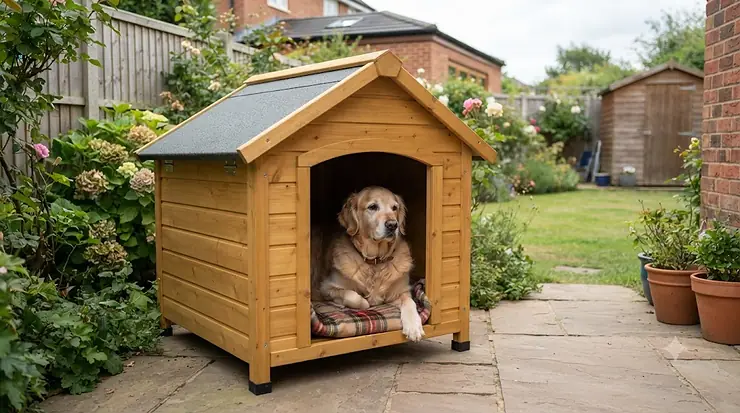
A wooden dog kennel for large dogs is an outdoor timber shelter built to house big breeds — think German Shepherds, Labradors, Rottweilers and Great Danes — with enough headroom to stand, turn and stretch out, plus walls thick enough to survive a British winter without turning into a soggy plywood sponge by March. That’s the short version. The long version is that not every kennel labelled “large” actually deserves the badge, and the difference between a genuinely sturdy build and a glorified garden ornament usually comes down to details nobody photographs for the listing page: cladding thickness, roof pitch, and whether the base is raised off wet ground.
If you’ve ever stood in a garden centre car park trying to mentally fit a flat-pack kennel around a dog the size of a small pony, you’ll know the sizing guesswork is half the battle. Add in British weather — driving rain sideways in November, baking heat in a July heatwave — and you’re really shopping for two things at once: a home your dog will actually want to use, and a structure that won’t need replacing after eighteen months. This guide covers seven genuine, currently available options across budget, mid-range and premium tiers, with honest analysis of what each one gets right and where it falls short, drawn from real specifications and aggregated buyer feedback rather than marketing copy.
We’ll also walk through sizing for big breeds specifically, what “sturdy timber” actually means in millimetres rather than adjectives, and how to set the whole thing up so it survives its first winter intact. According to the RSPCA’s cold weather advice, meeting a dog’s needs outdoors is genuinely difficult even with the right kit — so getting the kennel itself right matters more than most buyers assume.
Quick Comparison Table
Here’s the fast-scan version before we get into the detail. Every product below is a real, currently listed wooden dog kennel or dog house suitable for large breeds, ranked loosely from budget to premium.
| Product | Best For | Price Range |
|---|---|---|
| PawHut Wooden Dog Kennel for Outside | Tightest budget, first-time buyers | Under £150 |
| Large Wooden Dog Kennel (Wide Overhang) | Rainy gardens, simple design | £150-£220 |
| Samuel Alexander Large Garden Dog House | Garden aesthetics, added light | £180-£280 |
| PawHut Elevated Outdoor Dog Kennel | Damp gardens, easy cleaning | £220-£320 |
| Aivituvin Anti-Chewing Wooden Kennel | Chewers, dogs who scratch at walls | £250-£360 |
| 4×4 Tanalised Deluxe Wooden Kennel | Long-term outdoor living, giant breeds | £350-£550 |
| Aivituvin Extra Large Insulated Dog House | Cold climates, XL and giant breeds | £400-£600+ |
Even at a glance, the spread tells its own story. Budget picks under £150 get the basics right — a roof, four walls, a raised floor — but skimp on cladding thickness and weatherproofing extras. The middle tier adds features like windows, anti-chew metal framing or elevated bases that genuinely extend the kennel’s working life. At the top end, insulation and tanalised (pressure-treated) timber turn a garden shelter into something closer to a proper outbuilding, which matters enormously if your dog spends real time outdoors rather than just popping out for toilet breaks.
💬 Just one click — help others make better buying decisions too!😊
Top 7 Wooden Dog Kennels for Large Dogs: Expert Analysis
1. PawHut Wooden Dog Kennel for Outside — best budget entry point
The PawHut Wooden Dog Kennel for Outside measures roughly 109cm long by 79cm wide by 72cm high, which comfortably suits medium-to-large breeds like Border Collies, Springer Spaniels or smaller Labradors, though it starts to feel snug for anything approaching Rottweiler size. Built from FSC-sourced fir, it has a sloped asphalt-felt roof for rain runoff and a hinged top panel that lifts for cleaning — a small design touch that saves you crawling in on your hands and knees with a dustpan. The raised base keeps the floor off damp soil, which matters more than most first-time buyers realise until they find out the hard way.
Based on the spec comparison against similar budget kennels, this is squarely an entry-level buy: solid enough for a dry, sheltered garden spot, but not the pick for a dog that spends all day, every day outdoors through a full winter. Reviewers consistently note that assembly is straightforward for two people, though a handful mention the felt roofing needing an early re-seal after the first heavy rain — a common weak point at this price bracket rather than a fault unique to this model. It’s genuinely good value for anyone easing a young or occasional-outdoor dog into kennel life without committing serious money upfront.
Pros:
- ✅ Genuinely affordable entry point for large-breed kennels
- ✅ Hinged roof panel makes cleaning far easier
- ✅ Raised floor keeps bedding away from ground damp
Cons:
- ❌ Interior space tight for giant breeds like Great Danes
- ❌ Felt roofing needs early monitoring in heavy rain
Price sits under £150 at the time of research, which represents solid value if you’re testing whether outdoor housing suits your dog before investing further — check current pricing before you buy, as availability shifts.
2. Large Wooden Dog Kennel (Wide Overhang) — best for rain protection on a budget
The Large Wooden Dog Kennel (Wide Overhang) is built from light, finished wood with a notably deep roof overhang — the kind of design detail that sounds cosmetic until you realise it’s doing real work keeping driving rain off the entrance and side panels. Available in Medium and Large sizing, the Large variant suits breeds up to roughly Labrador or German Shepherd size without feeling cramped, provided you check the listed internal dimensions against your dog’s stretched-out length plus a decent margin.
What most buyers overlook about overhang design is that it protects the timber itself, not just the dog — cladding that stays drier lasts longer before it needs re-treating. Aggregated review sentiment for this style of kennel is generally positive on build sturdiness for the price, with a recurring theme that the finished wood benefits from an annual coat of exterior wood preserver rather than being left entirely maintenance-free, despite what “finished wood” implies on the listing. It’s a strong pick for anyone in a wetter part of the UK — the North West, Wales, much of Scotland — who wants weather protection without paying premium prices.
Pros:
- ✅ Deep roof overhang shields walls and entrance from rain
- ✅ Genuinely spacious for one large breed dog
- ✅ Solid mid-budget build quality for the price point
Cons:
- ❌ Finished wood still needs annual re-treatment
- ❌ Limited colour and size variant choice
Expect to pay in the £150-£220 range, with prices fluctuating around seasonal demand — always check the current price before ordering.
3. Samuel Alexander Large Garden Dog House — best for a bright, garden-friendly design
The Samuel Alexander Large Garden Dog House measures around 82cm high by 1.16m in length, positioning it as one of the more generously proportioned options here, and it includes a window — an unusual feature at this size that genuinely changes how much natural light reaches the interior. On paper this means less of a dark, cave-like feel for dogs who dislike enclosed spaces, which some large breeds — especially nervous rescues — respond to noticeably better than a windowless box.
Here’s what to weigh: a window is a ventilation win in summer but a potential draught point in winter if the seal isn’t tight, so it’s worth checking the frame fit on arrival and adding weatherstripping if needed. Reviewers frequently mention the kennel’s kerb appeal — it reads more like a garden feature than a utilitarian shelter, which matters if the kennel sits somewhere visible rather than tucked round the back. Build quality is reported as solid for the price bracket, though a few buyers note the roofing felt is a common first upgrade across almost every kennel in this price range, this one included.
Pros:
- ✅ Window adds natural light and ventilation
- ✅ Generous footprint suits most large breeds comfortably
- ✅ Attractive garden aesthetic, not purely functional
Cons:
- ❌ Window seal may need extra weatherproofing in winter
- ❌ Roofing felt often needs an early upgrade
Pricing typically falls in the £180-£280 range depending on retailer stock — check current price at the time of purchase since these figures shift.
4. PawHut Elevated Outdoor Dog Kennel — best for damp gardens and easy cleaning
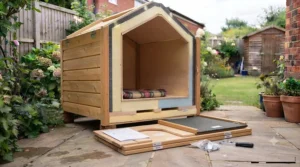
The PawHut Elevated Outdoor Dog Kennel comes in at approximately 106.5cm high, 110cm wide and 98cm deep — genuinely large-breed proportions that suit German Shepherds, Dobermans and similarly sized dogs without them needing to fold themselves in half to lie down. The standout feature is the elevated design paired with a removable floor panel: raising the whole structure off the ground reduces damp penetration significantly, and being able to pull the floor out for a proper hose-down solves one of the most persistent hygiene headaches with outdoor kennels.
Based on the spec comparison with ground-level alternatives, elevation is one of the highest-value upgrades you can buy at this price point — it does more for longevity and hygiene than almost any other single feature. The anti-corrosion treated wood is a genuine plus for anyone near the coast or in a consistently damp region, where standard softwood can start greying and softening within a season. Aggregated buyer feedback highlights the removable floor as the most praised feature, with cleaning time cited as dramatically reduced compared to fixed-floor kennels, while a smaller number of reviewers note the flat-pack assembly instructions could be clearer.
Pros:
- ✅ Elevated base meaningfully reduces ground damp exposure
- ✅ Removable floor makes deep cleaning genuinely easy
- ✅ Anti-corrosion wood treatment suits humid regions
Cons:
- ❌ Assembly instructions criticised as unclear by some buyers
- ❌ Larger footprint needs more garden space than compact models
This one sits in the £220-£320 range at the time of research — always verify current pricing before checking out.
5. Aivituvin Anti-Chewing Wooden Kennel — best for chewers and scratchers
The Aivituvin Anti-Chewing Wooden Kennel wraps a metal frame around the vulnerable corners and edges of an otherwise timber structure, plus adds a covered porch area and overhang roof — a combination aimed squarely at dogs who treat wooden edges as recreational chew toys. If you’ve ever replaced a kennel corner post because your Labrador decided it was a snack, this is the feature that actually solves the problem rather than just delaying it.
What the spec sheet won’t tell you, but reviewers note, is that the metal framing also adds structural rigidity beyond its anti-chew purpose — the whole kennel feels noticeably less prone to racking or twisting in wind compared to pure-timber budget models. The porch area is a genuinely useful transformation feature too: it gives dogs a shaded, dry spot to sit without fully committing to going inside, which many large breeds prefer, especially in warmer months when the enclosed interior can feel stuffy. Aggregated review sentiment consistently flags the anti-chew frame as the standout selling point, particularly among owners of young dogs or known chewers, while a smaller cluster of feedback mentions the asphalt roofing benefits from an annual inspection for granule loss.
Pros:
- ✅ Metal-framed edges genuinely deter chewing damage
- ✅ Covered porch gives shaded outdoor space
- ✅ Frame adds structural rigidity against wind
Cons:
- ❌ Asphalt roof needs periodic inspection over years
- ❌ Higher price than basic timber-only kennels
Expect to pay somewhere in the £250-£360 range, with the exact figure depending on size variant and retailer — check current price before purchase.
6. 4×4 Tanalised Deluxe Wooden Kennel — best for long-term, all-weather outdoor living
The 4×4 Tanalised Deluxe Wooden Kennel is a genuine step up in construction philosophy: 12mm tongue-and-groove cladding, pressure-treated (“tanalised”) throughout rather than surface-coated, and a full 4ft by 4ft footprint that functions more like a small shed than a conventional dog house. Pressure treatment forces preservative deep into the timber’s cell structure under vacuum and pressure, rather than simply painting a protective layer onto the surface — a distinction explained well in this UK timber use-class guide, and one that directly affects how many years the structure lasts before rot sets in.
Based on the spec comparison with the six other kennels here, this is the one genuinely built for a dog that spends significant daylight hours outdoors year-round rather than popping out for toilet breaks. The 12mm T&G boards are noticeably thicker than the 8-9mm cladding common on budget and mid-range kennels, which translates to better insulation against both heat and cold and far greater resistance to warping. Reviewers consistently describe the build as “shed-grade” rather than “dog house-grade,” with the trade-off being a longer, more involved self-assembly process — this isn’t a thirty-minute flat-pack job, and a second pair of hands is genuinely recommended.
Pros:
- ✅ 12mm tanalised T&G cladding built for years, not seasons
- ✅ Full walk-in footprint suits giant breeds comfortably
- ✅ Pressure treatment resists rot far better than surface coating
Cons:
- ❌ Longer, more involved assembly process
- ❌ Higher upfront cost than standard dog houses
Pricing typically runs £350-£550, positioning it as a genuine investment piece — check the current price and delivery lead time before ordering.
7. Aivituvin Extra Large Insulated Dog House — best for cold climates and giant breeds
The Aivituvin Extra Large Insulated Dog House stretches to roughly 59 inches, built around an all-around iron frame with a waterproof roof and, notably, an insulated liner — with a heated variant also available for genuinely cold gardens. This is the clearest XL wooden dog house on the list, sized for Great Danes, Newfoundlands, Bernese Mountain Dogs and similarly giant breeds that most “large dog” kennels quietly assume are smaller than they actually are.
Here’s what most buyers overlook about insulation on outdoor kennels: it works both ways, keeping heat in during winter and reducing heat build-up during summer, which matters given the RSPCA’s guidance that dogs kept outdoors need constant access to shade and protection from temperature extremes in both directions. On paper, the combination of insulated walls and an iron anti-chew frame makes this the most complete cold-weather package here, though it’s worth being honest that no wooden kennel — however well insulated — fully replaces indoor housing during genuinely severe cold snaps; supplementary heating or bringing the dog indoors overnight remains sensible in hard frosts. Aggregated buyer feedback highlights the insulation as a genuine, noticeable difference versus non-insulated alternatives, with the iron frame also praised for withstanding determined chewers, while some reviewers note the overall unit is heavy and benefits from being assembled close to its final position.
Pros:
- ✅ True XL sizing genuinely fits giant breeds
- ✅ Insulated liner helps with both heat and cold
- ✅ Iron frame resists chewing and adds durability
Cons:
- ❌ Heavy unit, awkward to reposition once built
- ❌ Premium price reflects the added materials
This sits at the top of the range, typically £400-£600+ depending on whether you choose the heated variant — check current pricing carefully, as this is the biggest single investment on the list.
Top 7 Products: Full Specification Comparison
| Product | Approx. Size | Standout Feature | Best For | Price Range |
|---|---|---|---|---|
| PawHut Wooden Dog Kennel for Outside | 109 x 79 x 72cm | Hinged cleaning access | Budget buyers, medium-large dogs | Under £150 |
| Large Wooden Dog Kennel (Wide Overhang) | Large variant | Deep rain overhang | Wet climates, budget | £150-£220 |
| Samuel Alexander Large Garden Dog House | 82cm x 1.16m | Window for light | Garden aesthetics | £180-£280 |
| PawHut Elevated Outdoor Dog Kennel | 106.5 x 110 x 98cm | Elevated + removable floor | Damp gardens | £220-£320 |
| Aivituvin Anti-Chewing Wooden Kennel | Large + porch | Metal anti-chew frame | Chewers | £250-£360 |
| 4×4 Tanalised Deluxe Wooden Kennel | 4ft x 4ft | 12mm tanalised T&G | Giant breeds, long-term | £350-£550 |
| Aivituvin Extra Large Insulated Dog House | 59″ | Insulated liner | Cold climates, XL breeds | £400-£600+ |
Read across this table and a clear pattern emerges: price correlates far more closely with cladding thickness and weatherproofing engineering than with size alone. The PawHut Elevated Outdoor Dog Kennel and 4×4 Tanalised Deluxe Wooden Kennel both justify their mid-to-premium pricing through structural choices — elevation and pressure treatment respectively — that directly extend usable lifespan rather than just adding cosmetic extras. If your budget stretches to it, the Aivituvin Extra Large Insulated Dog House is the standout for genuinely cold gardens, while the PawHut Wooden Dog Kennel for Outside remains the sensible low-risk entry point for anyone still working out whether outdoor housing suits their dog long-term.
Setting Up Your Large Dog Kennel: The First 30 Days
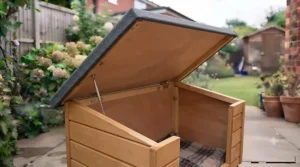
Getting a wooden dog kennel for large dogs right isn’t just about the purchase — the first month of setup and introduction shapes whether your dog actually uses it. Start with placement: a spot with partial shade, some shelter from prevailing wind, and good drainage underneath matters more than most buyers plan for. Standing water pooling around the base is one of the fastest ways to rot even pressure-treated timber, so raise the whole kennel on paving slabs or a timber bearer frame if the ground isn’t naturally well-drained.
Assembly-wise, budget an extra 20-30% time beyond the stated instructions — nearly every flat-pack wooden kennel benefits from pre-drilling screw holes to avoid splitting panels, a step manufacturers rarely mention. Once built, don’t expect instant adoption: dogs generally need gradual introduction, with familiar bedding, a favourite toy, and short supervised sessions building positive associations before you leave them to use it independently. A common early mistake is treating the roofing felt or asphalt shingles as maintenance-free from day one — a quick check after the first heavy rainfall, resealing any lifted edges, saves a much bigger repair job later. Maintenance-wise, plan on an annual timber treatment (wood preserver or oil, depending on the finish) each spring, and a felt or shingle roof inspection before and after winter.
Real-World Scenarios: Matching Kennels to Dogs and Owners
The young, energetic Labrador owner with a modest garden and a tight budget is probably best served by the PawHut Wooden Dog Kennel for Outside or the Large Wooden Dog Kennel (Wide Overhang) — both offer genuine shelter without a premium price tag, though a chew-resistant upgrade may become necessary if the dog is a determined destroyer.
The rural household with a German Shepherd or Doberman that spends significant daytime hours outdoors should lean toward the PawHut Elevated Outdoor Dog Kennel or Aivituvin Anti-Chewing Wooden Kennel — elevation and anti-chew framing both directly address the wear patterns that heavier daily use creates.
The owner of a Great Dane, Newfoundland or Bernese Mountain Dog in a genuinely cold part of the UK — Scotland, the Pennines, rural Wales — is the clearest case for the Aivituvin Extra Large Insulated Dog House or the 4×4 Tanalised Deluxe Wooden Kennel. Both are built for years of exposure rather than occasional use, and the insulated option in particular addresses the RSPCA’s point that dogs kept outdoors need consistent protection from temperature extremes, not just an occasional dry spot.
Buyer’s Decision Framework: Which Kennel Fits Your Situation
If budget is your primary constraint, choose the PawHut Wooden Dog Kennel for Outside because it delivers the essential shelter basics without unnecessary extras inflating the price. If your dog chews or scratches at wood, choose the Aivituvin Anti-Chewing Wooden Kennel because the metal frame directly solves that specific failure point rather than just delaying it. If your garden is genuinely damp or you’re near the coast, choose the PawHut Elevated Outdoor Dog Kennel because elevation and anti-corrosion treatment address moisture at the source. If your dog is a giant breed spending real time outdoors through winter, choose the Aivituvin Extra Large Insulated Dog House because insulation is the one feature that meaningfully changes year-round comfort. And if you want a structure that will genuinely still be standing in a decade, choose the 4×4 Tanalised Deluxe Wooden Kennel, because pressure-treated timber is doing fundamentally different long-term work than surface-coated softwood.
How to Choose a Wooden Dog Kennel for Large Dogs
Choosing the right kennel comes down to a short list of criteria that matter far more than colour or styling:
- Measure your dog first, not the kennel. Take a nose-to-tail-base length and shoulder height with your dog standing and lying stretched out, then add at least 25% margin — large breeds keep growing well past a year old.
- Check cladding thickness, not just overall size. Anything under 10-12mm is genuinely budget-tier; treat listings vaguely describing “solid wood” with some scepticism until you find the actual millimetre spec.
- Prioritise a raised, ventilated base. Ground contact is the single biggest driver of rot and damp, regardless of how good the walls are.
- Assess roof pitch and overhang. A steeper pitch and deeper overhang shed rain more effectively and protect the walls, not just the interior.
- Consider insulation if your garden gets genuinely cold. It’s a meaningful upgrade for giant breeds or exposed sites, less critical for sheltered gardens or dogs with heavy natural coats.
- Factor in chew-resistance if relevant. Metal-framed corners cost more upfront but prevent a much bigger repair bill down the line.
- Confirm delivery and assembly realistically. Larger kennels arrive as substantial flat-pack loads — check delivery access and whether two people are recommended for assembly.
Kennel Sizing Guide: How Big Is Big Enough?
Getting sizing right is arguably the single most common mistake in this category, which is why a proper kennel sizing guide matters more than a features checklist. As a working rule, the kennel’s internal length should be at least the dog’s nose-to-tail length plus 25-30%, and internal height should allow the dog to stand fully upright without ducking. For context: a Labrador or German Shepherd typically needs an internal footprint in the 90-110cm length range, while genuinely giant breeds — Great Danes, Newfoundlands, Bernese Mountain Dogs — often need the XL wooden dog house category specifically, starting around 120-150cm in length, which is where models like the Aivituvin Extra Large Insulated Dog House and 4×4 Tanalised Deluxe Wooden Kennel come into their own.
It’s worth resisting the temptation to oversize dramatically “to be safe.” A kennel that’s too large loses one of its key winter benefits — dogs partly rely on their own body heat warming a contained space, and an oversized interior struggles to retain that warmth as effectively. The sweet spot is snug-but-not-cramped: enough room to turn around and stretch fully, without so much excess volume that the space feels draughty in January.
Sturdy Timber Thickness: What Actually Matters
“Sturdy” gets used loosely in kennel marketing, so it’s worth being specific about what sturdy timber thickness genuinely means for durability. Budget kennels commonly use 8-9mm tongue-and-groove or shiplap cladding — adequate for light, sheltered use, but noticeably prone to flexing and, over years, warping under sustained weather exposure. Mid-range and premium kennels, like the PawHut Elevated Outdoor Dog Kennel and 4×4 Tanalised Deluxe Wooden Kennel, step up to 12mm or thicker cladding, which meaningfully improves both structural rigidity and insulation value — thicker timber simply loses heat more slowly.
Thickness alone isn’t the whole story, though. Whether the timber is pressure-treated (tanalised) or merely surface-coated matters just as much for longevity. As explained in this UK timber treatment guide, pressure treatment forces preservative deep into the wood’s cellular structure, offering protection that a painted-on coating simply can’t match once the surface layer wears through. If you’re comparing two kennels with similar wall thickness, the one using genuinely pressure-treated timber — check the listing explicitly states this, rather than just “weather-resistant” — is the more durable long-term buy.
Wooden Kennel vs Plastic and Metal Kennels for Big Breeds
| Factor | Wooden Kennel | Plastic Kennel | Metal Kennel |
|---|---|---|---|
| Insulation | Good, especially thick cladding | Poor, prone to condensation | Poor, conducts heat/cold |
| Weight | Heavy, stable in wind | Light, can shift in strong wind | Heavy, very stable |
| Chew resistance | Moderate (better with metal framing) | Low, dogs can chew through | High |
| Aesthetic | Blends into garden settings | Utilitarian, less attractive | Utilitarian, industrial look |
| Maintenance | Annual treatment needed | Minimal, occasional cleaning | Rust-checking, minimal otherwise |
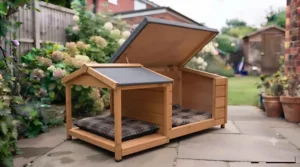
Wood wins decisively on insulation and garden aesthetics, which is precisely why it dominates the large-breed outdoor housing market despite requiring more upkeep than plastic. Plastic kennels are lighter and lower-maintenance but perform noticeably worse thermally — condensation build-up inside plastic shelters is a genuine, well-documented issue in colder months. Metal offers the best chew-resistance outright, which is why the strongest wooden kennels here, like the Aivituvin Anti-Chewing Wooden Kennel and Aivituvin Extra Large Insulated Dog House, hedge their bets by combining timber’s insulation benefits with metal framing at the vulnerable points.
Common Mistakes When Buying a Large Dog Kennel
Buyers repeatedly make a handful of avoidable errors when shopping for large breed outdoor housing. The first is sizing purely off breed name rather than the individual dog — a “large breed” kennel sized for a lean Labrador can feel genuinely cramped for a broad-chested Rottweiler or Mastiff. The second is ignoring roof material entirely; asphalt shingle generally outlasts basic roofing felt, but almost every kennel in the budget-to-mid range needs the roof checked and resealed periodically regardless. The third is underestimating placement — positioning a kennel in full afternoon sun with no shade access creates a genuine overheating risk in summer, something the RSPCA specifically warns against for temperature extremes in both directions. The fourth mistake is skipping the raised-base check; a kennel sitting directly on grass or bare soil will develop damp-related rot far faster than one raised even a few centimetres. Finally, many buyers assume “finished wood” means maintenance-free — in reality, nearly every timber kennel benefits from an annual preserver or oil treatment, tanalised options included, particularly around joints and cut edges.
Safety, Regulations and Weatherproofing for Large Breed Outdoor Housing
While there’s no single UK statute governing garden dog kennels the way there is for licensed boarding kennels, welfare guidance from organisations like the RSPCA and Blue Cross still applies practically to anyone housing a dog outdoors, even part-time. The Blue Cross’s winter advice is a useful benchmark: dogs left outside unsupervised in genuinely cold conditions are at real risk of hypothermia, and short-coated breeds in particular often need supplementary warmth that a wooden kennel alone can’t fully provide. Practically, that means treating a wooden kennel as one part of a wider setup — thick bedding that’s changed when damp, a draught-blocking door flap or interior baffle, and a willingness to bring the dog indoors during severe cold snaps, rather than treating the kennel as a complete year-round solution on its own.
On the construction side, look for kennels using FSC or PEFC-certified timber where possible — a genuine sustainability marker rather than just a nice-to-have, and pressure-treated (tanalised) cladding for anything intended for long-term outdoor use, ideally treated to UK Use Class UC3 or above for exterior, above-ground exposure. Roofing should be genuinely waterproof rather than merely water-resistant, and any electrical heating elements — as found in some premium insulated models — should carry proper outdoor-rated safety certification before use.
Wooden Dog Kennels for Big Breeds: Best Practice Checklist
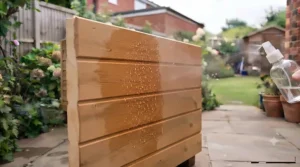
Pulling the practical guidance together into a quick reference: position the kennel somewhere with partial shade and shelter from prevailing wind; raise it off bare ground on slabs or a bearer frame; check and reseal the roof after the first heavy rain and again each autumn; add thick, regularly changed bedding rather than relying on the timber alone for warmth; fit a door flap for draught protection in winter; and schedule an annual timber treatment each spring regardless of whether the wood was originally pressure-treated. None of these steps are complicated individually, but together they’re the genuine difference between a kennel for big breeds lasting two winters or ten.
Frequently Asked Questions
❓ What size wooden kennel do I need for a large dog?
❓ How thick should kennel timber be for durability?
❓ Do wooden dog kennels need to be treated every year?
❓ Can large dogs live outside in a wooden kennel full-time?
❓ Is an insulated wooden dog house worth the extra cost?
Conclusion
A genuinely good wooden dog kennel for large dogs isn’t really about the biggest price tag or the most photogenic design — it’s about matching cladding thickness, elevation, roofing and (where needed) insulation to your specific dog, garden and climate. The PawHut Wooden Dog Kennel for Outside remains a sensible, low-risk starting point for budget-conscious buyers, while the 4×4 Tanalised Deluxe Wooden Kennel and Aivituvin Extra Large Insulated Dog House represent genuine long-term investments for giant breeds facing proper British winters. In between, options like the PawHut Elevated Outdoor Dog Kennel and Aivituvin Anti-Chewing Wooden Kennel solve very specific, common problems — damp ground and destructive chewing respectively — that are worth paying for if they apply to your situation.
Whichever kennel you land on, remember that the structure is only half the equation; placement, bedding, and seasonal maintenance do just as much work keeping your dog genuinely comfortable outdoors. Take the sizing guidance seriously, check timber thickness before you check the price, and your large dog’s new home should genuinely earn its keep for years rather than one damp winter.
✨ Don’t Miss These Exclusive Deals!
🔍 Take your large dog kennel search to the next level with these carefully selected products. Click on any highlighted item to check current pricing and availability. These sturdy, weatherproof builds will help create a genuinely comfortable outdoor home your dog will love!
Recommended for You
- Pent Roof Wooden Kennel: 7 Best UK Picks for 2026
- Apex Roof Dog Kennel: 7 Best UK Picks for 2026
- Wooden Dog Kennel With Raised Floor: 7 Best Elevated Picks 2026
Disclaimer: This article contains affiliate links. As an Amazon Associate, I earn from qualifying purchases. If you purchase products through these links, we may earn a small commission at no additional cost to you.
✨ Found this helpful? Share it with your friends! 💬🤗
