
In This Article
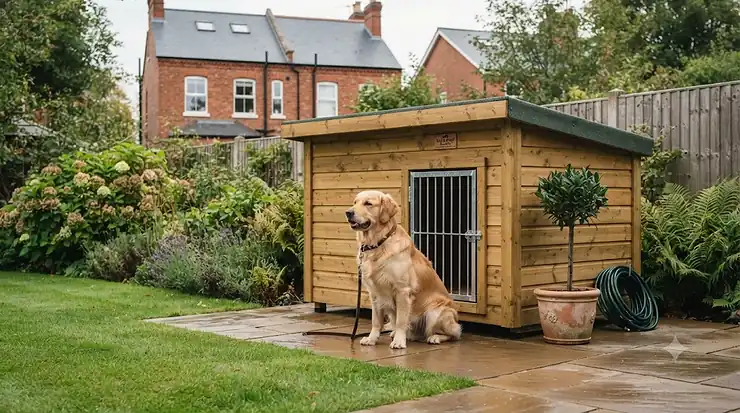
If you’ve ever watched a “sturdy” garden kennel flex like a cardboard box the first time your dog leans on it, you’ll understand why so many owners eventually go looking for something with a bit more backbone. A heavy duty wooden dog kennel isn’t just a bigger box with a roof — it’s a small timber structure built with thicker cladding, chunkier framing, and weatherproofing that’s meant to survive years of rain, wind, and enthusiastic shoulder-barging, not just one damp autumn.
So, what is a heavy duty wooden dog kennel? In short, it’s an outdoor timber shelter constructed with reinforced framing (typically 33-45mm), thick tongue-and-groove or shiplap cladding of 12mm or more, a raised weatherproof floor, and pressure-treated or similarly protected timber designed to resist rot, warping, and chewing far better than budget flat-pack alternatives.
We’ve spent time digging through real specs, verified customer feedback, and the sort of technical detail that never makes it onto a glossy Amazon listing photo — timber thickness, framing dimensions, treatment types, and how each kennel actually performs once the British weather gets involved. Before you buy, it’s worth knowing what the RSPCA says about keeping a dog outdoors, since a genuinely suitable kennel is as much a welfare decision as a shopping one. Below you’ll find seven genuinely available wooden kennels spanning budget starter shelters right up to insulated, cabin-grade housing, plus the analysis to help you work out which one actually suits your dog, your garden, and your wallet.
Quick Comparison Table
| Kennel | Best For | Cladding Thickness | Price Range |
|---|---|---|---|
| PawHut Elevated Open-Top Kennel | Small dogs, tight budgets | Standard fir panel | Under £70 |
| PawHut Large Wooden Kennel (109cm) | Medium dogs, all-rounder | Standard fir panel | £100-£150 range |
| Forest Garden Hedgerow Kennel | Owners wanting FSC-certified UK timber | 12mm tongue & groove | £300-£450 range |
| Benchmark Insulated Timber Kennel | Large or elderly dogs, harsh winters | 12mm shiplap + insulation | £450-£700 range |
| Buttercup Farm Kennel and Run | Large breeds needing exercise space | Pressure-treated panel | £350-£550 range |
This snapshot is deliberately narrow — it’s here to give you the headline picture before we go deep on all seven contenders. Notice how cladding thickness roughly tracks with price: the budget picks use standard panel timber, while the premium options step up to genuine 12mm tongue-and-groove construction, which is the benchmark figure specialist UK kennel builders use for anything they’d call properly heavy duty. If your dog is a persistent chewer or you live somewhere exposed, it’s worth paying the difference rather than replacing a flimsier kennel twice.
💬 Just one click — help others make better buying decisions too!😊
Top 7 Heavy Duty Wooden Dog Kennels: Expert Analysis
1. PawHut Elevated Wooden Dog Kennel (Open Top) — best budget starter kennel
The PawHut Elevated Wooden Dog Kennel is the entry point of this list, and it earns its spot by doing the basics properly without pretending to be something it isn’t. At roughly 85W x 58D x 58H cm, it’s built for small to medium dogs rather than anything Labrador-sized.
Constructed from fir wood with an elevated base, the design lifts your dog off cold, wet ground — a small detail that makes a genuinely big difference to comfort in a British winter. The openable top panel means you can lift the roof section to clean out bedding without crawling in on your hands and knees, which sounds trivial until you’ve tried cleaning a sealed kennel with a torch and a long arm.
Based on the spec sheet, this is a starter kennel rather than a forever kennel: fir is a softer, lighter timber than the tanalised pine or spruce used in premium builds, so it suits dry gardens, covered patios, or as a first outdoor bolt-hole for a puppy rather than full-time exposure to driving rain. Reviewers consistently rate it around 3.4 out of 5, with feedback split between owners pleased with the easy assembly and value, and others noting the timber feels lighter-duty than “heavy duty” branding implies — worth knowing before you buy rather than after.
Pros:
- ✅ Genuinely low price point for a wooden outdoor kennel
- ✅ Elevated base keeps bedding away from ground damp
- ✅ Openable top makes cleaning straightforward
Cons:
- ❌ Fir panelling is thinner than premium tongue-and-groove kennels
- ❌ Only suitable for small to medium breeds
Priced under £70 at the time of research, this is a sensible choice if you want shaded, off-ground shelter for a smaller dog and don’t need it to survive a coastal gale — check current price and availability before ordering, as stock and exact figures shift regularly.
2. VOUNOT Wooden Dog House with Waterproof Roof — best for damp gardens on a budget
The VOUNOT Wooden Dog House sits just above the entry-level tier, built around a 72 x 65 x 83cm footprint aimed at small to medium dogs who need somewhere genuinely dry rather than merely covered.
What stands out on the spec sheet is the dedicated waterproof roof treatment, which matters more than people assume — a huge proportion of kennel failures start at the roof seam, where water finds its way in and slowly rots the frame from the inside out. Pairing a waterproof roof with solid wood panel walls gives this kennel a sensible balance for gardens that see regular rain but not extreme wind exposure.
What most buyers overlook about compact kennels like this one is that internal height matters as much as footprint — an 83cm apex is comfortable for beagle-to-collie-sized dogs to stand and turn around in, but cramped for anything larger. Aggregated seller feedback for this style of kennel tends to highlight straightforward assembly and decent value for the price bracket, though as with any budget wooden kennel, verified long-term durability data beyond the first year or two is harder to pin down — we’d rather say that honestly than invent a five-year track record that doesn’t exist yet.
Pros:
- ✅ Dedicated waterproof roof reduces the most common failure point
- ✅ Compact footprint suits smaller gardens
- ✅ Reasonable internal height for medium breeds
Cons:
- ❌ Not rated for exposed, high-wind locations
- ❌ Smaller dogs only — no room for larger breeds
In the £70-£90 range at the time of writing, this is a durable outdoor kennel pick for owners prioritising dryness over sheer bulk, and a solid step up from the cheapest fir-panel options.
3. PawHut Large Wooden Dog Kennel for Outside (109cm) — best all-rounder for medium breeds
Stepping up in both size and feature count, the PawHut Large Wooden Dog Kennel measures 109L x 79W x 72H cm and is rated for dogs up to roughly 20kg and 80cm in body length — think Border Collies, Springer Spaniels, and French Bulldogs comfortably, with room to spare.
The asphalt roof is the standout upgrade here compared with the smaller PawHut model: asphalt (bitumen felt) roofing sheds water far more effectively than painted timber alone, and it’s the same roofing material specialist kennel builders use on premium cabins. Two windows bring in light and airflow, while a removable tray under the raised floor turns what would otherwise be a fiddly clean into a five-minute job — pull the tray, hose it down, slide it back in.
On paper this means you’re getting mid-range durability features — elevated legs, asphalt roofing, a door curtain for weather protection — without stepping into premium cabin pricing. Reviewers of PawHut’s wooden kennel range generally flag good build quality for the price point, with the usual caveat that fir wood, while treated, benefits from an annual check of joints and roof seals rather than being treated as fully “fit and forget.”
Pros:
- ✅ Asphalt roof sheds rain significantly better than basic timber
- ✅ Removable cleaning tray under a raised, damp-resistant floor
- ✅ Suitable for medium breeds up to around 20kg
Cons:
- ❌ Assembly involves more panels and hardware than entry-level models
- ❌ Fir construction still benefits from yearly re-treatment
Sitting in the £100-£150 range at the time of research, this is arguably the sweet spot for owners who want genuine mid-tier features without premium-cabin pricing.
4. vidaXL Dog Kennel — Solid Pine Wood — best mid-range pine build
The vidaXL Dog Kennel takes a different construction approach, built from solid pine rather than fir panel, with dimensions of roughly 96 x 60.5 x 87cm and a water-resistant roof treatment.
Solid pine has a real practical advantage over thin panel timber: it’s denser and holds screws and joints more securely over repeated freeze-thaw cycles, which is exactly the kind of detail that never shows up in a product photo but matters enormously two winters down the line. The large door opening is worth flagging too — it’s a small design choice that makes a genuine difference for older or larger dogs who struggle to duck through a cramped entrance.
Here’s what the spec sheet won’t tell you outright: “durable” and “weatherproof” claims on budget-to-mid kennels almost always hinge on how well the owner maintains the roof seal and reapplies exterior wood treatment, not purely on the timber species. Solid pine gives you a better starting point than thin panelling, but it isn’t magic — a neglected pine kennel will still suffer in a wet garden corner. Buyers consistently note the straightforward flat-pack assembly and appreciate the more substantial feel of the pine compared with fir-panel competitors at a similar price.
Pros:
- ✅ Solid pine construction holds joints better long-term than thin panel
- ✅ Large door opening suits bigger or older dogs
- ✅ Water-resistant roof treatment included
Cons:
- ❌ Marketed dimensions suit small-to-medium dogs rather than large breeds
- ❌ Still requires an annual reapplication of exterior wood treatment
At around the £108 mark at the time of research, this reinforced dog kennel option is a genuinely solid mid-tier pick if you want denser timber without paying for a full cabin-style build.
5. Forest Garden Hedgerow Wooden Dog Kennel — best FSC-certified premium build
This is where the article moves from “decent garden kennel” into genuinely specialist territory. The Forest Garden Hedgerow Wooden Dog Kennel measures 1.28m x 1.06m and is built entirely in the UK from FSC-certified timber — meaning the wood is verifiably sourced from responsibly managed forests, not just labelled that way.
The construction specification reads like a proper outbuilding rather than a flat-pack pet accessory: 12mm tongue-and-groove cladding on sturdy 33mm x 33mm framing, a raised 12mm plywood floor, and a 12mm plywood roof finished with a mineral-felt cover. Tongue-and-groove cladding is a genuinely different category of construction from the overlap or panel cladding used on budget kennels — the interlocking joints lock out draughts and driving rain in a way that simple flat boards simply can’t replicate.
Based on the spec comparison with the rest of this list, this is the first entry that qualifies as a proper thick timber dog house rather than a garden accessory. It’s pressure treated and backed by a 10-year anti-rot guarantee, which tells you the manufacturer is confident enough in the timber treatment process to put a decade-long number on it — a meaningful signal in an industry full of vague “weatherproof” claims. The smooth-planed finish also means no rough edges or splinters for dogs who like to lean, scratch, or chew at the walls.
Pros:
- ✅ 12mm tongue-and-groove cladding on 33mm framing — genuinely heavy duty
- ✅ FSC-certified, UK-made timber with a 10-year anti-rot guarantee
- ✅ Raised plywood floor and felted roof for serious weatherproofing
Cons:
- ❌ Considerably pricier than fir-panel budget kennels
- ❌ Larger footprint needs a proper flat spot in the garden
In the £300-£450 range at the time of research, this is where “heavy duty” stops being a marketing phrase and starts being an accurate technical description.
6. Benchmark Insulated Timber Dog Kennel — best for harsh winters and older dogs
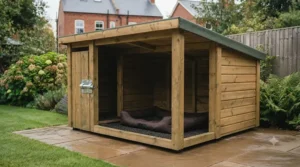
If the Forest Garden kennel is heavy duty, the Benchmark Insulated Timber Dog Kennel is heavy duty with a coat on. Built by a UK specialist animal-housing manufacturer, it uses 12mm thick, tanalised pressure-treated tongue-and-groove shiplap cladding over a chunky 45mm x 45mm tanalised framework — noticeably thicker framing than anything else on this list.
Tanalising is a vacuum pressure-treatment process that forces preservative deep into the wood’s cellular structure, rather than simply coating the surface, which is precisely why manufacturers can offer long rot-and-decay guarantees on timber built this way. Reviewers who’ve bought Benchmark-style kennel panels consistently describe them as noticeably heavier and more rigid to assemble than typical flat-pack kennels — genuinely reassuring feedback for anyone who’s had a “sturdy” kennel rack sideways in strong wind.
What sets this apart from every other entry here is the Rockwool insulation between the wall panels, plus a pre-felted roof, galvanised trimming, an anti-chew guard fitted around the pop-hole, and a built-in draught excluder — features borrowed directly from proper timber cabin construction rather than pet-product design. Reviewers consistently note this suits dogs on vet-recommended crate rest or older dogs who struggle to regulate body temperature, since the insulation keeps the internal microclimate far more stable than an uninsulated shell.
Pros:
- ✅ Thickest framing on this list at 45mm x 45mm tanalised timber
- ✅ Rockwool insulation plus draught excluder for genuine winter protection
- ✅ Anti-chew guard fitted specifically around the entrance pop-hole
Cons:
- ❌ The most expensive kennel in this round-up
- ❌ Overkill for dogs who mostly live indoors and use it occasionally
Typically in the £450-£700 range at the time of research depending on size, this is the pick for anyone whose dog spends real time outdoors through a proper British winter.
7. Buttercup Farm Dog Kennel and Run — best for large breeds needing secure exercise space
Rounding out the list, the Buttercup Farm Dog Kennel and Run takes a different shape entirely: an 8ft x 4ft (L127 x W243 x H127cm) combined kennel-and-run structure built from pressure-treated timber, designed for dogs who need secured outdoor space to move around in, not just somewhere to sleep.
This is less “dog house” and more “small outbuilding with a bedroom attached,” and that distinction matters for larger or high-energy breeds — a German Shepherd or Rottweiler genuinely benefits from having a run to pace and stretch in, rather than being confined to a sleeping box the moment they’re left outside unsupervised. The pressure-treated timber construction follows the same principle as the premium picks above: preservative forced into the wood rather than sprayed on top, which matters enormously for a structure with this much timber surface area exposed to weather.
Here’s what most buyers overlook about kennel-and-run combinations specifically: the run panels see far more direct weather exposure than the enclosed sleeping section, so the quality of that outer timber and its treatment matters just as much as the kennel box itself. This is a structure built for function over polish, and it shows in genuinely useful ways — secure containment, weatherproof shelter, and enough room that a big dog isn’t just tolerating the space but can actually use it.
Pros:
- ✅ Combines secure exercise run with enclosed sleeping shelter
- ✅ Pressure-treated timber suited to large surface area exposure
- ✅ Genuinely sized for large and giant breeds
Cons:
- ❌ Needs a substantial, level garden footprint
- ❌ Assembly is a bigger job than a standalone kennel
In the £350-£550 range at the time of research, this is the practical choice for anyone whose dog needs contained outdoor time as much as shelter.
Top 7 Kennels: Full Comparison
| Kennel | Cladding / Frame | Best For | Price Range | Best For (Weather) |
|---|---|---|---|---|
| PawHut Elevated Open-Top Kennel | Fir panel | Small dogs, tight budgets | Under £70 | Dry, sheltered gardens |
| VOUNOT Wooden Dog House | Solid panel, waterproof roof | Small-medium dogs, damp gardens | £70-£90 range | Regular rain, limited wind |
| PawHut Large Wooden Kennel | Fir panel, asphalt roof | Medium breeds, all-rounder | £100-£150 range | Moderate exposure |
| vidaXL Solid Pine Kennel | Solid pine | Small-medium dogs, denser build | Around £108 | Moderate exposure |
| Forest Garden Hedgerow Kennel | 12mm T&G on 33mm frame | FSC-certified, serious durability | £300-£450 range | High exposure, coastal-ready |
| Benchmark Insulated Kennel | 12mm shiplap on 45mm frame | Large/elderly dogs, cold winters | £450-£700 range | Extreme cold, exposed sites |
| Buttercup Farm Kennel & Run | Pressure-treated panel | Large breeds needing a run | £350-£550 range | Moderate-high exposure |
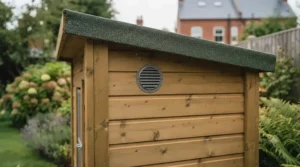
Looking at the table above, there’s a clear line between the fir-panel budget tier and the tongue-and-groove premium tier, and it runs almost exactly through the £150-£300 price gap. If your dog spends genuine hours outside in all weather, the jump to the Forest Garden Hedgerow Kennel or Benchmark Insulated Timber Dog Kennel buys you framing that’s roughly 30-50% thicker than the budget options, not just a nicer paint job. Budget-conscious owners with mostly dry, sheltered gardens can reasonably stick with the PawHut or vidaXL models without feeling like they’re compromising on their dog’s welfare.
Practical Usage Guide: Setting Up and Maintaining Your Kennel
Getting a heavy duty wooden dog kennel home is only half the job — how you set it up in the first 30 days genuinely determines how long it lasts. Start with siting: place the kennel on a level, well-drained spot, ideally with the entrance facing away from prevailing wind and driving rain, which in most of the UK means avoiding a south-westerly-facing doorway.
Before your dog ever sets paw inside, treat any exposed cut edges or joints with an appropriate exterior wood preserver, even on pre-treated kennels — manufacturing cuts can expose untreated timber underneath. Raise the kennel slightly further off the ground with paving slabs or a timber bearer if your garden holds water after rain; even 2-3cm of extra clearance meaningfully reduces damp wicking into the floor panel.
A common first-month mistake is over-bedding a new kennel with thick blankets that trap moisture rather than wicking it away — straw or a proper raised dog bed inside the kennel breathes far better than folded duvets. Check roof seals and screw fixings after the first fortnight, since new timber can move slightly as it settles, and again after any serious storm. Finally, build a light maintenance schedule: a quick joint and roof-seal check every three months, and a full re-treatment of exterior timber annually, ideally in early autumn before the weather turns — this single habit does more for kennel longevity and treatment than any single product feature ever will.
Real-World Scenarios: Matching a Kennel to Your Dog and Garden
If you’re a first-time owner with a Cockapoo puppy and a small, paved courtyard garden, something like the PawHut Elevated Wooden Dog Kennel or VOUNOT Wooden Dog House makes sense — compact, affordable, and appropriately sized, without paying for structural capacity you’ll never use.
If you’ve got a Labrador or Collie-cross who spends real daytime hours outside while you’re at work, and your garden takes the brunt of westerly weather, the PawHut Large Wooden Dog Kennel or vidaXL Solid Pine Kennel sit in the right zone — sturdier framing and better roofing than entry-level, without full premium pricing. Budget for around £100-£150 and expect to check the roof seal every few months.
If you’re keeping a senior German Shepherd who struggles with cold joints through winter, or you live somewhere genuinely exposed — coastal, hilltop, or a garden that catches every gust — the Benchmark Insulated Timber Dog Kennel earns its higher price tag through insulation and heavier framing that a younger, hardier dog simply wouldn’t need. And if you’re housing a large, energetic breed who needs secure outdoor time as much as shelter, the Buttercup Farm Kennel and Run solves a problem none of the standalone kennels on this list can: containment plus space to actually move.
Problem → Solution: Common Kennel Problems Solved
Problem: Roof leaks after heavy rain. This is almost always a seal or felt issue rather than a timber failure — check the roofing felt or asphalt layer for lifted edges, and reseal with an appropriate bitumen adhesive before it reaches the frame underneath.
Problem: Your dog is chewing the entrance frame. This points straight to chew-resistant kennel materials — kennels like the Benchmark Insulated Timber Dog Kennel with a dedicated anti-chew guard around the pop-hole are built specifically for this, but you can also retrofit a metal edging strip to an existing kennel’s entrance.
Problem: Damp smell developing inside. Nine times out of ten this is inadequate ground clearance or blocked ventilation gaps — raise the kennel further off the ground and make sure any vent slots aren’t packed with bedding.
Problem: Kennel rocks or shifts in wind. Larger structures like the Buttercup Farm Kennel and Run benefit from ground anchors or paving-slab weights at each corner; smaller kennels can simply be positioned against a fence line for a wind break.
Problem: Timber greying and splitting after a year or two. This is UV and moisture degradation from a lapsed treatment schedule — a full re-treat with exterior wood preserver, applied to bone-dry timber, typically restores both appearance and protection.
How to Choose a Heavy Duty Wooden Dog Kennel
- Start with your dog’s size and breed, not the kennel photo. A kennel should let your dog stand fully upright, turn around, and stretch out lying down — measure your dog, not just their current bed.
- Check the cladding thickness before anything else. Anything under 12mm tongue-and-groove is budget-tier; 12mm-plus on proper framing is where “heavy duty” claims start to be accurate.
- Look at the framing dimensions, not just the walls. A 33mm or 45mm frame resists racking and flexing far better than thin batten framing hidden behind decent-looking cladding.
- Confirm the treatment type and guarantee length. Pressure-treated (tanalised) timber with a multi-year rot guarantee tells you far more than a vague “weatherproof” label.
- Assess your garden’s exposure honestly. A sheltered courtyard needs less kennel than an exposed, windy plot — don’t overpay for insulation you won’t need, or underbuy for weather you will get.
- Factor in cleaning access. Removable floor trays and openable roofs turn a monthly chore into a five-minute job — worth prioritising over minor size differences.
- Budget for annual maintenance, not just the purchase price. A genuinely durable outdoor kennel still needs a yearly re-treatment; factor that ongoing cost in before comparing sticker prices.
Kennel Timber Thickness: What the Numbers Actually Mean
Timber thickness is the single most useful spec on any kennel listing, and it’s also the one most owners skim past in favour of dimensions and colour. As a rough guide: standard panel or fir cladding on budget kennels typically runs thinner than proper tongue-and-groove boarding, which is why entry-level kennels feel noticeably lighter when you pick up a wall section.
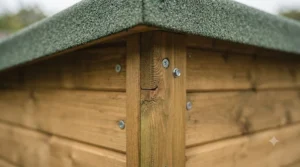
Specialist UK kennel builders converge on 12mm tongue-and-groove cladding as the practical minimum for genuinely weatherproof, long-lasting construction — it’s thick enough to resist warping and flexing, but not so heavy that assembly becomes unmanageable. Framing thickness matters just as much: 33mm framing (as used on the Forest Garden Hedgerow Kennel) is a solid mid-tier standard, while 45mm framing (as used on the Benchmark Insulated Timber Dog Kennel) is genuinely chunky, rigid construction that shrugs off a dog jumping against the wall in a way thinner framing simply can’t.
Here’s what the spec sheet won’t spell out directly: thicker timber isn’t just about strength, it’s about insulation too — mass slows heat loss, so a 12mm-plus wall keeps the internal microclimate noticeably more stable than a 6-8mm panel wall, independent of any added insulation material.
Chew-Resistant Kennel Materials: What Actually Stops a Determined Chewer
Not every dog chews their housing, but for the ones that do, no amount of marketing copy fixes a soft entrance frame. Genuinely chew-resistant kennel materials come down to a combination of factors: hardwood or densely tanalised softwood resists tooth marks better than untreated fir, metal edging strips around entrance frames physically block gnawing access, and a well-fitted anti-chew guard — like the one built into the Benchmark Insulated Timber Dog Kennel — protects the single most vulnerable point on any kennel, the pop-hole edge.
Based on the spec comparison across this list, no wooden kennel is truly chew-proof in the way a welded steel cage is, and that’s worth being upfront about rather than overselling. What you’re buying with reinforced entrance framing and metal trim is meaningfully slower damage and a structure that stays structurally sound even after a determined chewing phase, not total immunity. If chewing is a known issue, pairing a well-built kennel with appropriate chew toys and boredom-reduction routines — Dogs Trust has practical guidance on managing destructive chewing — solves the root cause far more effectively than timber choice alone ever will.
Kennel Longevity and Treatment: Pressure-Treating, Guarantees and Re-Coating
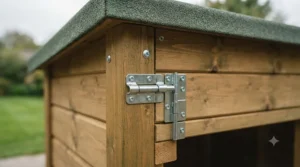
Kennel longevity and treatment go hand in hand, and this is genuinely where the biggest gap between cheap and premium kennels shows up over time rather than on day one. Pressure treatment — sometimes branded tanalising — forces preservative deep into the timber’s cell structure under vacuum pressure, rather than simply coating the surface the way a basic exterior paint or oil does.
The Health and Safety Executive publishes guidance on how industrial timber treatment plants operate, and while that’s aimed at operators rather than pet owners, it underlines just how controlled and deliberate proper pressure treatment actually is compared with a quick surface spray. Kennels built this way, like the Forest Garden Hedgerow Kennel and Benchmark Insulated Timber Dog Kennel, can carry genuine multi-year rot guarantees because the manufacturer has confidence in a documented process, not a marketing assumption.
Even on a pressure-treated kennel, longevity still depends on you: an annual exterior re-coat, prompt attention to any lifted roof felt, and keeping the base clear of compost, leaves, or standing water will roughly double the practical lifespan of almost any wooden kennel on this list, budget or premium.
Heavy Duty Wooden Dog Kennel vs Plastic and Metal Alternatives
Wood isn’t the only outdoor kennel material, and it’s worth being honest about the trade-offs rather than assuming wood always wins. Plastic and resin kennels are lighter, need zero timber treatment, and resist rot entirely — but they insulate poorly, can become brittle and crack in hard UV exposure over several summers, and rarely match the internal warmth of a well-built wooden structure in winter. Metal or wire-framed kennels offer excellent security and chew resistance but conduct heat and cold far more readily, making them a poor standalone choice without significant added insulation.
| Material | Insulation | Weather Resistance | Maintenance | Best For |
|---|---|---|---|---|
| Heavy duty wooden kennel | Good, better with insulation | Very good when treated | Annual re-treatment needed | All-round shelter, winter warmth |
| Plastic/resin kennel | Poor | Good, but UV degrades over years | Minimal | Easy-clean, low upkeep |
| Metal/wire kennel | Poor | Good structurally | Low, but rust-prone untreated | Security, run enclosures |
The analysis here is fairly clear-cut: for a dog spending real time outdoors through UK winters, a properly built wooden kennel offers the best balance of warmth and durability, provided you commit to the annual maintenance. Plastic wins on convenience, and metal wins on raw security, but neither matches timber’s natural insulating properties without significant extra spend.
Common Mistakes When Buying a Reinforced Dog Kennel
The most common mistake is buying on footprint dimensions alone and ignoring cladding thickness entirely — a kennel can look spacious in a product photo while being built from timber barely thicker than a fence panel. A close second is assuming “pressure treated” and “weatherproof” are interchangeable marketing terms; only the former tells you anything concrete about how the timber was actually protected.
Buyers also frequently underestimate their garden’s real exposure, choosing a lightweight kennel for a spot that catches every prevailing wind, then wondering why the roof lifts within a year. On the flip side, some owners overspend on insulated, heavy duty framing for a dog who’s only outside for an hour a day — genuinely reinforced construction matters most for dogs with real outdoor hours logged, not occasional use.
Finally, skipping the maintenance conversation entirely is a costly mistake: even the sturdiest kennel on this list will underperform its guarantee if the exterior treatment is never topped up. Budget the annual re-coat into your decision from the start, not as an afterthought once the timber’s already greying.
Long-Term Cost & Maintenance
It’s tempting to compare kennels purely on sticker price, but total cost of ownership tells a more honest story. A £60 fir-panel kennel that needs replacing within three to four years of exposed outdoor use works out more expensive per year than a £400 tongue-and-groove kennel backed by a 10-year rot guarantee, once you factor in the cost and hassle of a second purchase.
Ongoing costs are broadly similar across the range: expect to spend roughly £15-£25 a year on exterior wood preserver regardless of which kennel you buy, plus the odd bag of screws or a felt repair patch. Where premium kennels earn their keep is in avoided replacement cost and avoided vet bills from a genuinely warm, dry shelter through winter — a false economy on kennel quality can end up costing more in a single damp-related illness than the price difference between budget and premium timber ever would.
Safety, Regulations & Welfare Compliance Guide
Keeping a dog outdoors in the UK is legal, but it comes with real welfare obligations under the Animal Welfare Act 2006, which places a legal duty of care on owners to meet an animal’s needs, including a suitable living environment. The RSPCA takes the view that dogs are generally better off indoors, though it accepts outdoor housing as legal provided the setup meets recognised welfare guidelines for England and Wales.
Practically, that means a kennel large enough for separate sleeping and activity space, genuine shelter from rain, wind and direct sun, and protection against extreme temperatures. Sourcing FSC-certified timber, as used in the Forest Garden Hedgerow Kennel, adds an environmental dimension too — the Woodland Trust explains that FSC certification verifies timber comes from responsibly managed forests rather than unregulated sources, which matters if sustainability factors into your buying decision alongside durability.
Whichever kennel you choose, check local guidance if you’re in a listed property or conservation area, as some outbuildings over a certain footprint require basic notification — most standalone dog kennels fall well under any such threshold, but it’s worth a quick check for larger kennel-and-run combinations like the Buttercup Farm Kennel and Run.
FAQ
❓ What thickness of timber counts as heavy duty for a dog kennel?
❓ Do wooden dog kennels need to be treated every year?
❓ Is a wooden kennel warmer than a plastic one?
❓ How do I stop my dog chewing their wooden kennel?
❓ What size kennel does my dog actually need?
Conclusion
A genuinely heavy duty wooden dog kennel isn’t about the biggest price tag or the flashiest listing photo — it’s about matching cladding thickness, framing, and treatment to how your dog actually lives outdoors. For smaller dogs in sheltered gardens, the PawHut Elevated Wooden Dog Kennel or VOUNOT Wooden Dog House cover the basics affordably. For medium breeds and moderate exposure, the PawHut Large Wooden Dog Kennel and vidaXL Solid Pine Kennel strike a sensible middle ground.
If your dog genuinely lives outdoors through proper British weather, though, the difference between a £70 fir-panel box and a Forest Garden Hedgerow Kennel or Benchmark Insulated Timber Dog Kennel isn’t cosmetic — it’s the difference between replacing a kennel every few years and one that’s still standing solid a decade from now. And for larger, more active breeds, the Buttercup Farm Kennel and Run solves the space problem none of the standalone kennels can.
Whichever you choose, remember that even the best timber needs a bit of yearly attention to earn its keep. Check the current price and stock on the models above before making your final call, since availability and pricing shift regularly.
✨ Don’t Miss These Exclusive Deals!
🔍 Take your search for the right kennel to the next level with the seven picks above. Click on any highlighted product to check current pricing and availability, and give your dog a shelter built to actually last.
Recommended for You
- Cheap Wooden Dog Kennel: 7 Best Budget Picks for UK Gardens (2026)
- Wooden Dog Kennel for Large Dogs: 7 Best Sturdy Picks (2026)
- Pent Roof Wooden Kennel: 7 Best UK Picks for 2026
Disclaimer: This article contains affiliate links. As an Amazon Associate, I earn from qualifying purchases. If you purchase products through these links, we may earn a small commission at no additional cost to you.
✨ Found this helpful? Share it with your friends! 💬🤗
