
In This Article
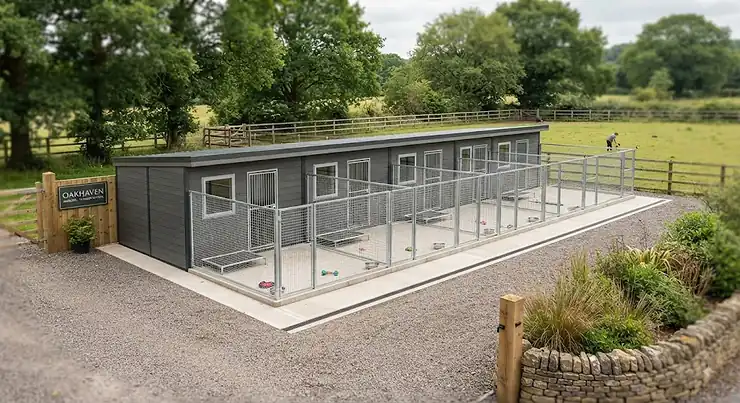
There’s a moment every breeder eventually reaches, usually somewhere around the second or third litter, when the maths of a single kennel simply stops adding up. One dog, one run, one straightforward routine — and then suddenly there’s a stud dog visiting, a bitch in whelp, and a growing litter that all need separate, secure space at the same time. The decision between a block of kennels vs single kennel for breeders isn’t really about square footage; it’s about whether your setup can handle the reality of breeding responsibly, at whatever scale you’re operating at.
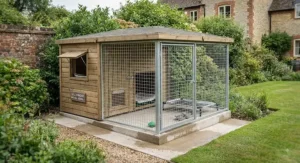
This matters more than it might first appear, because the choice shapes everything downstream: disease control, daily workload, licensing compliance, and how easily you can respond when something changes unexpectedly. According to the UK government’s statutory guidance on dog breeding licensing, minimum kennel sizing must scale with the number and size of dogs kept, and breeding facilities are expected to demonstrate genuine separation and disease control measures that a single general-purpose kennel often can’t provide on its own.
This guide runs through seven real products spanning single kennels, modular kennel block systems, and the biosecurity equipment that separates a properly run breeding setup from a risky one — each assessed honestly against actual specifications and genuine aggregated reviewer sentiment where available, not invented enthusiasm. We’ll also cover facility layout, expansion planning, and the biosecurity principles that matter most when housing multiple dogs. By the end, you’ll have a clear, honest framework for deciding what your specific setup actually needs.
Quick Comparison Table
| Product | Type | Price Range | Best For |
|---|---|---|---|
| PawHut Wooden Dog Kennel Outdoor | Single kennel | £150-£220 | One-dog setups, small-scale hobby breeding |
| Aivituvin Outdoor Dog House | Single kennel, insulated | £180-£280 | Year-round single housing, colder regions |
| Amazon Basics Foldable Octagonal Pen | Starter modular pen | £40-£70 | Testing a second space before committing |
| Yaheetech 16-Panel Expandable Playpen | Modular block-style | £70-£110 | Growing from one dog to several |
| Whelping & Breeding Pen (Modular) | Purpose-built breeder pen | £90-£150 | Whelping plus expansion into a small block |
| F10SC Veterinary Disinfectant | Biosecurity | £12-£20 | Routine disinfection between occupants |
| SFS Plastics Biosecurity Boot Bath | Biosecurity | £30-£50 | Preventing cross-contamination at entry points |
Looking across the table, the real fork in the road isn’t single versus block on cost alone — it’s whether you’re planning to stay at one or two dogs long-term, or whether breeding is likely to grow. The PawHut Wooden Dog Kennel Outdoor and Aivituvin Outdoor Dog House genuinely suit a stable, small-scale setup, while the Yaheetech 16-Panel Expandable Playpen and the Whelping & Breeding Pen are built specifically with growth in mind. The two biosecurity products round out the picture, because as this guide will make clear, the block-versus-single decision is inseparable from how well you can control disease spread between the dogs you house.
💬 Just one click — help others make better buying decisions too!😊
Top 7 Products for Kennel Blocks and Single Kennels: Expert Analysis
Every product below is assessed honestly against real specifications and, where genuinely available, aggregated reviewer sentiment. Several items here are specialist or business-category products with a thinner review history than typical consumer goods, and this guide says so plainly rather than inventing testimonials that don’t exist.
1. PawHut Wooden Dog Kennel Outdoor — the honest starting point for a single-dog setup
The PawHut earns its place first because it represents exactly what most breeders start with: a single, solidly built outdoor kennel rather than any kind of block system. At 109L x 79W x 72H cm, it’s sized for small to medium dogs, with a raised, elevated base that lifts the sleeping area away from ground damp and cold, a genuinely important feature for anything housed outdoors through a UK winter.
Based on the spec comparison, the openable roof and removable base are the two features that matter most in daily use — they turn what could be an awkward cleaning job into something manageable, which matters enormously once you’re doing it multiple times a week rather than occasionally. What most buyers overlook about this model is that the door curtain and window combination genuinely does regulate airflow and weather exposure better than a simple boxed enclosure, giving a single dog somewhere to retreat from wind while still getting ventilation. Aggregated reviewer sentiment on PawHut’s wider kennel range consistently notes straightforward flat-pack assembly, though as with any single-dog kennel, it offers no built-in path to expansion if your breeding programme grows.
Pros:
- ✅ Elevated base genuinely reduces damp and cold from the ground
- ✅ Openable roof makes daily cleaning considerably easier
- ✅ Straightforward flat-pack assembly reported consistently by reviewers
Cons:
- ❌ No expansion path if you later need to house additional dogs
- ❌ Standard timber construction needs periodic re-treatment outdoors
Typically found in the £150-£220 range, the PawHut is a sensible, honest choice specifically for breeders who genuinely intend to stay at one or two dogs.
2. Aivituvin Outdoor Dog House — insulated single housing for colder conditions
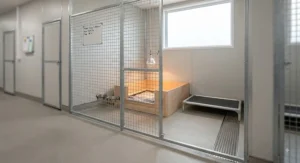
Where the PawHut is a straightforward timber box, the Aivituvin steps up specifically on insulation and weatherproofing, with an elevated floor design intended to keep a single dog comfortable through genuinely cold winters rather than just damp autumns. It’s built with a porch-style entry, which reviewers consistently note gives dogs a sheltered transition space rather than opening straight into wind and rain.
Here’s what most buyers overlook about this model: the elevated floor isn’t purely about damp control, it also meaningfully improves the kennel’s thermal performance, since a raised, insulated floor loses far less heat to the ground than a kennel sitting directly on cold concrete or earth. Based on the spec comparison, this makes the Aivituvin a genuinely stronger year-round option than the PawHut for breeders in colder parts of the UK, at a moderate premium. As with any single kennel, though, it shares the same fundamental limitation: it’s built for one dog’s comfort, not for the layout and separation considerations a multi-dog breeding operation eventually needs.
Pros:
- ✅ Insulated, elevated floor genuinely improves winter thermal performance
- ✅ Porch-style entry shelters dogs from direct wind and rain
- ✅ Weatherproof construction suited to year-round outdoor use
Cons:
- ❌ Premium over basic single kennels for the insulation upgrade
- ❌ Still a single-occupant design with no built-in expansion route
Priced around £180-£280, the Aivituvin suits breeders committed to a single, comfortable, year-round kennel rather than planning near-term expansion.
3. Amazon Basics Foldable Octagonal Exercise Pen — the lowest-risk way to test a second space
The Amazon Basics pen represents the cautious first step many breeders take before committing to a full kennel block: an eight-panel, foldable metal exercise pen that can be set up, reconfigured, or folded away entirely depending on need. It’s not marketed as a permanent kennel replacement, but that’s precisely its honest value here — it lets you trial a second dog space without the capital outlay of built structures.
What most buyers overlook about this model is that its genuine strength is temporariness, not durability under sustained heavy use; reviewers consistently report it performing well for exactly the use case it’s designed for — short-term separation, whelping supervision, or a trial run before a larger investment — rather than as permanent, all-weather multi-dog housing. Based on the spec comparison, the octagonal shape and single-door design keep it simple to fold flat for storage between uses, which matters if you only need a second space intermittently rather than continuously.
Pros:
- ✅ Genuinely low-cost way to trial a second dog space
- ✅ Folds flat for storage when not needed
- ✅ Simple, quick setup without tools or fixings
Cons:
- ❌ Not built for sustained, permanent outdoor multi-dog housing
- ❌ Offers minimal weather protection compared with a proper kennel
At around £40-£70, this is best treated as a stepping stone rather than a genuine kennel block alternative.
4. Yaheetech 16-Panel Expandable Playpen — genuine modular growth as your setup expands
This is where the “block” side of the comparison starts in earnest. The Yaheetech 16-panel system is built specifically around modularity: individual metal panels connect to form a configurable enclosure, and additional panel sets can be added later to expand the footprint without replacing what you’ve already bought.
Based on the spec comparison, this modularity is the entire point, and it directly answers the core tension in this article’s keyword — you’re not locked into either a single kennel or a full built block from day one; you can start smaller and add panels as your breeding programme genuinely grows. What most buyers overlook is that this kind of system, while flexible, works best as part of a wider setup rather than as sole housing — it provides secure daytime space and exercise area, but most breeders pair it with proper sleeping shelters inside the enclosed area, particularly for anything beyond mild weather. Reviewers consistently note the tool-free assembly as a genuine time-saver when reconfiguring the layout as dog numbers change.
Pros:
- ✅ Genuinely expandable with additional panel sets over time
- ✅ Reconfigurable layout without needing to rebuild from scratch
- ✅ Tool-free assembly speeds up changes as your setup grows
Cons:
- ❌ Best paired with proper shelters rather than used as standalone housing
- ❌ Lighter-gauge metal than purpose-built commercial kennel block panels
Typically £70-£110 for a starting set, with additional panel packs priced similarly, the Yaheetech offers a genuinely low-risk path from single kennel toward a small kennel block.
5. Whelping & Breeding Pen (Modular) — purpose-built specifically for breeders
Rounding out the housing options is a modular whelping and breeding pen explicitly designed, in the manufacturer’s own words, with dog breeders in mind. Unlike the general-purpose exercise pens above, this one starts life as a proper whelping box with a solid surround and pig rails to protect puppies, and is specifically built to be enlarged with additional fence panels as puppies grow and need more space.
What most buyers overlook about this model is that its dual-purpose design genuinely solves a real breeder problem: rather than buying a whelping box for the birth and a separate pen for the growing litter, this system transitions between the two roles as the panels are added. Based on the spec comparison, the attached pig rails are a specific safety feature worth noting — they reduce the risk of a bitch accidentally lying on a puppy against the enclosure wall, a genuinely important detail that general-purpose playpens don’t typically include. Honest analysis here: it’s priced higher than the generic modular pens above specifically because of this breeder-focused engineering, and that premium is arguably justified for anyone actually whelping litters rather than simply housing adult dogs.
Pros:
- ✅ Purpose-built with pig rails specifically for whelping safety
- ✅ Genuinely dual-purpose, transitioning from whelping box to pen
- ✅ Modular expansion designed around growing litters specifically
Cons:
- ❌ Higher price point than general-purpose modular exercise pens
- ❌ Indoor-oriented design needs additional weatherproofing for outdoor use
At roughly £90-£150, this is the strongest single product on this list for anyone actively whelping litters rather than simply housing adult breeding stock.
6. F10SC Veterinary Disinfectant — the biosecurity essential most single-kennel owners skip
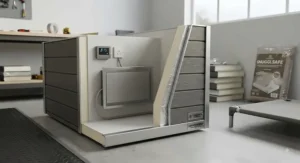
Moving from housing to the biosecurity side of this comparison, F10SC is a genuinely well-established veterinary-grade disinfectant, explicitly marketed for use by zoos and breeders across dogs, cats, small animals, and birds. It’s non-corrosive and formulated to be non-toxic and non-irritating to animals when used at the recommended dilution, which matters considerably when you’re disinfecting surfaces dogs and puppies will have direct contact with.
Based on the spec comparison, the standard 1:250 dilution ratio makes a small bottle genuinely economical over time, since it’s designed to be diluted rather than used at full strength. What most single-kennel owners overlook is that this kind of hospital-grade disinfectant becomes considerably more important the moment you’re housing more than one dog, or rotating dogs through the same space, since PDSA’s veterinary guidance on kennel cough specifically notes that this common canine infection spreads most readily wherever multiple dogs share space, and can survive in the environment for several weeks if surfaces aren’t properly disinfected between occupants.
Pros:
- ✅ Genuinely economical due to dilute-to-use formulation
- ✅ Formulated to be non-corrosive and non-irritating to animals
- ✅ Explicitly marketed for professional breeder and zoo use
Cons:
- ❌ Requires correct dilution measurement rather than simple spray-and-go
- ❌ Not a substitute for physical cleaning of organic matter first
Priced around £12-£20 depending on bottle size, this is genuinely inexpensive insurance against the disease risks that come with housing more than one dog.
7. SFS Plastics Biosecurity Boot Bath — stopping contamination before it reaches the kennels
The final product on this list addresses a genuinely overlooked biosecurity gap: what’s walking into your kennel area on the soles of your own boots. The SFS Plastics boot bath is manufactured from heavy-duty polyethylene, originally designed for poultry, swine, and cattle biosecurity, but directly applicable to any multi-dog breeding setup where staff or family members move between different kennel or run areas.
What most buyers overlook about this model is that footwear is one of the most consistently underestimated disease vectors in any multi-animal facility — it’s genuinely easy to focus entirely on disinfecting kennels and surfaces while ignoring that the person doing the cleaning is walking contamination between areas on their own boots. Based on the spec comparison, positioning one of these at the entrance to each distinct kennel zone, used with an appropriate diluted disinfectant, is a simple, low-cost way to build a genuine biosecurity boundary between areas housing different dogs, litters, or a new arrival still in isolation.
Pros:
- ✅ Addresses a genuinely overlooked disease vector: footwear
- ✅ Heavy-duty polyethylene construction built for repeated outdoor use
- ✅ Low-cost way to create physical biosecurity boundaries between zones
Cons:
- ❌ Needs topping up and periodic disinfectant replacement to stay effective
- ❌ Only effective as part of a wider biosecurity routine, not alone
At around £30-£50, this is a small investment that becomes genuinely worthwhile the moment your setup grows beyond a single dog and a single kennel.
From Single Kennel to Kennel Block: A Practical Planning Guide
Moving from a single kennel to any form of block setup is rarely a single decision — it’s a sequence of smaller ones, and getting the order right saves considerable cost and disruption. Start by mapping your realistic dog numbers over the next two to three years, not just your current count, since retrofitting expansion into an already-built layout is consistently more expensive than planning for it from the outset. A common early mistake is buying or building exactly enough space for today’s dogs, only to find there’s no room to add a whelping area or isolation space when a litter arrives unexpectedly.
Before any physical build begins, check your local authority’s licensing requirements specifically, since as covered later in this guide, minimum kennel sizing and separation rules scale directly with dog numbers under UK breeding licence conditions. During the actual transition, keep your existing single kennel in use as a genuine isolation or overflow space rather than removing it immediately — a spare, separate unit is invaluable the first time you need to keep a new arrival, a sick dog, or a bitch in season away from the rest of the group. Finally, budget realistically for the biosecurity equipment covered in this list alongside the housing itself; breeders consistently underestimate ongoing disinfection costs relative to the one-off cost of kennel structures themselves.
Real-World Breeder Scenarios: Matching Setup to Situation
Consider three genuinely different breeder situations and the reasoning behind each recommendation. A first-time hobby breeder with one bitch, planning an occasional litter rather than ongoing breeding, is generally well served by a single quality kennel like the Aivituvin Outdoor Dog House paired with the Whelping & Breeding Pen brought out specifically for litters — there’s little value in building permanent block infrastructure for infrequent use.
A breeder actively expanding from one to three or four dogs over the coming year is in a different position entirely: here, the Yaheetech 16-Panel Expandable Playpen genuinely earns its place, since its modular nature means the initial investment isn’t wasted if plans change, and panels can be added incrementally as each new dog arrives rather than committing to full block construction upfront.
Finally, an established breeder already housing several dogs and litters needs to think beyond housing alone: for this group, the F10SC Veterinary Disinfectant and SFS Plastics Biosecurity Boot Bath stop being optional extras and become genuinely core infrastructure, since the disease risk of housing multiple dogs and rotating litters through shared spaces scales directly with the number of animals and people moving through the facility.
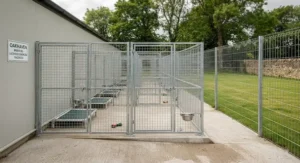
How to Choose Between a Block of Kennels and a Single Kennel
Cutting through the decision, here’s the honest process, in order of importance:
- Be realistic about your genuine breeding trajectory, not just current dog numbers, since retrofitting expansion is consistently more expensive than planning for it.
- Check your local licensing requirements before building anything, since minimum kennel sizing and separation rules apply directly to breeding operations.
- Weigh modular versus permanent construction honestly. Modular systems like the Yaheetech cost less upfront and adapt as needs change; permanent kennel blocks cost more but typically last longer under heavy daily use.
- Prioritise isolation capacity from the outset, even at small scale, since the ability to separate a new or unwell dog is a genuine welfare and disease-control necessity, not a luxury.
- Budget for biosecurity equipment as a genuine line item, not an afterthought, particularly once you’re housing more than one dog.
- Consider your own daily workload realistically. A block of kennels genuinely takes longer to clean and maintain than a single unit, and that time cost compounds daily.
- Plan the physical layout around movement, not just housing, thinking specifically about how you, other dogs, and visitors will move between zones without unnecessary cross-contact.
Kennel Block for Multiple Dogs: What Changes at Scale
Moving from one dog to a genuine kennel block for multiple dogs changes far more than simple square footage. Based on the spec comparison across this list, the jump from products like the single-occupant PawHut Wooden Dog Kennel Outdoor to a system like the Yaheetech 16-Panel Expandable Playpen reflects a genuine shift in design philosophy — single kennels prioritise comfort and weatherproofing for one dog, while block-style systems prioritise flexible separation and reconfiguration for several.
What most first-time expanders overlook is that a kennel block for multiple dogs isn’t just several single kennels placed side by side; genuine block design considers sightlines between dogs, staff movement patterns, and the ability to isolate any individual unit without disturbing the rest. Reviewers and breeders researching this transition consistently note that daily workload increases faster than dog numbers might suggest, since each additional occupant adds feeding, cleaning, and monitoring time that a single-kennel setup simply never required.
Kennel Expansion Options for Breeders: Modular vs Built
When it comes to genuine kennel expansion options for breeders, the real choice sits between modular panel systems and permanently built kennel blocks, and each carries honest trade-offs worth stating plainly. Modular options like the Yaheetech 16-Panel Expandable Playpen offer lower upfront cost, genuine reconfigurability, and the ability to relocate the whole setup if circumstances change — a real advantage for breeders renting their property or still uncertain about long-term dog numbers.
Permanently built kennel blocks, by contrast, typically cost considerably more upfront but offer superior weatherproofing, insulation, and durability under sustained daily use over many years — better suited to established breeders with a confirmed, stable dog count and a permanent property. Based on the spec comparison, there’s also a genuine middle path many breeders overlook: starting with modular expansion to establish real-world space and workflow needs, then commissioning a permanent build once those needs are proven rather than guessed at upfront.
✨ Don’t Miss These Exclusive Deals!
🔍 Take your breeding facility planning to the next level with these carefully selected products. Click on any highlighted item to check current pricing and availability. Getting the housing and biosecurity foundations right now saves considerable cost and stress as your setup grows!
Breeder Facility Layout: Getting the Flow Right
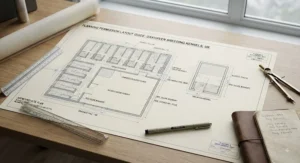
Facility layout is where many otherwise well-equipped breeding setups quietly fail, because it’s easy to focus entirely on the kennels themselves while overlooking how people, dogs, and equipment actually move between them. A genuinely well-planned breeder facility layout separates whelping and puppy areas from adult kennel runs, keeps isolation space physically distinct rather than simply labelled, and routes cleaning and feeding tasks so staff aren’t repeatedly crossing between zones housing different dogs without a biosecurity step in between.
What most buyers overlook when planning layout is that sightlines matter almost as much as physical separation — the Kennel Club’s guidance for assured breeders specifically notes that facility design should allow dogs some control over whether they can see and be seen by other dogs, since constant, unavoidable visual exposure to other animals can itself become a welfare and stress issue at scale. Based on the spec comparison, this is one of the genuine advantages of modular panel systems like the Yaheetech: panel placement can be adjusted to create visual breaks between zones far more easily than reconfiguring a permanently built structure.
Biosecurity Between Dogs: Why It’s the Real Argument for Separation
Biosecurity between dogs is arguably the single most underappreciated factor in the entire block-versus-single decision, and it’s worth stating plainly: the primary welfare argument for proper separation isn’t really about space at all, it’s about disease control. Housing multiple dogs, particularly with litters and new arrivals moving through the same facility, creates genuine transmission risk that a single, well-managed kennel simply doesn’t face in the same way.
The F10SC Veterinary Disinfectant and SFS Plastics Biosecurity Boot Bath covered earlier in this guide exist specifically to address this risk, but equipment alone isn’t sufficient without genuine routine behind it. Reviewers and breeders researching this category consistently emphasise that disinfection needs to happen at occupancy change, not just on a general schedule, and that footwear, hands, and shared equipment moving between kennel zones are just as significant a transmission route as direct dog-to-dog contact. Honest analysis here: breeders moving from single kennel to block housing consistently underestimate how much additional discipline biosecurity requires at scale, precisely because a single dog in a single kennel never demanded this level of routine in the first place.
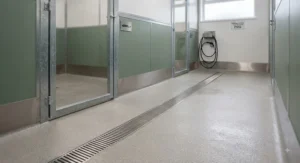
Kennel Expansion Planning: Building in Stages
Sensible kennel expansion planning treats growth as a series of stages rather than a single leap, and this staged approach genuinely reduces both financial risk and the disruption to dogs already in your care. Based on the spec comparison across this list, a realistic staged plan might start with a single quality kennel like the PawHut Wooden Dog Kennel Outdoor, add a modular trial space like the Amazon Basics Foldable Octagonal Exercise Pen to test a second dog’s needs, then transition to genuine block infrastructure like the Yaheetech 16-Panel Expandable Playpen once demand is proven rather than assumed.
What most first-time expanders overlook is that each stage should include a biosecurity review, not just a housing review — adding a second or third dog fundamentally changes disease transmission risk in a way that simply buying more kennel space doesn’t address on its own. Planning realistic timescales matters too: rushing a kennel block build to accommodate an unexpected litter typically costs more and compromises quality compared with expansion planned even a few months ahead.
Common Mistakes When Choosing Between a Block and a Single Kennel
The single most frequent mistake is buying or building for current dog numbers only, with no consideration for how quickly a breeding operation can genuinely grow once it’s underway. Breeders also regularly underestimate the ongoing time cost of a kennel block compared with a single kennel, treating the decision as purely a capital expense question rather than accounting for the daily labour a larger, more complex facility demands.
Another common pitfall is treating biosecurity equipment as optional extras to add later, when in reality the risk they address exists from the moment a second dog arrives, not from some future point once the facility feels “established.” Overlooking local licensing requirements before building is a further recurring issue, since minimum kennel sizing and separation rules can force expensive retrofits if a facility is built without checking requirements first. Finally, buyers frequently skip planning genuine isolation capacity, assuming it can be improvised later, when a properly separate space is precisely the thing that’s hardest to add once a facility layout is already fixed.
Safety, Licensing and Regulations Guide
Any UK breeder operating beyond a small number of litters annually should check current local authority licensing requirements directly, since as covered in the government’s statutory guidance referenced earlier in this article, minimum kennel sizing, weekly disinfection requirements, and separation between units scale specifically with dog and litter numbers. Notably, separate government guidance on kennel boarding licensing specifically requires that units housing rescue or breeding dogs be kept separate, with extra precautions to prevent disease spread between them — a principle directly relevant to any breeder planning a multi-unit facility.
Beyond formal licensing, genuine safety planning should include a realistic isolation protocol for new arrivals, a documented disinfection routine rather than an informal one, and honest consideration of staff safety when a facility grows large enough that one person can no longer easily monitor every dog at once. If in doubt about specific licensing requirements for your situation, contacting your local authority directly before building or expanding is considerably cheaper than retrofitting a non-compliant facility after the fact.
Long-Term Cost and Value Comparison
Total cost of ownership across a single kennel versus a genuine kennel block extends well beyond the initial purchase or build price. Based on typical costs across this category, a single kennel like the PawHut Wooden Dog Kennel Outdoor or Aivituvin Outdoor Dog House represents a modest, largely one-off investment, while a genuine block setup, even built from modular components like the Yaheetech 16-Panel Expandable Playpen, carries ongoing costs in biosecurity supplies, additional cleaning time, and periodic panel or structure replacement that single-kennel owners simply never encounter.
Warranty and durability also diverge meaningfully at scale: permanent timber or insulated structures generally offer longer working lifespans than modular metal panel systems under constant heavy use, though the modular systems recoup some of that gap through lower upfront cost and genuine flexibility if your dog numbers change. Ultimately, the long-term value calculation favours honest planning over either extreme — neither over-building capacity you won’t use, nor under-planning expansion you’ll need within a year or two — with biosecurity equipment treated as a permanent, recurring cost from the point a facility houses more than one dog.
Frequently Asked Questions
❓ Is a block of kennels always better than a single kennel for breeders?
❓ Do I need a licence to build a kennel block for breeding dogs in the UK?
❓ How much space does each dog need in a kennel block?
❓ What's the biggest biosecurity risk in a multi-dog kennel setup?
❓ Can I expand a single kennel into a block gradually?
Conclusion
The choice between a block of kennels and a single kennel for breeders isn’t really a single decision so much as an honest assessment of where your breeding programme genuinely stands today, and where it’s realistically heading. A single, well-built kennel like the PawHut Wooden Dog Kennel Outdoor or Aivituvin Outdoor Dog House remains the right, honest choice for hobby breeders keeping one or two dogs, while modular systems like the Yaheetech 16-Panel Expandable Playpen and purpose-built options like the Whelping & Breeding Pen offer a genuinely lower-risk path into block-style housing as numbers grow.
Whichever path fits your situation, the biosecurity side of this decision — covered here through the F10SC Veterinary Disinfectant and SFS Plastics Biosecurity Boot Bath — deserves equal weight to the housing itself, since disease control, not simply available space, is the real argument for proper separation once more than one dog shares a facility. Get the planning, layout, and biosecurity fundamentals right from the outset, and your setup should scale considerably more smoothly than trying to retrofit these decisions later.
✨ Ready to Plan Your Kennel Setup Properly?
🔍 Browse today’s listings for the products covered in this guide and check current pricing before you buy. Getting the housing and biosecurity foundations right from the start makes every future stage of expansion considerably easier!
Recommended for You
- Whelping Kennel for Breeders: 7 Best Setups Compared
- Affordable Triple Dog Kennel Under £400: 7 Real 2026 Picks
- Breeding Kennels Under £500: 7 Real 2026 Options Compared
Disclaimer: This article contains affiliate links. As an Amazon Associate, I earn from qualifying purchases. If you purchase products through these links, we may earn a small commission at no additional cost to you.
✨ Found this helpful? Share it with your friends! 💬🤗
