
In This Article
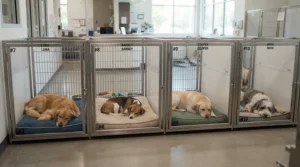
Dog daycare kennel setup is the process of planning and equipping a licensed space where other people’s dogs spend the day: safe rest areas, secure fencing and gates, washable surfaces, monitoring, and hygiene kit. In England, it must satisfy the Animal Welfare (Licensing of Activities Involving Animals) Regulations 2018 before you take a single booking.

Here’s what the glossy “start your own doggy daycare” videos skip. The dogs are the easy bit. The hard bit is that a local authority inspector will arrive with the statutory guidance for dog day care licensing, updated in June 2026, and every crate, bed, gate and mop bucket becomes evidence for or against you. Get your dog daycare kennel setup right and the licence is a formality. Get it wrong and you buy everything twice.
This guide covers seven genuinely useful pieces of dog daycare facility equipment: crates, bedding, a raised bed, a gate, a disinfectant and a camera. It then digs into daycare facility layout, rest area requirements and daycare licensing. Everything rests on the government’s own guidance and on aggregated review sentiment. There are no invented “I tested it for six months” stories here, and where reviews are thin, the article says so.
One caveat up front: this is about England. Wales, Scotland and Northern Ireland run their own rules, so check with your local authority before you buy a single bolt.
Quick Comparison: Dog Daycare Facility Equipment at a Glance
| Product | Job in your setup | Price range | Best For |
|---|---|---|---|
| Ellie-Bo 36-inch Crate | Budget daycare rest kennel (open-door retreat) | Roughly £40-£80 | Start-ups on a tight budget |
| Savic Dog Residence | Sturdier mid-range wire crate | Roughly £40-£120 by size | Small facilities wanting longevity |
| Vetbed Original | Washable rest bedding | From the mid-£10s, rising with size | Every rest area |
| Coolaroo Original Elevated Bed | Raised, airy rest platform | Roughly £30-£70 | Warm days and thick-coated dogs |
| Carlson Extra Tall Gate | Internal zoning | Roughly £40-£80 | Splitting groups by size or energy |
| Virkon S | Virucidal disinfection | Small tubs under £30; bulk tubs well over £100 | Deep-cleaning routines |
| Tapo C210 | Monitoring and incident review | Typically in the £20s-£30s | Owner reassurance and staff training |
Read the table as a shopping order rather than a ranking. The first four items fill your rest zones, the Carlson Extra Tall Gate shapes the floor plan, and Virkon S and the Tapo C210 keep the whole operation clean and accountable. Prices above are indicative ranges at the time of research, so check current prices before you commit.
💬 Just one click — help others make better buying decisions too!😊
Top 7 Dog Daycare Kennel Setup Essentials: Expert Analysis
Each pick below is judged on what its specs mean on a busy daycare floor, backed by what reviewers genuinely report. None of it is hands-on testing.
1. Ellie-Bo 36-inch Crate — best budget daycare rest kennel
A British-brand folding crate gives you the cheapest route to quiet retreat spaces for a dog daycare kennel setup.
The 36-inch two-door model uses double sliding latches on each door and a removable metal tray instead of plastic. Two doors matter more than they sound: you can place the crate against a wall and still open it from whichever side is accessible, then tie the door open so it works as a daycare rest kennel the dog chooses to enter. The metal tray also shrugs off chewing, which is useful when a nervous dog is redecorating.
Based on the spec sheet, this suits start-ups running small groups of medium dogs. It is a domestic-grade product, so expect to replace units sooner than you would with commercial steel. Remember that official guidance says a dog’s rest area should be at least twice the area needed to lie flat, so size up rather than squeezing the dog in.
Reviewers consistently describe it as sturdy, easy to fold and good value, and Ellie-Bo’s height-to-size guidance gets praise. One reviewer reported sharp edges on a couple of folding clips, so run a gloved hand over every joint before dogs get near it.
Pros:
- ✅ Two doors for flexible placement
- ✅ Metal tray resists chewing
- ✅ Folds flat for deep cleaning
Cons:
- ❌ Domestic-grade durability under daily use
- ❌ Reported sharp clip edges on some units
Expect a price in the sub-£80 range depending on size; check the current price. It is strong value for a first batch of rest kennels.
2. Savic Dog Residence — rounded corners and a long-lived reputation
Savic’s Belgian-designed wire crate suits owners who would rather buy once than twice.
It comes in six sizes from 50cm to 118cm, with rounded corners, double door locks and a pull-out plastic tray for cleaning. Rounded corners are a small detail with a big payoff in a space shared by wriggly dogs and tired staff, because fewer snags mean fewer injuries to log. The mesh lets dogs see out, which helps a daycare rest kennel feel like a lookout post instead of a cell.
The honest caveat comes from one major retailer’s listing, which says this crate should only be used on a temporary basis. That makes it a fit for rest breaks, not for long confinement, which suits daycare licensing rules limiting crating to one hour in any eight-hour period, and only where it forms part of the dog’s normal routine.
Reviewers frequently praise build quality, absence of sharp edges and longevity, with one owner reporting earlier Savic crates still looking good after ten years. One reviewer, though, reported a young bull terrier injuring his toes escaping, so keep it for settled dogs.
Pros:
- ✅ Rounded corners reduce injury risk
- ✅ Six sizes cover most breeds
- ✅ Reviewers praise long-term durability
Cons:
- ❌ Plastic tray less chew-proof than metal
- ❌ Not designed for determined escape artists
Prices run from roughly £40 for small sizes to £120 or more for the largest; check current price. Good value if longevity matters more than the lowest upfront cost.
3. Vetbed Original — hot-washable and hard to shred
This veterinary bedding is the unglamorous hero of a hygienic rest area.
Vetbed Original is double woven, which retailers say makes it harder to chew, and it drains and dries quickly. Listings state it can be machine washed at up to 90°C for disinfection, though 40°C is the norm for everyday use. In a daycare, that hot-wash capability turns bedding from a hygiene risk into a routine laundry load. It also cuts to any size, so you can line crates, raised beds and floor mats from one roll.
Here’s why it matters for rest area requirements: guidance expects enough clean resting places for every dog to be comfortable and warm. A flat, fast-drying blanket lets you rotate fresh sets through the day. Plan one clean set per dog per day, plus spares.
Reviewers consistently highlight durability and say it resists shredding better than sewn beds, with several saying cheaper lookalikes don’t last. One reviewer noted it still suffers under heavy accident use even with puppy pads, so don’t expect miracles.
Pros:
- ✅ Machine washable at disinfecting temperatures
- ✅ Dries fast after accidents
- ✅ Cuts to fit any crate or bay
Cons:
- ❌ Flat pile gives less joint cushioning
- ❌ Laundry volume multiplies with dog numbers
It starts in the mid-£10s and rises with size; check current price. Excellent value per wash cycle.
4. Coolaroo Original Elevated Bed — airflow that keeps dogs cool
A raised mesh platform gives dogs a cool, drained, off-floor place to rest.
The breathable fabric stretches over a frame so air circulates beneath the dog. The fabric is described as resistant to fleas, mites, mould and mildew, and the cover can be hosed off. The large size has a stated 100lb weight limit. For a facility, that means a bed you can sluice down at day’s end without carrying it to a washing machine.
There’s a regulatory angle too. Guidance says a dog must be able to move away from a direct source of heat and must not be kept anywhere that causes distress. Raised beds are a cheap way to offer cooler options in summer, supporting the “choice of areas” expected at higher standards.
Reviews on one major US retail listing are broadly positive at around 4.4 stars from over 2,400 ratings, with owners calling it sturdy and good for joint pressure relief. The recurring complaints are fiddly assembly and mesh that can rip under strong chewers or heavy claws.
Pros:
- ✅ Airflow on all sides keeps dogs cooler
- ✅ Hose-clean fabric saves laundry time
- ✅ Takes pressure off joints
Cons:
- ❌ Fiddly assembly reported by buyers
- ❌ Mesh can tear under determined chewers
Expect roughly £30-£70 depending on size; check current price. Best as a supplement to crates, not a replacement.
5. Carlson Extra Tall Gate — zoning without building walls
An internal gate lets you split your floor into calm and lively zones.
Listings describe a 36-inch (about 91cm) steel gate, adjustable between roughly 29 and 36.5 inches (about 74-93cm) with the extension, plus a 16.5-inch (about 42cm) walk-through door, a lever handle with a safety lock and wall mounts. Height is the point: standard baby gates are a hurdle for athletic labradors, while this one is tall enough to discourage jumpers.
Use it inside the building, never as an exit barrier. Guidance expects at least two secure physical barriers between a dog and any entrance or exit to the property, which means doors and perimeter gates, not pressure-mounted internal gates. Also check whether your version has the small pet door. Small dogs, and the occasional squeezy medium, can slip through it, so lock or avoid it. Confirm the UK-listed size and availability before buying.
Reviewers describe it as sturdy, tall enough for big dogs and good value. Complaints include a latch that can pop up if shaken hard and some doubt it would survive a very large dog repeatedly launching at it.
Pros:
- ✅ Extra height deters jumpers
- ✅ Walk-through door suits busy staff
- ✅ All-steel build, wall mounts included
Cons:
- ❌ Latch can pop under vigorous shaking
- ❌ Pet door gap can be exploited
Expect roughly £40-£80; check current price. Good value as a zoning tool.
6. Virkon S — the virucidal workhorse
Hygiene is where daycare licensing and daily routine collide, and this powder is a widely used answer.
Manufacturer claims put its kill time at under five minutes for bacteria and fungi and under ten for parvovirus. Guidance says disinfectants must kill viruses as well as bacteria, and the Wales conditions point operators to Defra’s list of approved disinfectants. A distributor notes Virkon S regained its place on that list, but listings change, so check the current list before buying.
One practical point the product page whispers: it is corrosive. Retailers advise against soaking metal objects, with ten minutes the maximum contact time. In a facility full of wire crates, that rule matters. Spray, wait, rinse, dry.
Reviewers report using it on kennels, stables and a nine-dog yard with good results. Cost is the main gripe, with one reviewer angry about the price of the 10kg tub.
Pros:
- ✅ Kills viruses, bacteria and fungi
- ✅ Concentrated powder stores compactly
- ✅ Familiar to vets and breeders
Cons:
- ❌ Corrosive to metal with prolonged contact
- ❌ Bulk tubs are expensive upfront
Small tubs sit under £30, while bulk tubs run well over £100; check current price. Buy small first and scale once your routine is proven.
7. Tapo C210 — a second pair of eyes (not a replacement)
This budget pan-and-tilt camera adds accountability to a busy room.
It records at 2K (2304 x 1296), pans 360° and tilts 114°, with two-way audio and motion detection. Footage can go on a microSD card up to 512GB (sold separately) with no monthly fee. That means you can review a scuffle, show an owner what happened, and train staff from real footage.
What the spec sheet won’t tell you is the limit: guidance says dogs must be supervised at all times, so a camera supplements trained staff and never replaces them. It is also indoor-only, so yards need a different solution. If footage captures people, UK data protection rules may apply, so signage matters.
The verifiable review picture is thin, with manufacturer-curated highlights praising picture quality. Treat that as directional, not conclusive.
Pros:
- ✅ Sharp 2K picture for incident review
- ✅ No subscription needed with microSD
- ✅ Pan-and-tilt covers a whole room
Cons:
- ❌ Indoor-only for yards and runs
- ❌ Independent review data is limited
Typically in the £20s-£30s; check current price. Excellent value for the accountability it adds.
Top 7 Comparison: Specs, Price and Review Signals
| Product | Key spec | Review signal | Price range | Best For |
|---|---|---|---|---|
| Ellie-Bo 36-inch Crate | Two doors, metal tray | Sturdy, good value | Roughly £40-£80 | Budget rest kennels |
| Savic Dog Residence | Six sizes, rounded corners | Long-lived, well made | Roughly £40-£120 | Durable mid-range crates |
| Vetbed Original | Washable to 90°C | Shred-resistant, durable | Mid-£10s upwards | Hygienic bedding |
| Coolaroo Original Elevated Bed | Raised mesh, 100lb large limit | Mostly positive, tricky assembly | Roughly £30-£70 | Cooling rest platforms |
| Carlson Extra Tall Gate | 36-inch, walk-through | Sturdy, latch quirks | Roughly £40-£80 | Internal zoning |
| Virkon S | Virucidal powder | Trusted, pricey in bulk | Under £30 to over £100 | Deep cleaning |
| Tapo C210 | 2K, 360° pan, microSD | Picture quality praised | Typically £20s-£30s | Incident review |
Looking at the comparison above, the Ellie-Bo 36-inch Crate and Savic Dog Residence differ mainly in longevity versus upfront cost, and the Vetbed Original earns its place because it solves bedding hygiene most cheaply. The Coolaroo Original Elevated Bed and Carlson Extra Tall Gate are the “choice and zoning” pair that help you reach higher licence standards. Budget buyers should note that the Tapo C210 is the cheapest accountability upgrade here.
Your First 30 Days: A Practical Setup and Maintenance Routine
Day one isn’t the finish line, because the first month is where weak routines reveal themselves. Build this rhythm early:
- Every morning: inspect crates, gates and fencing for damage, check the temperature (sleeping areas should stay between 10°C and 26°C), and confirm each dog has bedding, water and an escape route to a quiet space.
- Twice daily at minimum: remove faeces from all areas and move dogs out before cleaning.
- End of day: hot-wash the Vetbed Original sets, hose the Coolaroo Original Elevated Bed, and review any incident footage from the Tapo C210.
- Weekly: disinfect with Virkon S, respecting the ten-minute limit on metal, then rinse and dry. Check every latch on the Ellie-Bo 36-inch Crate and Savic Dog Residence for wear.
Common first-month mistakes, as inferred from the guidance: leaving crate doors shut (they should be open retreats), forgetting to log behaviour changes, letting standing water linger in drains, and accepting dogs before your daycare facility layout can actually separate them. None of these require expensive fixes, just discipline.

Real-World Scenarios: Three Dog Daycare Kennel Setup Budgets
Scenario 1: The cautious start-up (six dogs, indoor space plus small yard). A modest budget, perhaps £300-£500 for kit, suggests three Ellie-Bo 36-inch Crate units as rest kennels, a roll of Vetbed Original, a small tub of Virkon S and one Tapo C210. Staffing stays simple, since one person can look after up to ten dogs under guidance.
Scenario 2: The established small unit (twelve to fifteen dogs, rented premises). Here a £900-£1,500 range for kit is plausible: a mix of Savic Dog Residence crates for durability, two or three Coolaroo Original Elevated Bed units for hot days, two Carlson Extra Tall Gate zoning gates, and a camera per room. Guidance considers staffing, not just kit, so you will need more than one trained person.
Scenario 3: The four-star ambition (twenty-plus dogs). Higher standards require a facility design that gives dogs a choice of areas, and optional extras like managed ventilation. Kit costs in the £2,000-plus range, but the real prize is a longer licence at a lower fee.
These are estimates for kit only, excluding fencing, flooring and building work. Choose the scenario closest to your reality, then adjust.
Problem → Solution Guide: Fixing Five Classic Setup Headaches
- Resource guarding around beds and bowls. Guidance expects communal areas to have food, water, enrichment and resting places that equal or exceed the number of dogs. Stock extra Vetbed Original cut-offs and spread water bowls around.
- An anxious dog overwhelmed by the group. Guidance requires an area where any dog can avoid seeing other dogs and people, which can be open crates, screening with blankets, or separate areas. A Savic Dog Residence with a draped cover and the door open does the job.
- Smell and standing water. Fix drainage first, then clean on schedule with Virkon S.
- Escape attempts. Check mesh sizes, aiming for no larger than 50mm by 50mm for square mesh, and keep two secure barriers between dogs and any exit. A Carlson Extra Tall Gate inside doesn’t count as one.
- “Do I even need a licence?” If the activity is a business, you need one. Guidance points to the HMRC trading income allowance as one factor, though falling under it doesn’t automatically exempt every case. Ask your local authority before assuming either way.
✨ Ready to Kit Out Your Facility?
🔍 Take your dog daycare kennel setup to the next level with these carefully selected products. Click on any highlighted item to check current pricing and availability. The right kit will help you create a calm, compliant space that dogs and owners genuinely trust!
How to Choose Dog Daycare Facility Equipment
Follow these six steps, in order, before you buy anything:
- Start with the licence conditions, not the catalogue. Rest, water, shelter, toileting and escape-proofing are all specified, so shop against that list.
- Match durability to dog type. Domestic-grade crates suit calm groups, while strong or anxious dogs need sturdier hardware.
- Count resources per dog. Beds, bowls and toys should equal or exceed dog numbers in any communal area.
- Prioritise cleanability. If a surface can’t be hosed, wiped or hot-washed, think twice.
- Check temperature options. Raised beds, ventilation and shade help dogs move away from heat.
- Plan replacement cycles. Treat crates, gates and beds as consumables with a lifespan, not lifetime assets.
Daycare Facility Layout: Zones, Sightlines and Flow
A good daycare facility layout is an argument you make without speaking. Think in zones: a reception airlock, a main play area, quiet rest bays, a toileting area, an isolation space and a food preparation corner.
Start at the entrance. Guidance expects at least two secure barriers between a dog and any property exit, so a lobby with two doors does more than any gate. Inside, give dogs a choice. Required higher standards expect the layout to give dogs choices of areas, and guidance also expects a place where a dog can avoid seeing others.
Allow space too: official guidance considers 6 square metres per dog across indoor and outdoor areas when assessing staffing and numbers. Sightlines matter for supervision, so avoid blind corners where a Tapo C210 can’t help. Where the floor needs splitting, a Carlson Extra Tall Gate is quicker and cheaper than building a wall.
Finally, plan for the dog you hope never to meet: guidance expects isolation facilities for sick or potentially infectious animals. That can be a separate room or a nearby vet, with evidence.
Rest Area Requirements and the Daycare Rest Kennel Question
Rest area requirements are where many first-time operators trip. Per guidance, each dog needs a clean, comfortable, warm place to rest and sleep, and the rest area must offer at least twice the area needed to lie flat. Sleeping areas should stay above 10°C and below 26°C, and dogs need natural light for part of the day.
Then comes the crate rule, which surprises people: a dog must not be crated for longer than one hour in any eight-hour period, may only be crated if it forms part of normal routine, and the owner must consent. So a daycare rest kennel is best treated as an open retreat or a short, consented break, not a place to park dogs.
Supply is another requirement. Guidance wants enough clean resting places for every dog, so keep spares of Vetbed Original. Add a Coolaroo Original Elevated Bed or two for hot days, and use the Ellie-Bo 36-inch Crate or Savic Dog Residence as open dens. Dogs that need separation, including unneutered bitches in season, must be kept apart and given alternative stimulation.
Daycare Licensing in England: What Inspectors Actually Check
Daycare licensing in England sits under Schedule 4 of the 2018 Regulations, with day care specifics layered over general conditions. The licence must be displayed in a public-facing area, and your name and licence number must appear on your website.
Inspectors then look at substance. Dogs must be screened before admission to ensure they aren’t afraid, anxious or dangerous around other dogs or people, and you must keep a record of each screening. A register must log each dog’s details, vet, vaccinations and consent forms, and records must be kept for at least three years. Overnight stays are not permitted at all.
Staffing is also scrutinised: each member of staff should have ten dogs or fewer, and training must be recorded and reviewed annually. Add a written emergency plan, smoke and carbon monoxide detectors, a dog-suitable first aid kit and a key holder within about 30 minutes.
If you want a four or five star rating, you must meet 100% of the required higher standards and at least half of the optional ones. The reward is a longer licence at a lower fee.
Doggy Daycare Kennel vs Open Rest Bays
Should your doggy daycare kennel be a crate or an open bay? Here is the honest comparison.
| Option | Strength | Weakness | Best For |
|---|---|---|---|
| Open-door crate (Ellie-Bo 36-inch Crate) | Gives dogs a den to retreat into | Misuse risk if closed too long | Anxious dogs and quiet breaks |
| Raised bay (Coolaroo Original Elevated Bed) | Cooler, drains and hoses clean | Mesh vulnerable to chewers | Hot days and joint relief |
| Floor zone (Vetbed Original) | Cheap, flexible, easy to launder | Less defined personal space | Mixed groups needing many beds |
| Screened quiet room | Genuine separation | Needs floor area and staff attention | Nervous or recovering dogs |
The table shows the Ellie-Bo 36-inch Crate wins on privacy, while Vetbed Original floor zones win on flexibility and cost. The Coolaroo Original Elevated Bed is the temperature specialist. Most facilities do best mixing all three rather than committing to one, which also supports the choice-of-areas standard.
Long-Term Cost and Maintenance
Cheap kit isn’t always cheap. A cost-per-use mindset helps: bedding wears out fastest, so budget for replacement sets; crates last longer but hinges and latches fail; disinfectant is a running cost.
| Tier | Typical kit | Indicative kit cost | Best For |
|---|---|---|---|
| Starter | Three Ellie-Bo 36-inch Crate units, Vetbed Original, small Virkon S, Tapo C210 | Roughly £300-£500 | Six-dog start-ups |
| Mid | Savic Dog Residence mix, Coolaroo Original Elevated Bed, Carlson Extra Tall Gate | Roughly £900-£1,500 | Twelve to fifteen dogs |
| Premium | Full zoning, extra cameras, managed ventilation | £2,000 and above | Four-star ambitions |
These are estimates drawn from typical price brackets, excluding fencing, flooring, building work and licence fees. Starter budgets leave little room for error, so keep a reserve. Mid-tier is where Savic Dog Residence longevity starts paying back, since each crate that survives a second year is money you didn’t spend twice. Premium spend only makes sense once your numbers and your routine justify it.
Features That Actually Matter (And Those That Don’t)
What matters: washability, secure latches, rounded edges, no sharp projections, and enough resources for every dog. Guidance requires robust, safe, well-maintained equipment with minimal risk of injury, illness and escape, so durability and cleanability beat looks every time.
What doesn’t: designer crate “furniture”, decorative cushions that can’t be hot-washed, and top-spec cameras when a Tapo C210 already covers the job. A pretty bed that can’t survive a 90°C wash is a liability in a facility, however photogenic it looks on social media.
Similarly, don’t over-buy dog daycare facility equipment before your licence conditions are confirmed. Your local authority may interpret guidance slightly differently, and the layout they approve should drive what you purchase, not the other way round.
FAQ: Dog Daycare Kennel Setup Questions
❓ How many staff do you need for a dog daycare in England?
❓ Can you run dog daycare from your own home in the UK?
❓ Which vaccinations must dogs have before attending daycare?
❓ Are cameras worth having in a daycare facility?
❓ Can puppies join the same group as adult dogs?
Conclusion: Build the Boring Bits First
A dog daycare kennel setup succeeds or fails on unglamorous details: a clean bed for every dog, a rest area that meets the numbers, two barriers between a dog and the road, and records that stand up to inspection. The seven picks here cover the essentials, with the Ellie-Bo 36-inch Crate and Savic Dog Residence as your doggy daycare kennel foundations, Vetbed Original and the Coolaroo Original Elevated Bed as your comfort layer, and the Carlson Extra Tall Gate, Virkon S and Tapo C210 as your control layer.
Remember the honest limits. Domestic-grade crates wear out, a camera never replaces staff, and good dog daycare facility equipment can’t rescue a poor layout. Treat daycare licensing as your design brief, not a hurdle, and confirm details with your local authority before you spend.
Start small, log everything, and add kit as your numbers and confidence grow. The dogs will arrive soon enough, and the best compliment is a quiet, tail-wagging room that smells of nothing at all.
✨ Your Dog Daycare Is Waiting!
🐾 Pick the essentials that fit your scale, click any highlighted product to check current pricing and availability, and get your dog daycare kennel setup moving today!
Recommended for You
- Boarding Kennel Equipment: 7 Essential Buys For UK Owners (2026)
- Affordable Breeding Kennels: 7 Smart Budget Picks (2026)
- Multi-Dog Kennel For Breeders: 7 Best Picks For UK Setups (2026)
Disclaimer: This article contains affiliate links. As an Amazon Associate, I earn from qualifying purchases. If you purchase products through these links, we may earn a small commission at no additional cost to you.
✨ Found this helpful? Share it with your friends! 💬🤗
