
In This Article
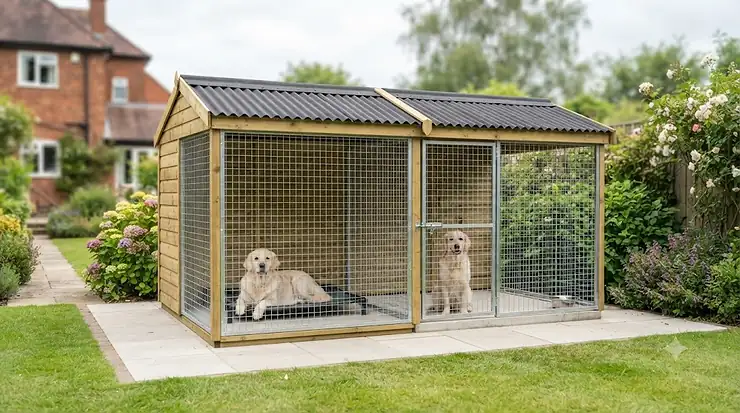
Here’s a truth nobody puts on the box: breeding kennels under £500 is not really a shopping category, it’s a compliance category wearing a shopping category’s clothes. A cardboard whelping box and a fully-panelled timber kennel block both technically fit the search term, but only one of them will survive a local authority inspector’s clipboard and a boisterous six-week-old litter trying to eat the walls. Breeding kennels under £500 is what is often searched for by first-time and small-scale breeders trying to work out whether “budget” and “compliant” can coexist in the same sentence. Spoiler: they can, but only if you know exactly what you’re buying and why.
This guide walks through seven real, currently available products spanning disposable cardboard through to insulated timber kennel blocks, all realistically obtainable for under £500 in the UK. We’ll dig into breeder starter kennel options at every price point, unpack breeder licensing so you don’t get caught out at your first inspection, translate the official kennel space requirements into numbers you can actually measure with a tape, and build a proper whelping essentials shopping list around whichever kennel you choose. Every product mention here includes honest, spec-grounded commentary rather than a rehashed listing — because that’s the only way this article, or your breeding set-up, earns its keep.
Under the Animal Welfare (Licensing of Activities Involving Animals) Regulations 2018, anyone breeding three or more litters in any 12-month period needs a licence from their local council — regardless of whether they consider themselves a “hobby” breeder. That single fact should shape every kennel purchase you make, because an inspector isn’t grading your kennel on kerb appeal. They’re grading it against a documented minimum standard, and we’ll show you precisely what that standard looks like in square metres, degrees Celsius and centimetres of headroom.
Quick Comparison Table: Breeding Kennels Under £500 At a Glance
| Product | Type | Price Range | Best For |
|---|---|---|---|
| Petnap Disposable Cardboard Whelping Box | Cardboard, single-use | £20-£35 | Emergency or one-off litters |
| Petnap Reusable Plastic Whelping Box | Moulded plastic | £45-£60 | Repeat small-breed litters |
| PawHut Two-Room Whelping Pen | Panelled indoor pen | £90-£130 | Indoor whelping with recovery space |
| BingoPaw Heavy-Duty Whelping Pen | Indoor/outdoor pen | £110-£160 | Larger or more boisterous litters |
| Cozy Pet XL Insulated Wooden Kennel | Insulated timber house | £220-£280 | Cold-weather whelping and rearing |
| Confidence Pet Wooden Dog Kennel | Timber kennel with side yard | £180-£260 | Combined sleeping and toileting space |
| Rowlinson Large Outdoor Dog Kennel | Full timber kennel | £350-£480 | Multi-litter or larger-breed setups |
Looking at this spread, the pattern that jumps out is how little price correlates with compliance readiness. The two cheapest options here are genuinely useful, but only as a whelping box inside a wider kennel environment — neither is a standalone breeding kennel in the regulatory sense. Once you move into the panelled pen and timber kennel tiers, you start getting the enclosed, cleanable, weatherproof structure that inspectors and common sense both expect of a breeding set-up. Budget wisely: the jump from a £50 box to a £250 insulated kennel usually pays for itself the first time a UK winter tries to undo your whelping schedule.
💬 Just one click — help others make better buying decisions too!😊
Top 7 Breeding Kennels Under £500: Expert Analysis
Coverage below spans true budget cardboard through to premium insulated timber, including brands and models genuinely stocked in the UK at the time of research. Prices fluctuate constantly on Amazon, so treat every figure here as a guide rather than gospel — always check the current price before you commit.
1. Petnap Disposable Cardboard Whelping Box — cheapest genuine safety net for a surprise litter
The standout here is honesty in its own disposability: this is a reinforced cardboard whelping box built to be used once, hygienically binned, and never worried about again. It comes in several sizes up to roughly 48 x 48 inches, with a built-in pig rail (the raised inner lip that stops a heavy bitch rolling onto a pup against the wall) supplied as standard. Reviewers repeatedly describe the cardboard as far sturdier than they expected, holding its shape through a full whelping and weaning cycle despite the inherent flimsiness of the material. Based on the spec comparison with plastic alternatives, this is the box for a genuinely unplanned litter, a foster situation, or a breeder who wants zero long-term storage or cleaning obligations — not for anyone running three or more litters a year, where reusable kit earns its cost back quickly. Reviewers consistently note that the pig rail fitting is slightly fiddly on first assembly but that cleanup afterwards is essentially “fold, recycle, done.” One recurring theme in aggregated feedback is a split on value for money: some buyers call it brilliant for the price, others feel a cardboard box shouldn’t cost what it does — a fair tension when you remember you’re paying for design and safety features, not raw materials.
Pros:
- ✅ Genuinely disposable — zero disinfection admin between litters
- ✅ Pig rail included as standard for newborn safety
- ✅ Lightweight enough to position and reposition solo
Cons:
- ❌ Not reusable, so ongoing costs add up over multiple litters
- ❌ Can’t be left outdoors or in damp conditions
Prices for the larger sizes sit around £25-£35, making this the cheapest legitimate whelping solution on this list — solid value for a single litter, poor value as a long-term breeding kennel component.
2. Petnap Reusable Plastic Whelping Box — the go-to budget box for repeat small-breed litters
What most buyers overlook about this model is that it’s been in continuous UK production since 1973, which is a longer track record than almost anything else on this list. The moulded one-piece plastic construction means no seams for bacteria to hide in, and the 30 x 30 x 12 inch version — Amazon’s Choice in this category with over 470 ratings averaging 4.5 stars — is sized comfortably for small and medium breeds. Based on the spec comparison, the sealed opening height (around 6.5 inches on the mid-size box) is a deliberate design choice: tall enough to stop wobbling newborns tumbling out, low enough for the bitch to step over without straining a healing body post-whelp. This is squarely the pick for breeders doing Cavaliers, Cockapoos, French Bulldogs or similarly sized litters two or three times a year, who want something they can hose down, disinfect and store flat between uses. Aggregated review sentiment is strongly positive on cleaning ease, with multiple buyers independently praising how quickly the surface wipes clean after a messy birth; a smaller cluster of reviews flags chewed or roughened edges over time with more destructive mothers.
Pros:
- ✅ Reusable across multiple litters with simple disinfection
- ✅ One-piece moulded construction with no bacteria-trapping seams
- ✅ Strong aggregated review history spanning five decades of production
Cons:
- ❌ Limited to smaller breed sizes at the lower end of the range
- ❌ Some mothers can chew or roughen the plastic edges over time
Sitting in the £45-£60 range depending on size, this earns its place as the best-value reusable option for breeders who aren’t yet ready to invest in a full kennel structure.
3. PawHut Two-Room Whelping Pen (2m x 1m) — best indoor pen for post-whelp recovery space
The standout feature is the two-room layout: a genuine architectural upgrade over a basic box, splitting the pen into a whelping area and a separate recovery or feeding zone the bitch can retreat to. Built from lightweight panels with a lockable door, the pen assembles into a 2m x 1m footprint — enough floor area, on paper, to satisfy the doubled space allowance that UK guidance requires for a bitch with a litter. Here’s what to weigh: panelled pens like this trade the total enclosure of a plastic box for far more usable square metreage, which matters once puppies start crawling and need room to move away from littermates, a behavioural need explicitly referenced in DEFRA’s kennel guidance. Reviewers frequently mention the pen’s usefulness for keeping puppies contained as they become mobile at three to four weeks, well past the point a standard whelping box can hold them. The trade-off, and it’s a real one, is that panelled pens are markedly less waterproof than moulded plastic, so accidents and mess require more thorough floor protection underneath.
Pros:
- ✅ Two-room design gives the bitch a genuine retreat space
- ✅ Large enough footprint for puppies as they become mobile
- ✅ Lockable door reduces escape risk once pups are exploring
Cons:
- ❌ Requires a washable underlay since panels aren’t waterproof
- ❌ Takes up more floor space than a box, so needs a dedicated room
Typically priced in the £90-£130 range, this is the mid-tier pick for breeders whelping indoors who expect to keep puppies in the same space through most of the weaning period.
4. BingoPaw Heavy-Duty Indoor/Outdoor Whelping Pen (126 x 126 x 80cm) — best for boisterous or larger litters
The 80cm wall height is the headline feature, and it matters more than it sounds: taller panels mean a determined eight-week-old puppy — or an escape-artist terrier litter — isn’t simply stepping over the side the moment your back is turned. Constructed for both indoor and outdoor use, this pen ships with a waterproof mat included, addressing one of the recurring frustrations breeders report with panel-only systems. Reviewers consistently note that the black powder-coated finish resists rust better than cheaper wire alternatives, a genuinely practical detail if you’re planning to hose the pen down outdoors between litters. What most buyers overlook is that a taller, sturdier pen like this doubles as general puppy socialisation space well beyond the whelping period itself — useful when the statutory guidance requires puppies to have supervised interaction and play opportunities multiple times a day. On the downside, several reviewers flag that the assembly instructions are minimal, and the panels, while sturdy, are heavier and more awkward to reposition solo than the lighter PawHut equivalent above.
Pros:
- ✅ Taller 80cm panels reduce escape risk from mobile puppies
- ✅ Rust-resistant coating suited to outdoor and indoor use
- ✅ Waterproof mat included rather than sold separately
Cons:
- ❌ Minimal assembly instructions frustrate first-time buyers
- ❌ Heavier panels are harder to reposition without help
Expect to pay somewhere in the £110-£160 bracket — solid value if you’re breeding a larger or more physically capable breed that would embarrass a flimsier pen.
5. Cozy Pet XL Insulated Wooden Puppy Kennel (DK01XL) — best for cold-weather whelping and rearing
Insulation is the standout advantage here, and it’s not a marketing flourish: DEFRA’s statutory guidance requires breeders to maintain whelping areas between 26°C and 28°C for the first ten days after birth, a target that’s genuinely difficult to hit reliably in an uninsulated garden structure through a British winter. The XL size gives enough internal room for a medium-to-large breed bitch and a full litter, with a raised, damp-resistant floor that ticks the “kept off wet ground” box UK guidance is specific about. Based on the spec comparison with the uninsulated timber kennels further down this list, the insulated panels mean you’re relying far less on supplementary heating equipment to hold a stable temperature, which cuts both your electricity bill and your fire-risk exposure from running heat lamps continuously. Aggregated feedback highlights the kennel’s weight and sturdiness as a strong point for withstanding a litter’s chewing phase, while a smaller number of reviews mention that flat-pack assembly for the XL size is a two-person job.
Pros:
- ✅ Insulated panels help maintain the required whelping temperature range
- ✅ Raised floor keeps bedding away from damp ground
- ✅ Robust enough to withstand a teething litter
Cons:
- ❌ Assembly is genuinely a two-person task at this size
- ❌ Heavier and bulkier to reposition once built
Priced around £220-£280, this sits at the upper-mid tier — arguably the strongest value pick on this whole list if you’re whelping outdoors through autumn or winter.
6. Confidence Pet Wooden Dog Kennel with Water Bowls (Grey) — best combined sleeping and toileting layout
The side-yard layout is the clever bit: rather than one undivided box, this kennel splits into a main sleeping chamber (internally around 99 x 87.5 x 91.5cm) plus an attached yard fitted with two stainless steel bowls and a small lockable storage chest. What that means in practice is a dog gets a defined toileting and feeding zone separate from where she sleeps and nurses — a distinction UK guidance treats as genuinely important, since exercise and toileting areas must not double as sleeping areas. Reviewers repeatedly praise the “off the ground” design, which sits the kennel roughly four inches up on integrated feet, reducing damp transfer from the base and matching the raised-floor expectation in the statutory guidance almost by accident. Here’s what to weigh: the furniture-grade timber and sanded edges make this a genuinely presentable kennel a breeder could position visibly on their property, but the compact main chamber means it suits small-to-medium breeds far better than anything approaching a Mastiff.
Pros:
- ✅ Divided sleeping and toileting zones match welfare guidance
- ✅ Raised construction reduces damp and cold transfer from ground
- ✅ Lockable storage chest for feed and equipment included
Cons:
- ❌ Main chamber is compact — unsuitable for large breeds with a litter
- ❌ Timber requires annual re-treatment against UK weather
Generally available in the £180-£260 range, this is a strong premium-tier pick for smaller breed programmes that want a defined, tidy outdoor set-up without going all the way to a full kennel block.
7. Rowlinson Large Outdoor Dog Kennel — best for multi-litter or larger-breed operations
Scale is the entire point of this kennel: manufactured by a long-established UK garden buildings company, the large outdoor kennel is built with proper tongue-and-groove timber construction rather than the thinner panel systems used lower down this list, giving genuinely usable internal headroom for larger breeds. Based on the spec comparison with the smaller wooden kennels above, the extra internal volume matters most once you’re looking at DEFRA’s minimum kennel size table, which scales up sharply for dogs over 20kg and doubles again for any bitch with a litter in residence — a large-breed pairing that a compact kennel simply can’t accommodate without breaching minimum standards. Reviewers and UK manufacturer listings consistently point to the sturdier timber gauge as the reason this sits near the top of the £500 budget rather than the middle, but for a breeder running German Shepherds, Labradors or similar, it’s realistically the only structure on this list that clears the higher-standard headroom and floor-area expectations without modification. The honest trade-off is cost proximity to the £500 ceiling, leaving very little budget left over for a run, heating or bedding once the kennel itself is paid for.
Pros:
- ✅ Genuine tongue-and-groove timber build for larger breeds
- ✅ Internal headroom suited to bigger dogs with litters
- ✅ Established UK manufacturer with long production history
Cons:
- ❌ Sits near the top of the £500 budget, limiting spend on extras
- ❌ Overkill and unnecessarily large for toy or small breeds
At around £350-£480, this is very much the premium end of “under £500” — worth it specifically if your breed and litter size genuinely need the extra volume, and a poor-value overreach if they don’t.
Full Spec & Value Comparison
| Product | Approx. Internal Space | Insulated? | Indoor/Outdoor | Price Range | Best For |
|---|---|---|---|---|---|
| Petnap Disposable Cardboard Whelping Box | Up to 48″ x 48″ | No | Indoor only | £20-£35 | One-off litters |
| Petnap Reusable Plastic Whelping Box | 30″ x 30″ x 12″ | No | Indoor only | £45-£60 | Small breeds, repeat use |
| PawHut Two-Room Whelping Pen | 2m x 1m | No | Indoor | £90-£130 | Post-whelp recovery |
| BingoPaw Heavy-Duty Whelping Pen | 126 x 126 x 80cm | No | Both | £110-£160 | Larger, boisterous litters |
| Cozy Pet XL Insulated Kennel | XL (medium-large breed) | Yes | Outdoor | £220-£280 | Cold-weather rearing |
| Confidence Pet Wooden Kennel | 99 x 87.5 x 91.5cm | No | Outdoor | £180-£260 | Divided sleep/toilet zones |
| Rowlinson Large Outdoor Kennel | Large (multi-breed capacity) | No | Outdoor | £350-£480 | Larger breeds, multi-litter |
Reading this table against DEFRA’s minimum kennel size table is genuinely instructive: the reusable plastic box and cardboard box are whelping aids, not standalone kennels, and both need to sit inside a wider, compliant kennel or home environment rather than functioning alone. The Cozy Pet XL Insulated Kennel and Rowlinson Large Outdoor Dog Kennel are the two products here that could plausibly stand as an entire breeding kennel environment on their own, which is exactly why they command the higher end of this budget.
Setting Up Your Breeding Kennel: A Practical First-30-Days Guide
Getting a kennel delivered is the easy part — getting it inspection-ready and litter-ready is where most first-time breeders trip up. Start positioning your kennel or pen at least a week before the bitch is due, since she’ll settle far better if she’s had time to investigate and claim the space rather than being introduced to it mid-labour. Line the base with washable vet bedding rather than loose blankets initially, since loose fabric can bunch and pose a smothering risk to newborns in the first fortnight. Fit a thermometer inside the whelping area itself, not just the surrounding room — DEFRA guidance specifically requires monitoring the whelping zone’s own temperature, and ambient room temperature is not an acceptable proxy.
A genuinely common first-30-days mistake is under-cleaning: kennels must be disinfected at least weekly and after every occupancy change, but with newborns underfoot, many first-time breeders reduce cleaning frequency out of caution when the opposite is required. Establish a twice-daily faeces removal routine from day one, since guidance requires this at minimum, more if the litter is large. Finally, resist the urge to over-decorate the kennel with soft toys or loose enrichment items in the first fortnight; anything a puppy could ingest or a bitch could rearrange onto a newborn is a liability until the litter is mobile and supervised enrichment becomes appropriate.
Real-World Scenarios: Which Breeder Are You?
Consider Sarah, a first-time hobby breeder in Yorkshire with a single Cockapoo bitch and no plans beyond this one litter. Her budget priority is low commitment, not longevity, which makes the Petnap Disposable Cardboard Whelping Box paired with a spare bedroom the sensible, proportionate choice — she gets a genuinely safe whelping environment without sinking money into equipment she may never use twice.
Then there’s Tom, running a small, licensed Cavapoo programme with two to three litters a year in a converted garage. He needs something reusable, easy to disinfect between litters, and roomy enough for puppies through the mobile weaning stage — the PawHut Two-Room Whelping Pen or the BingoPaw Heavy-Duty Whelping Pen both fit that recurring-use, indoor-focused profile far better than a single-use box ever could.
And finally, Priya, licensed and breeding working-line Labradors outdoors in a converted outbuilding through the colder months. Her non-negotiables are insulation and internal volume, since DEFRA’s minimum kennel size table scales sharply for larger breeds with litters — which points straight at the Cozy Pet XL Insulated Wooden Puppy Kennel or, budget allowing, the Rowlinson Large Outdoor Dog Kennel for genuine headroom and warmth retention.
Common Problems, Real Solutions
Puppies squirming out from under mum and getting chilled is a frequent early complication; the fix is a properly fitted pig rail — standard on both Petnap boxes — combined with a monitored ambient temperature of 26-28°C for the whelping area specifically. Escaping mobile puppies around three to four weeks old is another near-universal issue; taller-walled pens like the BingoPaw Heavy-Duty Whelping Pen, at 80cm, solve this far more reliably than a standard whelping box ever will. Persistent damp or condensation inside a wooden kennel usually traces back to poor ventilation or ground contact — the raised-floor design on the Confidence Pet Wooden Dog Kennel and Cozy Pet XL both directly address this by lifting the structure clear of the ground. Finally, breeders frequently underestimate cleaning time once a litter is mobile; batching a twice-daily faeces removal routine with a weekly full disinfection, as the statutory guidance requires, keeps this from spiralling into an unmanageable daily chore.
How to Choose Breeding Kennels Under £500
- Confirm your licensing status first. If you’re breeding three or more litters a year, your kennel choice must satisfy the statutory minimum standards, not just your own comfort with it.
- Measure against the actual space table, not guesswork. DEFRA’s minimum kennel size scales by dog weight, and doubles for a bitch with a litter — check your breed’s typical adult weight before buying.
- Prioritise insulation if you’re whelping outside British winters. The required 26-28°C whelping temperature is genuinely hard to sustain in an uninsulated structure without excessive supplementary heating.
- Decide reusable versus disposable early. One litter favours disposable cardboard; three-plus litters a year make reusable plastic, panel or timber options cheaper over time.
- Check wall height against your breed’s agility. Escape-prone or larger breeds need taller panels than a standard whelping box provides once puppies are mobile.
- Budget for extras, not just the kennel. Bedding, a thermometer, heat source and cleaning supplies typically add £50-£100 on top of the kennel price itself.
- Read aggregated review themes, not star ratings alone. A 4.5-star average can still hide a consistent complaint — like chewed edges or fiddly assembly — that matters for your specific breed.
Breeder Licensing in the UK: What You Must Know Before You Buy
Breeder licensing catches out more first-time breeders than almost any other part of this process, largely because the threshold is lower than people assume. You need a licence from your local authority if you breed three or more litters in any twelve-month period, or if you’re advertising a business of selling dogs under HMRC’s business tests — and crucially, this applies to individuals, not just registered companies. Licence fees vary by council, but recent figures from local authorities such as Winchester City Council put the 2026/27 fee at several hundred pounds, plus the cost of a mandatory veterinary inspection before your first licence is granted.
Licensing isn’t a one-off box-tick, either. Businesses meeting the higher welfare standards qualify for longer licences of two or three years and lower renewal fees, while those meeting only minimum standards face annual renewal and closer scrutiny. Kennel space, staffing ratios, record-keeping and even how you advertise puppies for sale are all inspected against the statutory guidance — and your kennel purchase sits right at the centre of that inspection, since it’s the physical environment the whole assessment is built around.
Kennel Space Requirements: The Numbers Inspectors Actually Use
This is where a lot of budget kennel shopping quietly goes wrong. DEFRA’s statutory guidance sets out precise minimum kennel areas by dog weight, and — critically — a bitch with a litter must be given double this base allowance, not the same figure. Here’s the official minimum table, translated into plain terms:
| Dog Weight | Minimum Kennel Area | Additional Area Per Extra Dog |
|---|---|---|
| Under 5kg | 4.0 m² | 0.5 m² |
| 5-10kg | 4.0 m² | 1.0 m² |
| 10.1-15kg | 4.0 m² | 1.5 m² |
| 15.1-20kg | 4.0 m² | 2.0 m² |
| 20.1-30kg | 8.0 m² | 4.0 m² |
| Over 30kg | Scaled up proportionately | Scaled up proportionately |
So a 12kg Cocker Spaniel bitch needs a minimum 4.0 m² kennel on her own — but with a litter in residence, that doubles to 8.0 m². A 25kg Labrador with pups needs 16 m² minimum. Run those figures against the product dimensions in our comparison table above, and it becomes obvious very quickly why a compact box or small pen is only ever part of a compliant environment, never the whole of it, once a larger breed and her litter are involved. Headroom matters too: kennel units need a minimum 2-metre ceiling height where staff must access and clean them, and the whelping bed itself must be raised, sided high enough to stop newborns falling out, and made from waterproof, easily disinfected material.
Breeding Kennels vs Traditional Whelping Boxes
The instinctive comparison every new breeder makes is a purpose-built kennel against a simple whelping box, and the honest answer is that they’re not really competing products — they solve different problems at different litter stages. A traditional whelping box, like the Petnap Reusable Plastic Whelping Box, excels in the first two to three weeks: it’s compact, fully enclosed, easy to sterilise, and gives a newborn litter a contained, low-stimulation environment. Where it falls down is space — DEFRA’s doubled space requirement for a bitch with a litter quickly outgrows a standard box once puppies start crawling, at which point a panelled pen or full kennel becomes not just preferable but arguably necessary for compliance.
| Factor | Whelping Box | Breeding Kennel/Pen |
|---|---|---|
| Best litter stage | Birth to ~3 weeks | 3 weeks onward |
| Typical space | Compact, fully enclosed | Larger, often expandable |
| Compliance role | Whelping component only | Can satisfy full kennel space rules |
| Reusability | Varies (box-dependent) | Generally high |
| Price Range | £20-£60 | £90-£480 |
Most experienced breeders end up owning both: a whelping box for the newborn phase, transitioning into a larger pen or kennel — such as the BingoPaw Heavy-Duty Whelping Pen or Cozy Pet XL Insulated Kennel — once the litter is mobile. Trying to stretch a single £500 budget across only one category typically means compromising on whichever life stage you didn’t plan for.
✨ Don’t Miss These Exclusive Deals!
🔍 Whichever combination fits your litter size and season, click through on any highlighted product above to check current pricing and availability before stock or prices shift.
Common Mistakes When Buying Breeding Kennels
The single most common mistake is buying kennel size for the adult dog alone and forgetting the doubled space requirement once a litter arrives — a kennel that’s perfectly legal for one bitch can become non-compliant the moment she whelps. A close second is prioritising price over insulation for outdoor structures, then discovering the required 26-28°C whelping temperature is nearly impossible to hold through a UK autumn without expensive supplementary heating running constantly. Breeders also frequently underestimate cleaning frequency requirements, assuming weekly disinfection is sufficient when daily faeces removal and occupancy-change cleaning are both mandatory. Finally, many first-time buyers overlook wall or panel height entirely, buying a kennel sized correctly for an adult dog but far too low to contain a curious, mobile six-week-old litter.
Long-Term Cost & Maintenance: What a Breeding Kennel Really Costs
A £500 kennel is rarely a £500 total spend once you factor in the full picture. Timber kennels like the Rowlinson Large Outdoor Dog Kennel and Confidence Pet Wooden Dog Kennel need annual re-treatment against rot and weathering — budget roughly £20-£40 a year in wood preservative and a weekend of your time. Insulated options like the Cozy Pet XL reduce ongoing heating costs meaningfully compared with uninsulated structures, which is worth factoring into total cost of ownership if you’re breeding through multiple winters. Reusable plastic and panel systems, such as the Petnap Reusable Plastic Whelping Box and PawHut Two-Room Whelping Pen, carry near-zero ongoing costs beyond disinfectant, making their true cost-per-litter drop sharply the more litters you run through them. Disposable cardboard, by contrast, has the lowest entry cost but the highest cost-per-litter over time if you’re breeding regularly — a £25 box bought three times a year outpaces a £55 reusable box within eighteen months.
Breeder Starter Kennel Options for Different Budgets
If you’re a genuine first-timer testing the waters with one litter, breeder starter kennel options really come down to a whelping box plus a spare room — the Petnap Disposable Cardboard Whelping Box is about as low-risk an entry point as this category offers. Once you’re licensed and planning two or three litters annually, a mid-tier reusable pen like the PawHut Two-Room Whelping Pen or BingoPaw Heavy-Duty Whelping Pen earns its cost back quickly through reuse and better space compliance. Breeders committing to a longer-term, licensed programme — particularly with larger breeds or year-round whelping — are generally better served skipping the starter tier altogether and going straight to an insulated or full timber kennel, since retrofitting compliance later is almost always more expensive than buying for it upfront.
Whelping Essentials: What Belongs Inside (and Outside) the Kennel
A kennel is only half the equation; whelping essentials fill in the rest. At minimum, stock washable, non-slip whelping pads or vet bedding, a reliable digital thermometer for the whelping area itself, a supply of clean towels, a weighing scale for daily puppy checks, and puppy ID collars if you’re whelping a large or same-coloured litter. The Kennel Club’s guidance on whelping your first litter recommends introducing the bitch to her whelping set-up around a week before her due date, giving her time to settle before labour begins — advice that applies equally whether you’re using a £25 cardboard box or a £400 timber kennel.
Beyond the box itself, a heat source suited to your kennel type matters enormously: a heat pad or heat lamp for the first ten days keeps the whelping zone within the required temperature range without over-heating the wider kennel. Keep a first-aid kit suitable for dogs on site, alongside your registered vet’s contact details, since statutory guidance requires both to be readily accessible. Finally, don’t skip record-keeping essentials — a logbook for birth times, weights and colours isn’t just good practice, it’s a specific requirement of your breeding licence.
Safety, Compliance and What Inspectors Look For
Beyond space and temperature, licensing inspectors check a surprising amount of connective detail: whether outdoor fencing prevents digging and jumping, whether wire mesh (if used) meets minimum gauge and hole-size standards, whether drains are unblocked and covers secure, and whether staff — including a sole breeder working alone — have documented training in recognising illness or distress. The RSPCA’s guidance on responsible breeding is a useful independent benchmark to read alongside the statutory minimum, since it pushes past bare legal compliance toward genuinely good welfare outcomes — the kind of standard that also, not coincidentally, tends to produce healthier, better-socialised puppies and fewer post-sale complaints.
Frequently Asked Questions
❓ Do I need a licence to breed one litter from my pet dog?
❓ What's the minimum kennel size for a breeding bitch with puppies?
❓ Can I use a cardboard whelping box as my entire breeding kennel setup?
❓ What temperature should a whelping area be kept at?
❓ Is a wooden kennel or a plastic pen better for UK weather?
Conclusion
Breeding kennels under £500 span a genuinely wide range of real solutions, from a £25 cardboard box that quietly does its one job brilliantly, right up to a near-£500 insulated timber kennel built for larger breeds and colder months. The right pick isn’t the cheapest or the most expensive — it’s whichever option, honestly measured against DEFRA’s space and temperature rules and your actual litter size, lets you meet your licensing obligations without cutting corners on welfare. Whether that’s the Petnap Disposable Cardboard Whelping Box for a single litter, the PawHut Two-Room Whelping Pen for a growing hobby programme, or the Rowlinson Large Outdoor Dog Kennel for a licensed, multi-litter set-up, build your whelping essentials around the kennel, check the current price before you buy, and let the regulations — not the marketing copy — set your minimum standard.
Recommended for You
- Outdoor Dog Enclosure for Puppies: 7 Best UK Picks (2026)
- Dog Run With Concrete Base: 7 Best UK Picks for 2026
- Secure Dog Run for Escape Artists: 7 Fixes That Work 2026
Disclaimer: This article contains affiliate links. As an Amazon Associate, I earn from qualifying purchases. If you purchase products through these links, we may earn a small commission at no additional cost to you.
✨ Found this helpful? Share it with your friends! 💬🤗
