
In This Article
Nobody has ever walked into a boarding kennel and gasped, “Look at that floor!” Yet your dogs stand, sleep, skid and toilet on it for the whole of their stay. It’s the first place a licensing officer’s eyes drop to. And it’s what your team scrubs at 7am while the block barks its morning anthem.
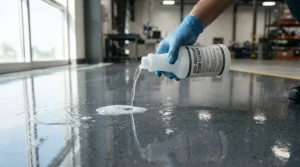
Choosing commercial kennel flooring is a four-way tug-of-war between hygiene, grip, drainage and durability. Win three and lose one, and the floor quietly costs you in vet bills, failed inspections and mats replaced every other year. In England, boarding kennels are licensed under the Animal Welfare (Licensing of Activities Involving Animals) (England) Regulations 2018. Defra’s statutory guidance for local authorities sets out how inspectors judge compliance. The council licence conditions I reviewed keep returning to the same demand: smooth, impervious, easily cleaned, non-slip floors.
One honest caveat first. Amazon UK stocks very few products built specifically as commercial kennel flooring. The heavyweight systems, such as poured resin, welded vinyl and bespoke rubber rolls, mostly come from specialist trade suppliers. What Amazon does offer is a handy middle layer of rubber mats, drainage tiles and run-entrance mats you can fit quickly. This guide ranks seven of those and tells you where each is strong and where it isn’t.
What is commercial kennel flooring?
Commercial kennel flooring is any floor surface or covering specified for professional dog facilities such as boarding kennels, rescue centres, breeders and vet wards. To earn the label it should be non-porous, slip-resistant when wet, tough enough for daily disinfection and claws, and laid so liquid drains away instead of pooling.
Commercial Kennel Flooring Quick Comparison: 7 Options at a Glance
Short on time? “Kennel flooring” on Amazon UK covers everything from a thin liner to a cushioned foam slab, so this table sorts the seven picks by what they actually are.
| Product | Type | Drainage | Price signal | Best For |
|---|---|---|---|---|
| Fine Ribbed Rubber Matting (1.2m × 3mm) | Thin ribbed rubber roll | None (solid) | Around £40-£50 for a 4m length | Dry indoor suites on a budget |
| VEVOR Modular Interlocking Drainage Tiles (30 × 30 cm) | Soft PVC grid tiles | Through and under the tile | Varies by pack size; check current price | Outdoor runs and wash zones |
| Bonnlo Rubber Floor Mat with Holes (90 × 150 cm) | Perforated rubber mat | Through the holes | Check current price | Grooming and hose-down stations |
| Easimat Heavy Duty Rubber Mat (6ft × 4ft × 10mm) | Solid rubber, loose-lay | None (solid) | Around £35-£40 per mat | Sleeping zones on sealed concrete |
| Actiasmat Heavy Duty Rubber Stable Mat (10mm) | Solid textured rubber | None (solid) | Check current price | Wet-prone covered runs |
| Bravich EVERMAT TX301 Hollow Safety Mat | Hollow rubber grid | Through hollow cells | Check current price | Muddy gateways and run entrances |
| ARKMat Lightweight EVA Stable Floor Mat (24mm) | Closed-cell EVA foam | None (solid) | Check current price | Cushioned rest zones, non-chewers |
Reading across, the solid-face options (Fine Ribbed Rubber Matting, Easimat Heavy Duty Rubber Mat and Actiasmat Stable Mat) are your hygiene workhorses. The grid and perforated picks (VEVOR Interlocking Drainage Tiles, Bonnlo Rubber Floor Mat and Bravich EVERMAT TX301) earn their place wherever water needs somewhere to go. ARKMat EVA Floor Mat is the odd one out: lovely underfoot, but the least forgiving with enthusiastic chewers.
💬 Just one click — help others make better buying decisions too!😊
Top 7 Commercial Kennel Flooring Options on Amazon UK: Expert Analysis
A note on method. Amazon blocks automated access to its listing pages, so I couldn’t verify aggregated star ratings or review themes for these products. Rather than invent any, each entry below gives the specs as listed, my reading of what they mean in a kennel, and what to look for in the reviews before you buy.
1. Fine Ribbed Rubber Matting (1.2m × 3mm) — best budget liner for dry indoor suites
This is the sensible cardigan of kennel flooring: thin, plain and cheaper per square metre than almost anything else here. It’s sold as a 1.2m-wide roll cut to your chosen length. I saw a 4m length in the mid-£40s, which works out at under £10 per square metre. At 3mm it won’t cushion joints, so pair it with a raised bed. The width is the clever bit. One 1.2m run can cover many standard kennel floors without a seam down the middle, and seams are where grime breeds.
Based on the spec, it suits dry indoor suites, cage bases and corridors better than wet outdoor runs. The fine rib adds modest grip, but a hose-down zone needs a more assertive profile. Review sentiment is unverified here. Skim the lower-star reviews for edges curling after repeated hosing and for any strong rubber smell on arrival.
Pros:
- ✅ Single-piece coverage avoids central seams
- ✅ Very low cost per square metre
- ✅ Easy to cut and replace
Cons:
- ❌ Too thin to cushion joints
- ❌ Ribs hold dirt unless brushed
Around £40-£50 for the 4m length (check current price). It’s strong value for dry suites with light-duty dogs.

2. VEVOR Modular Interlocking Drainage Tiles (30 × 30 cm) — fastest modular drainage for outdoor runs
Think of these as Lego for wet floors. The Amazon UK listing describes soft PVC 30 cm squares that splice together and lift paws clear of standing water, sold in multi-tile packs (12 and 50 are offered). You can tile a run in an afternoon with no adhesive.
Here’s what the spec sheet won’t tell you. A raised grid is brilliant at moving liquid, but it creates an underside that needs cleaning too, and every seam is a hiding place for organic matter. Some council breeding conditions state that slatted or mesh floors must not be used. Ask your licensing officer whether a grid tile over concrete is acceptable before buying fifty. On paper that makes it a strong outdoor-run and wash-area product and a riskier choice for sleeping suites. In the reviews, look for tiles popping apart under load and for how buyers cut edges. Also weigh up chewing, because soft PVC is easy to bite.
Pros:
- ✅ Tool-free snap-together installation
- ✅ Lifts paws above standing water
- ✅ Single damaged tiles swap out individually
Cons:
- ❌ Seams and underside harbour grime
- ❌ Inspectors may treat it as slatted flooring
Pricing depends on pack size, so check current prices and work out cost per tile before comparing.
3. Bonnlo Rubber Floor Mat with Holes (90 × 150 cm) — best hose-down mat for wash and grooming areas
The listing aims this perforated mat at industrial kitchens, restaurants and bars, which share your problem of wet, greasy floors and people on their feet all day. A mat that copes with kitchen degreasers and daily mopping tends to cope with a kennel wash bay. At 90 × 150 cm (about 1.35 m²) it’s a station mat rather than a floor, so think grooming tables, bath areas and the doorway where wet-dog traffic jams.
Based on the spec, the holes drain water and the rubber gives staff anti-fatigue cushioning, while dogs get grip. The trade-off is that holes collect hair, so brush before you hose. I couldn’t confirm thickness from the listing, so check that before ordering, and note it carries no dog-specific claims. In reviews, look for comments on clogged holes and edge curl.
Pros:
- ✅ Perforations let water escape quickly
- ✅ Cushioning helps staff on long shifts
- ✅ Compact size is easy to lift and rinse
Cons:
- ❌ Holes trap hair and debris
- ❌ Too small to floor a whole kennel economically
Check current price. It’s good value as a targeted wash-zone upgrade, not a whole-floor solution.
4. Easimat Heavy Duty Rubber Mat (6ft × 4ft × 10mm) — best-value solid rubber for sleeping zones
It’s listed as a gym mat, but 10mm solid black rubber in a 6ft × 4ft (1.83 × 1.22 m) slab is the same basic format used across stable floors, and it translates neatly to kennels. I saw it around the high £30s, which is roughly £16-£18 per square metre. Its weight keeps it in place without adhesive, and the solid face has no holes to harbour waste. A 1.22m width also fits neatly across a typical 1.2m-wide run.
The catch is the seams and the underside. Urine can creep beneath loose-lay mats, so plan to lift and wash underneath weekly in busy kennels. For a sealed, sloped concrete floor, though, it’s an excellent sleeping-zone layer. Reviewers’ views couldn’t be verified here, so check what buyers say about initial rubber odour and whether the mat lies flat after unrolling.
Pros:
- ✅ Solid, non-porous top surface
- ✅ Heavy enough to stay put
- ✅ Strong cost per square metre for solid rubber
Cons:
- ❌ No drainage of its own
- ❌ Underside needs regular lifting and washing
Around £35-£40 per mat (prices may vary). It’s the best-value solid option on this list.
5. Actiasmat Heavy Duty Rubber Stable Mat (10mm) — best stable-grade pick for wet-prone runs
It has the same 6ft × 4ft footprint and 10mm thickness as the Easimat Heavy Duty Rubber Mat, but this one is sold for stables. The listing highlights anti-fatigue, waterproof and slip-resistant properties. In practice that suggests a textured surface designed for wet hooves, which is just as useful under wet paws.
“Waterproof” here means the mat won’t soak up urine. It doesn’t mean liquid can’t get underneath, so the lifting routine still applies. At 10mm it’s thinner than the 17mm that specialist suppliers cite as the usual equine standard, but dogs weigh a fraction of what horses do, so that’s no hardship. If you’re choosing between the two 10mm mats, decide on surface texture, not price alone, because a gentler texture is kinder to paws. I couldn’t verify review themes, so look at customer photos of the surface and any comments on smell or flatness.
Pros:
- ✅ Texture aimed at wet footing
- ✅ Non-absorbent face
- ✅ Anti-fatigue feel for staff
Cons:
- ❌ Thinner than the 17mm equine norm
- ❌ Underside needs lifting to clean
Check current price, and compare cost per square metre with the Easimat Heavy Duty Rubber Mat before committing.
6. Bravich EVERMAT TX301 Hollow Safety Mat — best for muddy gateways and run entrances
Where the solid mats suit the inside, this one lives at the door. The listing positions it as a heavy-duty hollow rubber safety mat for stable gateways, farms and fields. In other words, it’s built for the churned-up mud your dogs carry into your block. The hollow grid lets water and mud pass through, so the surface stays above the slop.
For a kennel, I see its best use at outdoor run entrances, exercise-field gates and the path from car park to reception, where grip matters more than hygiene polish. Keep it away from sleeping and whelping zones, because the cells collect debris and are hard to disinfect. I couldn’t confirm dimensions or thickness from the listing, so measure your gateways and check the figures before you order. In reviews, look for comments on how well it stays put and how it cleans.
Pros:
- ✅ Lets water and mud drain through
- ✅ Rugged construction for livestock-grade traffic
- ✅ Keeps entrances from turning into puddles
Cons:
- ❌ Hollow cells trap debris
- ❌ Unsuitable for sleeping or whelping areas
Check current price. It’s good value as a high-traffic entrance fix rather than a floor.
7. ARKMat Lightweight EVA Horse Stable Floor Mat (24mm) — best for warm, cushioned rest zones
Twenty-four millimetres of EVA foam is a different species from rubber. It’s light, insulating and soft, and a single person can lift it. That suits senior dogs and recovery pens, where warmth and joint comfort matter, always under your vet’s guidance.
But foam has weaknesses. A determined chewer can swallow chunks, claws and sharp edges can mark the surface, and I couldn’t verify how it copes with your disinfectants, so ask the manufacturer before relying on it. Treat it as a comfort layer you inspect daily, not as primary flooring. Review sentiment is unverified, so look for notes on indentation and edge wear.
Pros:
- ✅ Warm, cushioned footing for older dogs
- ✅ Light enough for one-person handling
- ✅ Closed-cell material doesn’t soak up liquid
Cons:
- ❌ Chewed foam is an ingestion risk
- ❌ Claws and edges can mark the surface
Check current price. For context, another seller’s 34mm EVA stable mat sat around £115 each, so thick EVA costs several times more per square metre than rubber. It’s premium comfort, not premium durability.
Top 7 Specs Side by Side
| Product | Material (as listed) | Size / thickness | Cleaning note | Best For |
|---|---|---|---|---|
| Fine Ribbed Rubber Matting | Rubber | 1.2m wide × 3mm, cut to length | Brush ribs, then wipe or hose | Dry suites, tight budgets |
| VEVOR Interlocking Drainage Tiles | Soft PVC | 30 × 30 cm tiles | Lift tiles, jet-wash underside | Outdoor runs |
| Bonnlo Rubber Floor Mat | Rubber | 90 × 150 cm, thickness unconfirmed | Brush holes before hosing | Grooming and wash stations |
| Easimat Heavy Duty Rubber Mat | Rubber | 6ft × 4ft × 10mm | Lift weekly, wash beneath | Sleeping zones |
| Actiasmat Stable Mat | Rubber | 6ft × 4ft × 10mm | Lift weekly, wash beneath | Wet-prone covered runs |
| Bravich EVERMAT TX301 | Rubber | Dimensions to confirm | Pressure-wash, check cells | Gateways and entrances |
| ARKMat EVA Floor Mat | EVA foam | 6ft × 4ft × 24mm | Wipe; inspect for chew damage | Rest zones for non-chewers |
The pattern is clear. Thickness and solidity buy you hygiene and durability, while holes and hollows buy you drainage at the cost of cleaning effort. If you can only afford one purchase, Easimat Heavy Duty Rubber Mat or Actiasmat Stable Mat covers the most common brief. Add Bravich EVERMAT TX301 at the doors and Bonnlo Rubber Floor Mat at the wash bay to cover the wet edges.
How to Choose Commercial Kennel Flooring: 6 Steps That Actually Matter
Choose commercial kennel flooring by checking six things in order: licence conditions, the slab beneath, wet grip, the water path, disinfectant compatibility and cost over time.
- Start with your licence conditions. Your local authority decides what’s acceptable, and most conditions I reviewed ask for smooth, impervious, cleanable floors. Ask before you buy.
- Inspect the slab. Rubber can’t fix a floor that pools. If water sits in puddles, fix the fall first.
- Match grip to wet use. Look for a stated slip rating or test, not just the words “non-slip”.
- Plan the water path. Know where hose water goes, whether to a channel, a drain or the yard.
- Check chemical compatibility. Confirm the material tolerates your disinfectant at its working dilution.
- Count cost per year, not per mat. A cheaper mat that lasts half as long isn’t cheaper.
The Hygienic Kennel Floor: What Inspectors (and Germs) Care About
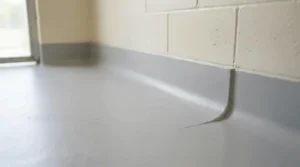
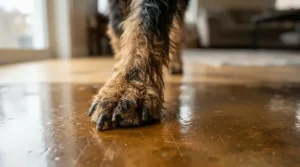
A hygienic kennel floor is smooth, impervious and free of places for dirt to hide. Local authority guidance I reviewed asks for easily cleansed surfaces, junctions that are coved or sealed, and no wood in exposed construction. Canine welfare researchers at Purdue make the same point: non-porous flooring is easier to disinfect and resists saturation with urine and faeces.
So audit every candidate for weak points. Seams, perforations and hollow cells all give microbes a foothold. That’s why Easimat Heavy Duty Rubber Mat and Actiasmat Stable Mat make better sleeping-zone surfaces than VEVOR Interlocking Drainage Tiles, whose joins demand more cleaning effort. Even a solid mat creates a hidden zone underneath, so lifting and washing beneath is part of keeping a hygienic kennel floor, not an optional extra.
Finally, treat your hygienic kennel floor as an evidence exercise. Keep a cleaning log, note when mats are lifted, and retain the product specifications. If an inspector asks how you know a floor is clean, a dated record beats confidence every time.
Non-Slip Kennel Flooring: Grip Without the Grazed Paws
Non-slip kennel flooring matters because slippery surfaces raise the risk of injury and joint strain, as the Purdue guidance notes. But “non-slip” is a spectrum, and the wrong end of it can be as bad as polished concrete. Over-aggressive studs and sharp textures abrade paw pads, and heavy texture also hides dirt.
Suppliers often quote R-ratings such as R11, which come from a ramp test. UK slip-resistance guidance also uses the pendulum test, where a value of 36 or above is generally treated as low slip potential. Whichever is quoted, ask for the test result, not a marketing adjective. In this list, Actiasmat Stable Mat and Bravich EVERMAT TX301 are aimed squarely at wet footing, Fine Ribbed Rubber Matting offers modest grip for dry areas, and Bonnlo Rubber Floor Mat carries a non-slip claim from a human-traffic context.
The practical test is simple. Wet a sample, walk on it in socks, then watch a dog turn on it. Good non-slip kennel flooring lets a dog turn and settle without skating or scrubbing its pads.
Flooring Drainage: Falls, Channels and Perforated Mats
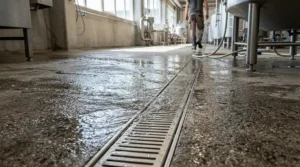
Flooring drainage is the unglamorous hero of a dry kennel. Model licence guidance used by councils says liquids must not pool, and for new constructions it recommends a minimum fall of 1 in 80 toward a shallow drainage channel. That fall belongs to the slab, not to the matting. A perforated mat on a flat floor simply moves the puddle underneath.
Where flooring drainage depends on holes and grids, the products matter. VEVOR Interlocking Drainage Tiles and Bravich EVERMAT TX301 keep surfaces above water, while Bonnlo Rubber Floor Mat suits a wash station. Remember the caution on slatted floors. Some breeding conditions ban slatted or mesh flooring, so confirm with your licensing officer.
Damp floors cause trouble too. Purdue warns that flooring which stays wet can inflame paws. Design your flooring drainage so hose water travels away from beds, not through them, and squeegee after washing. A floor that dries quickly is gentler on paws and harder for bacteria to colonise.
Disinfection-Friendly Surfaces: Chemistry, Contact Time and Compatibility
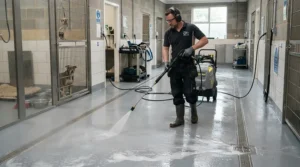
Disinfection-friendly surfaces tolerate the full routine: remove organic matter first, then apply disinfectant at the right dilution for the right contact time, then rinse. Disinfectant can’t work properly through a layer of dirt, so porous or textured surfaces demand extra scrubbing.
Some local conditions require cleaning chemicals to come from the Defra list, so see Defra’s guidance on approved disinfectants and check what your licence says. Compatibility cuts both ways. Specialist rubber suppliers warn against undiluted bleach on rubber, and phenol-based products are toxic to cats, which matters if you also run a cattery. Always follow the disinfectant manufacturer’s instructions.
Solid rubber such as Easimat Heavy Duty Rubber Mat is generally the easiest of these seven to treat as one of the disinfection-friendly surfaces. ARKMat EVA Floor Mat is different: I couldn’t verify its chemical tolerance, so ask the maker before using it with strong disinfectants. When choosing disinfection-friendly surfaces, look for edges you can reach, faces without holes, and a manufacturer who’ll confirm compatibility in writing.
Durable Dog Kennel Flooring: Built for Claws, Chewers and Pressure Washers
Durable dog kennel flooring has to survive four enemies: claws, teeth, water pressure and time. Thickness is your first clue. A 3mm liner like Fine Ribbed Rubber Matting will wear faster than the 10mm slabs of Easimat Heavy Duty Rubber Mat and Actiasmat Stable Mat. Foam like ARKMat EVA Floor Mat wears fastest of all in the wrong hands.
Specialist suppliers cite a typical life of 5-10 years for kennel rubber with daily cleaning. Treat that as a supplier claim rather than a guarantee, and expect busy facilities to sit at the lower end. Outdoors, UV matters. Suppliers recommend EPDM compounds for sunlit areas because they stay stable through frost and sun, so check what compound a listing uses before you put it in a south-facing run.
Durable dog kennel flooring also fails at the edges first. Check for lifting corners, cracked tiles on VEVOR Interlocking Drainage Tiles, and loss of texture. The replacement trigger is any floor you can no longer disinfect properly, whatever its age.
Commercial Kennel Flooring vs Traditional Alternatives: Concrete, Resin and Vinyl
Matting isn’t your only option, and for new builds it often isn’t the best one. Here’s how the main alternatives stack up in general terms.
| Option | Hygiene | Grip and comfort | Drainage | Best For |
|---|---|---|---|---|
| Sealed concrete | Good if sealed; cracks harbour germs | Hard and cold | Depends on falls | Tight budgets, outdoor runs |
| Resin or epoxy coating | Seamless and easy to disinfect | Needs anti-slip aggregate; hard | Depends on falls | New builds with specialist installers |
| Welded vinyl | Seamless with welded joints | Moderate cushioning | Depends on falls | Vet wards, specialist installs |
| Loose-lay rubber mats | Non-porous face; lift to clean beneath | Good grip and cushion | None unless perforated | Easimat Heavy Duty Rubber Mat and Actiasmat Stable Mat in sleeping zones |
| Interlocking grid | Seams need cleaning | Good drainage underfoot | Excellent | VEVOR Interlocking Drainage Tiles and Bravich EVERMAT TX301 outdoors |
Resin and welded vinyl win on seamless hygiene but need specialist fitting and a bigger upfront spend, which is why they rarely turn up on Amazon. Loose-lay rubber adds warmth and joint comfort to existing concrete with no builders involved. If you’re renovating, speak to a trade installer. If you’re upgrading in stages, mats are the lowest-disruption route.
Long-Term Cost of Commercial Kennel Flooring: A Worked Example
Price per mat is the wrong number. What counts is cost per square metre, per year, plus labour and downtime. Take a ten-run kennel with 3 m² of sleeping zone per run, 30 m² in total. At the listing prices I saw, Fine Ribbed Rubber Matting would cost under £300 for that area and Easimat Heavy Duty Rubber Mat would cost roughly £500. Both are indicative, so check current prices.
The cheaper option looks tempting until you factor in wear. A 3mm liner may need replacing sooner under heavy use, while a 10mm slab should last longer. Add the labour of lifting, cutting and refitting, and the gap narrows. A kennel that has to close runs for refits loses boarding income, and that cost rarely appears on a product page.
Cheap floors also fail in hidden ways. A floor you can’t disinfect risks an outbreak, a failed inspection or a vet bill. Keep a small contingency for replacing damaged sections, and buy a few spare mats up front so you can swap one out without waiting for stock.
Practical Guide: How to Install and Maintain Commercial Kennel Flooring in Your First 30 Days
Before you lay anything
- Hose and fully dry the slab, then check falls toward your channel.
- Unroll rubber and let it relax flat for 24 hours before cutting.
- Ventilate while any new-rubber smell fades.
Laying
- Measure each run and cut rubber with a sharp utility knife and straight edge.
- Leave a small gap at the walls so you can clean around the edges.
- For tile systems like VEVOR Interlocking Drainage Tiles, start in a corner and work outward so you can trim edge tiles last.
Weekly routine
- Lift loose-lay mats such as Easimat Heavy Duty Rubber Mat and Actiasmat Stable Mat, wash beneath, and let both sides dry.
- Brush the holes in Bonnlo Rubber Floor Mat before hosing, and inspect Bravich EVERMAT TX301 cells for packed mud.
Common first-month mistakes
- Laying mats over a wet slab, which traps moisture.
- Using a disinfectant that isn’t compatible with the material.
- Skipping the written record.
Keep specifications, cleaning logs and installation notes together for your licence inspection. The conditions themselves sit in Schedule 4 of the 2018 Regulations, and your local authority’s guidance explains how they apply.
Real-World Scenarios: Matching Commercial Kennel Flooring to Your Setup
Scenario 1: The home-based breeder with four runs and a tight budget. The runs are dry, indoors and on sealed concrete. Fine Ribbed Rubber Matting gives wipeable liners cheaply in one piece per run, with raised beds supplying the cushioning. Spend what’s left on a spare roll for quick swaps, and confirm acceptability with your licensing officer.
Scenario 2: The rescue centre with muddy outdoor runs. Mud, weather and constant traffic call for drainage and grip. Bravich EVERMAT TX301 goes at gateways and entrances, and VEVOR Interlocking Drainage Tiles may suit outdoor-only wash areas if your inspector agrees. Keep solid Actiasmat Stable Mat slabs in covered sleeping spaces so beds sit on a cleanable face.
Scenario 3: The small boarding kennel with a wash bay. The floors are sealed and sloped, with ten kennels and one grooming room. Use Easimat Heavy Duty Rubber Mat in the sleeping zones for the best solid value, Bonnlo Rubber Floor Mat at the grooming station, and reserve ARKMat EVA Floor Mat for a calm senior-dog pen, supervised and inspected daily.
FAQ: Commercial Kennel Flooring Questions Answered
❓ What is the best commercial kennel flooring for a boarding kennel?
❓ How much does commercial kennel flooring cost per square metre in the UK?
❓ Can I use stable mats as kennel flooring?
❓ Is rubber kennel flooring safe for puppies and chewers?
❓ How often should kennel flooring be replaced?
Conclusion: Choosing Commercial Kennel Flooring You Won’t Regret
The best commercial kennel flooring is the one that matches your slab, your cleaning routine and your licence conditions. Amazon UK won’t give you a full trade-grade system, but it does offer capable building blocks. Easimat Heavy Duty Rubber Mat and Actiasmat Stable Mat are the sensible solid options for sleeping zones. Fine Ribbed Rubber Matting is the low-cost liner for dry suites. Bonnlo Rubber Floor Mat and Bravich EVERMAT TX301 handle the wet edges. VEVOR Interlocking Drainage Tiles are a fast outdoor fix if your inspector approves. ARKMat EVA Floor Mat is a comfort layer for the right dog under supervision.
Whichever you choose, fix falls first, check disinfectant compatibility, and keep records. A floor that’s hygienic, grippy, draining and durable is almost invisible, and that’s the highest praise a floor can earn.
✨ Ready to Upgrade Your Kennel Floors?
🐾 Click on any highlighted product above to check current pricing and availability. Pick the right surface for each zone, and give your dogs, your team and your inspector a floor to be proud of!
Recommended for You
- Bulk Dog Kennels For Kennels Business: 7 Best Picks (2026)
- Commercial Dog Kennel: 7 Essential Buys For UK Start-Ups (2026)
- Grooming Business Kennel: 7 Proven Picks For UK Salons (2026)
Disclaimer: This article contains affiliate links. As an Amazon Associate, I earn from qualifying purchases. If you purchase products through these links, we may earn a small commission at no additional cost to you.
✨ Found this helpful? Share it with your friends! 💬🤗
