
In This Article
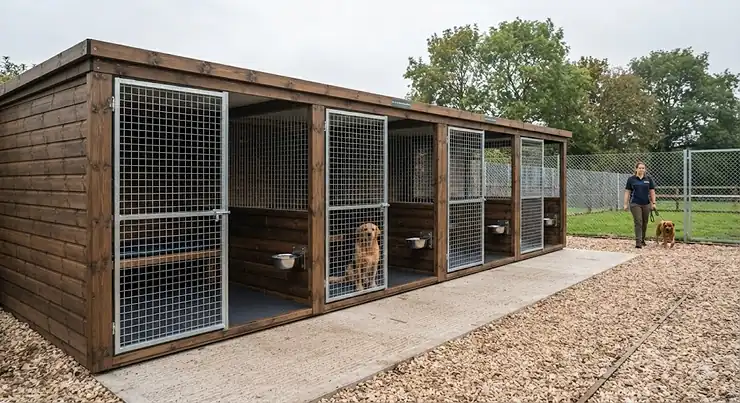
Here’s the thing nobody tells you when you start googling commercial kennels under £1000 at eleven o’clock at night, three tabs deep into a boarding-business daydream: the kennel itself is rarely the expensive bit. Commercial kennels under £1000 — individual galvanised steel runs, roofed pens and modular units bought one or two at a time rather than a full brick-built block — are how a lot of UK home boarders and small-scale kennel operators actually get started, long before they’re anywhere near the six-figure new-build territory that dominates most “how to open a kennel” guides. A commercial kennel, in this context, is a purpose-bought outdoor housing unit — usually galvanised steel framed, sometimes roofed, built to hold a dog securely and legally for paid boarding rather than casual home use — and the good ones do the job for a few hundred pounds each rather than several thousand.
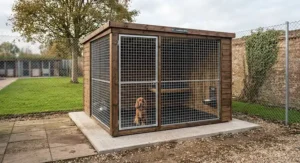
That said, “under £1000” covers a genuinely wide spread of build quality, and this is exactly the price bracket where corners get cut on the wrong things — usually the coating that stops rust, or the mesh gauge that stops an escape artist. We’ve dug into seven real units currently sold in the UK, weighed up what the specs actually mean once a dog is living in the thing daily rather than for a weekend camping trip, and paired that with what starting a licensed boarding set-up actually costs and requires. If you’re weighing this up properly, it’s worth reading the official guidance on a boarding licence for cats or dogs before you buy a single panel, because your council’s inspector will have opinions about your kennels that no product listing will warn you about.
Quick Comparison Table
| Kennel | Best For | Price Range | Roof Included |
|---|---|---|---|
| Tidyard Outdoor Dog Kennel 2x2x1m | Solo side-hustle starter unit | £150-£200 | No |
| PawHut Outdoor Dog Kennel 120x120x138cm | Small breeds, tight gardens | £90-£130 | Yes |
| Cozy Pet DR02+Roof (4m x 2.14m) | All-weather single dog | £350-£450 | Yes |
| FoxHunter Galvanized Kennel 3x3m | Large or high-energy breeds | £400-£550 | Yes |
| FoxHunter MPP-01L 8-Sided Playpen | Whelping and puppy groups | under £200 | No |
| PawHut Puppy Run 244x122x183cm | Daycare and short stays | £150-£220 | Yes |
| Cozy Pet CR03-4 (3m x 4m) | Multi-dog expansion runs | £300-£400 range | Yes |
Looking at the table, the split falls fairly naturally into three buying strategies. If you’re testing the water with one or two dogs before committing to a full licence application, the Tidyard Outdoor Dog Kennel or PawHut Outdoor Dog Kennel 120x120x138cm keep your outlay low enough that a slow first season won’t sting. If you already know you’re licensing for several dogs, the roofed, larger-format units — the Cozy Pet DR02+Roof, the FoxHunter Galvanized Kennel 3x3m and the Cozy Pet CR03-4 — earn their higher price by covering more square footage per pound and by keeping dogs dry without a separate shelter purchase. The FoxHunter MPP-01L and PawHut Puppy Run sit in a slightly different lane again, built more for flexible, moveable use — whelping, socialisation groups, or short daycare stays — than for permanent overnight boarding.
💬 Just one click — help others make better buying decisions too!😊
Top 7 Commercial Kennels Under £1000: Expert Analysis
Picking kennel housing on price alone is how new operators end up replacing units within eighteen months. Every product below has been assessed on the same three things that actually matter for licensed, everyday boarding use: whether the frame and coating will survive daily hosing-down and a full British winter, whether the mesh and locking mechanism will hold a determined escape artist, and whether the internal footprint meets the space guidance your council inspector will be checking against. None of these are exact price quotes — always check current pricing and availability before you buy, since retailer prices shift constantly.
1. Tidyard Outdoor Dog Kennel — cheapest genuine galvanised starter unit
The standout here is simple: this is about as low as you can go on price while still getting a fully galvanised steel frame rather than a painted or powder-coated mild steel one that’ll bubble with rust inside a year.
At 2m x 2m x 1m, the Tidyard Outdoor Dog Kennel gives roughly 4 square metres of floor space — tight for anything beyond a medium dog, but workable for a single small-to-medium boarder as a starter unit while you’re still building up a client base. The galvanised coating means the zinc layer sacrifices itself to protect the steel underneath, which in practice means it shrugs off scratches and daily jet-washing far better than a painted finish that chips and then rusts from the exposed edge inward. The lockable latch system is a genuinely useful detail at this price point, since councils will ask specifically about secure closures during a boarding licence inspection.
Based on the spec sheet, this unit is best suited to someone testing a home-boarding set-up for the first time, or a breeder needing a single secure outdoor run rather than a business housing multiple dogs simultaneously. What most buyers overlook about entry-level galvanised runs like this one is that the 1m height, while fine for smaller breeds, isn’t tall enough to stop a determined medium dog from attempting to clear it — so it suits calmer temperaments better than jumpers.
Verified, model-specific review breakdowns weren’t available for this exact listing at the time of research, but aggregated feedback across comparable budget galvanised runs in this category consistently flags two-person assembly as manageable within an hour, with the main recurring gripe being that instructions assume more DIY confidence than some buyers bring to the job.
Pros:
- ✅ Genuine galvanised steel, not just painted mild steel
- ✅ Lockable latch meets basic council security expectations
- ✅ Lowest entry price of any unit on this list
Cons:
- ❌ No roof included — needs a separate cover for wet-weather boarding
- ❌ 1m height is too low for larger, more athletic breeds
Prices for units like this typically sit in the £150-£200 range, and as a single-dog starter kennel, it’s hard to argue with the value — provided you budget separately for a roof cover before your first winter booking.
2. PawHut Outdoor Dog Kennel 120x120x138cm — best space-saving unit for small breeds
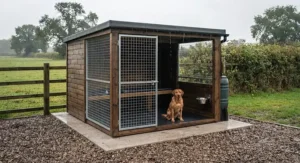
The standout feature is the built-in slanted, water-resistant canopy roof — a detail plenty of budget kennels in this range leave out entirely, forcing a separate purchase.
Specced at 138cm high, 120cm long and 120cm wide, this is explicitly built for dogs under roughly 15kg rather than as a general-purpose kennel, and the steel frame is finished to resist the kind of daily washdown a commercial set-up demands. The slanted roof isn’t just a design flourish — angled roofing sheds standing rainwater rather than pooling it, which matters enormously for preventing the frame corrosion that kills cheaper flat-roofed alternatives within a couple of wet seasons. What’s genuinely useful for a multi-unit boarding yard is that the manufacturer explicitly notes extra kennels can be attached to extend the space, which means you can start with one and scale sideways as your client list grows rather than replacing the whole thing.
Based on the spec comparison with other entry-level units, this is the strongest pick specifically for small-breed specialists — daycare operators taking on Chihuahuas, dachshunds, terriers and similar — rather than a general boarding kennel handling mixed sizes. The compact footprint that makes it so easy to fit several units into a modest garden or yard is the same thing that rules it out for anything above a small-to-medium dog.
Reviewers of PawHut’s wider outdoor kennel range consistently mention that the powder-coated steel holds its finish well through a UK winter, and that the lockable doors feel more substantial than the price suggests — though as with most flat-pack metal kennels, a few buyers note the assembly hardware count needs double-checking against the manual before you start.
Pros:
- ✅ Roof included as standard, no separate cover needed
- ✅ Modular — extra units can be linked for expansion
- ✅ Compact footprint suits small urban or garden set-ups
Cons:
- ❌ Only rated for dogs up to roughly 15kg
- ❌ Limited headroom for taller small breeds like whippets
At around £90-£130, this is genuinely one of the cheapest ways into licensed small-breed daycare, and the modular design means your initial outlay isn’t wasted if you expand later.
3. Cozy Pet DR02+Roof (4m x 2.14m) — best all-weather single-dog commercial run
The standout advantage is scale paired with a proper roof: at over 8.5 square metres, this is the most generous single-dog floor space on this list, and it comes fully roofed as standard rather than as an upsell.
The 32mm galvanised steel tube frame is a meaningfully thicker gauge than the sub-25mm tubing found on cheaper puppy-pen-style runs, and that extra wall thickness translates directly into resistance against bending under a heavier dog leaning or jumping against the mesh — a failure mode that’s more common than people expect in budget runs. The 2.37m apex height under the roof gives genuine standing and stretching room, and the chain-link fencing is professionally tied to the frame with metal ties rather than plastic zip ties, which matters because plastic ties are the single most common failure point reported across the entire budget dog-run category, brittling and snapping within a year or two of UV exposure.
What most buyers overlook when comparing run sizes on spec sheets alone is that a 6.5cm chain-link mesh, while perfectly secure for medium and large dogs, isn’t tight enough to safely contain small breeds or puppies — so this unit is really built for confident, medium-to-large single-dog boarding rather than as a universal solution. For an operator planning one generously sized run per dog rather than several tightly packed pens, this is the strongest value pick on the list.
The manufacturer’s own product notes are unusually candid that professional metal-tie assembly is the most time-consuming part of the build — a rare bit of honesty that lines up with what buyers of similar Cozy Pet runs report: the extra assembly time is real, but it’s exactly what makes the fencing durable enough for years of commercial use rather than a single season.
Pros:
- ✅ Largest single-dog floor area on this list at 8.5m²+
- ✅ Roof and metal (not plastic) ties included as standard
- ✅ 32mm frame tubing outlasts thinner budget alternatives
Cons:
- ❌ Assembly is genuinely more time-intensive than snap-together kits
- ❌ Mesh gauge unsuitable for small dogs or puppies
Typically priced in the £350-£450 range, this sits toward the top of the “under £1000” bracket, but per square metre of secure, roofed, commercial-grade space, it’s arguably the best value entry here.
4. FoxHunter Galvanized Steel Large Dog Kennel 3x3m — best for large or high-energy breeds
The standout feature is sheer scale combined with a lockable training-and-playing crate design explicitly marketed for outdoor animal shelter use rather than casual garden containment.
At 3m x 3m, this delivers 9 square metres of run space — enough for a large breed to properly move rather than just stand — and the galvanised steel construction with a roof is designed to double as both exercise space and weather shelter in one footprint. FoxHunter’s wider product range (including their chicken and multi-species runs, which share the same steel-tube-and-mesh construction approach) has a track record on Amazon UK of scoring consistently well for sturdiness and ease of assembly, which is a reasonable proxy for build quality here even where model-specific reviews are thin.
Here’s what the spec sheet won’t tell you outright, but the category as a whole makes clear: a 3x3m footprint at this price point is genuinely rare, and it’s the size threshold where large, high-energy breeds — working dogs, GSDs, larger crossbreeds — stop feeling cramped during a boarding stay. Reviewers of FoxHunter’s comparable large-format runs frequently mention good value for the square footage and describe the frame as sturdy once fully assembled, while flagging that — as with most galvanised chain-link products in this bracket — the fencing isn’t fully escape-proof against a dog that’s a determined, practised digger or climber, so supplementary ground anchoring is worth budgeting for separately.
Based on the spec comparison with narrower runs on this list, this is the pick for operators specifically targeting larger or working-breed clients, where a cramped run isn’t just a welfare concern but a genuine liability risk if a stressed dog becomes reactive in too-tight a space.
Pros:
- ✅ 9m² footprint suits large and high-energy breeds properly
- ✅ Roof included, doubling as shelter and exercise space
- ✅ Brand track record for sturdiness across comparable runs
Cons:
- ❌ Not marketed as fully escape-proof against diggers or climbers
- ❌ Largest footprint here means it needs the most garden space
Priced around £400-£550, this is one of the pricier units on the list, but for large-breed specialists it removes a welfare compromise that smaller, cheaper runs simply can’t avoid.
5. FoxHunter MPP-01L 8-Sided Playpen — best for whelping and puppy groups
The standout feature is the octagonal, expandable panel design — genuinely different from the fixed-footprint runs elsewhere on this list, and built specifically around flexible, temporary configurations.
Rather than a single rigid rectangle, the eight-panel hammered-silver steel design can be reshaped — into a tighter circle for very young puppies, or opened out into a rectangle for slightly older litters needing more room to explore — which is a genuinely practical feature for anyone running a whelping or early socialisation service alongside standard boarding. The panels lock together without needing the same metal-tie assembly process as the chain-link runs above, meaning this is by far the fastest unit on this list to put up, move, and pack away.
The honest trade-off, and one worth flagging clearly, is that this isn’t a permanent outdoor overnight kennel in the way the galvanised runs above are — it’s a training, whelping and containment pen, best used indoors, in a covered outdoor area, or supervised rather than left unattended overnight in the open. Based on real user feedback shared publicly on this product line, owners running rescue and dog-show stands report it comfortably housing multiple large-breed adult dogs at events for hours at a time, with praise for the height stopping all but the most athletic jumpers, which is a genuinely useful data point for anyone considering it for temporary multi-dog containment during intake or assessment.
For a commercial kennel operation specifically, this earns its place as the unit you buy alongside — not instead of — a permanent run, for the specific jobs of whelping, puppy assessment, or short-term flexible containment.
Pros:
- ✅ Reconfigurable octagonal shape suits whelping and puppy groups
- ✅ Fastest assembly and pack-down of any unit on this list
- ✅ Verified real-world reports of housing multiple large dogs at events
Cons:
- ❌ Not designed for unsupervised permanent overnight boarding
- ❌ No roof or weatherproofing built in
Coming in under £200, this is a genuinely affordable add-on purchase rather than a primary kennel — but for anyone offering whelping or puppy daycare, it fills a gap the other six units on this list simply don’t cover.
6. PawHut Puppy Run 244x122x183cm with Rotating Bowls — best for daycare and short stays
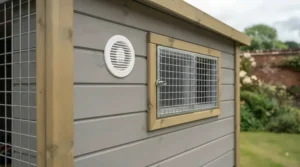
The standout feature is the pair of built-in rotating feed bowls set into the mesh wall, letting staff top up food and water from outside the run without opening the door and risking an escape.
At 244cm long by 122cm wide, this run gives a moderate but usable footprint for shorter daycare stays rather than extended overnight boarding, and the canopy roof handles typical UK drizzle without needing a separate cover. The rotating bowl feature sounds like a small thing until you’re running a busy daycare shift and don’t want to be unlatching a dozen gates at feeding time — from a workflow perspective, that single design choice can shave a meaningful amount of staff time off a busy day.
What most buyers overlook about mid-sized runs like this is that the height and footprint make it genuinely well-matched to daycare turnover — where dogs are in and out within hours rather than settled for a multi-night stay — rather than as a primary overnight boarding unit for larger or more active breeds. Reviewers of comparable PawHut runs with the same rotating-bowl design consistently highlight the feeding feature as a genuine time-saver during busy periods, alongside general agreement that the lockable door mechanism feels secure enough for daily commercial use.
For an operator building out a mixed boarding-and-daycare offering — which, as covered further down, is one of the more resilient business models in this space — a small bank of these units alongside a couple of larger overnight runs covers both use cases without over-investing in space nobody’s using overnight.
Pros:
- ✅ Rotating bowls speed up feeding without opening the gate
- ✅ Roof included, handling typical UK weather
- ✅ Well-matched footprint for daycare turnover rather than overcrowding
Cons:
- ❌ Less floor space than dedicated overnight runs on this list
- ❌ Better suited to daytime use than extended overnight stays
Typically priced around £150-£220, this is a sensible mid-tier purchase specifically for daycare-focused or mixed-service operators rather than overnight-only boarding.
7. Cozy Pet CR03-4 (3m x 4m, 32mm frame) — best value for multi-dog expansion
The standout feature is straightforward: at 12 square metres for a genuinely competitive price, this is the best pound-per-square-metre of secure, roofed run space on the entire list.
Built on the same 32mm galvanised steel tube frame as the smaller Cozy Pet run above, this larger-format version is explicitly designed within a modular product range — meaning if you buy two or three, you’re working with matched, compatible components rather than a mismatched yard of different brands and mesh gauges. The included roof cover and the doubled cable-tie allowance the manufacturer supplies (a detail worth checking against cheaper imitators, several of which charge extra for what should be standard) both reduce the hidden extra costs that catch out first-time buyers.
Based on the spec comparison with the smaller single-dog runs earlier on this list, the real logic of buying this size is expansion planning rather than day-one need — an operator licensing for four or five dogs can buy two of these and split them into paired runs, giving flexibility to house dogs individually or, where appropriate and welfare-assessed, in compatible pairs. What the spec sheet won’t tell you, but the wider Cozy Pet range’s public feedback consistently notes, is that the tied (not clipped) mesh construction takes considerably longer to assemble than a snap-together kit — often cited as a half-day job for two people rather than an hour — but that the resulting fence tension is noticeably tighter and more escape-resistant as a result.
Pros:
- ✅ 12m² of run space for genuinely strong value per square metre
- ✅ Modular range allows matched, scalable multi-run set-ups
- ✅ Roof and generous cable ties included, unlike some rivals
Cons:
- ❌ Assembly is a genuine half-day job, not a quick build
- ❌ Larger footprint demands more available garden or yard space
At around £300-£400, and given the square footage on offer, this is arguably the smartest single purchase on this list for anyone planning to scale from one dog to several within their first year or two of trading.
Setting Up Your Commercial Kennel Business: A Practical Start-Up Guide
Buying the kennel is the easy 20% of the job; the other 80% is everything around it, and this is where kennel business start-up costs quietly balloon if you haven’t budgeted properly. Realistic UK figures for a small-scale, home-based or garden-based boarding set-up — as opposed to a purpose-built commercial block — typically run from roughly £500 at the absolute minimum for licensing, insurance and a first-aid course, up to a few thousand pounds once you’ve bought two or three commercial kennels under £1000 each, secured public liability and care-custody-control insurance, and covered your council licensing fee. One detailed UK cost breakdown puts a licensed home-boarding start-up at £500 to £800 once insurance, licensing and a pet first-aid course are all accounted for — and that’s before a single kennel unit is bought, which is worth sitting with for a moment if you were mentally budgeting for the kennels alone.
In your first thirty days, the most common mistake is skipping straight to buying equipment before your council licence application is even submitted — councils can take several weeks to inspect and approve, and trading before approval isn’t just risky, it’s illegal under the current regulations. Set up your kennel units, get photographs of the completed, secured set-up, and use those in your licence application rather than assembling everything at the last minute under inspection pressure. A simple maintenance schedule — daily waste removal (a legal minimum of twice daily under the current statutory guidance), weekly full disinfection, and a monthly check of every lock, hinge and mesh join for wear — will keep you compliant and, just as importantly, keep your kennels lasting years rather than needing early replacement.
One optimisation trick that doesn’t appear in any product listing: buy your first kennel unit and your first insurance policy in the same week, not months apart. Insurers sometimes ask for photographic evidence of the actual housing you’re using, and starting that conversation early avoids a scramble later.
Real-World Scenarios: Matching Kennels to Your Business Model
If you’re a part-time home boarder taking on one or two dogs alongside a day job, the PawHut Outdoor Dog Kennel 120x120x138cm or the Tidyard Outdoor Dog Kennel make the most financial sense — low outlay, quick to assemble in a weekend, and sized appropriately for the small-to-medium breeds that dominate home boarding demand. You’re not trying to fill a yard; you’re trying to prove the model works before spending more.
If you’re a semi-retired or career-changing operator with garden space and a genuine intention to license for four or more dogs within the first year, start with the Cozy Pet CR03-4 and plan to add a second matched unit within six months — the modular approach means your first purchase isn’t wasted capital when you scale, and you’ll have avoided the classic mistake of buying five mismatched budget runs from five different sellers.
If you’re specifically building a puppy-focused or breeding-adjacent service — whelping support, early socialisation classes, or puppy daycare — the combination of the FoxHunter MPP-01L 8-Sided Playpen for flexible indoor/supervised use and the PawHut Puppy Run 244x122x183cm for supervised outdoor daytime sessions covers both ends of that specific use case without over-investing in permanent overnight infrastructure you don’t yet need.
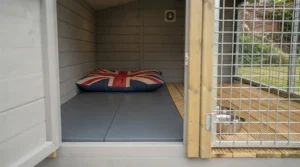
What Are Commercial Kennels Under £1000?
Commercial kennels under £1000 are individually purchased outdoor dog housing units — typically galvanised steel-framed runs or pens, sometimes roofed — bought new for licensed paid boarding, daycare or breeding use rather than large-scale purpose-built kennel blocks. They range from small, single-dog starter runs costing under £150 to larger, roofed multi-square-metre units approaching the £1000 ceiling, and they’re the standard entry route for UK home boarders and small kennel operators scaling up gradually rather than committing to a full commercial build from day one.
How to Choose Commercial Kennels Under £1000
- Check the frame gauge and coating first. A genuinely galvanised 25-32mm steel tube frame will outlast a thinner or simply painted frame by several years — this single spec matters more than almost any other feature on the listing.
- Match the footprint to your target breeds, not your budget. A run sized for small dogs will constantly limit which clients you can accept; oversizing slightly gives you flexibility as your client base develops.
- Prioritise a roof for anything used year-round. Unroofed runs are cheaper upfront but add a separate cost and a weak point where a bolt-on cover can fail in high wind.
- Look for metal ties over plastic zip ties in chain-link designs. Plastic ties are the single most commonly reported failure point in budget dog runs after 12-18 months of UV exposure.
- Confirm the lock and latch meet basic security expectations. Council inspectors will specifically check that a dog can’t self-release the door, so a flimsy pin latch is a false economy.
- Factor in assembly time realistically. Tied chain-link runs are more durable but can take a genuine half-day for two people; snap-together kits are faster but sometimes less rigid over time.
- Buy into a modular range if you plan to scale. Matched components from the same manufacturer’s range let you expand cleanly rather than ending up with an inconsistent, hard-to-maintain patchwork yard.
Licensing Requirements for Commercial Dog Kennels in the UK
Every commercial kennel purchase should be planned around your licensing position, not the other way round. Since October 2018, boarding kennels in England have been licensed under the Animal Welfare (Licensing of Activities Involving Animals) (England) Regulations 2018, which replaced the older Animal Boarding Establishments Act 1963 and introduced a single, star-rated licensing regime covering kennel boarding, home boarding, dog day care and cattery boarding. Anyone providing dog boarding for commercial gain — and several councils explicitly define this as earning more than £1,000 in income from the activity — is legally required to hold a licence before trading, regardless of how small the operation is.
Licensing fees vary by council, but home-boarding and small kennel licences typically run in a similar band to the £100-£200 first-year cost seen across pet-sitting start-up guidance, plus an annual renewal at a comparable rate. The application process involves a council inspection against detailed minimum standards — covering everything from kennel dimensions and cleaning frequency to record-keeping and staff competency — and businesses meeting higher optional standards can achieve a 4- or 5-star rating under the scheme, which is a genuinely useful marketing tool once you’re trading. It’s worth budgeting time as well as money here: inspections aren’t instant, and trading before your licence is granted is an offence under the regulations, not a grey area.
Commercial Kennel Suppliers: Where to Buy in the UK
Beyond the individual units covered above, UK buyers researching commercial kennel suppliers generally fall into three camps. General online marketplaces — Amazon UK chief among them — carry the galvanised steel run and pen products covered in this guide, and are the fastest route to a single unit or two with standard delivery timelines. Specialist online pet-equipment retailers, several of which manufacture their own modular ranges rather than reselling third-party stock, tend to offer better bulk-order pricing once you’re buying three or more matched units, along with more detailed technical specifications aimed specifically at commercial buyers rather than domestic pet owners. Finally, bespoke commercial kennel manufacturers exist for operators planning a purpose-built block from the ground up — these sit well above the £1000-per-unit bracket covered in this guide, but are worth knowing about as the natural next step once a small galvanised-run set-up has proven the business model works and you’re ready to reinvest in permanent infrastructure.
For anyone still at the comparison stage, it’s worth cross-checking supplier reputation against consumer research resources such as Which?’s guidance on choosing pet services and products, which — while not kennel-specific — offers a useful independent framework for assessing retailer reliability, returns policies and warranty terms before committing to a purchase in this price bracket.
Common Mistakes When Buying Commercial Kennels
The single most common mistake is buying for today’s dog count rather than next year’s — operators consistently under-buy floor space in year one, then face the cost and disruption of replacing units within eighteen months rather than starting with a slightly larger, modular option. A close second is skipping the roof to save money upfront, only to discover that a bolt-on aftermarket cover costs nearly as much as buying a pre-roofed unit would have, while fitting less securely. Buyers also frequently underestimate mesh gauge requirements, assuming a run rated for “medium to large dogs” will safely contain a small, determined escape artist, when the wider spacing simply isn’t built for that. Finally, plenty of first-time buyers assemble their kennels before checking local planning permission — some councils require planning consent for permanent outdoor structures above a certain size, separate entirely from the animal boarding licence, and finding this out after installation is an expensive lesson.
Benefits vs Traditional Brick-Built Kennel Blocks
| Factor | Galvanised Runs Under £1000 | Traditional Brick-Built Block |
|---|---|---|
| Upfront cost | £150-£1000 per unit | Tens of thousands upwards |
| Installation time | Hours to a half-day per unit | Weeks to months |
| Scalability | Add units incrementally | Fixed capacity once built |
| Best For | New and small-scale operators | Established, high-volume kennels |
The comparison makes the appeal of galvanised commercial kennels under £1000 fairly obvious for anyone starting out: you can begin trading, generating income and proving demand within weeks rather than the months a brick-built planning and construction process typically takes. The trade-off is longevity and weather performance at the very top end — a well-built brick block with proper insulation and drainage will typically outlast even the best galvanised run by decades — but for the first several years of a small operation, that gap in lifespan rarely justifies the enormous difference in upfront cost and commitment.
Long-Term Cost & Maintenance
Over a five-year horizon, a well-chosen galvanised run bought new for £300-£450 and properly maintained — weekly disinfection, prompt repair of any mesh damage, occasional re-tensioning of ties — typically works out at £60-£90 per year in amortised capital cost, before factoring in the far larger recurring costs of insurance, licensing renewal and daily consumables like bedding and cleaning products. Cheaper sub-£150 units bought without attention to frame gauge or coating quality often need replacing within two to three years, which can make them more expensive per year of service than a single well-specced £400 unit bought once. The clearest long-term cost lesson from comparing the seven kennels above is that spending toward the middle of the “under £1000” bracket, rather than the very bottom, is usually the better financial decision once you account for realistic replacement cycles.
✨ Ready to Compare Prices Before You Buy?
🔍 Take your kennel search further by checking current pricing and availability on the models above — retailer prices shift regularly, and a quick comparison now could save a meaningful chunk of your start-up budget.
Frequently Asked Questions
❓ Do I need a licence for a single commercial kennel under £1000?
❓ What's the minimum kennel size for commercial dog boarding in the UK?
❓ Are galvanised kennels warmer than plastic ones in winter?
❓ Can I run a small kennel business from my garden?
❓ How many dogs can I board before needing a licence?
Conclusion
Commercial kennels under £1000 genuinely are a realistic, well-trodden route into licensed dog boarding in the UK — you don’t need a purpose-built block or a five-figure loan to start legally and safely, provided you choose the right unit for your specific breed mix and business model rather than the cheapest option on the page. Of the seven covered here, the Cozy Pet DR02+Roof and Cozy Pet CR03-4 stand out as the strongest all-round value for anyone planning to scale beyond a single dog, while the PawHut Outdoor Dog Kennel 120x120x138cm remains the smartest low-risk entry point for a first-time home boarder testing the model. Whichever unit you choose, treat the licensing and insurance process as equally important as the kennel purchase itself — a brilliant run bought before your council approval is in place is still, legally, a problem rather than an asset.
✨ Don’t Miss These Exclusive Deals!
🔍 Take your commercial kennel search to the next level with the seven options covered above. Click through to check current pricing and availability before you commit, and make sure your first purchase sets your boarding business up properly from day one!
Recommended for You
- Double Dog Kennel for Breeders: 7 Brilliant Picks for 2026
- Block of Kennels vs Single Kennel for Breeders: 2026 Guide
- Whelping Kennel for Breeders: 7 Best Setups Compared
Disclaimer: This article contains affiliate links. As an Amazon Associate, I earn from qualifying purchases. If you purchase products through these links, we may earn a small commission at no additional cost to you.
✨ Found this helpful? Share it with your friends! 💬🤗
