
In This Article
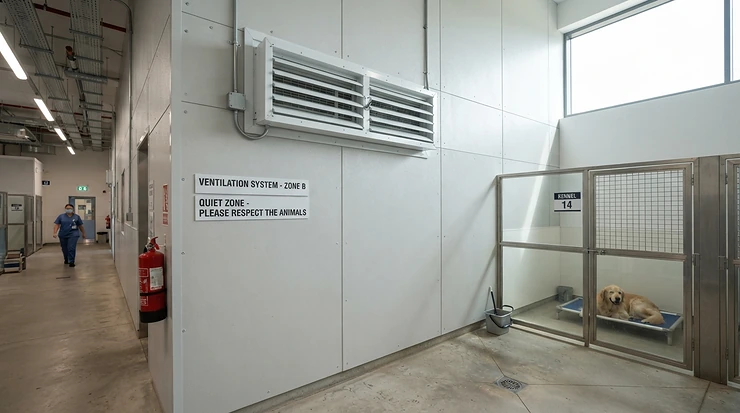
A multi-dog kennel for breeders is a housing setup that keeps several dogs in separate, secure compartments under one structure or modular system, so breeding bitches, studs, whelping mothers and growing litters each get their own space. The best versions combine divided sleeping areas, runs, easy-clean surfaces and room to expand.
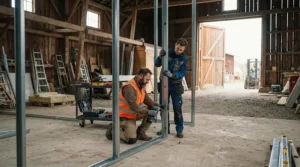
That definition sounds simple. Buying one is not. A pet owner’s kennel has to keep one dog dry. A breeder’s kennel has to keep a bitch in season away from the stud, give a whelping mother quiet, isolate a coughing puppy, and still pass an inspector’s clipboard. Miss any of those and you are patching problems rather than running a programme.
Here is the awkward truth I want to flag early. Most consumer-grade products on Amazon UK were never designed as a licensed breeding facility. The Animal Welfare (Licensing of Activities Involving Animals) (England) Regulations 2018 set the licensing framework for English breeders, and council conditions are strict about space, cleaning, temperature and permanent housing. Some products below suit small-scale, hobby-level or supporting roles. Others point towards professional-grade housing.
This guide compares seven real options for a multi-dog kennel for breeders. It also covers layouts, licensing, and how to grow without outgrowing your welfare standards. Prices are indicative bands from the listings I could find, so check the current price before buying. Where I couldn’t verify real customer reviews, I say so rather than guess.
Quick Comparison: 7 Kennel Options at a Glance
| Product | Format | Best For |
|---|---|---|
| PawHut Steel Two-Room Dog Run | Steel-mesh run, two compartments, covered | Small-scale outdoor separation |
| PawHut Fabric-Roof Two-Room Kennel | Panel run, two covered rooms, open yard | Larger outdoor exercise space |
| PawHut Double Dog Crate | Indoor furniture crate with removable divider | Short-term indoor separation |
| Ellie-Bo Folding Crate | Folding two-door wire crate | Transport, vet visits, temporary use |
| Ferplast Dogvilla | Plastic outdoor kennel house | Hygienic, weatherproof sleeping quarters |
| MIM Safe MultiCage | Crash-tested stackable vehicle kennel | Multi-dog transport to shows and vets |
| Easy Animal Thermal Kennels | UK-built insulated commercial kennels | Professional, permanent breeding housing |
Looking at this table, the first six are building blocks, while Easy Animal Thermal Kennels is the only one built as permanent commercial housing. If you are licensed, or heading that way, most of the budget picks cover supporting roles such as quarantine, transport and temporary separation. Choose by the job each product does, not by the price tag.
💬 Just one click — help others make better buying decisions too!😊
Top 7 Multi-Dog Kennel for Breeders Options: Expert Analysis
Each entry below combines real specifications, aggregated review themes where I could find them, and a view on where it fits in a breeding set-up. Nothing here is based on personal testing.
1. PawHut Steel Two-Room Dog Run — best for compact outdoor separation
The standout here is the two-room layout, which splits one footprint into separate compartments so two dogs never share space.
Listings describe an overall footprint of roughly 2.4 m by 1.2 m and 1.8 m tall, with about 3 m² of activity area. It uses 14 welded wire panels with an escape-proof latch, a powder-coated steel frame and a waterproof, UV-resistant cover. Assembly is described as a two-person job of around an hour. The stated limit is dogs up to about 30 kg.
On paper, that makes it a tidy solution for rotating a bitch and stud, or keeping a nervous dog apart. Based on the spec comparison, 3 m² split in two is tight for permanent housing of anything bigger than small breeds, so think of it as a supporting enclosure rather than your main block.
I could not verify a reliable aggregate of customer reviews for the UK listing, so treat durability claims as unconfirmed. Check recent buyer comments on cover wear and latch strength before committing.
Pros:
- ✅ Two separate compartments in one structure
- ✅ Quick assembly, roughly an hour with two people
- ✅ Powder-coated steel frame resists rust
Cons:
- ❌ Small floor area once divided in two
- ❌ Fabric cover needs removing in bad weather
Price: roughly the £250-£450 range at the time of research (check current price). Good value as a flexible add-on, weaker as a core housing system.

2. PawHut Fabric-Roof Two-Room Kennel — best for generous open run space
What sets this one apart is the yard. It pairs two covered resting rooms with a big open exercise area.
The listing gives overall dimensions of about 4.1 m by 2.9 m by 1.5 m. The covered area is roughly 3.9 m² and the open area about 8.2 m². It uses 28 welded panels, PVC-coated Oxford fabric covers, a rotating bowl rack with four bowls and a high door and eaves to deter jumping. The stated limit is dogs up to about 30 kg with a shoulder height over 25 cm. Assembly is described as a two-person job of about two hours.
What the spec sheet doesn’t say is how well fabric copes with a British winter. Fabric roofs are not insulation. For a whelping bitch or young puppies, you would need a proper heated, draught-free area elsewhere. The sheer amount of open ground does make it a useful daytime exercise block, and council guidance generally expects regular exercise for breeding dogs.
Verified reviews were thin in my research, so I can’t give you an aggregate sentiment. Look for comments on panel stability with strong dogs.
Pros:
- ✅ Large open exercise area for the footprint
- ✅ Two covered rest rooms for separation
- ✅ Bowl rack simplifies feeding routines
Cons:
- ❌ Fabric roofs offer no real insulation
- ❌ Not suited to large or powerful breeds
Price: around the £300-£500 range (check current price). Strong value for exercise and daytime use, not for whelping.
3. PawHut Double Dog Crate — best for indoor, furniture-style separation
The clever part is the removable divider. One room for a large dog, or two rooms for small ones.
Each room measures about 79 cm high, 56 cm wide and 52 cm deep, with lockable sliding doors. Listings say the single-room setup suits a dog under 60 cm long and 30 kg, while the divided setup suits small dogs under about 35 cm and 8 kg. The tabletop doubles as a side table.
Here is where honest analysis matters. Council model licence conditions say crates are not acceptable as permanent housing. A furniture crate like this is therefore a short-term tool for recovery, separation after a vet visit, or settling a single puppy. It is not a breeding housing system.
I found no verified aggregate review data, so durability claims are unconfirmed. The 6-month guarantee shown on one retailer listing is also worth noting.
Pros:
- ✅ Blends into a living room
- ✅ Divider converts one room into two
- ✅ Lockable sliding doors keep dogs secure
Cons:
- ❌ Too small for permanent breeding housing
- ❌ Small rooms limit it to toy breeds when divided
Price: roughly the £120-£220 range (check current price). Good for hobby households, poor value as breeder infrastructure.
4. Ellie-Bo Folding Crate — best for flexible, low-cost temporary separation
Its main trick is the fold-flat frame with doors on two sides. That makes it quick to deploy and store.
The crate comes in several sizes, including 24, 30 and 36 inches, with a chew-proof metal tray and double latches. The brand’s height guide helps match size to breed. The fold-flat design means you can keep spares for show days, vet trips and emergency isolation.
Reviewers consistently describe it as sturdy for the price, and some praise the double latches. Less flattering comments include a weld sliver found on assembly and a note that the tray can rust if left wet. One reviewer reported repeat faults across several units, so inspect each crate on arrival.
For breeders, this is a tool, not a kennel. Like any crate, it sits outside council definitions of permanent housing.
Pros:
- ✅ Folds flat for easy storage
- ✅ Two-door design speeds up access
- ✅ Wide size range suits different breeds
Cons:
- ❌ Tray can rust if left wet
- ❌ Some reviewers report weld or finish flaws
Price: around £40-£90 depending on size (check current price). Excellent value for temporary jobs.
5. Ferplast Dogvilla — best for hygienic, weatherproof sleeping quarters
The plastic body is the selling point. It wipes clean, resists rot and avoids the repainting wooden kennels demand.
It comes in three sizes. Inside dimensions are roughly 62 by 43 by 45 cm for the 70, 75 by 55 by 55 cm for the 90, and 95 by 66 by 68 cm for the 110. An adjustable ventilation lever, an aluminium-reinforced entrance and a fold-down side wall add practical touches. A separate insulation panel kit exists for the 110.
Reviewers on the retailer listing frequently praise waterproofing and easy cleaning. Common complaints include sizing confusion, because the quoted size can be external rather than internal, and occasional missing pieces on delivery. Read the interior dimensions carefully before ordering.
For breeders, it works as a sleeping shelter inside a larger secure run. It is not a whelping solution and is not a full multi-compartment system.
Pros:
- ✅ Plastic surfaces wipe clean fast
- ✅ Adjustable vents for hot days
- ✅ Insulation panel kit available separately
Cons:
- ❌ Single-dog shelter, not a compartment system
- ❌ Sizing can confuse buyers
Price: around £100-£200 depending on size (check current price). Good value as modular sleeping quarters.

6. MIM Safe MultiCage — best for crash-tested multi-dog transport
This is the only entry designed around vehicle safety, with crash testing at RISE Research Institutes of Sweden.
It is stackable, and brackets can lock units together. The double version has doors at both ends and a removable partition. Retractable carry handles and ratchet-strap fixing are included. The large single measures roughly 73 by 61 by 61 cm inside. The XL is roughly 88 by 74 by 75 cm.
Breeders travel more than most owners: stud trips, vet runs, shows, puppy handovers. A crash-tested multi-dog transport system answers a real welfare and liability question. Based on the spec comparison, this is the most specialised product here, and priced accordingly.
I could not verify UK-specific review data or UK pricing, since the listing I found was a North American retailer. Confirm UK availability and delivery before planning around it.
Pros:
- ✅ Crash-tested design for vehicle use
- ✅ Stackable and linkable for multiple dogs
- ✅ Partition converts one cage into two
Cons:
- ❌ Premium price likely
- ❌ UK availability needs checking
Price: likely well above £800 per unit based on overseas listings (check current price). Worth it only if you travel with multiple dogs regularly.
7. Easy Animal Thermal Kennels — best for professional, permanent housing
This is the benchmark of the list: UK-built, insulated commercial kennels aimed at breeders, boarding kennels and charities.
The Staffordshire manufacturer describes thermal kennel systems with high-security locks and construction designed for longevity across breeds. I could not find published specifications or verified customer reviews in my research, so I can’t give you dimensions or sentiment. Request those directly.
Their relevance is straightforward. Insulated, purpose-built housing speaks to the temperature, durability and cleaning requirements that licensing conditions emphasise. This is the route for a professional dog breeding kennel, and it is typically a quote-based purchase, not an Amazon basket item. Do not expect an Amazon listing.
Pros:
- ✅ Purpose-built for commercial breeding use
- ✅ Insulated design suits British weather
- ✅ UK manufacturer simplifies support and delivery
Cons:
- ❌ Quote-based pricing, no published figures
- ❌ Longer lead times than off-the-shelf products
Price: not published; expect a significant investment (request a quote). Best long-term value for serious, licensed operations.
Top 7 Specification Comparison
| Product | Approx. Size | Housing Type | Best For |
|---|---|---|---|
| PawHut Steel Two-Room Dog Run | 2.4 m × 1.2 m | Outdoor run | Small breeds, rotation |
| PawHut Fabric-Roof Two-Room Kennel | 4.1 m × 2.9 m | Outdoor run | Daytime exercise |
| PawHut Double Dog Crate | 56 cm wide rooms | Indoor crate | Short-term separation |
| Ellie-Bo Folding Crate | 24″-36″ options | Folding crate | Transport, vet visits |
| Ferplast Dogvilla | 62-95 cm interior length | Plastic kennel | Sleeping shelter |
| MIM Safe MultiCage | 73-88 cm interior length | Vehicle cage | Car travel |
| Easy Animal Thermal Kennels | Quote-based | Insulated kennel | Permanent housing |
The table makes the division clear: three products are outdoor or sleeping spaces, two are crates, one is transport and one is professional housing. Nobody should expect a single purchase to cover all roles. A realistic breeder’s system uses a permanent core and cheaper supporting pieces around it.
✨ Don’t Miss These Carefully Selected Options!
🔍 Take your kennel planning to the next level with the products above. Click on any highlighted item to check current pricing and availability. These tools will help you build a calmer, safer, better-organised set-up for your dogs!

Kennel System for Breeders: Building a Modular Layout
A kennel system for breeders works best when you treat it like a small campus rather than a single building. Different zones do different jobs: breeding, whelping, quarantine, exercise, and transport. The art is connecting them so dogs move between zones without chaos.
Start with the flow. Dogs should be able to move from sleeping quarters to run to exercise yard without being carried through areas where other dogs are housed. Council guidance emphasises avoiding stress from visual and physical contact between dogs, which is why separate compartments and visual barriers matter.
Here is how the modular approach might look in practice:
- Core sleeping block: insulated, draught-free units such as Easy Animal Thermal Kennels.
- Supplementary shelters: plastic units like the Ferplast Dogvilla for outdoor rest zones.
- Exercise areas: panel runs such as the PawHut Fabric-Roof Two-Room Kennel.
- Temporary separation: the Ellie-Bo Folding Crate for short, supervised use only.
- Transport: the MIM Safe MultiCage for vehicle travel.
The strength of a kennel system for breeders is replaceability. If one component fails, you swap it instead of rebuilding. Weakness appears when components don’t connect: gaps between panels, mismatched heights and awkward gates quickly become escape routes.
Professional Dog Breeding Kennel: What “Professional” Really Means
A professional dog breeding kennel is defined less by price than by evidence. Can you show temperature records, cleaning logs, health checks and clear separation of dogs? That is what inspectors and responsible buyers look for.
The Kennel Club’s Assured Breeders scheme is a useful benchmark. It requires a breeder assessment visit every three years, and its rules cover where puppies are raised, health testing and local authority licensing. Even if you never join, reading those requirements is a free education in what “professional” looks like.
Three markers matter most:
- Environment: dry, draught-free, ventilated housing with monitored temperatures.
- Records: whelping logs, health checks, microchip details and breeding history kept current.
- Welfare outcomes: dogs that are handled regularly, exercised properly and visibly relaxed.
Honest analysis suggests that a polished kennel can still fail on routine. A basic run with excellent daily care beats a shiny block with sloppy cleaning. Equipment helps, but process proves professionalism.
Multi-Compartment Breeder Kennel: Layout, Dividers and Whelping Zones
A multi-compartment breeder kennel splits space into units that can be opened or closed as needed. Dividers, sliding hatches and shared runs let you reconfigure for each stage of the breeding cycle.
The best layouts solve these problems:
- Heat cycles: keep a bitch in season physically and visually separate from males until you plan a mating.
- Whelping: give the mother a quiet, warm, easily accessible whelping area. Council conditions typically expect direct access for staff without disturbing the wider kennel.
- Puppy stages: move from whelping box to larger pen as litters grow, with surfaces that clean fast.
- Isolation: reserve at least one compartment for quarantine so illness doesn’t sweep through the block.
Dividers matter. A solid divider blocks visual contact, which helps with stress and territorial behaviour. A mesh divider allows social contact but invites barking. Many breeders choose solid dividers between unrelated or incompatible dogs and mesh between friendly pairs.
The PawHut Steel Two-Room Dog Run and the PawHut Fabric-Roof Two-Room Kennel show the principle at small scale, though neither replaces a purpose-built block. Their main lesson: compartments are only useful if each one is big enough for the dog inside it.
How to Choose a Multi-Dog Kennel for Breeders
Here are seven steps for choosing a multi-dog kennel for breeders, in order of priority:
- Check legal status first. Confirm whether your breeding activity needs a licence, since licensing conditions shape everything else.
- Measure your largest dog. Council conditions expect dogs to stand, turn, wag their tails without touching the sides and lie down without touching another dog.
- Define the job. Sleeping, exercise, whelping, quarantine and transport each need different features.
- Prioritise surfaces. Smooth, impervious, non-porous materials clean faster and harbour fewer germs.
- Plan for temperature. Choose insulated or heatable options for whelping and puppies, with a way to record temperatures at dog level.
- Test security. Latches, door strength and panel rigidity matter more than looks.
- Allow for growth. Pick systems that can add units rather than require replacement.
If a product fails step 1 or 2, nothing else matters. Many budget products fail on step 3, because they are excellent at one job and weak at the rest.
Practical Setup Guide: Your First 30 Days
Buying the kennel is the easy bit. Making it work is where the value is.
Week 1: Site and base. Choose level, well-drained ground. Concrete or compacted hardcore with a slight fall makes washing out far easier than grass or loose gravel. Position runs away from prevailing wind where possible.
Week 1: Assembly. Build panel kennels exactly to the manual, then walk the perimeter pulling at every joint. Gaps wider than a puppy’s skull are hazards.
Week 2: Dog introduction. Let dogs explore with doors open and meals nearby. Never use a new kennel as punishment. Zooplus guidance for kennels makes the same point: introduce the space slowly and gently.
Week 2-4: Routine. Set a daily cleaning slot. Council model conditions require every occupied kennel to be cleaned at least daily. Add temperature checks and a short written log.
Common mistakes in the first 30 days:
- Oversized shelters that let dogs get cold
- Forgetting drainage, so runs turn into mud
- Leaving fabric covers on in storms, which the manufacturer advises against for the PawHut Steel Two-Room Dog Run
- Skipping insulation, even though kits exist for the Ferplast Dogvilla
Get the basics right in month one and the rest of the year gets easier.
Real-World Scenarios: Matching Kennels to Breeder Profiles
Numbers are abstract. People are not. Here are three typical breeder profiles and how the options fit.
Profile 1: The hobby breeder with one bitch and one litter a year. Space is limited, budget is modest, and licensing may not apply. A Ferplast Dogvilla in a secure run, a Ellie-Bo Folding Crate for vet visits and a simple whelping area indoors cover the basics. Keep spending low, and focus on supervision.
Profile 2: The growing breeder with three bitches and a stud. Several litters a year could trigger licensing. Here, a core of insulated housing becomes sensible. Add a PawHut Fabric-Roof Two-Room Kennel as exercise space and a MIM Safe MultiCage if you travel regularly. Budget in the high hundreds to low thousands.
Profile 3: The established licensed breeder. Inspectors, buyers and the Kennel Club scheme all expect consistent standards. Easy Animal Thermal Kennels or an equivalent professional system forms the backbone. Cheaper products fill support roles. Think in terms of total system cost, not unit price.
In each case, the lesson is the same: match the kennel to the stage of the business, not to the stage you wish you were at.
Problem → Solution: Fixing Common Kennel Headaches
Every breeder hits these. Here are practical fixes.
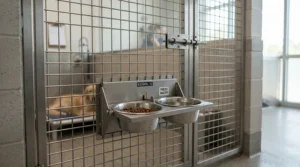
Problem 1: Dogs fight through dividers. Replace mesh with solid panels, or add a visual barrier. Visual stimulation is a common trigger.
Problem 2: Runs stay wet and smell. Improve drainage, add a slope and use a smooth surface. Wet bedding also loses heat quickly.
Problem 3: Puppies get cold. A fabric roof won’t hold heat. Use an insulated whelping area, and monitor temperature at dog level.
Problem 4: Escape artists. Check latch design, add secondary clips, and watch for climbing. A reviewer of a large kennel mentioned an escape-prone dog being stopped by height and cover, which shows how much roofing and height matter.
Problem 5: Rust on trays and hinges. Dry trays after cleaning. Reviewers of the Ellie-Bo Folding Crate note rust risk when trays stay wet.
Most kennel problems are design problems in disguise. Fix the system, not the symptom.
Kennel Licensing Considerations: What Breeders in England Should Know
Kennel licensing considerations should come before you buy anything. A kennel that looks perfect can still be unsuitable if it doesn’t fit the licence conditions your council applies.
In England, the 2018 Regulations created a single licence system, with general conditions in Schedule 2 and breeding-specific conditions in Schedule 6. Licensing is aimed at those breeding and selling dogs as a business, and the criteria include advertising a business of selling dogs. Thresholds and exemptions are detailed, so check your council’s guidance and the legislation itself rather than rely on a summary. Wales has its own rules under the Animal Welfare (Breeding of Dogs) (Wales) Regulations 2014, and Scotland and Northern Ireland have separate regimes.
Council conditions I reviewed repeatedly emphasise:
- Space: dogs must be able to move, turn and lie down comfortably.
- Construction: secure, impact-resistant doors and safe materials.
- Roofing: runs at least partially roofed against the weather.
- Heating and temperature: heating available, with temperatures at dog level monitored and recorded.
- Cleaning: every occupied kennel cleaned at least daily.
- Crates: not acceptable as permanent housing.
That last point is crucial for anyone tempted to treat the Ellie-Bo Folding Crate or PawHut Double Dog Crate as a housing solution.
Phone your local authority licensing team early. Inspectors can tell you what they expect before you spend. Licensing considerations also affect scaling: more dogs may mean different conditions, so plan ahead.
Scaling Kennel Capacity Without Losing Welfare Standards
Scaling kennel capacity is exciting and risky in roughly equal measure. More dogs mean more income, but also more cleaning, more records and more things that can go wrong.
A sensible growth plan looks like this:
- Fix routines first. If cleaning, feeding and health checks are already slipping at your current size, adding dogs makes it worse.
- Add in stages. Increase capacity by one compartment or one dog at a time, not in jumps.
- Check licence conditions. Larger operations may face different expectations from the council.
- Hire help before you need it. Staffing is capacity too.
- Keep a quarantine buffer. Never fill every compartment.
Modular products make staged growth easier. A PawHut Fabric-Roof Two-Room Kennel can add exercise space, while Easy Animal Thermal Kennels can add permanent housing. Compare that with traditional built blocks, which are cheaper per dog in the long run but slower to expand.
| Factor | Modular Systems | Traditional Built Kennel Block |
|---|---|---|
| Upfront cost | Lower, spread over time | Higher, usually one project |
| Speed to expand | Fast | Slow |
| Insulation | Varies; premium ranges insulated | Usually excellent |
| Flexibility | High | Low |
| Best For | Growing breeders | Established, stable operations |
In my analysis, modular systems win for growth and flexibility, while traditional blocks win on long-term durability. Many breeders end up combining both.
Long-Term Cost & Maintenance
A cheap kennel can become expensive. A dear one can pay for itself. The way to tell is total cost of ownership.
Think about:
- Replacement cycles: fabric covers, trays and latches wear out faster than frames.
- Cleaning time: smooth plastic and steel save minutes every day. Over years, that is real money.
- Energy costs: poorly insulated housing needs more heating.
- Downtime: broken or inadequate equipment can disrupt breeding schedules.
| Tier | Example Products | Indicative Band | Best For |
|---|---|---|---|
| Budget | Ellie-Bo Folding Crate, PawHut Double Dog Crate | Under £250 | Temporary and indoor use |
| Mid-range | PawHut Steel Two-Room Dog Run, PawHut Fabric-Roof Two-Room Kennel, Ferplast Dogvilla | £100-£500 | Outdoor runs and shelters |
| Premium | MIM Safe MultiCage, Easy Animal Thermal Kennels | £800 and above, or quote-based | Transport and permanent housing |
The table suggests mid-range products offer the best entry point, but premium options usually reward serious, long-term breeders. A £150 shelter that lasts three winters costs less per year than a £60 one replaced annually. Run the sums on your own timeline.
Common Mistakes When Buying a Multi-Dog Kennel for Breeders
Even experienced breeders slip up. Watch for these.
Treating crates as housing. Council model conditions say crates are not permanent housing. Using them that way risks failing an inspection and, more importantly, harms the dogs.
Buying for today’s dog count. If you plan to grow, buy for the dogs you’ll have in two years.
Ignoring interior dimensions. Reviewers of the Ferplast Dogvilla note confusion between external and internal sizes. Always measure interior space against your largest dog.
Skipping insulation. Fabric and thin panels don’t hold heat. Puppies and whelping bitches suffer first.
Forgetting the paperwork. Equipment is only part of compliance. Guidance for councils, such as this breeding dogs guidance document hosted by Fareham Borough Council, outlines the conditions inspectors apply to breeding dogs in England. Read it before you build.
Chasing the cheapest option. Price matters, but a failed latch or collapsed panel costs more than the saving.
Avoid these and you avoid most regrets.

FAQ
❓ How big should a multi-dog kennel for breeders be per dog?
❓ Can I use crates for breeding dogs permanently?
❓ Do I need a licence for kennel licensing considerations as a small breeder?
❓ What is the best way of scaling kennel capacity safely?
❓ Are insulated kennels worth it for breeders?
Conclusion
Choosing a multi-dog kennel for breeders is really about choosing a system. No single product on this list does everything. The PawHut Steel Two-Room Dog Run and PawHut Fabric-Roof Two-Room Kennel shine as flexible outdoor spaces. The Ferplast Dogvilla gives hygienic, weatherproof shelter. The Ellie-Bo Folding Crate and PawHut Double Dog Crate are handy short-term tools. The MIM Safe MultiCage solves travel safely. Easy Animal Thermal Kennels point towards a professional dog breeding kennel built to last.
My overall view, based on specs, licensing conditions and the review themes I could verify, is simple. Start with the legal framework, then size for your biggest dog, then build a modular system you can grow. Treat licensing as your design brief, not an afterthought. Spend where it protects welfare, and save where the job is temporary.
Take it one compartment at a time, and your kennel will grow as calmly and carefully as your programme does.
Recommended for You
- Heavy Duty Breeding Kennels: 7 Best Picks For UK Breeders (2026)
- Double Vs Triple Dog Kennel: 7 Best Picks For UK Owners (2026)
- Kennel For Breeding Dogs: 7 Essential Picks For UK Breeders (2026)
Disclaimer: This article contains affiliate links. As an Amazon Associate, I earn from qualifying purchases. If you purchase products through these links, we may earn a small commission at no additional cost to you.
✨ Found this helpful? Share it with your friends! 💬🤗
