
In This Article
There’s a particular kind of stress that comes with waiting on a due date. You’ve done the health screening, booked the vet on standby, packed the whelping kit — and then you look at the flimsy cardboard box you’d half-planned to use and think, “is this actually good enough?” For most litters, the honest answer is no.

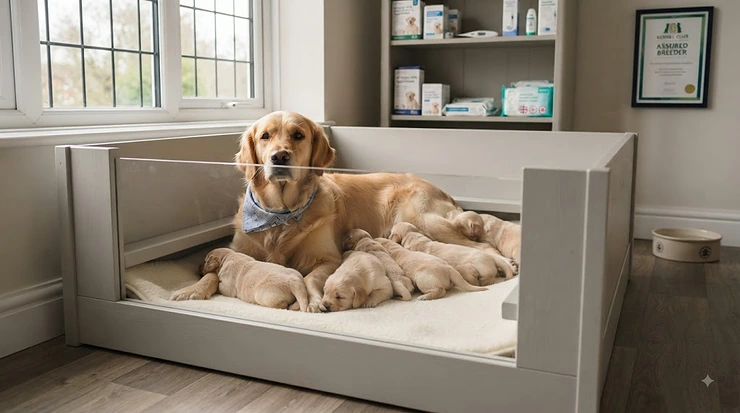
A whelping kennel for breeders isn’t just somewhere for the birth itself. It’s the environment that puppies will spend their first four to six weeks inside, during the single most physically vulnerable stretch of their entire lives. According to the entry on whelping boxes on Wikipedia, a good whelping box needs to keep puppies safely contained, protected from cold, and safe from the risk of being crushed by the mother — three separate jobs that a cardboard box or a spare dog bed simply isn’t built to do at once.
Get the kennel right and you’re giving the litter a controlled, hygienic, temperature-stable start. Get it wrong, and you’re managing chills, escapes, and hygiene problems on top of everything else whelping already throws at you. This guide covers seven real whelping kennels and boxes sold through amazon.co.uk, what their construction actually means for a litter day to day, and how to match a setup to your breed, litter size, and how many times a year you’re likely to use it.
Quick Comparison: 7 Best Whelping Kennels for Breeders at a Glance
Here’s the shortlist before the full breakdown — useful if you already know roughly what you need and just want to compare the headline differences.
| Kennel | Material | Best For | Price Range |
|---|---|---|---|
| Warwick Whelping Boxes Deluxe Whelping Box | Reusable PVC | Repeat breeders, professional setups | £90-£220 |
| BingoPaw Wooden Dog Whelping Box | MDF + tempered glass | Visibility and hygiene together | £70-£140 |
| PawHut Whelping Box for Dogs (2m x 1m Two-Room) | Pine wood + acrylic | Larger litters, mum’s own space | £100-£180 |
| PawHut Dog Whelping Box (100 x 96cm) | Pinewood + MDF + acrylic | Compact spaces, medium breeds | £60-£110 |
| BingoPaw Dog Playpen Heavy Duty (126 x 126cm) | Reinforced plastic panels | Large litters, giant breeds | £50-£100 |
| Yaheetech 8-Panel Modular Dog Playpen | Powder-coated metal | Flexible sizing, budget setups | £35-£75 |
| PawHut Electric Whelping Box Heat Pad | Thermostatic heat pad | Temperature control add-on | £20-£45 |
The pattern here is fairly clean: Warwick Whelping Boxes Deluxe Whelping Box sits at the professional end because it’s built by a UK specialist purely for this job and made to order for repeated use, while Yaheetech’s modular panels and the PawHut heat pad give budget-conscious or first-time breeders a genuine, functional setup without the outlay of a purpose-built professional kennel. The middle of the table — the two PawHut boxes and the BingoPaw options — is where most UK hobby and small-scale breeders will land, balancing hygiene, visibility, and price. As always, treat the figures above as ranges only; check the current listing for exact pricing, since it shifts by size, colour, and seller.
💬 Just one click — help others make better buying decisions too!😊
The 7 Best Whelping Kennels for Breeders: Full Expert Breakdown
1. Warwick Whelping Boxes Deluxe Whelping Box — professional-grade reusable PVC built to order
This is the one genuinely purpose-built product on the list, made by a small UK business that does nothing but whelping equipment. The standout feature is the material: rigid, reusable white PVC rather than wood or MDF, flat-packed for storage and assembled without tools between litters.
That PVC construction does real practical work for anyone whelping more than once a year. Wood and MDF absorb moisture and odour over repeated use no matter how carefully you clean them, while PVC wipes down and disinfects properly between litters — a meaningful difference for a licensed breeder facing regular inspection standards. The box includes removable puppy rails around three sides (the raised ledges that stop a puppy being pinned against the wall if the mother rolls), and a three-stage removable doorway that opens up as the litter grows more mobile.
Based on the spec sheet, this is built specifically for breeders who’ll use the same kennel across multiple litters rather than a single one-off birth — the made-to-order sizing and the flat-pack storage both only pay off with repeat use. Aggregated feedback on the brand’s other whelping products commonly praises the sturdiness and completeness of what’s included, with a recurring note that turnaround can take longer than off-the-shelf alternatives since each box is made to order.
Pros:
- ✅ Reusable PVC wipes clean and disinfects properly
- ✅ Removable puppy rails and a three-stage doorway
- ✅ Flat-packed for compact off-season storage
Cons:
- ❌ Made-to-order lead time longer than stocked alternatives
- ❌ Among the pricier options for a single, occasional litter
At roughly £90-£220 depending on size, it’s the strongest long-term value pick for anyone breeding regularly rather than a single litter and then storing the kennel away for good.
2. BingoPaw Wooden Dog Whelping Box — tempered-glass panels for hygiene and visibility together
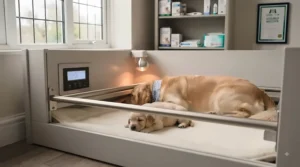
The standout feature here is genuinely unusual for the category: tempered glass panels combined with an MDF frame, rather than the solid wood or acrylic sheeting most competitors use. That glass is four times stronger than standard glass according to the manufacturer, and it means you can see straight into the box from any angle without opening a door.
In practical terms, that visibility matters more during whelping than it sounds like it would. Being able to watch a mother settle, count and check on puppies, or spot early signs of distress without disturbing the box by opening a panel reduces unnecessary handling during a period when minimal disturbance genuinely helps. The box also includes a raised protective ledge along the base — a version of the pig-rail principle — designed to stop puppies being trapped against the sides if the mother shifts position.
What most buyers overlook about glass-panel construction is the cleaning advantage: glass doesn’t absorb odour or stain the way MDF or wood does over a full litter’s stay, so hygiene between uses is genuinely easier. Reviewers commonly note the strength of the tempered panels and the overall stability of the frame, with a recurring caveat that the glass adds noticeable weight compared with acrylic or fabric alternatives.
Pros:
- ✅ Tempered glass panels for full visibility without disturbance
- ✅ Raised protective ledge reduces crushing risk
- ✅ Glass resists staining and odour better than MDF alone
Cons:
- ❌ Heavier and less portable than fabric or acrylic boxes
- ❌ Premium construction pushes it above basic budget options
Priced around £70-£140, it’s a strong mid-to-upper option for breeders who want to monitor the litter closely without constantly opening the box.
3. PawHut Whelping Box for Dogs (2m x 1m Two-Room Design) — a genuine retreat space for mum built in
The standout feature is right there in the name: a two-room layout, with three removable doors including a middle panel that lets you open or close access between a puppy area and a separate space for the mother. That second room matters more than it might sound, particularly once puppies pass around the two-week mark and become mobile enough that a mother genuinely benefits from somewhere to step away to.
Constructed from pine wood with panel railings for strength, the box includes a fenced side for ventilation and airflow, and panelled sides on the opposite end to block draughts — a sensible compromise between keeping the space open enough to monitor and sheltered enough to stay warm. Non-slip pads underneath keep the whole structure stable on hard flooring, which matters given the overall footprint at roughly two metres by one metre.
Here’s what to weigh honestly: at this size, it’s built for medium-to-large litters or bigger breeds rather than a single toy-breed puppy or two, and the wood-panel construction means cleaning between litters takes more effort than a wipeable PVC or acrylic surface. Reviewers commonly highlight the two-room concept as genuinely useful once puppies start weaning, with some noting that assembly, while straightforward, takes a bit longer than the smaller single-room alternatives.
Pros:
- ✅ Dedicated second room gives the mother a retreat space
- ✅ Ventilated fencing on one side, panelled shelter on the other
- ✅ Non-slip pads keep the structure stable on hard floors
Cons:
- ❌ Wood panels need more thorough cleaning between litters
- ❌ Larger footprint needs a genuinely spacious room
At around £100-£180, it’s a sensible pick for breeders expecting a fuller litter or a larger breed who want the option of separating mother and puppies as the weeks go on.
4. PawHut Dog Whelping Box (100 x 96cm) — the easiest whelping box to fit in a spare room
Where the two-room PawHut box above is built for scale, this is the brand’s answer for breeders working with a smaller footprint. The standout feature is the compact 100 x 96cm size paired with an adjustable entrance, using two removable panels that secure puppies inside while still giving the mother easy, controlled access.
Built from pinewood and MDF with acrylic viewing panels, the box gives a wind-resistant, stable structure without needing a spare room’s worth of floor space — a genuine consideration for breeders whelping at home rather than in a dedicated outbuilding. The acrylic panels let you keep an eye on the litter from outside the box, similar in principle to the glass panels on the BingoPaw option above, just in a lighter and more affordable format.
On paper, this suits medium breeds and smaller litters best, given the compact interior once the puppy safety features are accounted for. Aggregated reviewer sentiment tends to focus on how manageable the assembly and footprint are compared with the larger boxes on this list, with the honest trade-off being less usable floor space per puppy once a litter grows past five or six.
Pros:
- ✅ Compact footprint suits smaller rooms
- ✅ Adjustable two-panel entrance for controlled access
- ✅ Acrylic panels allow visual monitoring without opening the box
Cons:
- ❌ Tighter interior space for larger litters
- ❌ Best suited to medium rather than giant breeds
At roughly £60-£110, it’s a solid entry point for breeders of medium-sized dogs who need genuine structure without dedicating a full room to it.
5. BingoPaw Dog Playpen Heavy Duty (126 x 126cm) — the biggest footprint on this list for large litters
The standout feature is scale: at 126cm by 126cm with 80cm-high sides, this is the largest usable floor area among the seven kennels here, built from reinforced plastic panels rather than wood or metal mesh. For giant-breed litters, or simply large litters from a prolific breed, that extra floor space genuinely reduces overcrowding as puppies grow through their first month.
The panel construction includes a waterproof fertility mat included as standard, which matters given how much fluid and mess a whelping period genuinely generates. Reviewers commonly cite the sturdiness of the reinforced plastic compared with lighter playpen alternatives, and the manufacturer notes the panels can double as a general exercise pen once the puppies are weaned and mobile — useful if you don’t want a single-purpose product taking up storage space for the rest of the year.
Based on the spec comparison with the rest of this list, this sits closer to a heavy-duty playpen than a fully enclosed whelping box, which is a genuine trade-off: the open-panel design gives excellent airflow and visibility, but offers less draught protection than the panelled sides on options like the PawHut Two-Room box. Pairing it with a supplementary heat source, such as the PawHut Electric Whelping Box Heat Pad, is worth planning for if your whelping room isn’t consistently warm.
Pros:
- ✅ Largest floor area of any option on this list
- ✅ Waterproof fertility mat included as standard
- ✅ Reinforced plastic panels double as a general exercise pen later
Cons:
- ❌ Less draught protection than fully panelled wooden boxes
- ❌ Best paired with a separate heat source in cooler rooms
Typically priced around £50-£100, it’s a strong value pick specifically for large litters or giant breeds where floor space matters more than enclosed insulation.
6. Yaheetech 8-Panel Modular Dog Playpen — reconfigurable panels that grow with the litter
Yaheetech’s modular playpen system is the most flexible option here by design. The standout feature is the panel-based construction: eight connectable sections that can be arranged into a square, rectangle, or octagon, and expanded by adding extra panel sets as the litter grows and needs more room.
Made from powder-coated, anti-rust metal tubing, the panels are genuinely built for repeated indoor and outdoor use, connecting via metal anchor stakes with rounded edges to protect both puppies and flooring. What most buyers overlook about modular metal playpens is that they’re rarely marketed as whelping-specific, but they’re a longstanding, practical choice among breeders precisely because the reconfigurable size means one purchase can serve a toy-breed litter of three just as easily as a larger litter, simply by adding or removing panels.
Here’s the honest trade-off: unlike the fully enclosed PawHut or BingoPaw boxes, open metal panels offer no draught protection and only minimal privacy, so they suit a genuinely warm, draught-free room rather than an unheated outbuilding. Reviewers consistently note the ease of assembly and flexibility in reshaping the pen, with recurring feedback that a solid floor liner and separate bedding are essential additions, since the panels themselves have no base.
Pros:
- ✅ Reconfigurable panels adapt to litter size
- ✅ Rust-resistant metal construction for repeated use
- ✅ Doubles as a general puppy exercise pen later
Cons:
- ❌ No draught protection — needs a genuinely warm room
- ❌ No base included, so flooring and bedding are separate purchases
At around £35-£75 for a starter set, it’s one of the most budget-friendly ways to get a genuinely durable, reusable containment structure, provided your whelping room is warm enough on its own.
7. PawHut Electric Whelping Box Heat Pad — dedicated thermostatic temperature control
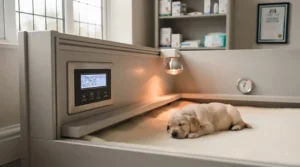
Not a kennel itself, but arguably the single most important accessory on this list: newborn puppies can’t regulate their own body temperature for the first couple of weeks, and this heat pad is built specifically to sit underneath a whelping box or bedding to provide that support. The standout feature is the thermostatic control, which keeps the pad at a consistent, safe temperature rather than the fixed, unregulated heat of a basic mat.
Running on a low-voltage 12V DC supply for safety, the pad is designed to sit under bedding rather than in direct contact with puppies, with a machine-washable plush cover over a waterproof coating that wipes clean easily. That combination — low-voltage safety plus thermostatic regulation — directly addresses the two biggest risks with DIY heating solutions like hot water bottles or unregulated mats: electric shock risk and overheating.
What most buyers overlook is that a heat pad is a supplement to environmental warmth, not a replacement for a warm room — it’s designed to give puppies a spot to gravitate toward if they get cold, with an unheated area always available so they can move away if they get too warm. Aggregated reviewer sentiment commonly highlights the low, gentle heat output and easy-clean cover, with some buyers noting the pad works best paired with a thick layer of bedding between the pad and the puppies rather than direct contact.
Pros:
- ✅ Thermostatically controlled for consistent, safe heat
- ✅ Low-voltage 12V design reduces electric shock risk
- ✅ Washable, wipeable cover for easy hygiene
Cons:
- ❌ Needs bedding between the pad and puppies, not direct contact
- ❌ A supplement to room heating, not a standalone solution
At roughly £20-£45, it’s a genuinely low-cost addition to almost any of the six kennels above, and arguably the single highest-value item on this list for the money.
Setting Up a Whelping Kennel: A Step-by-Step Practical Guide
Start the setup at least a week before the due date, not the night before — mothers benefit from settling into the whelping area gradually rather than being introduced to it mid-labour. Place the kennel somewhere quiet, draught-free, and away from household foot traffic, ideally a room that can be closed off from other pets.
Line the base with a supportive, absorbent layer before adding any soft nesting material on top — a firm, textured surface underneath actually matters for puppy development, since a completely flat, slippery floor has been linked to poor traction and joint strain in growing puppies. Add your chosen heat source, positioned under one section only rather than the whole floor, so the mother and puppies can always move away from the heat if they choose to. Test the temperature with a proper thermometer before the puppies arrive rather than guessing by hand.
In the first week, expect to change bedding and wipe down surfaces at least once or twice daily — newborn litters are genuinely messy, and hygiene during this period materially affects infection risk. From week two onward, as puppies become mobile, raise or adjust any doorway panels to prevent early escapes, and begin introducing a designated toileting area at the far end of the kennel, since puppies naturally start moving away from their sleeping area to relieve themselves from around three weeks old.
A common mistake in the first fortnight is disturbing the box too often for photos or visitors — minimal handling during the earliest days genuinely helps a mother settle and reduces stress-related complications.
Real Breeders, Real Litters: Matching the Kennel to the Situation
Scenario one: the first-time hobby breeder with one planned litter. A single litter, a spare room, and no plan to breed again for several years. Here, a budget-conscious combination like the Yaheetech 8-Panel Modular Dog Playpen paired with the PawHut Electric Whelping Box Heat Pad makes practical sense — genuinely functional, reusable for general pet containment afterwards, and without the cost of a purpose-built professional kennel you’ll only use once.
Scenario two: the licensed breeder producing two to three litters a year. For someone meeting the UK’s licensing thresholds and facing regular inspections, durability and hygiene matter more than upfront cost. A setup like the Warwick Whelping Boxes Deluxe Whelping Box — wipeable PVC, reusable, made to the breeder’s own sizing — earns its higher price back over several litters, and its ease of cleaning matters directly for meeting welfare standards.
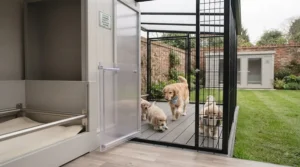
Scenario three: the giant-breed breeder expecting a large litter. A Mastiff or Great Dane litter of ten or more puppies needs floor space above almost everything else. The BingoPaw Dog Playpen Heavy Duty, with its larger footprint and included waterproof mat, suits this situation better than a compact box designed around a five- or six-puppy litter — paired with a reliable heat source, since the open-panel design offers less built-in insulation than a fully enclosed wooden box.
Insulated Whelping Box vs Standard Whelping Box: Is Insulation Worth It?
This is a genuinely important distinction, and it’s easy to conflate the two categories when shopping. A standard whelping box — including most of the wood, PVC, and acrylic options above — relies on the room around it for warmth, supplemented by a heat pad or lamp positioned under part of the box. A true insulated whelping box, more commonly found through specialist outdoor kennel suppliers than general retailers, is built with an insulated panel core (often a foam-filled or thermoboard construction) designed to hold heat within the structure itself, largely independent of the surrounding room.
For most breeders whelping indoors, in a heated house or flat, a standard box paired with a proper thermostatic heat source — like the PawHut Electric Whelping Box Heat Pad — genuinely does the job, since the room itself provides the baseline warmth an insulated shell would otherwise need to hold onto. Where true insulation earns its cost is outdoor kennel blocks and unheated outbuildings, where ambient temperature can swing dramatically overnight and a standard box has nothing to fall back on between heat-pad cycles.
The practical takeaway: don’t assume “orthopaedic-style” marketing language around thickness or padding means genuine thermal insulation — check specifically whether a product is described as insulated or simply padded. If you’re whelping in an unheated space, prioritise either a genuinely insulated structure or a well-heated room over a standard box alone, since puppies under two weeks old can develop hypothermia surprisingly quickly if the ambient temperature drops unexpectedly.
Whelping Box Temperature Control: Getting It Right From Day One
Temperature control is arguably the single area where breeders most commonly under- or over-correct, and it’s worth getting genuinely precise about rather than working from vague guesswork. According to Royal Canin UK’s guidance on puppy development, newborn puppies need to be kept at a specific temperature — roughly 29.5°C to 32°C in the first days, easing down to around 26.7°C by seven to ten days — in a well-aired space that’s neither draughty nor stuffy.
In practice, this means using a proper digital thermometer inside the whelping kennel rather than judging warmth by hand, positioning a thermostatic heat source under one section only so puppies and the mother can move away from the heat if they get too warm, and adjusting the target temperature gradually downward roughly every one to two weeks as the puppies’ own ability to regulate body heat improves. Reviewers of most heat-pad products consistently flag that direct puppy contact with an unshielded heat source is a genuine risk, which is exactly why a layer of bedding between the pad and the litter matters as much as the pad itself.
What most first-time breeders overlook is that overheating carries real risks too, not just cold — a mother panting heavily or puppies sprawled flat and separated from each other rather than huddled together are both signs the environment has tipped too warm, just as huddling and shivering signal the opposite problem.
Newborn Puppy Care Essentials Every Whelping Kennel Should Support
A whelping kennel’s job doesn’t stop at containment — the setup itself should actively support the practical demands of newborn puppy care during those first critical weeks. According to a British Veterinary Nursing Association overview of neonatal puppy care, neonatal puppies are particularly vulnerable to hypothermia, hypoglycaemia, and dehydration in their first days, partly because their temperature regulation and immune systems are still immature — which is exactly why the kennel’s warmth, hygiene, and accessibility all matter as much as its size.
Accessibility matters more than it might seem: a kennel with a proper adjustable door, like several of the boxes above, lets you weigh each puppy daily, check for the early warning signs breeders are taught to watch for, and intervene quickly without disturbing the whole litter every time. A quiet, low-traffic location supports the calm environment newborns and a recovering mother both need, while a genuinely easy-to-clean surface — tempered glass, PVC, or acrylic panelling rather than raw wood — reduces the infection risk that comes with a damp, soiled environment during a period when the immune system isn’t yet doing much of the work itself.
The practical upshot for kennel choice: prioritise a structure you can access, clean, and monitor easily over one that simply looks the most spacious in photos, since day-to-day newborn puppy care depends far more on those practical details than on square footage alone.
Nesting Materials: What to Put Inside the Whelping Kennel
The kennel itself is only the shell — what goes inside it does much of the practical work of keeping puppies warm, dry, and secure. Vet bedding (a synthetic fleece-style material that allows moisture to pass through to an absorbent layer beneath, keeping the surface itself dry) is a long-standing favourite among UK breeders precisely because it stays drier against the skin than towelling, which tends to hold moisture against a puppy’s body.
Layer bedding rather than relying on a single thick piece: a washable, non-absorbent under-layer close to any heat source, a moisture-wicking middle layer such as vet bedding, and old towels or blankets on top that can be swapped out quickly when soiled without disturbing the whole setup underneath. Avoid loose, stringy, or fringed nesting materials — puppies can become tangled or, in rare cases, ingest loose threads, and a mother’s claws can snag on loosely woven fabric during the more active stages of labour.
What most first-time breeders overlook is how often nesting materials need changing in the earliest days: expect to swap the top layer multiple times daily during the first week, tapering off as the puppies grow and the mess reduces. Keep a rotating supply of clean, pre-washed bedding ready before the due date rather than trying to launder and dry it fast enough to keep pace once the litter arrives.
How to Choose a Whelping Kennel for Breeders
- Size it to the breed and expected litter, not the bitch alone. Measure the mother stretched out and add extra space for a growing litter, since puppies need room to move away from each other and from the mother as they mature.
- Decide indoor or outdoor use first. This single decision shapes almost everything else — a wooden or PVC enclosed box suits indoor use, while outdoor kennel blocks generally need genuine insulation rather than a standard box alone.
- Prioritise cleanable surfaces if you’re a licensed or repeat breeder. PVC, acrylic, and tempered glass all wipe down and disinfect more thoroughly than raw wood or MDF, which matters for both hygiene and inspection standards.
- Check for a proper doorway system. A three-stage or adjustable door lets the mother in and out easily early on, then adapts as puppies become mobile and need supervised access instead of free range.
- Budget separately for a genuine heat source. Very few whelping boxes include built-in heating — plan for a thermostatic heat pad or lamp as a standard addition rather than an afterthought.
- Factor in storage between litters. Flat-pack or modular designs matter far more if you’re breeding occasionally rather than running a full-time kennel with dedicated space.
- Confirm the base is genuinely non-slip. A stable base prevents both the kennel sliding on hard flooring and puppies losing their footing awkwardly on a slick surface as they start to move around.
Common Mistakes When Buying a Whelping Kennel for Breeders
The most common mistake is buying based purely on the size of the bitch rather than the likely litter size — a box that comfortably fits the mother alone often becomes cramped within two to three weeks once a litter of six or more starts actively moving around. A second frequent error is assuming padding equals insulation; as covered above, a thickly padded box isn’t automatically a thermally insulated one, and breeders whelping in unheated spaces need to check this distinction specifically rather than assume.
Underestimating cleaning demands is a third common issue — raw wood and untreated MDF are harder to fully sanitise between litters than PVC, acrylic, or glass, which matters considerably for breeders producing multiple litters a year. Fourth, many first-time breeders overlook the legal side entirely: anyone breeding three or more litters in a twelve-month period, or advertising a dog-breeding business, is required to hold a local authority dog breeding licence in the UK, and the government’s statutory guidance on dog breeding licensing sets out the welfare standards inspectors will expect a whelping setup to meet — worth reading before, not after, you buy. Finally, skipping a dedicated heat source to save money is a false economy: an unheated whelping box in a merely “warm-ish” room can genuinely put a young litter at risk during the first fortnight, when puppies can’t regulate their own temperature at all.
Frequently Asked Questions
❓ What is a whelping kennel for breeders?
❓ Do I need an insulated whelping box for indoor whelping?
❓ What temperature should a whelping box be kept at?
❓ What nesting materials are safest for a whelping box?
❓ Do I need a licence to breed and sell puppies in the UK?
Conclusion
There’s no single whelping kennel that suits every breeder — a one-off hobby litter in a warm spare room has genuinely different needs than a licensed breeder producing several litters a year in a dedicated space. What holds true across every option on this list is the same underlying principle: containment, warmth, and hygiene all matter together, not in isolation, and skimping on any one of the three creates real risk for a litter that can’t yet look after itself.
If you’re breeding regularly, Warwick Whelping Boxes Deluxe Whelping Box or the BingoPaw Wooden Dog Whelping Box offer the durability and cleanability that repeated use demands. For a single planned litter, the Yaheetech 8-Panel Modular Dog Playpen paired with the PawHut Electric Whelping Box Heat Pad covers the essentials without overspending. And for larger litters or giant breeds, the extra floor space on the BingoPaw Dog Playpen Heavy Duty or the PawHut Two-Room box earns its place.
Whichever setup you choose, remember the kennel is only one part of a responsible breeding plan — proper temperature control, clean nesting materials, and, where required, a valid breeding licence all work together with good equipment, not instead of it.
✨ Don’t Miss These Exclusive Deals!
🔍 Give your next litter the safest possible start. Click through on any of the kennels above to check current pricing and availability before your due date arrives.
Recommended for You
- Affordable Triple Dog Kennel Under £400: 7 Real 2026 Picks
- Breeding Kennels Under £500: 7 Real 2026 Options Compared
- Outdoor Dog Enclosure for Puppies: 7 Best UK Picks (2026)
Disclaimer: This article contains affiliate links. As an Amazon Associate, I earn from qualifying purchases. If you purchase products through these links, we may earn a small commission at no additional cost to you.
✨ Found this helpful? Share it with your friends! 💬🤗
